

Cabochons & Flatbacks Other at Hilmaspyssel.se – A Guide for Creative Crafters
Do you want to create more personalized jewelry, cards, or decorations but feel unsure about which decorative elements to choose? Cabochons and flatbacks are small details that make a huge difference – and in the category “Cabochons & Flatbacks Other” at Hilmaspyssel.se, you’ll find everything from cute motifs to stylish stones that instantly elevate your DIY projects.
In this guide, we'll go through what cabochons and flatbacks are, how to use them in jewelry making, scrapbooking, and home decor crafts, which materials to choose, which glue actually works – and how to shop smart online. You'll get concrete tips, common mistakes to avoid, and simple step-by-step ideas so you can start creating with cabochons and flatbacks today.
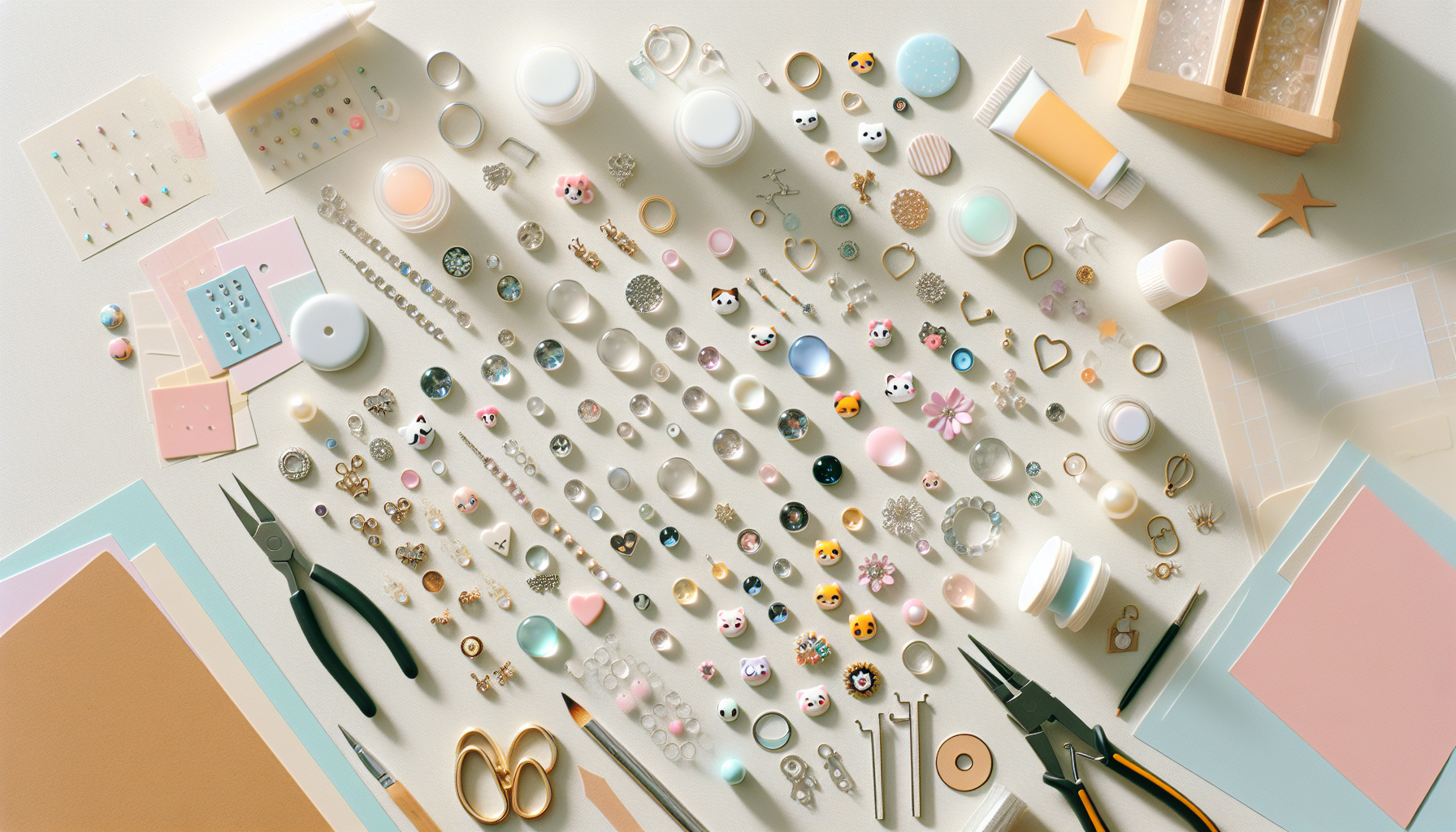
When you start exploring jewelry making, scrapbooking, or other DIY decor, the words cabochons and flatbacks quickly appear. At Hilmaspyssel.se, they are gathered in the category Cabochons & Flatbacks Other, but what does that actually mean – and how do they differ from ordinary beads? This section will give you a clear foundation so you immediately understand what to look for and how to use them in your projects.
Cabochons – Domed Eyecatchers with a Flat Back
- Cabochon – simple explanation: A cabochon is a decorative “stone” or motif with a polished, domed front and a flat back. It is not perforated like a bead, but designed to be glued on.
- Difference from beads: Beads have holes for thread or wire, while cabochons are attached to a base – such as ring blanks, pendant bases, or decorative plates.
- Common shapes: At Hilmaspyssel.se, you'll find cabochons in round, oval, heart-shaped, teardrop-shaped, and also figurative designs with printed motifs.
-
Typical uses: Perfect for rings, pendants, keychains, bookmarks, hair clips, and as a focal point on cards or boxes.
Cabochons are often used as the "centerpiece" in a piece of jewelry or a decoration. By gluing them into a pre-made jewelry base, you quickly achieve a professional result without advanced techniques, something many beginner guides point out but rarely explain pedagogically step by step.
Flatbacks – Completely Flat Backs for Flexible Decoration
Flatbacks are similar to cabochons but usually have a completely flat back and are often rhinestones, acrylic decorations, or small decorative motifs. They are designed to be placed on a surface, not set in the same way as a classic cabochon. Here, they are used to decorate cards, invitations, phone cases, tealight holders, frames, hair accessories, and much more. Flatbacks also work excellently as child-friendly craft materials when you want a lot of effect with minimal means.
By understanding the difference between cabochons, flatbacks, and traditional beads, it becomes much easier to choose the right products in the category Cabochons & Flatbacks Other and plan your creative projects without unnecessary wrong purchases.
Material Guide – Acrylic, Glass, Resin and Other Materials at Hilmaspyssel.se
Once you understand what cabochons and flatbacks are, the next big question is: which material should you choose? The material itself determines how your jewelry, cards, and decorations will feel, last, and shine. In this section, we will go through the most common materials in the category “Cabochons & Flatbacks Other” at Hilmaspyssel.se and how to use them most effectively in your projects.
Common materials: acrylic, glass, resin, and special materials
-
Acrylic flatbacks and cabochons: Lightweight, affordable, and perfect for children's crafts, larger decorations, and projects where weight matters (e.g., hair clips and phone cases). They often come in many colors and fun motifs.
-
Glass cabochons: Give a more exclusive feel with a beautiful luster and weight. Glass is especially suitable for rings, necklaces, and earrings where you want a distinct "jewelry feel."
-
Resin cabochons: Very versatile – perfect for printed motifs, pictures, and more detailed illustrations. Resin is durable and lightweight but still looks "glassy."
-
Other materials (wood, metal, mother-of-pearl effect): Wood gives a natural, bohemian feel, metal feels edgy or vintage, while mother-of-pearl inspired surfaces suit romantic and wedding-focused projects.
Keep in mind that acrylic can withstand a bit more wear and tear and is well-suited for children's crafts, while glass and some resin variants require a bit more care – but also give a more luxurious look.
How material choice affects glue, durability, and applications
The material determines which glue you should use and where your cabochons/flatbacks are best suited:
-
Acrylic: Adheres well with a hot glue gun or good craft glue on paper, cardboard, and wood. Avoid strong solvent-based glues that can dull the surface.
-
Glass: Works best with jewelry glue or epoxy glue, especially against metal bases (rings, pendants, bracelets). Provides very good durability with the right glue choice.
-
Resin: Works with both super glue and jewelry glue. Excellent for keychains, bookmarks, and hair clips where you want to combine strength and low weight.
-
Wood & metal: Can usually be glued with the same glue as the base (wood glue/craft glue or jewelry glue for metal).
By matching the cabochon material with the right glue and surface, you reduce the risk of decorations coming loose or discoloring. A good tip is to always test glue a cheaper piece first – especially if you are working with new materials or delicate surfaces like lacquered boxes or painted frames. This way, you get professional results even in small home studio projects.
Popular Uses – How You Can Use Cabochons & Flatbacks Other in Your Projects
Cabochons and flatbacks are small details that make a huge difference – whether you're creating jewelry, scrapbooking layouts, or personalized home decor. Many who discover the category “Cabochons & Flatbacks Other” at Hilmaspyssel.se are surprised by how versatile they actually are. Here, we'll go through the most popular uses and provide concrete examples so you can quickly get started with your own DIY projects.
Jewelry, Scrapbooking, and Cards – From Detail to Focal Point
-
Jewelry making: Use cabochons in ready-made ring bases, necklace frames, or earring blanks. A single motif cabochon can become a personalized statement piece of jewelry.
-
Scrapbooking & card making: Small flatbacks work perfectly as “enamel dots,” corner decorations, or a centerpiece in flowers and labels.
-
Hair accessories: Glue cabochons onto hair clips, headbands, or bobby pins for quick, unique accessories.
-
Gift wrapping: Add some decorative flatbacks to tags, ribbons, or gift box lids for a more luxurious feel.
Consider, for example, an easy 10-minute cabochon necklace: choose a glass or resin cabochon with a motif, put a small amount of jewelry glue in a bezel setting, press the cabochon into place, and string it on a chain – done. The same principle applies to rings and earrings, just on a smaller scale.
Home Decor, Children's Crafts, and Smart Upcycling
Cabochons and flatbacks are also perfect when you want to transform simple everyday objects:
-
Decoration & home decor: Spruce up frames, tealight holders, jars, phone cases, or key cabinets with matching flatbacks in a color theme.
-
Personalized nameplates: Place letter cabochons or motifs next to names on door signs, hooks, or storage boxes.
-
Children's crafts: Make magnets, bookmarks, keychains, or hair clips. Choose lightweight acrylic or resin variants and use child-friendly glue.
A simple project is to transform a plain gift box with flatbacks: paint the box in a base color, glue some selected motif flatbacks onto the lid in a cluster, complement with a satin ribbon – and you have a gift package that looks store-exclusive. By combining different sizes, shapes, and materials from the assortment at Hilmaspyssel.se, you can create a common thread between jewelry, cards, and decorations, achieving a thoughtful, personalized style in all your craft projects.
Techniques and Glue – How to Attach Cabochons and Flatbacks Correctly
Choosing the right technique and the right glue is crucial for whether your cabochons and flatbacks from Hilmaspyssel.se will stay put – or fall off after a few days. Here, we'll go through proven methods often mentioned in top articles, as well as practical tricks that are often missing from simpler guides.
Choose the right glue for the right material and surface
-
Jewelry glue/epoxy glue: Perfect for metal bases, glass, and resin cabochons when you want maximum adhesion, e.g., for rings and pendants.
-
Super glue/instant adhesive: Good for small acrylic flatbacks or rhinestones on hair clips, keychains, and hard plastic surfaces – use very little glue.
-
Hot glue gun (melt adhesive): Suitable for larger decorations on wood, cardboard, and some fabrics, e.g., boxes, frames, and simple children's crafts (not for fine jewelry).
-
Special textile glue: If you want to attach cabochons to fabric bags or headbands and still be able to bend the surface without everything coming loose.
A simple guideline: hard surface + hard material (metal, glass, resin) = jewelry glue or epoxy. Softer surface (paper, cardboard, fabric) + lighter decorations (acrylic, flatbacks) = super glue, hot glue gun, or textile glue depending on the stress.
Step-by-step and common mistakes to avoid
-
Prepare the surface: Wipe both the back of the cabochon and the jewelry base with a little alcohol or dish soap and water. Grease and dust are the most common reasons for glue failure.
-
Apply minimal glue: Place a small “drop” in the center of the setting or on the back of the flatback – the glue should be pressed outwards, not over the edge.
-
Attach calmly and straight: Press the cabochon into place, twist a millimeter or so to distribute the glue, and hold still for 10-20 seconds.
-
Allow to dry undisturbed: Let the project lie flat for at least the time specified on the glue packaging – preferably longer for heavy glass or resin cabochons.
Avoid: using too much glue, mixing the wrong type of glue and material (e.g., hot glue gun on smooth metal bases), or rushing the drying time. An extra professional tip is to test glue a cheap flatback on the same surface before making your "real" piece of jewelry or gift. This way, you know the technique holds – literally.
Design & Composition – Create Personalized Jewelry and Decorations
Design is what transforms simple cabochons and flatbacks from Hilmaspyssel.se into expressive jewelry and decorations. Here, it's not just about which motifs you choose, but how you combine color, shape, size, and placement to achieve a harmonious and well-thought-out result – whether you're making a necklace, a card, or a decorated box.
Color, Shape, and Motif – How to Build a Strong Design
-
Color Combinations:
– Tone on tone (e.g., different shades of blue) creates a calm, unified impression.
– Contrasting colors (turquoise against copper, pink against black) create clear focal points.
– Neutral bases (white, beige, gray) with a colorful cabochon make the design stylish yet personal.
-
Motif Selection:
– Vintage and nature motifs suit romantic jewelry and shabby chic decor.
– Children's motifs and cute figures are perfect for hair clips, keychains, and bookmarks.
– Abstract patterns and graphic motifs work well in modern, stylish jewelry.
-
Shape & Size:
– Large statement cabochons are ideal as the centerpiece in necklaces or large rings.
– Small flatbacks work best in groups, as edge decorations on cards, boxes, or around a larger cabochon.
A practical working method is to always lay out the cabochons loosely on your surface first. Try at least three different combinations before you glue – and feel free to take a quick phone photo of the variants you like, this way you build your own little "idea library."
Composition in Practice – From Sketch to Finished Project
Start with a clear focal point. This could be a larger motif cabochon on a necklace or the center of a greeting card. Then build around this with smaller flatbacks, beads, or charms from Hilmaspyssel.se, much like arranging a bouquet – a main flower, then filler and details.
It's good practice to follow simple composition rules:
-
Triangles: Place three decorations so they form a triangle – it appears balanced to the eye.
-
Odd numbers: 3, 5, or 7 cabochons/flatbacks almost always feel more vibrant than even numbers.
-
Balance against the edge: Let some details be close to edges/settings so not everything "ends up in the middle."
For beginners, a good first project is to design a small series – for example, a set with a ring, earrings, and a matching gift box. Use the same color scheme and motif cabochon but vary the placement and quantity. This way, you train both your design eye and composition while creating a thoughtful, gift-ready set.
How to Choose the Right Cabochons & Flatbacks at Hilmaspyssel.se
Choosing the right cabochons and flatbacks can feel overwhelming when there are so many colors, shapes, and materials. At Hilmaspyssel.se, the category ”Cabochons & Flatbacks Other” is designed to simplify the selection, but it helps a lot to know what to look for based on your specific project. In this section, we'll guide you step-by-step so you order products that both suit your craft and last over time.
Smart purchasing strategy – checklist before you click “buy”
-
Start with the project: Jewelry, card, home decor item, or children's craft? Jewelry often requires smaller, more detailed cabochons, while decor can handle larger and more robust flatbacks.
-
Consider the surface: Metal bases, paper, fabric, and plastic place different demands on material and glue. Make a mental note: “What am I attaching this to?” before choosing.
-
Choose style consciously: Romantic rose cabochons, colorful children's motifs, or sleek, monochrome decorations – let the recipient and use guide you.
-
Plan the quantity: Multi-packs are perfect for serial production (gift boxes, goodie bags, market), while unique motif cabochons are suitable for individual use.
When you visit Hilmaspyssel.se, it's a good idea to start by filtering by type (cabochons/flatbacks), material, and color. Open several products in new tabs and compare size (mm), shape, and price – this saves both time and mispurchases.
How to read product descriptions & make thoughtful combo purchases
Product texts provide important information often overlooked by beginners:
-
Size in mm: Measure your jewelry bases, frames, or surfaces before ordering. A 12 mm cabochon won't fit in a 10 mm setting.
-
Material info: Acrylic is light and durable for children's crafts, glass gives more weight and luster to jewelry, resin is perfect for motif cabochons and smooth surfaces.
-
Color/shade: Screen color reproduction can vary – therefore, feel free to combine with neutral base colors (black, white, silver) if you're unsure.
To maximize shipping and get more value, you can make smart combo purchases:
- Match cabochons with suitable ring bases, pendants, and ear hooks in the same order.
- Add stickers, washi tape, ribbons, beads, and charms to your flatbacks for complete scrapbooking or gift projects.
- Build a small “starter kit” around a color scheme or a theme (e.g., vintage, unicorn, nature).
By using the ”Cabochons & Flatbacks Other” category as a hub and complementing it with related jewelry findings and decorations, you quickly create a well-planned craft supply that will last for many projects – without unnecessary impulse purchases.
Creative Project Ideas Step-by-Step – Start Using Cabochons & Flatbacks Immediately
It's when you actually start creating that cabochons and flatbacks from Hilmaspyssel.se truly show their potential. To lower the barrier and answer the common question "where do I start?", here are concrete, quick projects that work for both beginners and more experienced crafters. All ideas can be easily adapted to color themes, recipients, and occasions.
Simple DIY projects with cabochons
-
Project 1: Personalized bookmarks – Attach a round or oval motif cabochon to an empty bookmark base or a sturdy strip of paper. Add ribbon or a tassel for a more exclusive feel. Perfect gift for book lovers.
-
Project 2: 10-minute cabochon rings – Choose adjustable ring bases and small cabochons with suitable motifs (flowers, vintage, children's motifs). Glue, let dry, and you have a personalized gift that looks store-bought.
-
Project 3: Quick necklace – Glue a cabochon into a pendant base and string it on a chain or a waxed cotton cord. Just swap out the pendant to get "new" jewelry for different outfits.
These projects show how little material is actually needed: the right base, a good adhesive, and a few well-chosen cabochons go a long way in creating sellable crafts or appreciated gifts.
Playful Ideas with Flatbacks – Perfect for Children's Crafts
-
Decorated gift box – Cover a simple cardboard box with paper and decorate the lid with flatbacks in various sizes. Focus on a "cluster" in one corner for a more luxurious design feel.
-
Child-friendly hair clips and keyrings – Glue cute flat-back figures (animals, fruits, superheroes) onto hair clips or blank keyrings. Use strong but child-safe glue, and have an adult do the actual gluing.
-
Magnets for the fridge – Attach small magnets to the back of flatbacks. A perfect project for children who want to create their own "art exhibitions" with drawings on the fridge.
By combining different types of cabochons & other flatbacks, you can quickly build your own repertoire of favourite projects. Start simply, document what you do, and then develop the same basic idea into collections – jewellery, gift kits, or matching interior details.
Frequently asked questions about cabochons & flatbacks
Q: What is the main difference between cabochons and other flatbacks?
A: A cabochon is usually domed on the front and flat on the back, making it perfect for setting in a bezel – for example, in a ring or necklace base. Other flatbacks, on the other hand, are completely flat on the back and often thinner, more like decorative stones or small motifs that are glued directly onto a surface (cards, boxes, hair clips). Cabochons often give a more "jewellery-like" impression, while flatbacks are extremely flexible in everything from scrapbooking to interior details.
Q: Which glue works best for cabochons and flatbacks?
A: It depends on the material and surface, but in short:
-
Jewellery glue/epoxy – best for metal bases, glass and resin cabochons, rings, and pendants.
-
Superglue/cyanoacrylate glue – good for hard, small surfaces, e.g., acrylic flatbacks on metal or plastic.
-
Hot glue gun – suitable for larger decorations on wood, cardboard, and rough surfaces, but not for finer jewellery.
Always clean the surface of grease and dust first, use a little glue at a time, and allow to cure according to the instructions for best durability.
Q: How do I prevent the cabochon from coming loose after some use?
A: The most common reasons are the wrong glue, too little/too much glue, or a poorly cleaned surface. Do this:
-
Clean thoroughly with, for example, a little isopropyl alcohol or dish soap and water (let dry completely).
-
Choose glue based on both the cabochon material and the surface – glass + metal often require strong jewellery glue.
-
Cover the entire gluing surface thinly, but avoid it running over the edge.
-
Let it cure undisturbed – do not touch the jewellery until the full drying time has passed.
Q: Are cabochons and flatbacks safe to use in children's crafts?
A: Yes, many acrylic and resin cabochons are well suited for children's crafts, as they are lightweight and do not break as easily as glass. However, always consider:
- Use non-toxic, child-friendly glue for younger children.
- Avoid very small parts for children under 3 years (choking hazard).
- Let an adult handle sharp tools and stronger glue.
Q: How do I know what size to choose for a ring, necklace, or earrings?
A: A good guideline is:
-
Rings: 12–18 mm cabochons depending on how much of a "statement" you want the ring to be.
-
Pendants/necklaces: 18–30 mm for a clear motif or focal point.
-
Earrings: 6–12 mm flatbacks or small cabochons work best and feel comfortable on the earlobe.
Feel free to measure a favourite ring or a piece of jewellery you already own and compare the measurements with the product description on Hilmaspyssel.se.
Q: Can I combine different types of cabochons and flatbacks in the same project?
A: Absolutely – this is often where the most personal results emerge. For example, you can:
- Combine a larger motif cabochon in the middle with small rhinestone flatbacks around it as a frame.
- Mix matte acrylic decorations with sparkling glass flatbacks for depth and contrast.
- Let a graphic cabochon be the focus and build upon it with simpler, monochrome flatbacks as a complement.
Always test the layout "dry" before gluing – lay out all the parts, take a photo if you want to remember a certain composition, and adjust until the balance feels right.
Create more with less – time to start playing with cabochons & flatbacks
You have now received a complete overview of what cabochons and flatbacks are, what materials are available, how to glue them correctly, and how to think about colour, shape, and design. You have also received concrete ideas for jewellery, scrapbooking, interior details, and children's crafts – all based on the "Cabochons & Other Flatbacks" assortment at Hilmaspyssel.se. Together, these small details make it easy to create personal, unique projects without advanced tools or prior knowledge.
The next step is to turn inspiration into action. Start with a small project – perhaps a simple cabochon necklace, a pair of personalized rings, or a decorated gift box with flatbacks. Go to the "Cabochons & Other Flatbacks" category on Hilmaspyssel.se, compare materials, read the size specifications carefully, and put together a small starter mix that suits your style. Once you feel comfortable, you can build on with jewellery components, beads, and charms for a complete craft assortment at home. With the right cabochons and flatbacks, the threshold is low – but the possibilities are almost endless.