


Tools from Hilmaspyssel.se – the guide to the right craft tools for every project
Have you ever started a craft project with high expectations – only to be frustrated by dull scissors, messy glue, or tools that simply don't do the job? Then you know how crucial the right craft tools are for the outcome. At Hilmaspyssel.se, you'll find carefully selected tools for everything from paper crafts and scrapbooking to jewelry making and kids' crafts, all gathered in one place.
In this guide, we'll go through which basic and specialized tools you actually need, how to wisely choose between different options, and how to care for your tools so they last longer. You'll get concrete product suggestions, practical examples, and buying tips tailored for both beginners and experienced creators – so your next project will be both more enjoyable and more professional.
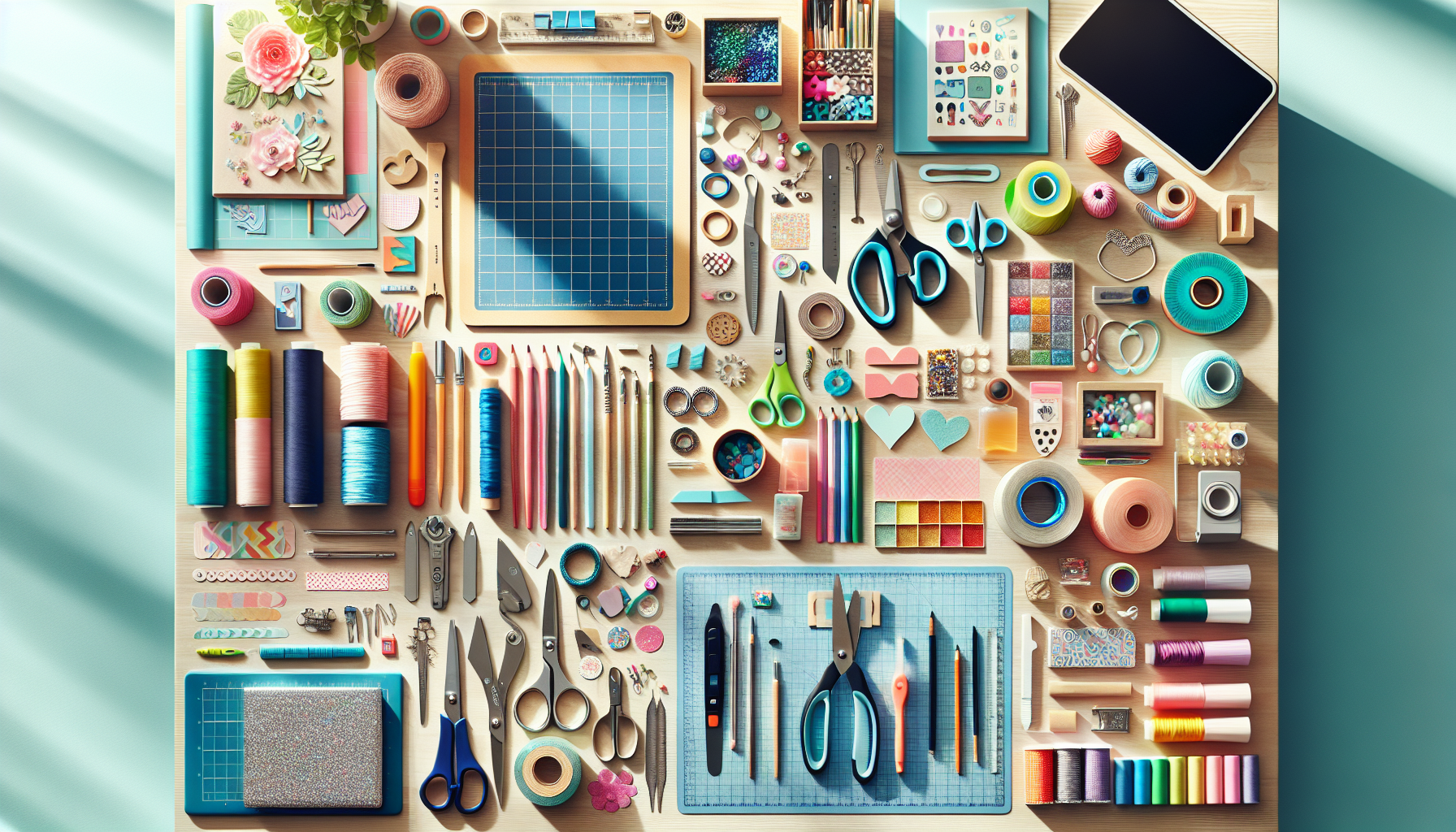
Hilmaspyssel.se is a Swedish webshop specializing in crafts, hobbies, and handicraft, with a particularly strong focus on well-thought-out and affordable tools. Where many stores have a scattered assortment, Hilmaspyssel.se is designed to make it easy to find exactly the craft tools you actually use – without having to search through endless product lists.
A hobby store with a carefully selected tool range
At Hilmaspyssel.se, the focus is on quality over quantity, while prices are kept at a level suitable for both beginners and experienced creators:
-
Carefully selected tools: The assortment is curated so that scissors, cutting tools, pliers, and special tools maintain a consistent, good standard – even in the simpler series.
-
Adapted for multiple levels: There are both easy-to-use basic tools for beginners and more precise professional tools for those who want to level up their craft.
-
Craft projects in focus: Many categories are structured around actual projects, such as card making, scrapbooking, or jewelry making, making it easy to see what you need from start to finish.
What is often missing in other guides – and what Hilmaspyssel.se covers well – is clarity about who the tools are suitable for. Here, it's easy to see if a tool is best for children, hobby creators, or more advanced users, which reduces mispurchases and frustration.
Everything for your project in one place
One of the great advantages of Hilmaspyssel.se is the ability to build an entire project from the same store. For example, if you want to make handmade greeting cards, you can find a paper cutter, scissors, glue, punches, decorations, and envelopes in a single order. If you plan to start jewelry making, pliers, wire, clasps, and beads are all gathered in clear categories.
This holistic approach makes tool purchases both more structured and more economical. Instead of impulsively buying the wrong things, you can start with your project, pick the right tools, and know that they will work together – which, in the long run, saves both time, money, and creative energy.
Basic craft tools every creative home should have
For your ideas from Pinterest, Instagram, or craft groups on Facebook to become a reality, a stable base of basic craft tools is needed. Top-ranked guides almost always highlight the same thing: without the right scissors, knife, glue, and brushes, the result can easily be crooked, dented, or sloppy – even if you are meticulous. A well-thought-out basic set also makes it much easier to start spontaneously when creativity strikes.
Your basic equipment – the tools every craft corner needs
Here is a smart basic list to start from, focusing on tools you can find in various versions at Hilmaspyssel.se:
-
Scissors: a sturdy general-purpose pair + a smaller precision pair for details
-
Cutting knives: craft knife/scalpel with interchangeable blades for straight, clean cuts
-
Rulers: preferably a metal ruler for cutting and a transparent ruler for measuring
-
Cutting mat: self-healing mat that protects the table and extends the life of knives
-
Glue: glue stick, liquid craft glue, and a glue gun for stronger bonds
-
Brushes: a set with different sizes for both details and larger areas
A good pair of scissors makes an enormous difference in paper crafts – cheap scissors often chew the paper and leave frayed edges. Similarly, a glue gun is invaluable when working with wood, decorations, felt, or heavier embellishments where ordinary glue is not enough.
Hobby tools vs. professional tools – how much do you need to invest?
Many wonder if they need to buy "professional level" right away. The answer is usually no – but it pays to choose gradually better quality for the tools you use often. A simpler pair of scissors might work for kids' crafts, while those who regularly make cards or scrapbook will benefit from more precise scissors and sharper cutting blades.
A good approach is to start with an affordable basic kit from Hilmaspyssel.se and then upgrade the tools you find yourself using the most. This way, you avoid unnecessary mispurchases, while building a sustainable tool collection that works for everyday crafts, school projects, and more advanced handicrafts over time.
Special tools for paper crafts, scrapbooking, and card making
When you leave the simplest craft projects behind, special tools for paper, scrapbooking, and card making are what truly take your creations to the next level. At Hilmaspyssel.se, there is a wide selection of tools designed to provide clean lines, sharp details, and a professional finish – without you needing to be a professional from the start.
Important special tools for neater paper projects
Some of the most useful paper tools you'll find at Hilmaspyssel.se are:
-
Paper cutters and trimmers: For straight, repeatable cuts in paper, cardstock, and photos
-
Punches: For decorative shapes, labels, circles, hearts, and detailed motifs
-
Scoring tools and scoring boards: For precise fold lines on cards, boxes, and album spines
-
Corner rounders and border punches: For soft corners and decorated edges that look store-bought
A common beginner's mistake is trying to do everything with scissors. With a simple paper cutter and a scoring board, you immediately get straighter invitation cards, even photo mats, and folds that don't crack at the edge. This saves both time and material, especially when making many similar cards or series of albums.
How to use special tools for professional results at home
For the best results in card making and scrapbooking, you can think in terms of steps: first cutting, then folding, then punching/decorating. For example:
- Cut cardstock to the correct size with a trimmer for millimeter precision
- Score fold lines with a scoring tool and fold along the line for sharp edges
- Use a corner rounder on photos and card panels for a softer, more thoughtful look
- Add details with border punches along edges or the bottom of the card front
An added advantage of the Hilmaspyssel.se assortment is that many tools are multifunctional – for example, paper cutters with interchangeable blades (crimped, wavy, perforated) or punches that both score and punch labels. This allows you to build a small but smart toolkit that provides great creative freedom, even if you have limited space or budget.
Tools for jewelry making – pliers, needles, and accessories
Jewelry making requires not only imagination and beautiful beads – the right jewelry tools are absolutely crucial for achieving a durable and professional result. At Hilmaspyssel.se, there is a wide range of tools specifically designed for intricate detail work, something often highlighted in top-ranked guides on jewelry creation. Here, we go through which tools you actually need and how to use them most effectively.
Essential jewelry tools – what every box should contain
For most projects, a well-thought-out basic kit goes a long way:
-
Round nose pliers: For forming even loops, spirals, and bends without damaging the metal
-
Flat nose/chain nose pliers: For holding small parts, opening and closing jump rings, and flattening crimps
-
Wire cutters: For cleanly cutting wire, pins, and beading wire without frayed edges
-
Jewelry needle, thread, and wire: Adapted to the project – elastic thread for bracelets, beading wire for necklaces, strong thread for bead weaving
-
Crimping pliers and small precision tools: For securing finishes and achieving a clean, professional look
A common pitfall that is rarely described properly is using ordinary household or electrical pliers. They can leave marks, break wire, and result in crooked cuts. Special pliers for jewelry have smooth jaws and are designed for thin metals – a small detail that makes an enormous difference in daily crafting.
The difference between cheap all-purpose pliers and real jewelry tools
All-purpose pliers from the toolbox might work for a single project, but when you start making more jewelry, the shortcomings become clear: tired springs, play in the jaws, and cuts that are never quite straight. By choosing special tools for jewelry making from, for example, Hilmaspyssel.se, you get better precision, less hand fatigue, and more attractive results. A smart first step is to invest in an affordable starter kit with round nose, flat nose, and wire cutters, and then supplement with crimping pliers and extra needles when you know which techniques you like best. This allows you to build a tool collection that lasts – and that grows with your creativity.
Child-friendly tools for crafting – safe and creative choices
Crafting with children should be both fun and safe. The right child-friendly tools make a big difference: projects are more successful, children gain better control – and you avoid unnecessary accidents. At Hilmaspyssel.se, there are many well-thought-out options that allow children to create "for real," but with adapted materials, shapes, and sizes.
Safe basic tools for different ages
For younger children (approx. 3–6 years), simple, safe tools are best:
-
Rounded tip scissors: short blades, soft handles, and rounded tips that reduce the risk of accidental poking
-
Glue sticks and children's glue: water-based glue that can be washed off hands, clothes, and tables
-
Child-friendly brushes: thicker handles for small hands and synthetic bristles that can withstand a bit of rough handling
-
Plastic needles and blunt needles: perfect for first sewing or weaving projects with cardboard and felt
-
Simple punches: motif punches where children can press with their whole hand instead of small, fiddly grips
For school-aged children (approx. 7–12 years), you can gradually introduce sharper scissors, simpler craft knives with safety grips, and more advanced brushes. A good approach is to have two levels in the craft supplies: a completely child-safe box that children can use themselves, and a box with tools that are only used with an adult.
Create a safe and inspiring children's toolbox
A well-thought-out "children's toolbox" makes craft time calmer and more structured. Start with:
-
A sturdy box or basket: preferably with compartments, so that scissors, glue, and brushes have their own place
-
Clear labeling: label the box with the child's name or a picture – this fosters a sense of responsibility
-
Smart kitchen table rules: sit down when cutting, glue and paint are only used on protective surfaces, all tools back in the box when you're done
Hilmaspyssel.se makes it easy to put together a complete starter kit with child-adapted scissors, glue, brushes, punches, and plastic needles in the same order. As children get older, you can supplement with more advanced tools from the same shop, without having to switch suppliers. In this way, both creativity and the toolbox grow with the children's skills – in a safe and sustainable way.
How to choose the right tools at Hilmaspyssel.se – smart buying tips
Choosing the right craft tools can feel overwhelming when the selection is large and projects vary. At Hilmaspyssel.se, there is everything from simple basic tools to more advanced specialized tools, and the key is to match your purchase with your specific project, your skill level, and your budget. Here, we guide you step by step so that every tool purchase is well-considered and smart in the long run.
Step-by-step: from idea to the right tool
-
First, define your project: Is the focus card making, scrapbooking, jewelry, mixed media, or children's crafts? Different projects require different basic tools.
-
Set a realistic budget: For tools you use often (like scissors, cutting mat, pliers), it almost always pays to choose higher quality.<
-
Read product descriptions and reviews carefully: Customer reviews often reveal how the tools perform in reality – e.g., whether a paper cutter truly provides straight cuts over time.
-
Compare sets with individual products: Starter kits and combo kits at Hilmaspyssel.se are often more affordable for beginners than buying everything separately.
Many wonder, for example: "Is a pair of scissors enough, or do I need a paper cutter?" The rule of thumb is: if you're only making occasional cards, good scissors work, but if you plan series of cards, albums, or invitations, a paper cutter gives more consistent results and saves time.
Smart additions and common decision paths
An effective way to build your tool collection is to start with a basic kit and then supplement with specialized tools when you know what you enjoy creating. Examples:
-
Card makers: start with scissors, a cutting mat, glue/glue pen, ruler – later supplement with a scoring board, punches, and corner rounders.
-
Jewelry makers: start with a plier set (round nose, flat nose, and wire cutters) – add crimping pliers, special needles, and more wire gauges as you progress.
-
Families with children: first focus on safe basic tools like rounded tip scissors and glue sticks – upgrade to more advanced tools as the children's age and experience grow.
When you're hesitating between two tools on Hilmaspyssel.se, consider how often you realistically will use it. Rather choose fewer really good tools that last a long time, than many cheap alternatives you'll soon need to replace. This way, your craft corner becomes more sustainable, more organized, and much more enjoyable to create in.
Care, storage, and safety – how to make your tools last longer
Buying good craft tools is only half the battle – the other half is about how you care for, store, and use them in everyday life. This is where the workspace of truly experienced crafters differs from a messy drawer in the kitchen. With well-thought-out routines for cleaning and safe storage, your tools from Hilmaspyssel.se will be both safer to use and last significantly longer.
Cleaning and basic care of craft tools
-
Scissors and cutting blades: Wipe off glue residue and paper dust after each project. Use a little cooking oil or sewing machine oil on a cloth to dissolve sticky residues, and wipe dry afterwards.
-
Pliers and metal tools: Keep them dry and free from bead powder and metal shavings. A soft brush or microfiber cloth is often sufficient.
-
Brushes: Rinse immediately after use, especially with acrylic paint and glue. Shape the tip with your fingers and let dry lying flat or with bristles downwards.
-
Glue guns: Remove excess glue when it is still warm (but not hot) and keep the nozzle clean for an even glue stream.
By spending 2–3 minutes on simple cleaning after each crafting session, you avoid worn blades, frayed brushes, and stiff pliers – and you won't need to buy new ones as often.
Smart storage and safe handling in the craft corner
An organized craft station not only makes creating more enjoyable but also reduces the risk of accidents – especially if you're crafting with children.
-
Sharp tools: Store scalpels, craft knives, and extra blades in boxes or cases with lids. Always keep the knife protected when not in use.
-
Pliers and metal tools: Gather them in a tool holder, mug, or mounted rack so that the gripping surfaces are easy to reach and don't rub against each other.
-
Child-safe storage: Place sharp tools and glue guns in a high drawer or a cabinet with a child lock. Have a separate, labeled box with child-friendly tools that children are allowed to use themselves.
-
Sorting small parts: Use jars, compartmentalized boxes, or bead organizers to keep accessories separate from tools – this extends their lifespan and saves time on every project.
A good rule of thumb is: if a tool feels worn, pinched, or unsafe – replace it. This way, you keep your craft corner functional, safe, and inspiring, and your favorite tools from Hilmaspyssel.se can do their best job every time you create.
Common questions about tools from Hilmaspyssel.se
Q: Which craft tools should I start with if I'm a complete beginner?
A: Start with a small but well-thought-out basic set: a good pair of scissors, sharp craft knives, a ruler, a cutting mat, glue (glue stick + liquid), and a couple of all-purpose brushes. With these tools, you can do the majority of all common craft projects – from cards and simple decorations to simpler mixed media. At Hilmaspyssel.se, you can often find ready-made starter kits where these items are collected, which both saves time and is more affordable than buying everything separately.
Q: Do I really need special tools, or are scissors and glue enough?
A: You can go a long way with simple equipment, but specialized tools provide better precision, save time, and significantly enhance the finish. For example, a paper trimmer produces straighter edges than scissors, and a scoring board makes fold lines on cards and invitations much neater. A good approach is to start with the basics and then add one specialized tool at a time, depending on the projects you get into, e.g., punches for scrapbooking or pliers for jewelry making.
Q: How do I know if a tool is of sufficiently high quality?
A: Look at three things:
- Material and construction – metal blades, stable joints, and ergonomic handles last longer.
- Product descriptions – many quality tools are labeled as acid-free/archival safe or adapted for specific materials.
- Customer reviews – read what other crafters think about durability and ease of use.
Hilmaspyssel.se generally works with carefully selected brands, which means you avoid the very worst low-cost alternatives.
Q: Which tools are safe for children to use at home?
A: For children, rounded scissors, glue sticks instead of strong liquid glue, children's brushes with thick grips, plastic needles, and simple hand punches are recommended. Avoid sharp knives, glue guns, and small metal parts until they are older and have clear safety routines. A good tip is to create a separate children's toolbox with only approved children's tools, so that nothing dangerous accidentally makes its way to the kitchen table.
Q: How often do I need to replace cutting blades, brushes, and pliers?
A: It depends on how much you craft, but as a rule of thumb: replace cutting blades when you start getting frayed edges or need to apply more force than usual. Brushes should be replaced when the bristles splay despite cleaning or lose their shape. Pliers that have become loose, crooked, or pinching in their grip do more harm than good – then it's time to upgrade. By storing tools dry, cleaning them immediately after use, and using the right tool for the right material, you significantly extend their lifespan.
Q: How do I plan a first purchase on Hilmaspyssel.se without breaking the budget?
A: Start by:
1. Choosing a main project – e.g., card making or simple jewelry.
2. Making a short tool list: basic tools + maximum 1–2 specialized tools.
3. Looking for sets and kits – often much cheaper than individual products.
4. Building on gradually – add more tools only when you notice what you use most.
This way, you get a durable, growing tool collection without unnecessary impulse purchases.
Conclusion: Build your creative tool collection with care
The right crafting tools are more than just gadgets – they are the foundation for sustainable creativity, neater results, and less frustration at the workbench. In this guide, you have received an overview of basic tools, smart specialized tools for paper, equipment for jewelry making, child-friendly options, thoughtful buying tips, and care and storage that make your tools last longer. Together, they give you a clear map for how to build a functional, inspiring crafting corner step by step.
Now, the next step is to put this knowledge into practice. Start by choosing an upcoming project – a card, a piece of jewelry, or a children's craft – and write a simple tool list based on the article. Then, review what you already have at home, supplement with durable, affordable tools from Hilmaspyssel.se, and create a small, well-organized space for your creativity. This way, your tool collection will grow slowly but thoughtfully, and every new project will be both more enjoyable and more professionally executed.