


TOHO Cube from Hilmaspyssel.se – the guide for bead lovers
Do you want to create professional-looking jewelry and bead projects without years of experience? Then TOHO Cube beads are a perfect choice. These small, cube-shaped glass beads from the Japanese brand TOHO produce sharp, even patterns, beautiful "bead mosaic" effects, and a luxurious finish – ideal for everything from bracelets and earrings to bead embroidery and woven designs.
At Hilmaspyssel.se, you'll find a wide range of TOHO Cube beads in various sizes, colors, and finishes, all in one place with convenient deliveries. In this guide, you'll receive practical help on choosing the right size, color, and technique, plus project ideas, beginner tips, and smart shopping strategies to avoid mispurchases – allowing you to spend more time on the creative process itself.
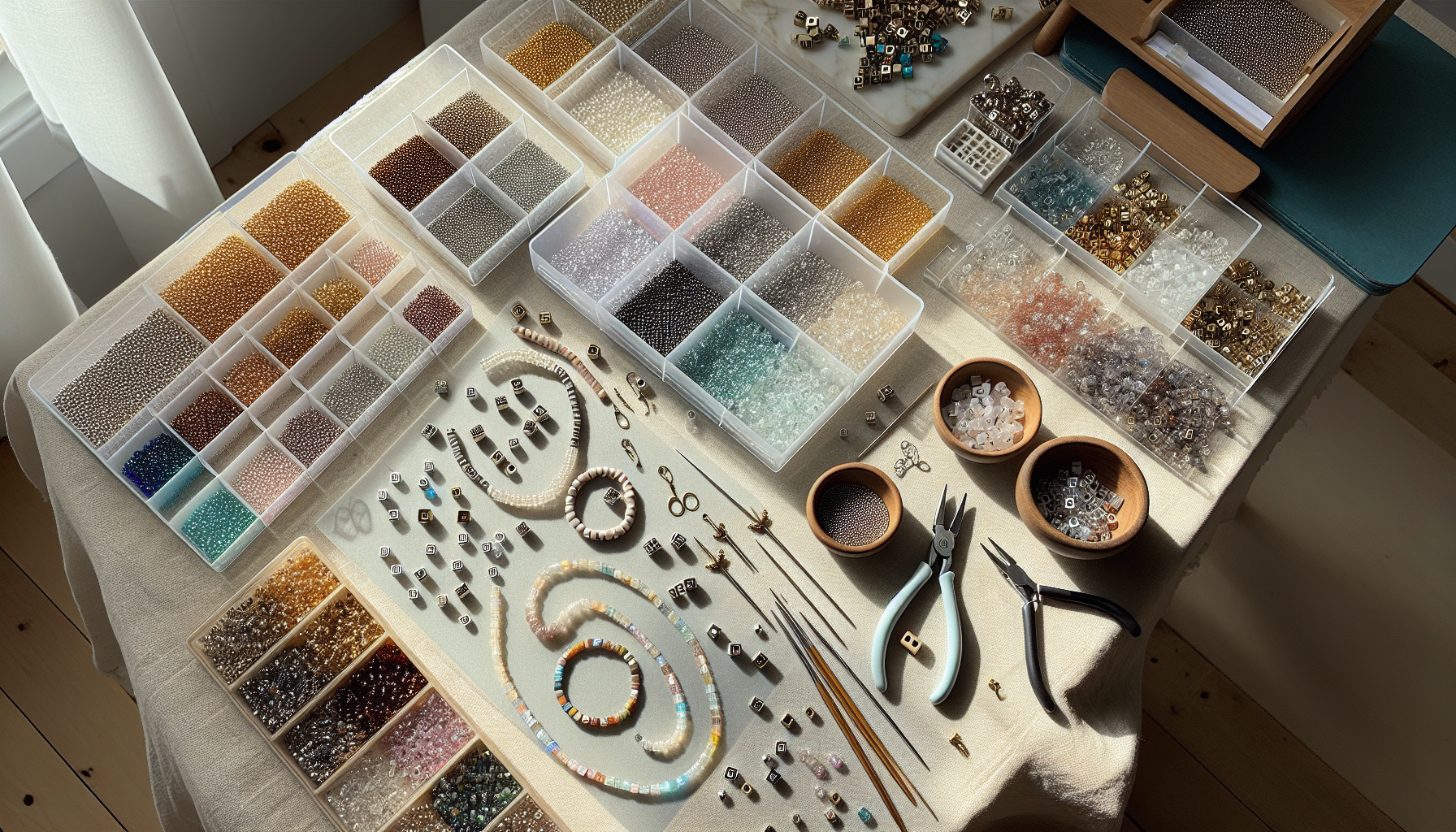
TOHO Cube beads are cube-shaped glass beads from the Japanese brand TOHO, known among beaders worldwide for their high quality, precision, and consistent size. While many simpler beads can vary slightly in both shape and hole size, TOHO beads are known for being extremely uniform – which makes a big difference when you want to create clean lines, clear patterns, and professionally beautiful jewelry.
TOHO as a brand and what distinguishes Cube from regular seed beads
TOHO is one of the most highly regarded manufacturers of seed beads and is often used in more advanced techniques such as bead weaving, brick stitch, and peyote. TOHO Cube beads stand out due to their:
-
Cube shape: Square sides create graphic, "pixelated" patterns and a clear mosaic feel.
-
Softly rounded edges: Comfortable against the skin, despite the angular shape, and less likely to fray the thread.
-
Consistent size and large hole: Easier to thread multiple passes of thread and achieve an even result, perfect for advanced techniques.
Compared to round seed beads, Cube beads are often better when you want clear grid patterns, letters, symbols, or geometric shapes. Round beads, on the other hand, are suitable when you want a softer, more organic look or rounded shapes. Many experienced beaders combine both types in the same project for added depth and texture.
Applications and visual effects with TOHO Cube
TOHO Cube beads work particularly well for woven bracelets, loom bead weaving, brick stitch earrings, necklaces, accessories, and bead embroidery on fabric. The cube shape allows the beads to lie tightly together, creating a flat, almost fabric-like surface – perfect if you want to create graphics, text, or patterns that really stand out.
The flat sides also provide more reflective surfaces, which makes metallic and glossy colors come alive. The result is a clear "bead mosaic" where each small cube functions as a pixel. This is one of the main reasons why TOHO Cube has become so popular among Swedish jewelry makers who want to create modern, stylish, and personal designs.
Guide to TOHO Cube sizes – choose the right size for your project
Choosing the right size of your TOHO Cube beads is crucial for both the appearance, feel, and durability of the finished jewelry. Many beginners find sizes like "1.5 mm" or "3 mm" abstract – how small are they really, and what suits what? In this section, we break down the most common sizes and link them to concrete projects, so you can order the right beads directly from Hilmaspyssel.se without unnecessary mispurchases.
Common sizes and how they appear in reality
The sizes you most often encounter when buying TOHO Cube include:
-
Approx. 1.5 mm (e.g., 1.5/0): Very small, perfect for detailed patterns, bead embroidery, and delicate, elegant bracelets.
-
Approx. 3 mm: Perceived as significantly larger; creates clear, graphic patterns and fuller jewelry.
-
Larger cubes (3–4 mm and up): Good for keychains, bookmarks, bag straps, and projects where you want the pattern to be visible from a distance.
Keep in mind that smaller beads require more patience and time but give a more intricate, "woven" impression. Larger cubes quickly build up a project and are often easier to handle if you are new to bead weaving.
How size affects projects, thread choice, and difficulty
The size of your TOHO Cube affects more than just the appearance:
-
Time consumption: Smaller beads = more beads per centimeter = longer time. A 1.5 mm bracelet can take twice as long as the same design in 3 mm.
-
Weight and wearing comfort: Larger cubes result in heavier jewelry. For long earrings or delicate necklaces, lighter, smaller beads may be more comfortable to wear.
- Thread and needle:
- For 1.5 mm, thin beading threads like Fireline 0.12–0.15 mm or Nymo in a finer thickness work well, along with beading needle size 10–12.
- For 3 mm and up, you can often use a slightly stronger thread, e.g., Fireline 0.15–0.20 mm and needle size 10–11 without problems.
Practical examples:
- Detailed bead embroidery on felt: choose 1.5 mm for soft transitions and small details.
- Graphic bead woven bracelet: choose 3 mm for clear blocks and quick assembly.
- Keychain with initials: choose 3–4 mm so that the letters are clearly visible and easier to read.
For beginners, approx. 3 mm TOHO Cube is often the most forgiving starting size. The beads are large enough for you to clearly see holes and thread, yet small enough to give a professional, detailed result. A good tip is to start with a straight bracelet in bead weaving or a simple row, order 3 mm cubes in 2–3 colors from Hilmaspyssel.se, and then, when you feel confident, challenge yourself with smaller sizes for more advanced patterns. This way, you build up both technique and confidence step by step.
Colors, finishes, and effects – how to choose the right TOHO Cube from Hilmaspyssel.se
Color is often the first thing that catches our eye – but when it comes to TOHO Cube beads, it's the combination of color, finish, and the properties of the glass that determines how your jewelry actually appears. To avoid surprises when you open your package from Hilmaspyssel.se, it's smart to understand how the different surface treatments behave in reality.
Common color types and how they behave in jewelry
-
Opaque colors: Produce clear, graphic patterns. Perfect for letters, pixel motifs, and Scandinavian, stylish bracelets.
-
Transparent colors: Let light through and feel light and glassy. Beautiful in layered bracelets and airy earrings.
-
Frosted/matte: Dampens shine and gives a soft, exclusive impression. Good when you want a more subtle look or to combine with metal components.
-
Metallic, iris, luster, etc.: More reflective surfaces that provide maximum shimmer. Excellent for festive statement earrings or details in an otherwise matte piece of jewelry.
A practical trick is to mix a base finish (e.g., opaque or matte) with an accent finish (e.g., metallic) to create contrast without the pattern becoming messy. This way, you fully utilize the "mosaic feel" of the cube shape.
Color combinations and how to use Hilmaspyssel.se when choosing
To achieve harmonious combinations, you can use three simple strategies:
-
Monochromatic palette: Choose 2–3 shades within the same color family (e.g., three different cool blues). Creates a calm, luxurious bracelet – especially beautiful in frosted or luster finishes.
-
Contrasting colors: Combine, for example, turquoise and copper, black and gold, or gray and mustard yellow for clear, modern patterns in woven bracelets and earrings.
-
Natural palettes: Be inspired by the seasons – muted greens and browns for autumn bracelets, powdery pastels for spring, navy blue and sand colors for summer.
When shopping at Hilmaspyssel.se, pay close attention to:
-
Product images in both light and dark backgrounds (if available) to see how the bead behaves in different lighting.
-
Color codes and color names – feel free to write down your favorites so you can order the same shade again or match with other bead types.
A concrete example: For a simple yet exclusive bracelet, you can choose 3 mm TOHO Cube in an opaque warm beige as a base, add a frosted white and a metallic gold as a thin stripe. Only three colors, but the result feels well-thought-out and elegant – and is easy to adapt by replacing the gold with silver or rose gold depending on your style.
Materials and tools – what you need to start with TOHO Cube
To get the most enjoyment out of your TOHO Cube beads from Hilmaspyssel.se, the right materials and tools are almost as important as the beads themselves. With a well-thought-out basic setup, you avoid unnecessary hassle, achieve better results, and can follow most patterns you find online without extra purchases.
Basic materials – build your base around TOHO Cube
-
TOHO Cube beads: Choose 1–2 sizes (e.g., smaller for details, larger for quick projects) and a few basic colors.
- Beading thread:
- Fireline or similar braided thread – perfect for durable bracelets, rings, and bead weaving.
-
Nymo, Miyuki Beading Thread, or other nylon thread – good for flexible necklaces and embroidery.
-
Beading needles: Thin needles in sizes 10–12 that easily pass through TOHO Cube's uniform holes multiple times.
-
Clasps and finishes: Lobster clasps, magnetic clasps, crimp beads, and jump rings to neatly finish bracelets and necklaces.
A practical start is to begin with a concrete project – for example, a straight bracelet in TOHO Cube – and then build on the same materials for more jewelry, instead of buying "a little of everything" without a plan.
Important tools and smart shopping list from Hilmaspyssel.se
In addition to beads and thread, a few basic tools make a big difference:
-
Plier set: Flat nose and round nose pliers for opening/closing rings and forming loops.
-
Flush cutters/thread scissors: Provide clean cuts on both metal wire and beading thread.
-
Bead mat or soft surface: Prevents your TOHO Cubes from rolling away and makes them easier to pick up.
-
Storage jars or compartmentalized boxes: Keeps colors and sizes organized, preferably labeled with color codes from Hilmaspyssel.se for easy refilling.
A concrete beginner's kit could consist of: 2–3 colors of TOHO Cube, a spool of Fireline, a packet of beading needles, a simple lobster clasp with jump rings, a bead mat, and a small storage box. Use keywords and categories like "TOHO beads", "cube beads", "beading thread", and "jewelry components" on Hilmaspyssel.se to quickly find everything you need for your first TOHO Cube project.
Techniques with TOHO Cube – from beginner to advanced
TOHO Cube beads open up a multitude of techniques, from really simple bracelets on elastic thread to advanced bead woven patterns with high levels of detail. Thanks to their uniform cube shape, you get clear lines and an almost "pixelated" expression that many Swedish beaders appreciate when they want to create graphic jewelry and accessories.
Basic techniques for beginners
-
Straight bracelet on elastic thread: Thread TOHO Cube beads onto an elastic thread, tie a secure knot, and hide it in a bead or a crimp cover. Perfect first project.
-
Wire bracelet with clasp: Use jewelry wire, crimps, and a simple lobster clasp. Creates a more durable bracelet that is still easy to make.
-
Single strand necklace: Combine TOHO Cube with some metal components or larger beads for a stylish statement necklace.
It's a good idea to start with straight rows before moving on to patterns. Focus on even thread tension – the beads should lie close together but not so tightly that the work becomes stiff and distorted. A tip is to regularly lay the jewelry on a flat surface to check that everything is straight.
Weaves, stitch techniques, and advanced projects
Once you feel confident with the basics, you can explore techniques where TOHO Cube truly shines:
-
Loom bead weaving: Creates clear, graphic patterns – perfect for keychains, bookmarks, and wide cuff bracelets.
-
Brick stitch & peyote: The cube shape creates defined edges and makes geometric earrings extra sharp and modern.
-
Square stitch: Perfect if you want a bead weaving feel without a loom – each bead corresponds to a "pixel" in your design.
-
Bead embroidery on felt or fabric: Use TOHO Cube beads as outlines, letters, or edge decoration around cabochons and motifs.
For more advanced projects, you can create pixel art, letters, or symbols by drawing a grid where each square corresponds to a TOHO Cube. Feel free to combine techniques – for example, a bead-woven centerpiece attached to a leather bracelet – for unique, personalized jewelry with long-lasting durability.
Creative project ideas with TOHO Cube from Hilmaspyssel.se
TOHO Cube beads are perfect when you want to create personalized, trendy projects that look more advanced than they actually are. With its wide range of colors and sizes, Hilmaspyssel.se makes it easy to turn an idea in your head into a finished piece of jewelry, accessory, or small bead art. In this section, you'll find concrete project suggestions with clear recommendations so you can get started right away.
Simple yet stylish projects for everyday wear
- Minimalist bracelet in Scandinavian style
- Recommended size: 3 mm TOHO Cube
- Colors: 2–3 neutral tones (e.g., white, gray, sand/beige)
- Difficulty: Beginner
- Tip: String the beads directly onto elastic thread for a quick and stylish bracelet.
- Subtle everyday earrings
- Recommended size: 1.5–2 mm for a delicate look
- Colors: One metallic tone + one matte accent color
- Difficulty: Beginner–Intermediate
- Tip: Use simple brick stitch around an ear hook to create small geometric shapes.
- Keychain with initial
- Recommended size: 3 mm for clear letters
- Colors: Base color + contrasting color for the letter
- Difficulty: Intermediate
- Tip: Make a small bead-woven plate with the letter and attach it to a keychain with a jump ring.
Here, you can advantageously use simple grid paper patterns (like pixel art) when planning letters or symbols. TOHO Cube's uniform shape ensures that motifs are sharp and legible even in small formats.
Projects that stand out – for parties, gifts, and home decor
- Statement earrings in metallic colors
- Recommended size: 3 mm
- Colors: 3–5 metallic/iris shades for maximum shimmer
- Difficulty: Intermediate
- Tip: Use brick stitch in multiple layers to build length and volume.
- Bookmark with graphic pattern
- Recommended size: 3 mm
- Colors: 2–3 colors (e.g., black, white, and an accent color)
- Difficulty: Intermediate
- Tip: Weave an elongated strip on a bead loom, finish with a tassel or metal charm.
- Small bead art to frame
- Recommended size: 3 mm for clear motifs or 1.5–2 mm for more detailed images
- Colors: Choose a palette of 4–8 colors for depth without it becoming cluttered
- Difficulty: Intermediate–Advanced
- Tip: Be inspired by nature motifs, simple landscapes, or abstract patterns, and mount the finished "bead mosaic" on cardboard in a frame.
By starting with a basic pattern and then changing the color palette, adding metal components, or combining TOHO Cubes with round seed beads, you can create an entire collection that still fits together. Use product images and color codes on Hilmaspyssel.se to recreate favorite combinations or build upon projects you love. This way, you gradually develop a personal style – with TOHO Cube as a common thread through all your creative projects.
How to shop for TOHO Cube smartly at Hilmaspyssel.se – budget, planning, and storage
Buying TOHO Cube online can feel overwhelming when there are hundreds of colors and sizes to choose from. By planning your purchases and creating a well-thought-out small "bead base," it becomes both easier and more budget-friendly – while maximizing creativity in your projects from Hilmaspyssel.se.
Plan your purchases – how much TOHO Cube do you need?
-
Start with the project: Estimate the approximate length/width of the bracelet, earrings, or keychain and consider how densely you want to bead.
-
Account for waste: Always add 10–20% extra for mistakes, test pieces, and future repairs.
-
Start with basic colors: First, invest in neutral tones (black, white, gray, metallic) that work in many different projects.
-
Adapt size to usage: If you frequently make bracelets, a medium-sized Cube might be most economical, while larger beads are better suited for accessories and keychains.
When shopping at Hilmaspyssel.se, you can use categories like "TOHO beads" and "Cube beads" as well as filtering by color and size to avoid impulse buys and truly get what you need for your specific pattern.
Budget, smart purchases, and storage of TOHO Cube
To keep costs down without compromising on creativity, you can:
-
Prioritize a few signature colors instead of many similar shades – for example, choose a light, a dark, and an accent color within the same color scheme.
-
Build up a "TOHO base" with 5–10 favorite colors that you know you'll use repeatedly.
-
Buy popular colors in larger quantities and more trendy shades in smaller packages.
By combining planning, well-considered color choices, and good storage, you will get a structured TOHO collection that lasts a long time, is easy to use – and makes every new order from Hilmaspyssel.se both more enjoyable and more accurate.
Frequently Asked Questions about TOHO Cube and Hilmaspyssel.se
Q: What is the biggest difference between TOHO Cube and regular seed beads?
A: The most obvious difference is the shape. TOHO Cube are cube-shaped with even edges, while regular seed beads/rocaille beads are round. The cube shape allows the beads to sit closer together and straighter, which gives more graphic, pixelated patterns and clear lines in bead weaving. The flat surfaces also reflect light differently, so the same color can appear more distinct in Cube than in a round bead. If you want soft, organic shapes, round beads work better – but for letters, symbols, squares, and stripes, TOHO Cube are hard to beat.
Q: How many TOHO Cube beads do I need for a bracelet or a pair of earrings?
A: It depends on the bead size, technique, and wrist circumference, but as a rule of thumb:
-
Simple straight bracelet (approx. 17–18 cm) with 3 mm TOHO Cube: count on approximately 90–130 beads
-
Bead-woven bracelet, 5–7 beads wide: approx. 200–400 beads depending on length
-
Brick stitch earrings: often 40–120 beads per earring, depending on the design
Many experienced beaders recommend always buying an extra bag to avoid interruptions if you want to extend or make matching jewelry.
Q: The colors look different on screen – how do I know I'm choosing the right shade on Hilmaspyssel.se?
A: Screens display colors differently, but you can reduce the risk of error by:
- Look for the color code/number in the product text (the same TOHO code can be googled for more pictures)
- Compare finish descriptions such as "opaque", "frosted", "metallic", "inside color", etc.
- Base your choice on colors you already own – e.g., if you know what a certain metallic or iris tone usually looks like
Start with a small order with several similar shades. Once you've found your favorites, the next order will be significantly more reliable.
Q: Which thread works best for TOHO Cube projects?
A: The choice is guided by the technique and how stiff you want the jewelry to be:
-
Fireline or other braided fishing line: Perfect for bead weaving, brick stitch, and projects that need to be durable and withstand wear.
-
Nymo, Miyuki Beading Thread or similar: Good for flexible bracelets and necklaces where you want the work to move smoothly.
-
Elastic thread: Works for very simple, straight bracelets with larger Cube beads, especially for beginners.
Make sure the thread goes at least twice through the hole without getting stuck – especially if you are working with advanced patterns where you pass through the same bead multiple times.
Q: Are TOHO Cube suitable for beginners or are they more for advanced beaders?
A: TOHO Cube are actually suitable for both beginners and advanced. Beginners appreciate that the cube shape makes it easier to see rows and patterns, and that the large holes are forgiving when re-threading. Advanced beaders like the precision and the ability to create complex, pixel-art-like motifs. A good beginner approach is to start with 3 mm TOHO Cube, elastic thread, and a straight bracelet – and then move on to brick stitch earrings or simple bead weaving when you feel confident.
Q: Why choose Hilmaspyssel.se when buying TOHO Cube?
A: A Swedish web store like Hilmaspyssel.se offers several practical advantages: you get clear product descriptions in Swedish, the option to buy other jewelry components in the same order, and usually faster delivery within Sweden compared to foreign stores. Additionally, you can more easily find what you're looking for through categories like TOHO beads, cube beads, and jewelry making supplies, and be inspired by any blog posts and guides. For those who want to build a well-thought-out "TOHO base" with favorite colors, it's a clear advantage to be able to easily restock from the same store over time.
Conclusion: Let TOHO Cube be the foundation of your creative beading
You have now received a complete overview of TOHO Cube beads – from what makes them so precise and dimensionally stable, to how to choose the right size, color, finish, material, and techniques for your specific projects. We have also looked at concrete ideas, common pitfalls, and how you can plan purchases and storage smartly with the help of Hilmaspyssel.se. Together, this gives you a solid knowledge boost that is often missing in more superficial online guides.
The next step is to put everything into practice. Start with a simple bracelet or a pair of earrings in 2–3 colors, choose a suitable size for your TOHO Cubes, and complement with the right thread and tools. Then explore the range at Hilmaspyssel.se, build up a small base of favorite colors, and save color codes for future projects. In this way, you not only create beautiful jewelry and accessories – you also build a sustainable, long-term creative hobby where TOHO Cube beads become the heart of your beading.