


Seed Bead Sizes – How to Choose the Right Ones at Hilmaspyssel.se
Have you ever meticulously followed a bead pattern only to end up with a crooked bracelet or a necklace that doesn't quite hold its shape? Often, the culprit is the size of your seed beads. Understanding the difference between, for example, 15/0, 11/0, and 8/0 is crucial for both beginners and experienced beaders who want consistent, professional results.
In this guide, we'll explain how the seed bead sizing system works, which sizes are best suited for different techniques, and how to interpret measurements in millimeters. With concrete examples, smart buying tips, and clear comparisons between brands like Toho, Miyuki, and Preciosa, we'll show you how to use the selection at Hilmaspyssel.se to plan your projects without guesswork – and with significantly less frustration.
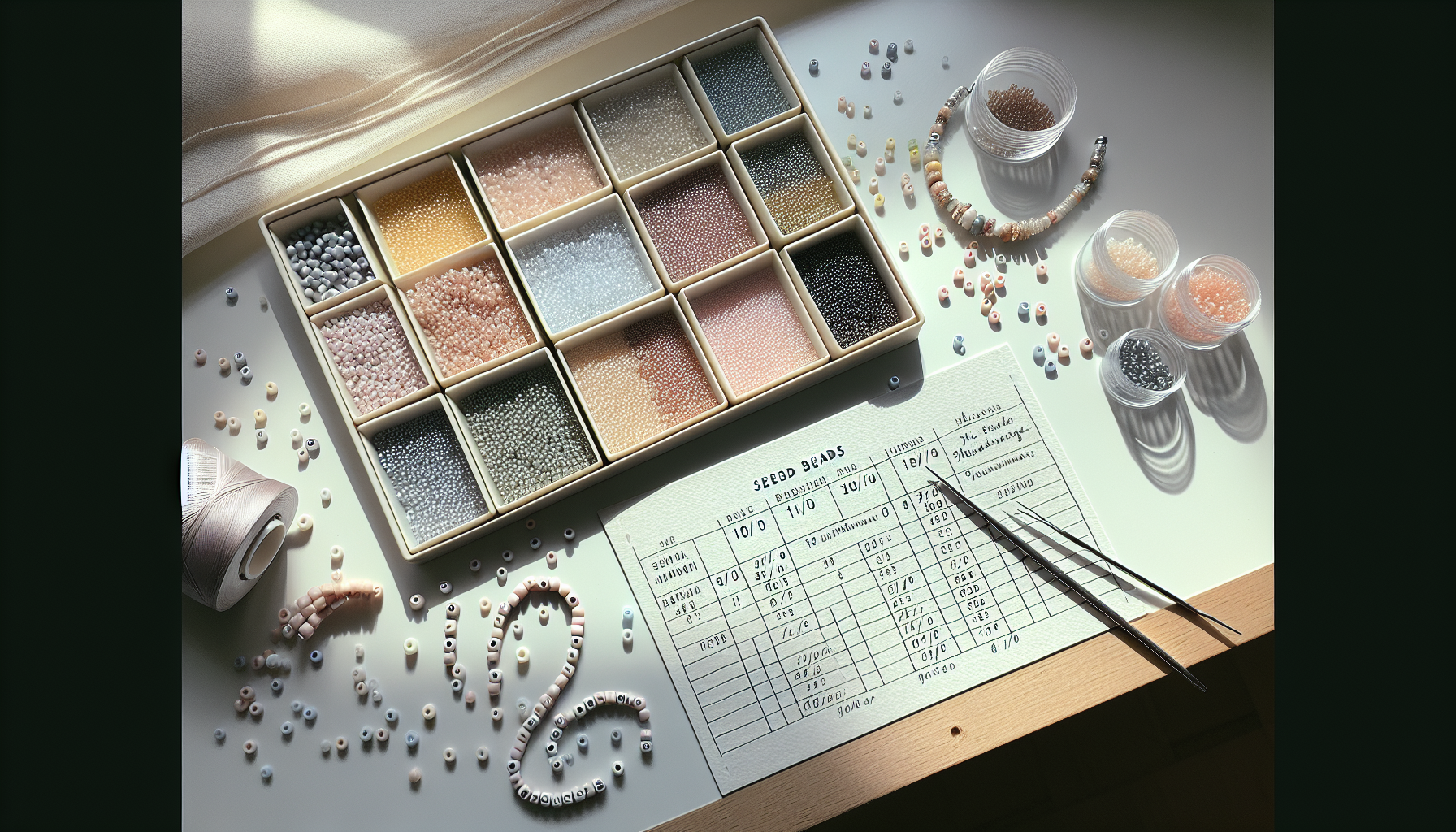
Seed beads, or rocaille beads, are small, uniform glass beads with holes through the middle, used in everything from delicate, elegant bracelets to intricate embroidery and advanced bead weaving. They are the foundation of countless beading techniques, and for that reason, they constantly appear in patterns, courses, and inspirational images. When you understand what seed beads are – and how they behave – it becomes much easier to choose the right size and quality for your projects.
What are Seed Beads Used for in Practice?
Seed beads are extremely versatile and are used in almost all types of beading work:
-
Jewelry making: delicate bracelets, necklaces, rings, earrings, chain-like structures, and stone settings
-
Bead embroidery: details around motifs, filling surfaces, outlines, and structural details on clothing, bags, and accessories
-
Bead weaving (off-loom): techniques like peyote, brick stitch, herringbone, right angle weave, etc.
-
Loom beading: graphic patterns, word bracelets, traditional woven bands
-
Decorations: Christmas ornaments, bookmarks, keychains, trinkets, and mixed media projects
A unique advantage of seed beads is that you can build "fabrics" of beads – flexible surfaces that behave almost like textiles. This makes them invaluable when you want to create lightweight yet durable jewelry with many colors and shades.
Brands and Why the Right Seed Beads are the Foundation of Your Projects
At Hilmaspyssel.se, you'll find well-known manufacturers like Toho, Miyuki, and Preciosa, all of whom have their own strengths when it comes to shape, hole size, and color range. Japanese brands like Toho and Miyuki are known for their uniformity, which results in smoother edges and more precise patterns – something immediately noticeable in, for example, geometric earrings or word bracelets.
Choosing seed beads of the right size and quality is therefore not just a detail, but the very foundation for a successful beading project. If the beads are uneven or too large/too small relative to the pattern, the work can become lumpy, crooked, or difficult to follow. With thoughtful choices – and clear product descriptions like those on Hilmaspyssel.se – you'll instead get patterns that hold their shape, feel comfortable to wear, and look professional, even if you haven't been beading for long.
How Seed Bead Sizes Work (15/0, 11/0, 8/0, 6/0)
The seed bead sizing system can seem cryptic at first glance, but once you understand the logic behind the numbers, it becomes much easier to choose the right beads for your projects. At Hilmaspyssel.se, you'll find clear size indications both in the classic "size X/0" system and in millimeters, making the choice more reliable – especially if you're ordering online.
What do the numbers 15/0, 11/0, 8/0, and 6/0 mean?
The most common sizes you'll encounter are 15/0, 11/0, 8/0, and 6/0. Simply put: the higher the number, the smaller the bead.
-
15/0 – approx. 1.4–1.5 mm
-
11/0 – approx. 2.0–2.2 mm ("standard size" in many patterns)
-
8/0 – approx. 3.0 mm
-
6/0 – approx. 3.7–4.0 mm
The number before "/0" originally referred to how many beads fit per inch on a thread – more beads per inch = smaller beads. Today, the system is used more as a relative measure, so exact millimeter measurements can vary slightly between different manufacturers. Therefore, the product description at Hilmaspyssel.se, where measurements are given in mm, is especially valuable when planning a specific project.
Overview: Common Sizes and When to Use Them
To make the sizing jungle more manageable, it's helpful to think in terms of typical uses:
-
15/0 – Detail Size
Perfect for fine work and settings, e.g., around small crystals or cabochons, or as finishes for fringes and edgings. -
11/0 – All-around and Patterns
The most commonly used size for peyote, brick stitch, loom, bead weaving, and many online instructions. Provides a good stitch density and works for both jewelry and bead embroidery. -
8/0 – Beginner-friendly and Clear Structure
Slightly larger, which makes the stitches easier to see. Good for beginners, simpler bracelets, and projects where you want the bead structure to be clearly visible. -
6/0 – Large, Full Beads
Often used for quick bracelets, elastic jewelry, children's crafts, and bohemian designs where volume is more important than intricate detail.
So, the next time you see a pattern that says "use 11/0 seed beads," you'll know both approximately how large the beads are and why that particular size was chosen. With the help of the size chart and millimeter measurements at Hilmaspyssel.se, you can also easily go up or down a size to adapt the jewelry to your own style.
The Most Common Seed Bead Sizes at Hilmaspyssel.se and When to Use Them
Once you understand how the seed bead sizing system works, the next step is to choose the right size for the right project. At Hilmaspyssel.se, you'll find all the most common sizes – 15/0, 11/0, 8/0, and 6/0 – and each size has its distinct strengths. By matching size with technique and difficulty, you'll get better results and much less frustration.
15/0 – for the Smallest Detail and Luxurious Finishes
-
Characteristics: Very small rocaille beads that provide extreme precision.
-
Best for: details, outlines, setting crystals and cabochons, pointed edges, and finishes.
-
Project idea: Embroider a cabochon and use 15/0 around the outer edge for a tight, professional frame.
15/0 can feel fiddly, but precisely because of this, they are perfect as a complement to larger beads. A common professional trick is to sew the main part of the work in 11/0 and then go over edges and transitions with 15/0 for a more "polished" look.
11/0, 8/0, and 6/0 – Your Workhorses in Everyday Beading
- 11/0 – the all-around favorite
- Perfect for peyote, brick stitch, bead weaving, loom bracelets, and bead embroidery.
- Provides good detail without being too difficult for experienced beginners.
-
Project idea: weave a "friendship bracelet" with text where each letter is built from 11/0 beads.
-
8/0 – clear stitches and faster results
- Ideal for beginners, children, and anyone who wants to see the structure clearly.
- Easier to thread multiple times through the hole.
-
Project idea: make a simple bead spiral or elastic bracelet with 8/0 in two contrasting colors.
-
6/0 – large seed beads with maximum visibility
- Excellent for quick projects, bohemian jewelry, and educational beginner sessions.
- Works well with elastic thread, leather cord, or waxed linen thread.
- Project idea: create colorful beach bracelets or personalized keychains with alphabet beads between 6/0 beads.
By always having at least one bag of each of these sizes at home – 15/0, 11/0, 8/0, and 6/0 – you can easily adapt each project to both design idea and experience level. At Hilmaspyssel.se, you can clearly see the size and recommended uses, making it easy to click home exactly what you need for your next beading project.
Differences Between Brands and Series (Toho, Miyuki, Preciosa, etc.)
As you delve into seed bead sizes, you'll quickly notice that an 11/0 doesn't always look the same – despite the identical size designation. Here, major manufacturers like Toho, Miyuki, and Preciosa differ in shape, hole size, and uniformity. For those who follow precise patterns or want bracelets to be exactly the same width every time, these nuances play a much larger role than many guides mention.
Toho, Miyuki, and Preciosa – What's the Practical Difference?
-
Toho: Often slightly "rounder" and very uniform beads with large holes, perfect for multiple thread passes and techniques like peyote and brick stitch.
-
Miyuki: Known for extreme precision and straight edges, especially in the Delica series. Produces very sharp, graphic patterns in, for example, word bracelets.
-
Preciosa: Classic Czech rocaille beads, slightly more organic in shape with a slight variation – many like them for a softer, more "handmade" look.
At Hilmaspyssel.se, you'll find clearly stated measurements in mm in the product description. This makes it easier to compare, for example, a Toho 11/0 with a Preciosa 11/0 before mixing them in the same project. A smart working method is to make a small test strip when changing brands, especially if you're following a purchased pattern where width and stitch density are important.
How to Avoid Uneven Surfaces and Frustration in Your Projects
If you want a perfectly even result – think geometric earrings, cuff bracelets, or bead weaving with very straight lines – it's wise not to mix different brands in the same row. Small differences in height and width can otherwise create a wavy edge or a "lumpy" surface.
A practical tip is to:
- Use one and the same brand for the entire main pattern.
- Save any mixes (e.g., Preciosa + Miyuki) for sections where the structure can be more lively, such as fringes, finishes, or embroidered edges.
- Always double-check both size and hole size in the product text on Hilmaspyssel.se before ordering larger quantities for a specific pattern.
By consciously choosing brands based on technique and desired expression, you can significantly improve the quality of your jewelry. You'll avoid guesswork, reduce waste – and get beading projects that look as professional as the pattern images. Here, the product information at Hilmaspyssel.se is one of your best tools.
Choosing the Right Seed Bead Size for Different Techniques and Projects
Understanding how different seed bead sizes behave in various techniques is key to creating beautiful, durable, and comfortable jewelry. Many guides only mention which size is "usually used" but rarely explain why – and what happens if you choose incorrectly. Here, we'll go through practical size choices step-by-step, so you can plan your next project confidently and smartly at Hilmaspyssel.se.
Recommended Sizes for Common Techniques
-
Peyote stitch: Most often 11/0 for bracelets, rings, and pendants. Choose 15/0 for extra fine details, settings, or edgings where you want tight, elegant edges.
-
Brick stitch: 11/0 provides a good balance between detail and stability. For beginners, 8/0 is perfect – easy to see stitches and learn the technique.
-
Bead embroidery: Feel free to mix 15/0, 11/0, and 8/0. 11/0 as a base, 8/0 for raised effects, and 15/0 for thin outlines around cabochons and motifs.
-
Loom beading: 11/0 for thin, "pixely" motifs like word bracelets. 8/0 when you want the project to go faster or be more rustic.
-
Elastic bracelets and necklaces: 6/0 and 8/0 are ideal – holes are large enough for elastic thread and a clear shape that adds volume to the design.
Here's a practical example: if you want to make a discreet everyday bracelet that doesn't snag on clothes, choose 11/0 in peyote. If, on the other hand, you want to make a colorful children's bracelet on elastic – go straight for 6/0.
Thread, Needle, and Experience Level – How They Affect Your Choice
A detail many overlook is the interaction between bead size, thread thickness, and needle.
-
Thin thread (e.g., FireLine 0.12 mm or Nymo B) works well with 11/0 and 15/0, especially when you need to pass through the same bead multiple times.
-
Slightly thicker thread (e.g., FireLine 0.15–0.17 mm or elastic 0.8–1 mm) works best with 8/0 and 6/0, where the holes are larger.
-
Needle size: For 11/0 and 15/0, a thin beading needle (size 10–12) is usually necessary, while 8/0 and 6/0 work well even with slightly thicker needles.
A simple rule of thumb:
- Are you a beginner? Start with 8/0 or 6/0 in a clear technique like brick stitch, simple loom work, or bracelets on elastic thread. You'll easily see what's happening and quickly learn the basics.
- Do you want to make thin, detailed jewelry? Go for 11/0 as a base and supplement with 15/0 for luxurious edges, settings, and finer structures.
When shopping at Hilmaspyssel.se, compare the product's stated mm measurements with your favorite thread and needles. This way, you avoid surprises in the middle of a project – and can focus on the fun part: color, shape, and design.
Size, Hole Size, and Number of Beads per Gram – Practical Buying Tips
When you start planning a beading project, it's easy to just look at color and size in "11/0" or "8/0." But to truly know how much you need to buy – and what thread will fit – you also need to understand hole size and roughly how many beads fit per gram. Here, the product information at Hilmaspyssel.se becomes invaluable, as millimeter measurements are often clearly stated.
Hole Size and Number of Beads per Gram
-
Hole size and thread passes: Smaller beads (e.g., 15/0) usually have smaller holes, but Japanese brands like Toho and Miyuki are known for relatively large holes in relation to the bead's size. This makes it easier to pass the thread through multiple times – important in, for example, peyote and brick stitch.
-
Approximate number of beads per gram (can vary between manufacturers, but as a guideline):
– 15/0: approx. 250–300 beads/gram
– 11/0: approx. 100–120 beads/gram
– 8/0: approx. 40–50 beads/gram
– 6/0: approx. 25–30 beads/gram
-
Practical calculation: Start with a guideline, compare with the mm measurements in the product text on Hilmaspyssel.se, and always round up if you're unsure.
Say you want to make a straight 17 cm bracelet in size 11/0. An 11/0 bead is about 2 mm wide. 10 mm / 2 mm ≈ 5 beads per cm. 17 cm × 5 = approx. 85 beads. With 100–120 beads per gram, 1 gram is more than enough for a simple bracelet – but count on 2–3 grams if you want a margin or a more advanced pattern.
How to Plan Your Purchase More Smartly
To avoid running out of beads in the middle of a project, you can follow a simple routine:
-
Step 1 – Choose technique and size: Decide whether you'll be doing bead weaving, embroidery, or an elastic bracelet, for example, and then choose the appropriate size (11/0, 8/0, 6/0, etc.).
-
Step 2 – Measure length or area: How long is the bracelet? How large an area needs to be embroidered?
-
Step 3 – Calculate beads per cm: Use the bead's mm measurement in the product description and estimate roughly how many will fit per cm or per square centimeter.
-
Step 4 – Convert to grams: Compare your estimated number of beads with the guideline for beads/gram for the current size.
-
Step 5 – Add a safety margin: It's a good idea to buy at least one extra bag if you're doing a larger project or want to be able to supplement with matching jewelry.
By combining these simple calculations with the detailed product information on Hilmaspyssel.se, you avoid guesswork, reduce waste, and achieve a more professional workflow – especially when working with multiple seed bead sizes in the same design.
Color Combinations and Design – How Size Affects Visual Expression
Seed beads in different sizes are like paintbrushes of different thicknesses – you get completely different expressions depending on how you combine them. When you understand how 15/0, 11/0, 8/0, and 6/0 behave next to each other, you can control the style, volume, and readability in your jewelry. Here, we look at how you can use size consciously to create more vibrant and professional designs with beads from Hilmaspyssel.se.
Create Contrast, Depth, and Texture with Mixed Sizes
-
Base in 11/0, details in 15/0: Perfect for elegant bracelets, earrings, and settings. 11/0 provides a smooth foundation, while 15/0 is used as an edge, picots, or small accents that give a luxurious feel.
-
Combination of 6/0 and 8/0: Creates bohemian, full jewelry with a soft texture. Use 8/0 as spacer beads and 6/0 as a focal point for an airy yet powerful expression.
-
Mix three sizes for more life: E.g., 6/0 + 8/0 + 11/0 in a necklace – large in the middle, medium size as a transition, and small beads near clasps and curved sections for better flexibility.
When planning a project, think "layers": large beads for volume and focus, medium-sized for rhythm, small for precision and finish. At Hilmaspyssel.se, you can easily filter by size and color and plan your design directly in the shopping cart.
Readability, Fit, and Smart Design Tricks
The size also affects how clearly the motif and text are visible. If you want to make bracelets with words or graphic patterns, 11/0 works best for most – small enough for details, but large enough so that letters aren't "pixelated". If you use 8/0, the text becomes coarser and more "pixel-art", perfect if you want a clear, playful style.
Simple, but powerful tricks:
-
Smaller beads at clasps and curved sections: Use 11/0 or 15/0 closest to the clasp and around sharp curves in necklaces – it provides a smoother fit and reduces gaps.
-
Larger beads in the center: Place 6/0 or 8/0 in the center front of bracelets or necklaces to create natural focal points without needing complicated patterns.
-
Test swatches before large projects: Make small test strips in two or three sizes to see how patterns, text, and color interact before starting a larger piece. This saves both time and material.
In conclusion: view size as a design element as important as color. By playing with proportions, contrasts, and placement, you can elevate even simple color combinations to something that looks thoughtful and professional – and Hilmaspyssel.se gives you all the sizes you need to experiment freely.
Frequently asked questions about seed bead sizes
Q: What do the size designations 15/0, 11/0, 8/0 and 6/0 actually mean?
A: The designations are an old sizing system where the higher the number, the smaller the bead. A 15/0 is therefore smaller than an 11/0. The number and zero come from how many beads once fit on a certain length of thread – more beads = smaller size. At Hilmaspyssel.se, measurements are also given in millimeters, making it much easier to compare different brands and plan projects more precisely.
Q: Which seed bead size is best if I am a complete beginner?
A: If you are a beginner, 8/0 or 6/0 is a perfect start. They are large enough for you to clearly see the stitches, but still classified as seed beads. You'll find it easier to learn techniques like peyote, brick stitch, and basic bead weaving without getting frustrated with micro-small beads. At Hilmaspyssel.se, you'll find many 6/0 and 8/0 in pre-selected color palettes that are well-suited for your first bracelets and necklaces.
Q: Can I mix different sizes in the same piece of jewelry, or will it just be messy?
A: Yes, you can absolutely mix sizes – done intentionally, it actually adds more life, texture, and depth to the design. A common arrangement is:
-
Base in 11/0 for the shape or pattern itself
-
Details in 15/0 around edges, cabochons, or as small accents
-
Focal points in 6/0 or 8/0 in the center front, in fringes, or as spacers
The key is to decide which size should dominate, and use the others as complements – not the other way around.
Q: Why do two beads of the same size (e.g., 11/0) look different depending on the brand?
A: Different manufacturers have different tolerances and shapes. Japanese brands like Toho and Miyuki are known for their very uniform and slightly "plumper" beads, while, for example, Preciosa can be slightly more varied in shape. Therefore, two 11/0 beads can differ slightly in height, width, and hole size. For projects that require super even edges (geometric earrings, bead weaving with strict patterns), it's smart to stick to one and the same brand throughout the entire project.
Q: How do I know how many beads I need for a bracelet or necklace?
A: A simple way is to start from the approximate number of beads per centimeter. For 11/0, you usually count about 17–19 beads per cm in a straight line. A 17 cm bracelet would then require around 300–330 beads, plus a little extra for clasps and any mistakes. At Hilmaspyssel.se, both the number of beads per gram and the measurements in mm are often provided, so you can calculate backward and see if one bag is enough – or if you need two.
Q: How does the size of seed beads affect readability in bracelets with text or names?
A: For clear text, 11/0 is usually recommended in bead weaving or peyote – they are small enough for fine letters but large enough for the text to be visible on the wrist. If you want extra sharp text, you can use 15/0 but that requires more rows and more patience. Avoid overly large beads like 6/0 for detailed text; the letters can easily become blocky and harder to read. A good tip is to make a test swatch with 2–3 letters before you start the entire bracelet, so you can immediately see if the size and font work.
Conclusion: How to take the next step with the right size of your seed beads
Once you master the seed bead sizing system, everything else in beading becomes easier: patterns look neater, edges become more even, and jewelry holds its shape better. In this article, we've covered what rocaille beads are, how sizes like 15/0, 11/0, 8/0, and 6/0 differ, what techniques they are suitable for, and how different brands and hole sizes affect the result. You've also received practical calculations regarding the number of beads per gram and how size interacts with design, structure, and readability in text patterns.
Now it's your turn to put this knowledge into practice. Start by choosing 2–3 sizes – for example, 11/0 as a base, complemented by 8/0 for beginner-friendly projects or 15/0 for details. Use the product information and millimeter measurements on Hilmaspyssel.se to plan smart purchases, calculate how many beads you need, and dare to try new brands and series. Create small test swatches, compare the results, and let your favorite sizes emerge naturally. The better you understand the sizes, the freer you can design personalized, professional jewelry.