


Freshwater Pearls from Hilmaspyssel.se – The Guide for Jewelry Making Enthusiasts
Are you looking for beads that feel exclusive, yet are suitable for both your budget and everyday jewelry? Freshwater pearls have become a favorite among both hobby creators and professional jewelry makers – precisely because they combine natural elegance, beautiful luster, and great variation in shape and color. At Hilmaspyssel.se, you'll find a wide range of freshwater pearls that make it easy to design everything from minimalist necklaces to romantic wedding jewelry.
In this guide, we will go through what freshwater pearls are, how to choose the right pearls for your project, concrete jewelry ideas, step-by-step instructions, and how to care for your pearl jewelry so that it stays beautiful for a long time. You'll get practical tips, a buying guide, and inspiration – all gathered in one place, so you can confidently order the right pearls from Hilmaspyssel.se and start creating right away.
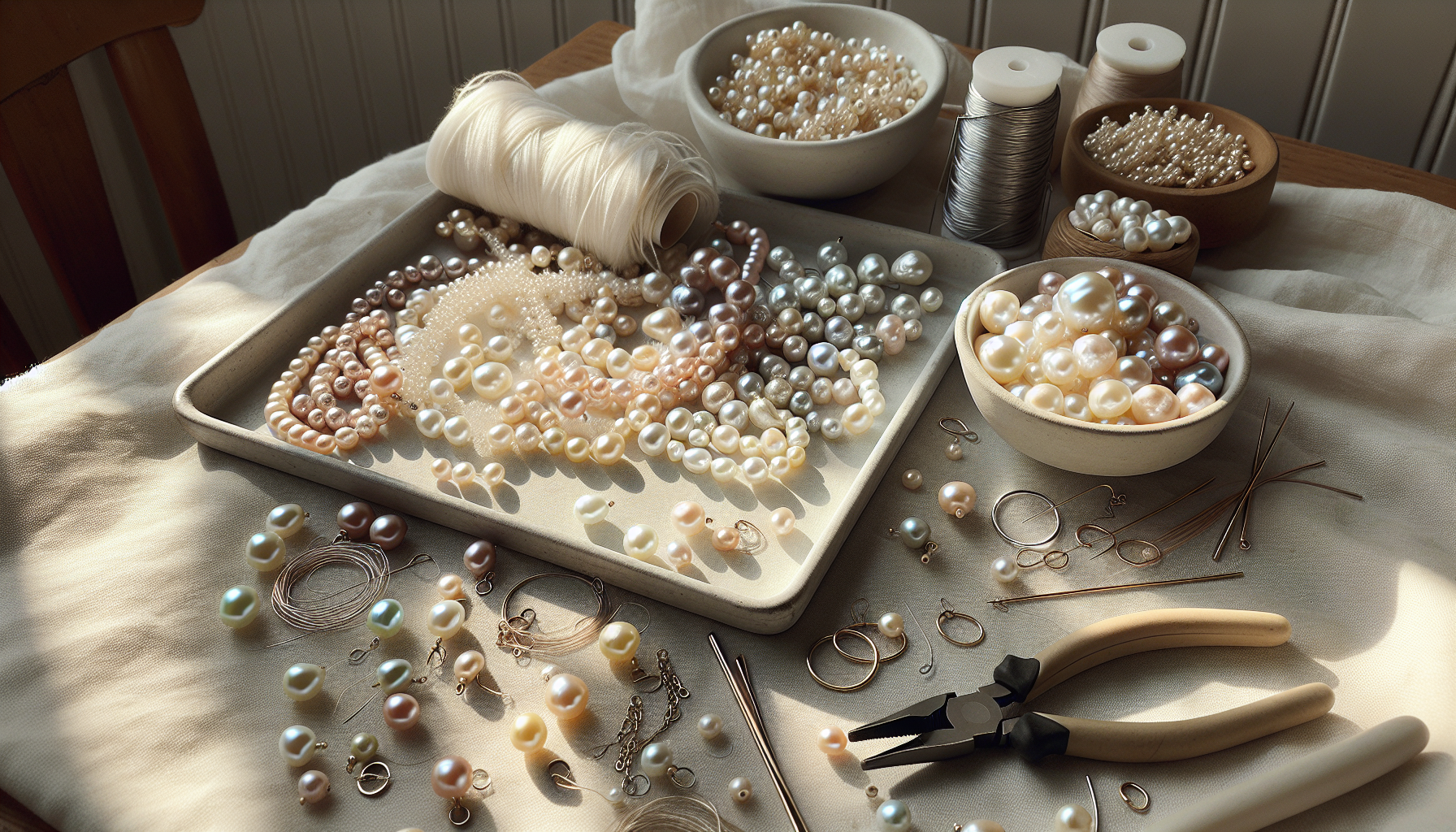
Freshwater pearls are genuine pearls cultivated in mussels that live in lakes, rivers, and ponds – primarily in Asia. Unlike classic saltwater pearls, such as Akoya or Tahitian, freshwater pearls often have a more organically irregular shape and a soft, creamy luster. It is this natural variation that makes them so appreciated by both hobby enthusiasts and professional jewelry makers.
How Freshwater Pearls Are Formed and What Differentiates Them
When a small piece of mantle tissue or other material is inserted into the mussel, it begins to form layers of nacre around the nucleus – this is how a cultured freshwater pearl is created. At Hilmaspyssel.se, you'll primarily find cultured freshwater pearls, which combine genuine pearl material with controlled cultivation for better quality and more consistent results.
-
Natural pearls: Formed without human intervention, extremely rare and very expensive.
-
Cultured pearls: Genuine pearls where humans have initiated the process, now the most common on the market.
-
Synthetic/imitation pearls: Made of glass or plastic with pearl imitation, lacking the vibrant luster.
A clear advantage of freshwater pearls is that they often consist of almost exclusively nacre, which provides deep luster and good durability even in thinner jewelry designs.
Shape, Luster, and Why They Are So Suitable for Crafts
Typical characteristics of freshwater pearls are their rich color variations (from white, rose, and cream to more color-treated tones), many different sizes, and shapes such as round, potato-shaped, rice-shaped, and baroque. For those who shop at Hilmaspyssel.se, this means you can tailor the expression of your jewelry – from strictly classic to bohemian artistic – without breaking the bank. This makes freshwater pearls one of the most affordable and flexible choices for creative jewelry projects.
Why Choose Freshwater Pearls from Hilmaspyssel.se? – Quality, Selection, and Price
When you invest time and creativity in your jewelry, you want to be able to trust that the materials are of high quality – both visually and practically. This is where freshwater pearls from Hilmaspyssel.se truly stand out. Through a carefully selected assortment, clear product information, and competitive prices, it becomes easy to create jewelry that looks exclusive without breaking the bank.
Quality You Can See – And Feel the Difference In
In many online stores, quality varies greatly, but Hilmaspyssel.se places great emphasis on consistency:
-
Careful sorting: The pearls are selected for uniform shape, fine surface, and minimal imperfections.
-
Beautiful luster: The freshwater pearls have a soft, natural sheen that makes even simple designs feel luxurious.
-
Good drill holes: Consistent drilling with clean edges makes it easier to thread the pearls onto elastic cord, wire, or jewelry cable without the cord fraying.
-
Clear size indications: You can immediately see if the pearls are suitable for bracelets, necklaces, or detailed earrings.
For you as a hobby or small-scale jewelry maker, this means fewer mistaken purchases and less waste. You can also repeat a popular design and get a similar result every time, something many top articles fail to emphasize but which is crucial if you sell your jewelry.
Wide Assortment, Fair Prices, and Smooth Shopping Experience
The selection at Hilmaspyssel.se is structured to cover the needs of both beginners and professionals:
-
Large selection of shapes and sizes: Everything from small, round pearls to larger baroque varieties on pearl strands.
-
Several color scales: Classic white, champagne, rose, darker tones, and colored freshwater pearls for trendier projects.
-
Affordable pearl strands: Perfect when you want to make entire collections or matching sets of necklaces, bracelets, and earrings.
-
Fast delivery in Sweden: Short time between idea and finished jewelry – important when creating to order or for markets.
-
Clear product images and reviews: You can see what the pearls actually look like and read what other customers have thought before you decide.
The combination of quality, price, and easy ordering allows you to plan projects more strategically: buy the right amount, calculate your material costs, and build your own style with freshwater pearls as a common thread. This is a level of control and security that few general craft stores offer – and that gives you a clear advantage in your jewelry making.
Different Types of Freshwater Pearls – Shape, Size, and Color for Different Projects
When you start working with freshwater pearls, you quickly discover that "pearl" is not a single look but a whole world of shapes, sizes, and colors. This very variation makes freshwater pearls from Hilmaspyssel.se perfect whether you are designing a discreet everyday piece of jewelry or a grand wedding necklace.
Shapes – From Classically Round to Organically Baroque
The most common shapes you'll find at Hilmaspyssel.se are:
-
Round and nearly round pearls: Give a classic, timeless expression – ideal for traditional pearl necklaces and elegant earrings.
-
Oval and potato-shaped pearls: A little softer and more organic, perfect for modern bracelets and necklaces where you want movement and life.
-
Baroque freshwater pearls: Irregular, sculptural shapes that create unique, bohemian jewelry and trendy statement pendants.
-
Rice-shaped and chubby "nuggets": Excellent as spacer beads or for layered designs with multiple strands.
By combining different shapes in the same piece of jewelry, you can create clear style shifts – for example, round pearls in the front and baroque pearls in the chain extension at the back of the neck for an unexpected detail.
Size and Color – How They Affect Your Design
Size and color determine how your jewelry is perceived from a distance:
-
Small pearls (approx. 3–4 mm): Perfect for detailed bracelets, children's bracelets, discreet earrings, or as an accent between larger stones. Gives a delicate, minimalist impression.
-
Medium-sized pearls (approx. 6–8 mm): The "classic" size for necklaces and bracelets – balanced, elegant, and easy to wear every day.
-
Larger pearls (10 mm and up): Used as a focal point in pendants, rings, or in the center of a bracelet – suitable for those who want more statement and fashion appeal.
In terms of color, there are both natural shades (white, cream, rose, light gray) and colored/toned pearls in, for example, dark gray, petrol, pink, or gold tones. A practical strategy is to:
- choose natural-colored pearls for jewelry you want to wear "always"
- use colored pearls for seasonal collections, wedding colors, or personalized gifts in a favorite color.
By starting with the project's style – classic, boho, modern, or romantic – and then matching the shape, size, and color from Hilmaspyssel.se, it becomes significantly easier to choose the right freshwater pearls from the beginning and avoid mistaken purchases. The combination of a wide assortment and clear product descriptions also means you can plan your jewelry more professionally, even as a hobby creator.
How to Choose the Right Freshwater Pearls for Your Project
Choosing the right freshwater pearls is crucial for whether your jewelry feels cheap or exclusive, durable or fragile. In this section, we guide you step by step so that you can make well-considered choices – whether you are buying your pearls for the first time or are already a loyal customer of Hilmaspyssel.se.
Start with Project, Style, and Budget
Before you order your pearls, it's wise to answer a few questions:
-
What type of jewelry will you make?
Bracelets and anklets are exposed to more wear and tear than earrings and necklaces, which places higher demands on durability and thread choice.
-
What style do you want to achieve?
Minimalist = smaller, more even pearls. Vintage and bohemian = baroque, irregular pearls. Wedding and party = high luster, soft light tones.
-
What is your budget – and what materials do you want to combine them with?
Freshwater pearls elevate inexpensive metals, but become extra luxurious when paired with sterling silver or stainless steel.
Also, consider who the jewelry is for: an everyday favorite bracelet should be practical and durable, while a wedding necklace can be more exclusive and delicate.
Match Pearl Type, Color, and Level with the Right Use
Here's how to think more concretely when choosing pearls from Hilmaspyssel.se:
-
For everyday jewelry:
Choose small to medium-sized pearls (approx. 4–8 mm) with a slightly irregular shape – potato-shaped or slightly baroque pearls give a lively expression and can withstand frequent use.
-
For weddings and parties:
Opt for rounder pearls with high luster in classic shades such as white, cream, or rose. Combine with discreet crystals or faceted glass beads for extra shine.
-
Color choice according to skin tone, wardrobe, and season:
Warm skin tones go well with champagne, golden, and peach tones. Cool skin tones are enhanced by white, silver-white, and light pink. For a capsule wardrobe, neutral tones are most useful, while colored/toned freshwater pearls add a trendy accent to seasonal fashion.
For beginners, a simple "starter kit" is smart: a strand of white/soft rose freshwater pearls in 4–6 mm, elastic cord, a few metal spacers, and a basic set of jewelry findings – all of which are readily available at Hilmaspyssel.se.
Concrete Purchasing Strategies That Save Both Time and Money
To get the most out of your purchases, you can:
-
Buy whole strands when you know you want to make several matching pieces of jewelry – it often offers a better price per pearl.
-
Plan a mini-collection concept: choose a main color for the pearls and complement with 1–2 accent colors and metals in the same tone (e.g., all silver or all gold).
-
Start small but thoughtfully: a well-crafted bracelet made with good materials is better than an entire set of carelessly chosen pearls.
When you start with the project, style, and use, the choice of freshwater pearls becomes significantly easier – and the result looks more professional, even if you still consider yourself a beginner.
Inspiration Ideas – Jewelry You Can Create with Freshwater Pearls
Freshwater pearls are perfect when you want to create personalized jewelry that feels both trendy and timeless. In this section, you'll get concrete ideas on how you can use pearls from Hilmaspyssel.se in everything from simple everyday jewelry to more elaborate statement accessories. The goal is for you to be able to go from idea to finished piece of jewelry without having to search for inspiration elsewhere.
Trendy Ways to Use Freshwater Pearls
Here are some popular ways to design jewelry with freshwater pearls:
-
Layered necklaces: Combine a short pearl choker with a longer chain necklace. Use small, even pearls (3–4 mm) closest to the neck and single larger pearls on the longer necklace for balance.
-
Asymmetrical earrings: One earring with a baroque freshwater pearl and one with several small pearls in a row creates a modern, personal expression without being "too much."
-
Mix with chains and metal: Let a short section of pearls be broken up by a chunky chain in stainless steel or sterling silver for a luxurious yet everyday-friendly style.
-
Boho-inspired pendants: Use irregular baroque pearls in combination with semi-precious stones for a more artistic expression.
By varying chain thickness, pearl size, and metal color (gold, silver, rose gold), you can easily create collections that look professional, even if you are a beginner.
Concrete Projects You Can Start Today
Some simple but effective projects where you can use the assortment from Hilmaspyssel.se:
-
Simple pearl choker: Thread small freshwater pearls onto wire, complete with crimp beads and a delicate clasp. Perfect basic piece for your jewelry wardrobe.
-
Delicate bracelet: Alternate smaller pearls with seed beads and small metal spacers. Use elastic cord if you want to avoid a clasp.
-
Bohemian earrings: Attach baroque freshwater pearls to hoops or ear hooks – get maximum effect with minimal effort.
-
Minimalist necklace with a focal pearl: A single larger pearl on a thin chain creates a stylish piece of jewelry suitable for both everyday and special occasions.
When planning your projects, you can advantageously start with ready-made pearl strands and complement them with crystals, semi-precious stones, and metal components from the same store. This makes it easy to maintain a consistent color scheme and style, while making the best use of the unique luster of freshwater pearls.
Step-by-Step – How to Make a Simple Bracelet with Freshwater Pearls
An elastic bracelet with freshwater pearls is a perfect first project – both for those who are completely new and for those who want to create something quick, stylish, and marketable. Here we go through a clear step-by-step guide where all materials can be easily purchased from Hilmaspyssel.se.
Materials and Preparation
Start by gathering everything you need:
-
Freshwater pearls – choose shape and size according to style (e.g., 4–6 mm potato-shaped for a delicate everyday bracelet)
-
Elastic cord (0.5–0.8 mm depending on the pearls' hole size)
-
Jewelry wire, crimp beads, and clasp – only if you want to make a non-elastic bracelet
-
Scissors or wire cutters and small flat-nose or round-nose pliers
-
Beading board or soft beading mat to plan the design
Lay out the pearls on the board before you start threading. This way, you immediately see if the balance between color, shape, and metal components feels right. Many underestimate this planning phase, but it makes an enormous difference to how "professional" the bracelet appears.
The Assembly Itself – From First Pearl to Finished Bracelet
- Measure your wrist with a tape measure. Add about 1–1.5 cm for a comfortable fit.
- Cut elastic cord with a good margin, at least 10–15 cm longer than the finished length.
- Pre-stretch the cord gently a few times so that the bracelet does not stretch out afterwards.
- Thread the pearls in the desired order.
- Work symmetrically if you want a classic look.
- Mix small metal spacers between the freshwater pearls for an extra luxurious feel.
- Tie a knot with a double or triple knot.
- Tighten the knot slowly while holding the bracelet circularly so that the elastic does not twist.
- Secure with a drop of jewelry glue (avoid superglue directly on the pearl's surface).
-
Hide the knot in a pearl with a slightly larger hole or in a cover bead for a neat finish, and trim off excess cord.
Common mistakes are too short a cord, too loose knots, and not pre-stretching the elastic. By following the steps above, you will get a durable bracelet with freshwater pearls that can withstand everyday use – and that looks like it came from a professional jewelry studio rather than from your craft table at home.
Care, Durability, and Storage of Freshwater Pearls
Freshwater pearls are relatively durable compared to many other precious and semi-precious stones, but they are still a natural material that requires care. By caring for your pearl jewelry correctly, they will retain their luster for many years – and you will avoid unpleasant surprises such as dull surfaces, scratches, or discoloration. This section collects the most important advice often mentioned in top articles, but with an extra focus on practical, everyday tips for those who shop at Hilmaspyssel.se.
How to Clean Freshwater Pearls Gently
-
Avoid chemicals: Always remove pearl jewelry when using perfume, hairspray, body lotion, cleaning products, or chlorinated water. Acids and alcohol degrade the pearl's surface.
-
Clean correctly: Gently wipe the pearls with a soft, slightly damp cotton or microfiber cloth after use, especially if they have been against the skin for a long time.
-
No ultrasonic cleaners: Machines and strong jewelry cleaners that work for metal and diamonds are too harsh for freshwater pearls.
A simple trick is to have your own small "pearl cloth" in your jewelry box. Make it a routine to quickly wipe down necklaces and bracelets when you take them off – it takes 10 seconds and significantly extends their lifespan.
Best Way to Store Pearl Jewelry Durably
-
Separate compartments or bags: Store pearls in soft jewelry bags or separate compartments, so they don't rub against sharp chains, stones, or earring hooks.
-
Protect from heat and sun: Do not leave pearl jewelry in direct sunlight or in very dry, hot areas – heat can dry out the pearl's natural moisture.
If you notice a favorite bracelet's thread starting to wear out, you can easily buy new wire or elastic cord at Hilmaspyssel.se and re-string it. It's both economical and sustainable.
Durability, repair, and reuse of freshwater pearls
Freshwater pearls are an excellent choice if you want to build a sustainable jewelry wardrobe. Unlike many fashion jewelry pieces made from cheap materials, pearls can be:
-
Re-strung when the thread wears out – you can keep the pearls for decades
-
Re-designed when your style changes – disassemble old jewelry and create new pieces
-
Combined with more durable metals like stainless steel or sterling silver for extra longevity
A clever tip is to collect pearls from jewelry you've grown tired of in a separate box. When creativity strikes, you can supplement with some new freshwater pearls from Hilmaspyssel.se and create entirely unique, upgraded designs – without having to start from scratch every time.
Frequently Asked Questions
Q: How do I tell the difference between genuine freshwater pearls and imitation (plastic or glass)?
A: A simple test is to gently rub two pearls against each other or against your teeth. Genuine freshwater pearls feel slightly gritty, almost like fine powder, because their surface consists of real nacre. Plastic and glass pearls feel completely smooth. Genuine pearls also have small natural irregularities in shape and surface, while imitation pearls are often "perfect." At Hilmaspyssel.se, it is clearly stated in the product description when they are freshwater pearls and not imitations.
Q: Do freshwater pearls lose their luster over time?
A: If you care for them properly, freshwater pearls can retain their luster for many years. They benefit most from being worn (the skin's natural moisture is positive), but you should avoid perfume, hairspray, strong cleaning agents, and storage places with strong heat or direct sunlight. Always wipe your pearl jewelry with a soft, slightly damp cloth after use and store them separately in a fabric pouch or a compartment with a soft lining.
Q: Are freshwater pearls a good choice for sensitive skin and allergy sufferers?
A: The pearl itself is a natural material and usually works well even for sensitive skin. What most often causes irritation are the metal components – clasps, ear hooks, wire, etc. Therefore, combine your freshwater pearls with nickel-free metals, stainless steel, or sterling silver. At Hilmaspyssel.se, you'll find several hypoallergenic options that go well with pearls.
Q: What thread or wire should I use for freshwater pearls?
A: The choice depends on the jewelry:
-
Elastic cord – perfect for simple bracelets without clasps, good for beginners
-
Jewelry wire – provides more durability for necklaces and bracelets, especially with heavier pearls
-
Nylon or silk thread – classic for pearl necklaces, especially if you want to knot between the pearls for an extra luxurious feel and security
See the product descriptions at Hilmaspyssel.se for recommended thread for each pearl type.
Q: How many freshwater pearls do I need for a necklace or bracelet?
A: As a rule of thumb, approximately 35–40 cm of pearls are needed for a standard bracelet and 40–45 cm for a short necklace/choker. A 40 cm strand of 6–8 mm pearls is usually enough for an entire necklace. For smaller pearls (3–4 mm), a longer length is needed to achieve the same measurement. Many product descriptions at Hilmaspyssel.se state both the strand length and approximate number of pearls, making it easier to plan your projects.
Q: Are freshwater pearls durable enough for everyday jewelry?
A: Yes, freshwater pearls are surprisingly durable, but they are not as hard as stone or metal. They work excellent for everyday bracelets, necklaces, and earrings if you:
-
Avoid hard impacts and rubbing against very rough surfaces
-
Remove jewelry when showering, exercising, and swimming
-
Use the correct thread/wire and secure finishes (crimp beads, proper knots)
The advantage is that pearl jewelry is easy to re-string and repair, so you can extend the life of your favorites instead of buying new ones.
Create timeless, personal jewelry with freshwater pearls
You now have a comprehensive overview of freshwater pearls – from how they are cultivated and the shapes, colors, and sizes available, to how to choose the right pearls for your style and projects. We've also covered practical design ideas, a concrete step-by-step guide, and how to care for and store your pearl jewelry for maximum durability. Together, all of this demonstrates why freshwater pearls are a smart, affordable, yet luxurious choice for both beginners and experienced jewelry makers.
The next step is simple: put inspiration into action. Start with a small project – for example, an elastic bracelet or a minimalist necklace with a focal pearl – and build from there. Visit Hilmaspyssel.se, explore the freshwater pearls category, and match the pearls with clasps, wire, and metal components that elevate your design. The more you experiment, combine, and upgrade, the more unique, personal, and durable jewelry you will create.