


Jewellery Making with Hilmaspyssel.se – your creative guide to making your own jewellery
Do you dream of creating your own bracelets, necklaces, and earrings that truly reflect your style – without being a professional? Then jewellery making with materials from Hilmaspyssel.se is a perfect way to enter the creative DIY world. More and more people in Sweden are discovering how relaxing, personal, and sustainable it is to design their own jewellery with the right beads, chains, and jewellery components.
In this guide, you will find a clear path from curious beginner to confident home designer. You will learn which materials, tools, and techniques actually work, how to avoid common mistakes, and how to find the right products in the wide range at Hilmaspyssel.se. The goal is simple: to help you succeed with jewellery making – whether you create for yourself, as gifts, or to start selling your own jewellery.
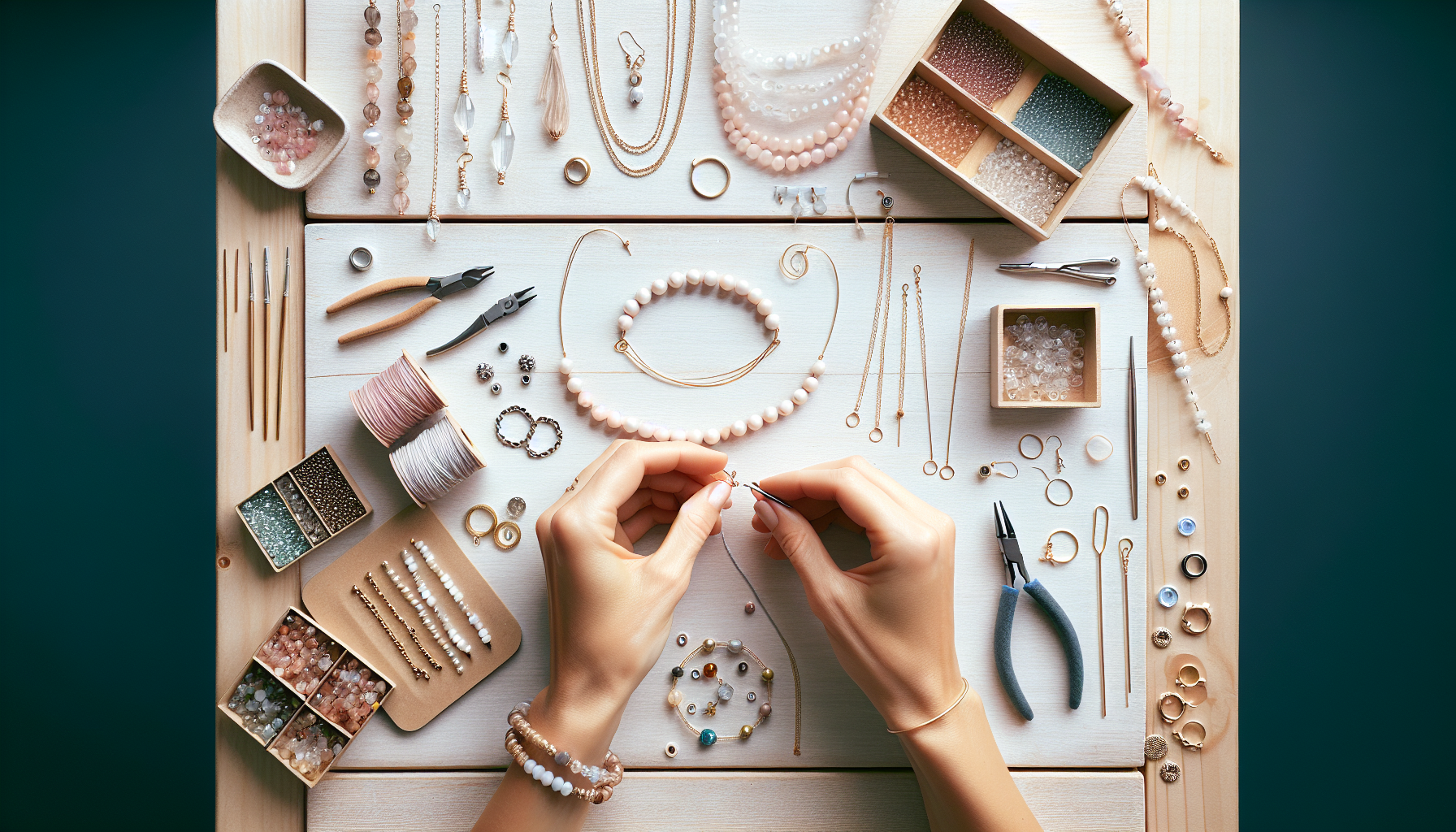
Starting with jewellery making doesn't have to be expensive, complicated, or time-consuming. With the right basic knowledge, you can quickly create your own bracelets, necklaces, earrings, rings, and anklets that feel both personal and professionally made. Here, we guide you step by step, focusing on easily accessible materials and tools you can easily find at Hilmaspyssel.se.
What is jewellery making – and what jewellery can you make?
Jewellery making simply involves combining beads, chains, clasps, and jewellery components into finished pieces of jewellery. As a beginner, it's smart to start with:
-
Elastic bracelets – the fastest way to a finished piece of jewellery
-
Simple necklaces – string beads on wire or use a ready-made chain with a nice pendant
-
Basic earrings – ear hooks + a pair of beads on pins go a long way
-
Anklets – like a bracelet, but a bit longer and usually on a chain or elastic cord
A common beginner's mistake is to choose overly advanced projects right away. Instead, start with small, manageable projects where you learn basics like knots, length, and balance. At Hilmaspyssel.se, there are specially designed beginner-friendly categories with elastic cord, ready-made clasps, and mixed bead packs that make starting easy.
Choose the right difficulty level and build confidence
To avoid frustration, it's good to think in levels:
-
Level 1 – Quick projects: elastic bracelets, simple earrings, necklaces with ready-made pendants
-
Level 2 – A bit more intricate: bracelets with wire and clasps, layered necklaces, multi-part earrings
-
Level 3 – More advanced: braided bracelets, macramé, wire wrapping, sets of matching jewellery
A good approach is to set a small goal: make three simple bracelets before moving on to more technical projects. This way, you'll have time to get a feel for what materials you like, how long things take, and what suits your style. Feel free to use Hilmaspyssel.se as a "base layer" – create a small standard order with elastic cord, a few bead mixes, ear hooks, and clasps, and you'll have everything you need for your first 5–10 pieces of jewellery without having to run to stores between each idea.
Why choose Hilmaspyssel.se for your jewellery making supplies?
When you start or want to develop your jewellery making, the choice of store is almost as important as the choice of beads. A specialized online store like Hilmaspyssel.se makes a big difference: you'll find everything you need for bracelets, necklaces, earrings, and more – all in one place, specifically adapted for jewellery makers. This saves both time, money, and frustration compared to searching around in general craft stores.
What distinguishes Hilmaspyssel.se as an online jewellery store?
Hilmaspyssel.se focuses on hobby materials and jewellery components with an assortment structured according to how you actually create jewellery:
-
Broad and well-thought-out assortment: beads, chains, clasps, wire, threads, tools, and ready-made kits – all adapted for jewellery making.
-
Affordable packaging: suitable sizes for both beginners and small business owners, so you don't have to buy industrial quantities.
-
Fast delivery within Sweden: perfect when you want to get started immediately with a new project or restock popular favorites.
-
Personal customer service: possibility to get advice on material selection, compatible parts, and what suits your project.
Many top articles mention the importance of clear product descriptions. Here, Hilmaspyssel.se is ahead with information on sizes, materials, nickel-free status, and areas of use – something that reduces incorrect purchases and makes it easier to plan your designs.
How to quickly find the right materials at Hilmaspyssel.se
A unique advantage is how easy it is to filter and sort among the products. Use the search function together with categories like "beads," "jewellery components," or "tools," and then filter by color, material, or size. This allows you to quickly build a well-thought-out material base that matches your style. Combine this with the store's inspiring product images, and Hilmaspyssel.se becomes not just a store – but also a source of ideas for your next jewellery project.
Choosing the right materials – beads, gemstones, metal and more
Choosing the right materials is the heart of all jewellery making. The material not only determines how your jewellery looks, but also how it feels on the skin, how long it lasts, and what price you can charge if you sell it. At Hilmaspyssel.se, you'll find everything from simple plastic beads to sparkling crystals and robust metals – but how do you know what to choose for your specific project?
Beads and stones – how to choose the right basic material
-
Glass beads: Provide weight and an "authentic" feel, perfect for elegant bracelets and necklaces.
-
Wood beads and natural beads: Lightweight, warm, and ideal for boho, children's, and summery jewellery.
-
Acrylic beads and plastic beads: Affordable, lightweight, and durable – great for beginners and children's jewellery.
-
Semi-precious stones and crystals: For those who want to create more exclusive, energizing, or "healing"-inspired jewellery.
-
Seed beads (rococo beads): Small beads suitable for woven bracelets, embroidery, and detailed patterns.
A smart way to start is to combine a "hero material" (e.g., a beautiful semi-precious stone) with simpler complementary beads. At Hilmaspyssel.se, you can filter by material, color, and size to quickly build a harmonious mix that suits your project and your budget.
Metals, allergy-friendliness, and adaptation for the target group
The choice of metal is crucial for both durability and sensitive skin. In short:
-
Stainless steel / surgical steel: Very durable, often nickel-safe, and perfect for everyday jewellery and sensitive skin.
-
Sterling silver: Real silver with a luxurious feel, can tarnish over time but can be polished up again.
-
Brass and plated metals: Provide an exclusive look at a lower price, but require more careful handling.
If you make jewellery for children or people with sensitive skin, it's wise to prioritize nickel-free and allergy-friendly options. Hilmaspyssel.se is careful with product descriptions that specify material, plating, and any allergy aspects, making it easier for you to choose correctly for your target group – whether it's playful children's jewellery, durable everyday jewellery, or festive statement pieces.
Basic tools for jewellery making – your smart starter kit list
To succeed with jewellery making, beautiful beads and pretty chains are not enough – you also need the right tools. With a well-thought-out jewellery making starter kit, the work becomes both more fun, faster, and more professional. Here we go through the basic tools you actually need, and how you can build an affordable kit with products from Hilmaspyssel.se without buying unnecessary items.
The basic tools every jewellery maker should have
-
Round nose pliers: For making neat loops on pins and wire, perfect for earrings and pendants.
-
Flat nose pliers/chain nose pliers: For holding small parts, closing jump rings, and gently flattening crimp beads.
-
Wire cutters: For cutting wire, pins, and chains without crushing them or making them jagged.
-
Scissors and tape measure/ruler: For ribbon, thread, and for accurately measuring wrist and necklace lengths.
-
Crimping pliers (for crimp beads): Provides neat and secure finishes on wire, much more stable than with regular pliers.
-
Bead board or bead mat: Helps you plan length, symmetry, and patterns before actually stringing everything.
At Hilmaspyssel.se, you will find both ready-made tool kits and individual pliers, making it easy to upgrade gradually as you discover which techniques you like best.
Storage, care, and how to avoid mistakes
Store your tools dry and protected – preferably in a tool bag, box, or roll so that the pliers don't bump against each other and become crooked. Don't put pliers in the same compartment as sharp scissors or wire cutters; this can make the jaws uneven and leave unsightly marks on the metal when you're working.
An additional tip that many guides miss is to have separate pliers for harder metals (like stainless steel) and for softer, plated parts – this will extend the lifespan of your tools and reduce the risk of scratches on delicate jewellery components. With a small but high-quality starter kit from Hilmaspyssel.se, you can create a multitude of jewellery before even needing to think about your next upgrade.
Jewellery components you need to know – clasps, jump rings, spacers & co.
For your jewellery to feel both secure and professional, beautiful beads alone are not enough – it's the jewellery components that make the finished result stable and wearable. At Hilmaspyssel.se, you'll find a wide selection of clasps, jump rings, spacers, and earring findings, but it can be difficult to know what everything is called and what suits which project. This section guides you through the most important components so you can choose correctly from the start.
Important jewellery components and what they are used for
-
Clasps (lobster clasp, magnetic clasp, toggle clasp): Used to close bracelets and necklaces. Lobster clasps are the classic, magnetic clasps are extra convenient, while toggle clasps often become a decorative detail in themselves.
-
Jump rings and split rings: Connect clasps to chains or wire, attach pendants and charms. A correctly closed jump ring is crucial for durability.
-
Ear hooks, pins, and hoops: The base for making your own earrings. Headpins and eye pins make it easy to create hanging decorations.
-
Crimp beads, wire guardians, and end caps: Used to secure wire, finish cords, and create neat, secure finishes on jewellery.
-
Spacers and dividers: Small, often metallic parts that create rhythm, air, and structure between beads.
By combining the right type of clasps, rings, and finishes, you get jewellery that withstands everyday wear and feels well-crafted – something many beginner guides mention but rarely explain practically.
How to choose the right jewellery components for your project
Always consider who will wear the jewellery and how it will be used. For children's jewellery, for example, magnetic clasps and sturdy jump rings are a safe solution, while a thin, elegant necklace often benefits from a discreet lobster clasp and small spacers. At Hilmaspyssel.se, you can filter by color, metal type, and function – a smart way to quickly find suitable clasp kits, ear hooks, or end caps without missing important components. Once you learn the names of the different jewellery components, it also becomes much easier to both search for and order exactly what you need for your next jewellery project.
Material choice by style – boho, minimalist, elegant or playfully childish
Your material choices determine whether a piece of jewellery feels bohemian, stylish, luxurious or playful. By starting with a clear style already when adding items to your shopping cart on Hilmaspyssel.se, it becomes much easier to create jewellery that "ties together" – both for your own wardrobe and if you plan to sell your jewellery.
Match materials with desired jewellery style
-
Boho & bohemian: natural beads, wooden beads, shells, leather cords, waxed cotton, macramé cords, antique gold- and bronze-coloured details.
-
Minimalist & Scandinavian: thin steel or silver chains, small seed beads, few but well-thought-out spacers, geometric charms.
-
Elegant & party: glass beads, crystals, rhinestones, faceted semi-precious stones, gold- or silver-look chains, sparkling ear hooks.
-
Playfully childish: plastic beads, Heishi beads, letter beads, shape beads (hearts, stars, animals), strong colours and rainbow mixes.
On Hilmaspyssel.se, you can easily filter by material, colour and metal type. A smart working method is to create small "style sets" in your shopping cart: a set of beads, clasps and spacers for each style you want to try. This way, you avoid disparate purchases and get more useful combinations.
Create a common thread in your collections
Once you've found a style you like, try to stick to a few recurring elements:
-
Recurring metal colour (e.g. always silver-coloured or always rose gold)
-
Signature beads – perhaps matte natural stone, wood or a specific colour palette
-
Recurring shape – e.g. always a small charm at the bottom of necklaces or bracelets
This makes your jewellery recognizable, even if you vary the models. An extra tip that is rarely mentioned in other guides is to think in "capsules": create 5–10 pieces of jewellery that work together in terms of colour and style, much like a capsule wardrobe. Use the wishlist on Hilmaspyssel.se to save different capsules – a boho capsule, a party capsule, a children's collection – and order when you are ready to produce. This way, you build up a personal style in a structured way instead of just beading by feel.
Bracelet techniques – from elastic bands to braided designs
Bracelets are often the first thing many people try when they start jewellery making, and with the right technique, the result is both stylish and durable. Here we go through the most common methods – from simple elastic bracelets to more advanced braiding – and how you can use materials from Hilmaspyssel.se for each style and difficulty level.
Elastic bracelets – the fastest way to a finished piece of jewellery
-
Elastic cord: Choose the right thickness in relation to the beads' hole size (usually 0.5–0.8 mm). Cords that are too thin will fray, cords that are too thick will be difficult to thread through.
-
Strong knot: Use, for example, a surgeon's knot/double knot and stretch the cord slightly before tying to avoid gaps between the beads.
-
Hide the knot: Thread the knot into a slightly larger bead or use a knot cover and secure with a small drop of jewellery glue.
A smart way to start is to choose a ready-made mixed pack of beads from Hilmaspyssel.se and make several simple bracelets in the same colour scheme. This builds both technique and a sense of design without you having to plan everything in detail.
Wire, clasps and braided designs – when you want to take the next step
When you want to create more exclusive and durable bracelets, jewellery wire and clasps are the next natural step:
-
Bracelets on wire: Use wire, crimp beads and crimp bead covers for a professional finish. Thread the beads, attach the clasp with crimp beads and always do a light pull test before finishing.
-
Braided bracelets: With waxed thread, suede cord or leather straps, you can make macramé, classic braids or trendy "wrap bracelets". Here, adjustable knots are perfect for fitting several wrists.
-
Wrist measurement: Measure tightly around the wrist and add approx. 1–1.5 cm for a comfortable bracelet. For thick beads, you may need to add a little extra length.
By combining elastic models, wire bracelets and braided variants, you can build small collections with the same colour theme but different expressions – perfect both for personal use and for those who want to start selling their jewellery. Hilmaspyssel.se has everything from wire and clasp components to threads and cords, so you can experiment freely and find your favourite techniques.
Jewellery making of necklaces – layering, lengths and balance
Necklaces are often the focal point of a jewellery look – this is where your style truly shows. When planning a necklace, it's all about length, balance, and proportions. With the right combination of chain, beads, and spacers, you can create everything from simple everyday jewellery to statement necklaces for parties. At Hilmaspyssel.se, you'll find both ready-made chains and loose components that make it easy to build exactly the design you dream of.
Choose the right length and create balance in the design
Start by deciding what feel you want before choosing the length:
-
Choker (35–40 cm): Sits close to the neck, perfect for trendy beaded necklaces and chains.
-
Princess (approx. 45 cm): The most versatile length, suits almost all necklines.
-
Matinee (55–65 cm): Looks good over a simple sweater or blouse, creates more of a "statement."
-
Opera (70+ cm): Can be worn single or double-wrapped, ideal for long strands of beads.
Consider the weight: heavy glass beads or natural stones should not be placed too high up on the necklace. Use spacers, small beads, and chain sections to lighten the design and create rhythm. At Hilmaspyssel.se, you can combine semi-precious stones with thin metal chain to achieve a professional balance between weight and airiness in your jewelry.
Layering – how to create a harmonious necklace look
Layering is a big trend often mentioned in top-rated guides, but few explain how to actually make it work in everyday life. A clever approach is to plan three levels:
-
Short base: A simple chain necklace or thin choker worn closest to the neck.
-
Medium-length focal point: A necklace with a prominent pendant detail or bead section (45–50 cm).
-
Long frame: A thinner, longer necklace that "frames" the others (60–70+ cm).
Stick to one color scheme (e.g., gold + white + an accent color) to avoid a cluttered look. Feel free to use extension chains from Hilmaspyssel.se to fine-tune the lengths so that the necklaces don't clash. An extra pro tip is to create a necklace set directly: design several matching necklaces in the same style so the customer – or you – can easily mix and match them according to outfit and occasion.
Make your own earrings – hooks, posts, and creative charms
Earrings are one of the most rewarding jewelry items to start with – small projects that quickly yield visible results. With the right ear hooks, posts, chains, and charms from Hilmaspyssel.se, you can create everything from discreet everyday earrings to large statement pieces. In this section, we'll cover the basics, show common variations, and provide practical tips often missing from simpler online guides.
Types of earrings and essential base components
-
Ear hooks: Classics for dangle earrings. Available in various shapes, colors, and metals. Choose nickel-free or surgical steel for sensitive ears.
-
Hoops and rings: Perfect for charms, small beads, or wire-wrapped details. Creates a more trendy, sleek look.
-
Pins (headpins and eyepins): The foundation for many pendants. Headpins are used when you want a "stopper" below the bead, eyepins when you want to link several parts.
-
Clips and screw-back earrings: Good alternatives for children or adults without pierced ears – a segment many overlook but which can become your niche.
When you combine these components with beads, crystals, or charms from Hilmaspyssel.se, you quickly achieve a professional finish. Remember balance: a heavy charm requires a sturdy hook or hoop to be comfortable all day.
How to build beautiful and secure earrings
Start with simple dangle earrings: thread a bead onto a headpin, create a clean, round loop with round-nose pliers, and attach it to an ear hook. Add a small piece of chain, a tassel, or a small charm for more movement and personality. Always remember to open and close jump rings sideways – otherwise, you weaken the metal and increase the risk of the charm detaching.
If you sell your jewelry, clear material information is crucial. For example, state "stainless steel ear hooks, nickel-free" in the product description and save links to the exact items you purchase on Hilmaspyssel.se. This builds trust, reduces complaints, and makes it easy to recreate popular designs for new orders.
Personalized jewelry – name bracelets, letter beads, and message jewelry
Personalized jewelry is one of the strongest trends in jewelry making right now – and Hilmaspyssel.se is a goldmine here. By combining letter beads, birthstones, charms, and simple base components, you can create unique name bracelets, message bracelets, and memorial jewelry that truly mean something to the wearer.
How to build a personalized piece of jewelry from scratch
- Choose the basic type of jewelry: bracelet, necklace, anklet, or keychain – bracelets are the easiest to start with.
- Determine the message: names, initials, important dates, coordinates, or short mantras (e.g., "COURAGE," "MOM," "BFF").
- Select the right components from Hilmaspyssel.se:
- Letter beads in plastic or acrylic for children's and friendship bracelets
- Metal blanks and charms for more elegant adult jewelry
- Birthstone-like beads for extra symbolism
-
Balance the design: alternate letter beads with neutral glass beads, seed beads, or metal spacers so the jewelry feels thoughtful rather than cluttered.
Also, consider practical details like elastic thread for children's bracelets and sturdy clasps for everyday adult jewelry. On the product pages at Hilmaspyssel.se, you can filter by size, color, and material to ensure everything matches both aesthetically and functionally.
Gift ideas and memorable projects
Personalized jewelry makes perfect gifts with sentiment. Some appreciated ideas:
- Friendship bracelets with your initials or an inside joke
- Christening and naming gifts with the child's name and birthdate
- Student and graduation jewelry in school colors with the year
-
Mom and grandma jewelry with grandchildren's initials on separate lines or charms
By documenting your favorite combinations – for example, which letter beads work best with which metals – you quickly build your own "recipe bank" of reliable choices. This makes it easier to create collections if you later want to start selling your personalized jewelry, while also maximizing the large assortment at Hilmaspyssel.se.
Color theory and design principles for harmonious jewelry
The colors you choose can make the difference between jewelry that feels "homemade" and jewelry that looks professional and well-thought-out. By using simple color theory and some basic design principles, you can create jewelry that feels balanced, marketable, and personal – whether you're buying beads and jewelry components from Hilmaspyssel.se as a beginner or a more experienced jewelry designer.
How to use the color wheel when choosing beads
-
Complementary colors (e.g., blue–orange, purple–yellow) create clear contrast and work well in statement jewelry and children's bracelets.
-
Tone-on-tone (different shades of the same color, e.g., light pink–dark pink) gives a soft, subdued look that often feels exclusive.
-
Accent colors: build the jewelry in neutral tones (white, beige, black, metal) and add a strong accent (e.g., turquoise or coral) for a modern look.
-
Warm vs. cool colors: warm colors (red, orange, gold) feel vibrant, cool colors (blue, green, silver) feel calm and elegant – combine them consciously based on the feeling you want to create.
A practical approach is to choose a main color for the beads at Hilmaspyssel.se, add them to your cart, and then add 1–2 complementary colors via related products or color filters to find a harmonious palette.
Design principles: balance, repetition, and rhythm
In addition to color, jewelry needs to have balance in shape and size. Some simple guidelines:
-
Repetition: repeat the same type of bead or spacer at regular intervals for a calm, professional impression.
-
Rhythm: alternate large and small beads in a specific pattern (e.g., 1 large + 3 small) to create movement without the jewelry feeling cluttered.
-
Focal point: let the largest bead or most eye-catching charm be the "main character" and keep the rest more subdued.
When designing, lay out beads and components from Hilmaspyssel.se on a bead board before stringing. This way, you can immediately see if colors, shapes, and metals harmonize. Photograph your favorite combinations and create your own color and design library – it saves time, strengthens your style, and makes it easier to build recognizable collections that customers love.
Sustainable and conscious jewelry making
Sustainable jewelry making involves both choosing the right materials from the start and caring for the jewelry you create so it lasts a long time. More and more Swedish hobbyists are demanding sustainable choices, and here you can make a big difference through conscious decisions when buying jewelry materials at Hilmaspyssel.se.
Choose materials that last – and can be loved for a long time
-
Stainless steel & surgical steel: Very durable, color holds up well, and is often nickel-safe – perfect for everyday jewelry and sensitive skin.
-
Sterling silver and high-quality brass: Can be polished and repaired if needed, good for jewelry you want to keep for a long time or resell.
-
Quality wire, sturdy clasps, and strong jump rings: Ensures long lifespan, reduces the risk of the jewelry breaking with normal use.
-
Timeless beads and gemstones: Glass, semi-precious stone, and natural beads age gracefully and work in many different styles over time.
When you choose slightly better basic materials, you don't need to produce as many "replacement pieces." This saves both money and the environment – and makes your jewelry more attractive if you resell it.
Recycling, care, and eco-friendly choices
Sustainable jewelry making is also about how you use what you already have. Go through old necklaces and bracelets, cut them apart, and combine your favorite beads with new jewelry components from Hilmaspyssel.se. Old buttons, denim details, or vintage chains can become unique eye-catchers in new jewelry.
To extend the lifespan of your creations:
-
Store jewelry dry and separately (e.g., in small bags or boxes).
-
Avoid perfume, hairspray, and water on plated jewelry and rhinestones.
-
Inform customers/recipients about how to care for the jewelry, ideally with a small enclosed note.
Are you planning to sell a lot or send many packages? Choose recyclable bags, boxes, and filling materials. Small fabric pouches or paper boxes around the jewelry provide both a more luxurious feel and can be reused – a simple, yet powerful, sustainability effort appreciated by conscious buyers.
Organization and storage of your jewelry components
One of the biggest differences between stressful and enjoyable jewelry making is how well you've organized your beads and jewelry components. Top-rated guides often emphasize material selection and technique – but surprisingly focus little on structured jewelry material storage, despite its direct impact on both creativity and productivity. Therefore, we will delve deeper here and show you how to build a system that suits you, with products that can easily be supplemented from Hilmaspyssel.se.
How to create a structure that suits your brain
There's no "one size fits all" when it comes to organizing. Test which logic feels most natural to you:
-
Sort by color: Perfect if you design based on color themes. Use bead organizers with compartments where each color has its place.
-
Sort by material type: One box for metal components, one for glass beads, one for natural materials, etc. – reduces searching for the "right category."
-
Sort by project/collection: Place everything belonging to a collection in the same box or zip bag, including sketches and samples.
-
Labeling with tags: Write down size, color code, item number from Hilmaspyssel.se – saves a lot of time when reordering.
When building your structure, consider which parts you use daily. These should be most accessible, while less frequently used components can be placed further back on the shelf.
Storage solutions that protect and inspire
Good storage is not just about order – it also protects your materials and makes them inspiring to use. Feel free to combine:
-
Small boxes and bead organizers with movable compartments for beads of various sizes.
-
Zip bags for loose chains, color-sorted mixes, and ongoing projects.
-
Magnetic plates or pincushions for pins, needles, and small tools that easily get lost.
-
Drawer inserts in a dresser or cart, so you can quickly see your entire assortment from above.
A well-thought-out system reduces waste, makes it easier to keep track of inventory if you sell jewelry, and gives you a creative "studio feel" even if you only have a small desk. Start simply, fine-tune as you go – and let your organized craft corner become as much a source of inspiration as the beads themselves.
Common mistakes in jewelry making – and how to avoid them
Even the most careful crafter makes mistakes – but many problems in jewelry making can actually be prevented. By knowing the most common pitfalls, you save time, materials, and frustrated customers. Here, we review typical mistakes highlighted in top-rated guides, and supplement with extra tips adapted for the material selection at Hilmaspyssel.se.
Typical technical errors – thread, knots, and jump rings
-
Wrong thickness of thread or wire: Too thick thread breaks beads, too thin makes the jewelry fragile. Always start with the hole size in the beads and use the product descriptions on Hilmaspyssel.se as a guide.
-
Loose or insecure knots: Especially on elastic bracelets. Use a double/triple knot, pull tightly, and secure with a drop of jewelry glue.
-
Improperly opened jump rings: "Pulling apart" the ring sideways weakens it. Instead, twist the opening back and forth with two pliers to maintain the ring's strength.
-
Too weak clasps and components: Cheap or too small clasps can come undone or break. It's better to choose a stronger clasp and quality components for everyday jewelry.
By practicing on a few test pieces – a test bracelet or a test chain – you can quickly see how thread, wire, and clasps behave before making your "real" piece of jewelry.
Design-related mistakes – balance, length, and overall impression
Another common problem is that the jewelry feels "wrong" despite correct technique. Often, it's about design balance:
-
Too heavy in front, too light in back: A necklace with many beads in the front but only a thin chain in the back can twist. Distribute the weight better or use a heavier chain/components behind the neck.
-
Overloaded jewelry without a clear focus: Too many colors, shapes, and textures at once mean the eye doesn't know where to land. Choose one main color/one main type of bead and complement with 1–2 accent details.
-
Incorrect length: Bracelets that are too tight or necklaces that end up in the middle of the neckline. Always measure wrist/neck and make a trial measurement on a bead board or with a tape measure before attaching the clasp.
Create a simple checklist before the final step: tug test, length check, edge check (no sharp threads or open rings), and a quick look in the mirror to assess proportions. With well-thought-out material choices and quality components from Hilmaspyssel.se, you reduce the risk of both technical mistakes and design problems – and your jewelry will last longer, look more professional, and feel more comfortable to wear.
From hobby to sales – building a small jewelry brand
Do you dream of taking your jewelry making from the kitchen table to paying customers? Many creatives in Sweden are now taking the step from hobby to small-scale business, thanks to simple e-commerce solutions and social media. With thoughtful design, the right materials from Hilmaspyssel.se, and a clear plan, even your hobby project can grow into a small jewelry brand – without losing the joy of creation.
Test your designs and build your brand gradually
- Start small and gather feedback: Let friends, colleagues, and family try your jewelry, ask for honest opinions on fit, durability, and style.
- Use social media smartly: Post pictures on Instagram, TikTok, or Facebook, test different styles, and see what gets the most response.
- Create a clear signature style: Choose recurring colors, materials, or themes (e.g., boho with natural stones from Hilmaspyssel.se) so your jewelry is immediately recognizable.
-
Develop a simple "collection": Instead of single pieces – offer matching sets of bracelets, necklaces, and earrings in the same style.
By thinking like a brand from the beginning – even if you only sell a few pieces of jewelry – you build a stable foundation for future sales, both online and at markets.
Pricing, quality, and customer experience
- Calculate the price realistically: Include material costs (easier with clear product prices from Hilmaspyssel.se), time per piece, packaging, and a reasonable markup.
- Sell on quality, not just price: Highlight that you use nickel-free components, durable chains, and carefully selected beads – this justifies a higher price and leads to fewer complaints.
- Build long-term customer satisfaction:
- Include care instructions.
- Offer simple repairs or adjustments.
- Use nice but simple gift packaging.
When you combine professionally made jewelry with thoughtful service, every customer becomes a potential repeat ambassador for your jewelry brand – and Hilmaspyssel.se becomes your reliable partner for all the materials you need along the way.
Inspiration and free resources – how to continue developing
Starting with jewelry making is one thing – continuing to develop and find new inspiration is another. Here, the right resources are invaluable. By combining free online inspiration with clear material categories on Hilmaspyssel.se, you can continuously take your jewelry to the next level, whether you are a beginner or already selling your creations.
Where do you find inspiration for new jewelry?
- Pinterest & Instagram: Search for terms like “diy jewelry”, “beaded bracelets” or “boho necklace” and save ideas in your own folders.
- YouTube guides: Perfect for learning new knotting techniques, macrame, or how to work with wire step-by-step.
- Swedish craft groups: Facebook groups and forums where you can ask questions, get feedback, and show off your creations.
-
Hilmaspyssel.se: Get ideas directly from product images, ready-made kits, news, and any blog posts/newsletters.
Feel free to combine a saved inspiration image with a "material hunt" on Hilmaspyssel.se: what beads, chains, and clasps would you need to create something similar – but in your own style?
Mini-challenges and your own idea archive
To avoid getting stuck in the same type of design, you can give yourself small creative challenges:
- “Three-color challenge”: Choose only three colors of beads for an entire jewelry set.
- “One technique at a time”: Focus one week on e.g. macrame, wire wrapping, or earrings.
-
“One piece of jewelry a day”: Make something small every day for seven days – bracelets, simple studs, anklets, etc.
Document everything by taking photos of your jewelry, saving sketches, and writing short notes about materials and lessons learned. This way, you build your own idea archive that you can return to when creativity feels low – and you clearly see how much your jewelry making has developed over time.
Frequently Asked Questions (FAQ)
Q: What material is best to start with if I'm completely new to jewelry making?
A: For beginners, elastic cord + acrylic or glass beads is a perfect starter kit. It requires few tools, gives quick results, and you quickly learn how length, color, and shape interact. On Hilmaspyssel.se, you'll find ready-made categories with beginner-friendly beads, elastic cords, and clasp kits, so you don't have to worry about whether the parts fit together. When you feel confident, you can move on to wire, crimp beads, and chains for more durable and advanced jewelry.
Q: How do I prevent jewelry from losing color or becoming discolored?
A: Primarily choose stainless steel, sterling silver, or high-quality platings if you want to minimize discoloration. Always remove jewelry when showering, exercising, cleaning, and when using perfume or hairspray. Store them in a dry place, preferably in small zip bags or boxes. On Hilmaspyssel.se, material types are clearly stated in the product descriptions, so you can make more durable and conscious choices from the start.
Q: I have sensitive skin – which jewelry components should I choose?
A: Opt for nickel-free and hypoallergenic options, such as surgical steel, stainless steel, or sterling silver. Avoid cheap, unclearly marked metals. In many cases, it's earring hooks and posts that cause irritation, so it's better to replace them with safe variants. Hilmaspyssel.se has special categories and clear material descriptions that make it easier to find the right components for sensitive skin.
Q: How do I know what price to charge when I start selling my jewelry?
A: Always start with a simple but clear calculation:
-
Material cost (everything: cord, beads, clasps, packaging)
-
Time (hourly wage you are happy with, divided per piece of jewelry)
-
Markup for tax, fees, sorting, development
Sum this up and compare with similar designers on the market. Avoid pricing too low – it's difficult to raise prices afterward without losing customers. Quality materials from Hilmaspyssel.se also make it easier to justify a higher but fair price.
Q: What do I do if my elastic bracelet keeps breaking?
A: This is usually due to incorrect thread thickness, an incorrect knot, or overly stressed bead holes. Choose elastic cord that fills the bead hole well, stretch the cord slightly before tying, and use a secure knot (e.g., surgeon's knot or double knot) secured with a drop of glue. Hide the knot in a larger bead or a crimp cover. On Hilmaspyssel.se, you'll find both the right type of elastic cord and accessories that make the bracelet more durable.
Q: How do I find inspiration when I'm stuck in my creativity?
A: Try setting small, playful challenges for yourself: make a piece of jewelry in only three colors, create a mini-collection with the same metal color, or be inspired by a season. Combine this with saving your favorite images on Pinterest and following Swedish craft accounts on Instagram. Hilmaspyssel.se often offers ideas via newsletters, social media, and product images – use them as a starting point and then put your own stamp on the design.
Create your own favorite jewelry – now it's your turn
You have now received a complete guide to jewelry making – from the first elastic bracelet to well-thought-out collections, sustainable material choices, and tips for those who want to start selling their own designed jewelry. We have covered how to choose the right beads, metals, and jewelry components, which tools are actually needed, how to avoid common mistakes, and how color theory and design principles make your jewelry more harmonious and professional. All based on the wide range at Hilmaspyssel.se.
The next step is simple: start small, choose a project from the guide, and put together a starter kit with cord, clasps, beads, and tools from Hilmaspyssel.se. Try a new technique, document your favorite combinations, and gradually build your own style – whether the goal is personal gifts, everyday jewelry, or your own jewelry brand. Visit Hilmaspyssel.se, let the categories inspire you, and start your next jewelry project today. Your creativity is the most important ingredient – the rest you'll find online.