


Jewellery Accessories from Hilmaspyssel.se – Your Complete Guide to Making Your Own Jewellery
Do you want to start making your own jewellery, but feel unsure about what jewellery accessories you actually need? Or have you been crafting for a while and are tired of clasps breaking, earrings irritating your skin, and chains losing their colour? Then this guide, focusing on the range at Hilmaspyssel.se, is for you.
In this article, we'll go step-by-step through everything from basic jewellery components and smart material choices to techniques, design, and trendy details. You'll get practical tips, examples, and professional tricks to help you create durable, stylish, and personalised jewellery – without wasting time or money on the wrong products. The goal is to make it easy, inspiring, and reliable to build your own home jewellery studio with the right accessories from the start.
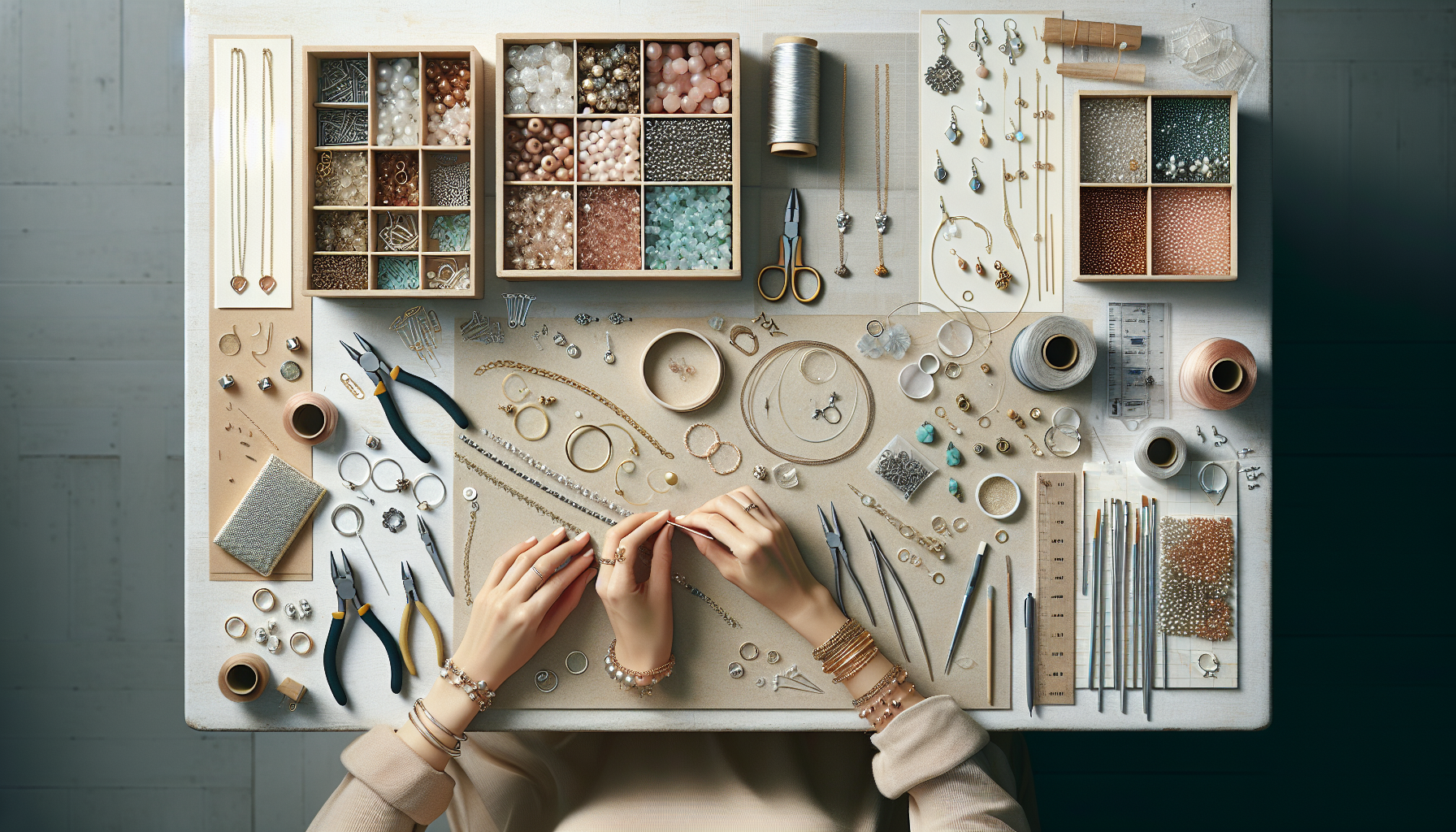
To succeed when you want to make your own jewellery, beautiful beads aren't enough – it's the jewellery accessories that hold everything in place, provide the right fit, and ensure the jewellery lasts. At Hilmaspyssel.se, you'll find a wide range of these small, yet crucial, components that transform an idea into a finished piece of jewellery you can actually wear day after day.
What is considered a jewellery accessory?
When we talk about jewellery accessories, we mean all the components that connect and complete your jewellery:
- Clasps – for example, lobster clasps, magnetic clasps, and toggle clasps for necklaces and bracelets
- Chains and wire – the base on which beads and pendants are strung
- Jump rings – connect parts securely
- Ear hooks, studs, and hoop bases – the foundation of earrings
- Spacers and decorative elements – spacers, caps, connectors that provide shape and structure
- Crimp beads and finishes – provide a neat and durable end to wire and thread
-
Tools – round nose pliers, flat nose pliers, wire cutters, and sometimes glue to ensure a professional finish
Many people confuse jewellery materials (such as beads, crystals, gemstones) with jewellery accessories. A simple way to distinguish them is: the material is the "decoration," the accessories are the "construction." Without the right accessories, the jewellery risks breaking, becoming uncomfortable, or looking messy.
Why basic components are your best starting point
As a beginner, it's wise to start with a small selection of well-chosen basic components instead of buying "a little bit of everything." At Hilmaspyssel.se, you can easily explore categories like clasps, chains, earrings, and tools to build up a basic stock. This way, you can create necklaces, bracelets, and earrings without having to order new items for each project. Once you've got these basics down, the rest of your jewellery making will be more fun, more affordable, and much more durable – literally.
Material Guide – Choose the Right Jewellery Accessories in Metal, Plastic, Glass, and Gemstone
The choice of material is one of the most important decisions when creating your own jewellery. It affects everything – from how the jewellery feels against the skin to how long it maintains its appearance. At Hilmaspyssel.se, you'll find a wide range of jewellery accessories in various metals, plastics, glass, and gemstones, and by understanding the differences, it becomes much easier to choose correctly from the start.
Metals – from budget to exclusive
Different metals have different properties, and this is clearly reflected in both price and quality:
-
Stainless steel & surgical steel: Very durable, colour-stable, and often good for sensitive skin. Perfect for everyday jewellery that needs to withstand showers and wear.
-
Sterling silver: Real silver with a beautiful lustre. Can oxidise but is easily polished. A good choice for more exclusive jewellery and gifts.
-
Brass & zinc alloy: Common in decorative parts and inexpensive basic components. Offers many colour choices (gold, rose gold, antique silver), but may lose colour faster with heavy wear.
-
Nickel-free alternatives: Important for allergy sufferers – always read the product description carefully and prioritize clearly nickel-free jewellery accessories.
Consider how the jewellery will be used: a party necklace can have a more delicate finish, while a favourite bracelet should be made of more durable metals like stainless or surgical steel.
Beads in glass, plastic, and gemstone – the right material at the right time
Beads set the tone for the entire piece of jewellery, and here the material plays a big role:
-
Glass beads: Provide beautiful lustre and weight. Suitable for necklaces and bracelets where you want a more "authentic" feel without the price level of real gemstones.
-
Acrylic and plastic beads: Super lightweight, affordable, and perfect for children, larger statement jewellery, and trendy layers you might not want to spend a lot of money on.
-
Semi-precious stones & natural stone: Give an exclusive, natural look. Perfect for bracelets and necklaces where the stone takes centre stage.
-
Freshwater pearls: Classic and timeless feel – ideal for wedding jewellery, gifts, and more elegant collections.
At Hilmaspyssel.se, you can filter by material, colour, and shape, making it easy to compare alternatives. A smart approach is to combine, for example, semi-precious stones with simpler metal components in stainless steel to balance both budget and quality.
Material-safe jewellery for sensitive skin
If you or your customers have sensitive skin, the choice of material is extra important. Opt for surgical steel, stainless steel, sterling silver, or clearly nickel-free jewellery accessories. Look for product descriptions that mention "nickel-free," "lead-free," and "cadmium-free" and avoid vague descriptions. A concrete tip is to create your own "safe zone" in your jewellery box – a small collection of ear hooks, chains, and clasps in skin-friendly materials that you can always rely on. This way, you can design freely, yet be confident that the final result works for sensitive skin.
Essential Basic Components – Jewellery Accessories You Should Always Have on Hand
To be able to make your own jewellery without interruption, it's smart to build up a small "stock" of basic components. These are the very jewellery accessories that allow you to transform loose beads and chains into finished bracelets, necklaces, and earrings. At Hilmaspyssel.se, you'll find all the basic components gathered, making it easy to stock your home studio in a well-thought-out way.
Basic components you use in almost every project
Here are jewellery accessories that will almost always come in handy:
-
Jump rings: Connect chains, clasps, and pendants. Choose several sizes and thicknesses for different projects.
-
Clasps – lobster clasps, magnetic clasps, toggle clasps: Lobster clasps are the classic, magnetic clasps offer extra convenience, toggle clasps are particularly suitable for bracelets and heavier necklaces.
-
Ear hooks, studs, and hoop bases: The foundation for all earrings, from simple drops to large statement earrings.
-
Crimp beads and wire: Necessary for durable beaded necklaces and bracelets – wire supports the beads and crimp beads secure the ends.
-
Spacers, chains, and extender chains: Create rhythm, structure, and make jewellery adjustable in length.
By always having these components at home, you avoid getting "stuck" in the middle of a project. At Hilmaspyssel.se, you can also choose multi-packs and sets specifically adapted for jewellery accessories for beginners.
How to build a smart starter kit for jewellery making
A good starter kit for jewellery making should contain fewer types of items, but in well-chosen colours and metals, for example, all in stainless steel in silver or gold colour. Then you can combine freely without worrying about anything clashing in colour or style. Add a few different chains, basic ear hooks, a couple of clasp variations, wire, crimp beads, and a set of jump rings – then you're ready for a long series of projects. When you notice which parts you use most, you can easily supplement with more variations and more advanced components from Hilmaspyssel's range.
Technique & Tips – How to Use Jewellery Accessories Correctly
The technique behind your jewellery is just as important as the beads and chains you choose. With the right grip, the right tools, and a few simple professional tricks, your jewellery will last longer, be comfortable to wear, and look significantly more exclusive. Here, we go through the basic techniques that make the biggest difference – whether you're just starting to make your own jewellery or want to refine the details of your design.
Basic techniques you must master
-
Opening and closing jump rings correctly: Twist the ends of the ring past each other sideways instead of "pulling them apart." This way, it retains its shape and the clasp remains secure.
-
Using crimp beads and wire: Thread the wire through the clasp and crimp bead, back through the bead, gently crimp with flat nose pliers, and ideally finish with a crimp bead cover for a neat, professional finish.
-
Attaching different types of clasps: Lobster clasps and toggle clasps are often attached with jump rings, while magnetic clasps require extra care to ensure the rings and glue truly hold.<
-
Making simple earrings: With ear hooks, studs, and a few spacers, you can create both dangle earrings and stylish studs in minutes.
By practicing these steps on cheaper materials first, you'll then dare to work more confidently with your favourite beads. Hilmaspyssel.se has sorted categories with both wire, crimp beads, clasps, and ear hooks, making it easy to order exactly what you need to practice the techniques step by step.
Common mistakes – and professional tricks that elevate your jewellery
One of the most common mistakes is choosing too thin rings or too small jump rings for heavy pendants – the result is that the jewellery breaks with everyday use. Another is the wrong type of clasp: a small lobster clasp on a stiff bracelet can be difficult to fasten by yourself, while a toggle clasp is better suited for shorter necklaces than for very light, thin chains.
A simple way to give your jewellery a "goldsmith feel" is to:
-
Finish the extender chain with a small bead or charm
-
Double the wire in bracelets for extra durability
-
Add decorative spacers near the clasp so that even the back is beautiful
Feel free to combine these technique tips with ready-made kits and materials from Hilmaspyssel.se. When you build up a small toolbox with round nose pliers, flat nose pliers, wire cutters, and a good jewellery glue, crafting becomes faster, more fun, and more professional – every time you assemble new jewellery accessories for your next favourite piece.
Designing Your Own Jewellery – Combining Jewellery Accessories Creatively
Once you master the basics of jewellery accessories, the real fun begins: designing your own jewellery with a personal touch. Here, it's all about how you combine beads, chains, spacers, and clasps into a cohesive whole that reflects your unique style. With the wide range at Hilmaspyssel.se, you can create everything from delicate everyday jewellery to eye-catching statement pieces – without being a professional from the start.
How to think design: balance, colour and form
A well-thought-out piece of jewellery is based on balance between different jewellery accessories:
-
Boho style: Opt for tassels, natural stone, antique silver, charms, and irregular shapes. Mix chains with leather straps and macramé cord for a soft, vibrant expression.
-
Minimalist: Use fine chains, small jump rings, discreet studs, small geometric spacers. Stick to 1–2 metals and a limited colour palette for a stylish look.
-
Statement: Work with chunky link chains, large spacers, many layers of beads, heavy clasps, and colour contrasts for maximum impact.
Feel free to start with a "focus object" – for example, a larger gemstone, a symbolic pendant, or an interesting chain – and build the rest of the design around it. At Hilmaspyssel.se, you can easily find matching components in the same metal colour and style, making it easier to keep the design cohesive.
Create your own signature collection at home
If you want to take your crafting from hobby to "mini-brand," the secret is to work with recurring components. For example, choose:
-
A favourite metal (e.g., gold-plated brass or stainless steel)
-
A shape or symbol that often recurs (hearts, circles, stars, moon-shaped spacers)
-
A colour palette for beads (muted natural tones, pastels, or bright rainbow colours)
By consistently using these building blocks, it becomes clear that all the jewellery "belongs together," even if they are different models. A good tip is to order a little extra of your key components from Hilmaspyssel.se and build up a small "signature stock." Then you can quickly create matching bracelets, necklaces, and earrings when you get a new idea – and your jewellery will have a more professional overall impression than in many standard online guides.
Trend spotting – popular jewellery accessories right now
Trends in jewellery accessories move quickly, but some styles return season after season. For those who love to make their own jewellery, it's invaluable to know which components are hottest right now – and how you can use them in a way that still feels personal and timeless. At Hilmaspyssel.se, you'll find a range that reflects trends, but also helps you build a sustainable basic wardrobe of jewellery accessories.
Current trends in jewellery accessories
The most sought-after trends right now are:
-
Personal touches: letter beads, initial pendants, small symbolic pendants (stars, moons, hearts, zodiac signs).
-
Layering effect: thin chains, extender chains, and small jump rings that make it easy to wear multiple necklaces and bracelets simultaneously.
-
Colourful beaded bracelets: seed beads, Miyuki beads, and glass beads in rainbow colours, often mixed with metal components in gold or silver.
-
Minimalist earrings: geometric spacers, small rings, bars, and thin ear hooks for a clean, Nordic look.
Hilmaspyssel.se makes it easy to find trendy jewellery accessories through clear categories and filtering by colour, shape, and material, so you can quickly put together everything you need for your next trend project.
How to make trends last longer than one season
To prevent your jewellery from feeling "outdated" after a few months, the key is to combine trendy details with timeless basic pieces. For example, use:
-
Classic chains in stainless steel or sterling silver as a base, and add letter beads or pops of colour that can be swapped out.
-
Neutral metal colours (silver, gold, rose gold) together with strong bead colours – then you can easily update just the beads when the trend shifts.
-
Interchangeable pendants on ear hooks or hoops, so the same basic earring can be styled both trendy and minimalist.
In this way, you build up a small "toolbox" of trendy jewellery accessories that can be combined over and over again. This gives you more value for money, while allowing you to stay at the forefront of style – with the help of carefully selected components from Hilmaspyssel.se.
Smart Shopping & Organisation – How to Get Maximum Value at Hilmaspyssel.se
Buying jewellery accessories online can feel overwhelming – the selection is enormous and it's easy to miss important details like size, colour shade, and material. By using Hilmaspyssel.se smartly, you can save money, avoid bad purchases, and build up a well-thought-out stock of jewellery components that are actually used in your projects.
How to find the right jewellery accessories online
When you shop at Hilmaspyssel.se, the filters are your best friend. Always start with your project and filter your way through:
-
Filter by type: for example, choose clasps, ear hooks, chains, or beads first, so you don't have to scroll through irrelevant products
-
Filter by material: stainless steel, nickel-free, sterling silver, etc. is extra important if you sell jewellery or have sensitive skin
-
Filter by size and colour: check measurements carefully and compare with a tape measure or an existing piece of jewellery at home
-
Choose multi-packs and basic components: consumables like jump rings, wire, and crimp beads are almost always worth buying in larger packs
By planning 2–3 upcoming projects before ordering, you can coordinate your purchases: the same type of clasp, chain, or colour theme recurs, which leads to lower shipping costs and a more cohesive collection.
Structure your stock – from chaos to a creative jewellery studio
To truly enjoy your jewellery accessories, you need a smart system at home. Think like a small shop:
-
Sort by category: one box/bag for beads, one for clasps, one for ear hooks, one for tools, etc.
-
Divide by colour or metal tone: e.g., gold, silver, rose gold, antique silver – this speeds up the design process
-
Label everything clearly: small labels with size, material, and place of purchase (Hilmaspyssel) save time when reordering
-
Create a "personal catalog": photograph your favourite pieces and collect the images in a folder or digital mood board along with the item name
Visually seeing your own stock makes it easier to plan new jewelry, discover gaps (e.g., “I always run out of 5mm gold jump rings”), and place more accurate orders at Hilmaspyssel.se. The result is less waste, more completed ideas, and a more professional feel throughout your jewelry studio – even if it only fits in a drawer in your bookshelf.
Frequently Asked Questions about Jewelry Components
Q: Which jewelry components do I need as a complete beginner?
A: Start simple. To be able to make bracelets, necklaces, and earrings, the following will take you far: jump rings, lobster clasps or magnetic clasps, ear hooks, headpins/eyepins (for pendants and charms), crimp beads, jewelry wire or elastic cord, and a basic plier set. At Hilmaspyssel.se, you'll find ready-made beginner kits where many of these parts are already gathered, reducing the risk of accidentally buying the wrong dimensions at the start.
Q: Which material is best if I have sensitive skin or am prone to allergies?
A: Above all, choose surgical steel, good quality stainless steel, or sterling silver (925). These materials are often more hypoallergenic and stay looking good for a long time. Avoid cheap, unmarked zinc alloys near the skin. Always read the product description carefully and look for words like nickel-free, lead-free, and cadmium-free. Hilmaspyssel.se is clear in its product texts, which makes it easier to "material-proof" jewelry for both yourself and customers with sensitive skin.
Q: How do I know what size rings, chains, and wire to choose?
A: Think about function first. For thin, delicate jewelry, small rings (4–5 mm) and finer chains work well. For bolder necklaces and statement bracelets, larger and thicker rings are needed to support the weight. For wire, 0.38–0.45 mm is a flexible all-around size for most beads. A good tip is to start with a ready-made starter kit or a recommended combination from Hilmaspyssel.se – then you know the dimensions will fit together.
Q: How do I prevent my handmade jewelry from breaking?
A: The most common reasons are rings that are too thin, the wrong type of clasp, and careless finishes. Use round-nose and flat-nose pliers to open rings sideways (not pull them straight apart), make sure the crimp beads are properly crimped around the wire, and choose clasps that are appropriate for the weight of the jewelry. You get extra security with an extension chain and by finishing with an extra ring between the clasp and the chain, so that the pull is not directly on the clasp.
Q: How do I organize all the small jewelry components at home?
A: Invest in small sorting boxes, zip-lock bags, and clear labels with both size, color, and material. A pro tip is to create a simple "inventory list" in a notebook or spreadsheet where you jot down what you have at home and project ideas. This way, you can plan your purchases at Hilmaspyssel.se smarter, avoid duplicates, and quickly see which parts you need to replenish before they run out in the middle of a project.
Create Your Own Jewelry Studio – Next Steps with the Right Jewelry Components
You have now received a complete overview of jewelry components – from basic concepts and material choices to techniques, design ideas, trends, and smart organization. Together, these parts show how important the right components are for your jewelry to be durable, comfortable, and personal. By understanding the difference between various metals, beads, clasps, and base components, you can make informed choices that benefit both your creativity and your skin, while avoiding common beginner pitfalls.
Now it's time to put that knowledge into practice. Start with a small project: choose a simple bracelet, a pair of earrings, or a personalized necklace and gather everything you need at Hilmaspyssel.se. Use the guides in this article as a checklist, build up a small "starter kit," and organize your new components right away. In this way, your own jewelry studio will grow step by step – with well-thought-out jewelry components, a clear design idea, and an assortment that can expand with your creativity.