


Samos® par Puca® at Hilmaspyssel.se – inspiration, techniques, and buying tips
Are you looking for beads that elevate your jewelry from “nice” to truly professional? Then Samos® par Puca® – the popular two-hole Czech glass beads – are a material you don't want to miss. In this article, we guide you through what makes Samos® so highly appreciated among jewelry makers, and how to utilize their full potential with the right techniques, color choices, and materials from Hilmaspyssel.se.
Whether you're a beginner in bead weaving or an experienced beader already working with Amos®, Arcos®, and other Puca® beads, here you'll find practical tips, step-by-step projects, common pitfalls to avoid, and smart buying advice. The goal is for you to be able to order the right beads, open your package from Hilmaspyssel.se – and immediately feel confident enough to create durable, stylish, and unique jewelry with Samos® par Puca®.
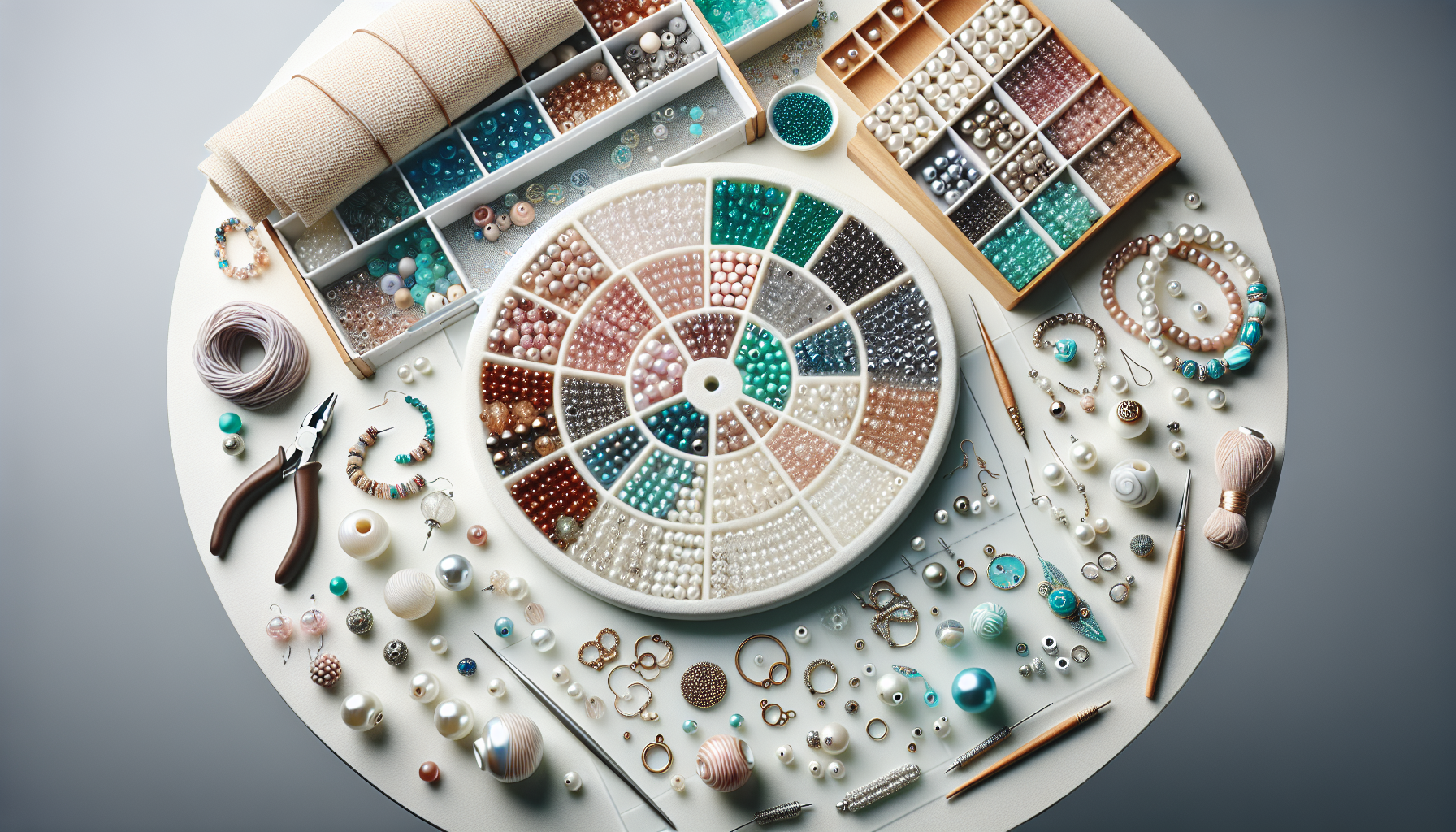
Samos® par Puca® is one of the most beloved shaped beads among European jewelry makers, and it's easy to understand why. It's a two-hole glass bead in a softly elongated, somewhat oval/half-cylindrical shape, developed by the French designer Puca in collaboration with Czech glass manufacturers. The combination of two holes, generous surface, and perfectly calibrated shape makes Samos® ideal for both detailed bead weaving projects and more minimalist, modern jewelry.
Shape, size, and hole placement – why Samos® feels so "easy" to work with
Most Samos® par Puca® measure approximately 6×10 mm, providing a moderately sized bead that is neither clunky nor too small to handle.
- Two parallel holes: Provides stability in bracelets, necklaces, and earrings
- Soft, domed top side: Perfect as a focal point or "cushion" around smaller beads
- Flat bottom side: Sits neatly against felt, leather, or metal parts in bead embroidery
-
Consistent size and shape: Facilitates advanced patterns where precision is important
Compared to other Puca® beads like Amos® (teardrop-shaped), Arcos® (arch), and Minos® (cylindrical), Samos® often functions as a stable base or centerpiece in the design. Where Arcos® builds arches and Minos® fills gaps, Samos® creates clear lines and blocks in your pattern.
Two-hole beads, Czech glass, and creative possibilities
Two-hole beads like Samos® par Puca® are particularly useful in bead weaving and bead embroidery, as they make it easy to:
- Build multidimensional structures without the work becoming wobbly
- Reinforce exposed areas by stitching through both holes multiple times
-
Create even edges and bezels around cabochons or crystals
The manufacturing in high-quality Czech glass provides good color fastness and beautiful finishes like metallic, luster, and Picasso. This means that your jewelry not only looks exclusive when you make it – it also remains beautiful over time. Together, these factors make Samos® par Puca® a reliable choice when you want to create thoughtful, durable, and professional jewelry, whether you are a beginner or an experienced beader.
Why buy Samos® par Puca® at Hilmaspyssel.se
Finding the right store for Samos® par Puca® can be crucial for both the end result and the joy of creation. At Hilmaspyssel.se, you not only get access to a wide range of Puca® beads but also a well-thought-out complete solution with threads, seed beads, clasps, and tools that match your projects. This allows you to plan everything in one place – something many beaders ask for in online forums and groups.
Advantages of buying Samos® par Puca® at Hilmaspyssel.se
-
Wide and updated assortment: Many different colors, finishes, and related Puca® shapes, so you can build complete designs.
-
Fast deliveries within Sweden: Short waiting time from idea to finished jewelry, especially important for special orders or client commissions.
-
Personal and knowledgeable service: Help with calculating bead quantities, choosing the right thread, or finding complementary beads when you get stuck.
-
Smooth filters and search function: Filter by color, type, brand, and stock status to quickly find the exact Samos® par Puca® in the right shade.
In addition, Hilmaspyssel.se is meticulous with clear product images and color descriptions, which reduces the risk of incorrect purchases – especially when matching specific shades for a wedding or customer order.
How to find the right color and quantity for your project
A common problem is uncertainty about how much to order. A simple approach is:
-
Start with a pattern or a sketch and estimate the number of Samos® per row/segment.
-
Always add 10–20% extra as a safety margin for mistakes and future adjustments.
-
Use the product suggestions on Hilmaspyssel.se (related articles) to choose seed beads, crystals, and clasps that fit the style.
By combining smart use of filters and search with this simple calculation method, you avoid both over-purchasing and panic orders afterwards, and can instead focus entirely on the creative work with your Samos® par Puca®.
Colors, finishes, and how to choose the right Samos® par Puca®
Choosing the right color and finish for your Samos® par Puca® is just as important as the pattern itself. The color determines whether your jewelry feels everyday, luxurious, bohemian, or strict, and here Samos® differs from many simpler glass beads due to its advanced surfaces and color combinations. At Hilmaspyssel.se, you will find a wide selection that often reflects the most sought-after colors in international bead trends.
Common finishes – how they affect the expression
-
Opaque (solid/full color): Provides a clear, graphic expression and is perfect for geometric patterns and everyday jewelry.
-
Transparent: Allows light to pass through and feels light and airy – great for earrings and summery bracelets.
-
Metallic & galvanized: Creates an exclusive feel, ideal for evening and party jewelry where you want to replace or enhance metal components.
-
Luster & pearl: Has a shimmering, mother-of-pearl-like surface that looks fantastic in wedding jewelry and romantic designs.
-
Matte & etched: Gives a soft, almost velvety impression – perfect when you want to avoid too much glare near the skin.
-
Picasso & special effects: Speckled, "rustic" surfaces that suit bohemian, nature-inspired designs and more artistic projects.
Consider mixing high-gloss and matte surfaces in the same piece of jewelry for more depth. Example: a bracelet with matte, neutral Samos® as a base and a few metallic variations as discreet accent beads.
How to build a harmonious color palette with Samos®
A simple way to succeed is to start with 2–3 main colors in Samos® and then complement with smaller beads from Hilmaspyssel.se:
-
Everyday jewelry:
For example, choose matte gray, beige, or petrol-colored Samos® and combine with small seed beads in tone-on-tone colors. Add a few metallic beads to elevate the overall look without it being "too much". -
Party & wedding:
Go for pearl, luster, or metallic finishes in white, champagne, rose, or gold. Build further with crystals and fire-polished beads for extra sparkle – perfect for earrings and statement pendants. -
Bohemian style:
Use Picasso finish or mixed earthy colors (moss green, ochre, turquoise) and combine with brown, copper-colored, or antique silver-colored spacer beads for an organic, handcrafted feel.
For maximum control: open the product pages for your selected Samos® on Hilmaspyssel.se in different tabs and compare the color tones against Delicas, seed beads, and crystals. This way, you create a well-thought-out palette even before placing your order – and reduce the risk of ending up with beads that don't quite match when you start creating.
Basic techniques for working with Samos® par Puca®
Samos® par Puca® are designed to truly shine in sewn jewelry. To achieve beautiful, durable results, you need to combine the right technique with the right materials. This section guides you through the most useful basic techniques, so you can confidently plan your first – or more advanced – projects with Samos® beads from Hilmaspyssel.se.
Suitable techniques: bead weaving and bead embroidery
-
Bead weaving: Samos® works exceptionally well in techniques like right angle weave (RAW), circular weave, and modified peyote, where the two holes provide stability and the ability to build height and structure.
-
Bead embroidery: On felt or leather, Samos® can be used as focal beads around cabochons or as edge decoration, where the two holes allow them to lie flat and stable.
-
Stable stringing of two-hole beads: Always stitch through both holes at least once in load-bearing sections (near clasps and suspensions) to prevent the jewelry from twisting or feeling flimsy.
When planning a pattern, you can think of each Samos® as a small "bridge" between seed beads. First, test on a scrap piece where you stitch 5–6 beads in a row to see how they lie and how tightly you need to pull the thread. This simple exercise helps you understand how the shape reacts in different techniques before you start a whole piece of jewelry.
Recommended materials and smart beginner tips
- Thread:
- FireLine or other braided fishing line – perfect for bracelets and necklaces that need to withstand everyday wear.
- Miyuki Beading Thread/nylon thread – softer and more flexible, suitable for earrings and embroidery.
- Needles and accessories:
- Beading needles size 10–12 to easily pass through both holes multiple times.
- Beading mat so that the Samos® beads don't roll away.
-
Clasps and wire guardians for extra durability at fastenings – all conveniently available at Hilmaspyssel.se.
Some concrete beginner tips often missing from articles but making a big difference:
-
Start with shorter threads (approx. 60–80 cm) to reduce the risk of tangling around the two holes.
-
Test the pattern with simpler seed beads before beading with your favorite Samos® colors – this allows for more experimentation.
-
Document everything: write down how many Samos® you use for a bracelet of your desired length, what thread type and needle size you used. Next time you can calculate the material consumption directly when placing your order at Hilmaspyssel.se.
By combining the right technique with conscious material choices, your Samos® projects will not only look professional but also last over time. Once you master the basics, you can easily build upon more advanced patterns and your own design ideas.
3 simple jewelry projects with Samos® par Puca® – step-by-step inspiration
Samos® par Puca® truly comes into its own when used in clearly defined, moderately quick projects. In this section, you'll get three concrete ideas you can start with right away – all materials can be put together at Hilmaspyssel.se, making planning easy even for beginners. The projects are intended as "building blocks" that you can then further develop according to your own style.
Project 1: Stylish bracelet with Samos® and seed beads
-
Material suggestion: Samos® par Puca®, Miyuki seed beads (e.g., 11/0), beading thread (FireLine/nylon), clasp + jump rings, beading needle.
-
Basic setup: Alternate one Samos® with 2–3 seed beads between each Samos® along a bead strand. Stitch through the holes twice for extra stability.
-
Adaptation: Adjust the length by adding or removing Samos® beads; change seed bead color to create collections (e.g., "spring," "party," "wardrobe staple").
This project is perfect if you want to get a feel for how the two holes behave in practice without having to follow an advanced pattern. Feel free to choose a neutral base color for the Samos® and complement it with a stronger accent color for the seed beads for a modern, Scandinavian feel.
Project 2 & 3: Earrings and statement pendant
-
Teardrop earrings:
-
Materials: Samos®, small glass rondelles or fire-polished beads, ear hooks/posts, thin beading thread.
-
Setup: Create a small arch/teardrop shape by stitching together 3–5 Samos® in a semi-circle and fill the gaps with rondelles. Attach a simple drop at the bottom for extra movement.
-
Tip: Place the earrings side by side on the beading mat and count beads aloud to ensure perfect symmetry.
-
Small statement pendant/medallion:
-
Materials: Samos® in a contrasting color, seed beads in two sizes, chain or waxed cotton cord.
-
Setup: Stitch a circle or oval where the Samos® beads lie like petals around the center. Fill the gaps with smaller seed beads for a lace-like effect.
-
Purchase planning: Calculate how many Samos® are needed for one pendant, add at least 10–20% extra to your Hilmaspyssel.se shopping cart for spares and matching bracelets/earrings later.
These two projects give you a complete small jewelry set – bracelet, earrings, and pendant – where Samos® par Puca® plays the main role yet is easy to combine with the rest of your bead stash.
Combine Samos® par Puca® with other Puca® beads and materials
Combining Samos® par Puca® with other Puca® shapes and quality materials from Hilmaspyssel.se is one of the easiest ways to take your jewelry from “nice” to “wow.” By utilizing the two holes and the softly oval shape, you can build intricate structures that are still stable, comfortable to wear, and relatively easy to stitch once you see how the parts fit together.
The smartest material combinations with Samos®
Here’s how you can combine Samos® par Puca® for maximum effect:
-
Samos® + Arcos® + Minos®: Perfect trio for arched segments, mandalas, and flower-like patterns in necklaces and bracelets.
-
Samos® + Miyuki seed beads (11/0, 8/0): Seed beads fill in gaps, provide flexibility, and allow you to fine-tune the shape and size of bracelets and earrings.
-
Samos® + crystals & fire-polished beads: Adds more sparkle and depth – ideal for festive projects, wedding jewelry, and statement pendants.
-
Samos® + cabochons: Use Samos® as a decorative frame around a cabochon in bead embroidery for a luxurious, textured look.
When planning a design, start with Samos® as the "main shape" and then choose complementary beads that either reinforce the curves (Arcos®, Amos®) or create contrast with rounder or faceted surfaces.
Design strategies and concrete examples
Think in terms of structures rather than individual beads. A simple but effective strategy is to create repeated modules with Samos® and then link them together for necklaces or bracelets. For example:
- Necklace: Build small arched elements with Samos® + Arcos® + seed beads and connect them with small crystal clusters from Hilmaspyssel.se for extra sparkle.
- Bracelet: Let Samos® act as a hub and fill the gaps with 11/0 seed beads; the result will be a flexible band that sits comfortably even at the keyboard.
Feel free to use the product images on Hilmaspyssel.se as a "digital color chart." Add several items to your cart simultaneously to compare tones, metallic finishes, and luster – it's an easy way to ensure your combinations feel well-thought-out even before you order.
For beginners and experienced beaders – common mistakes and how to avoid them
When you start working with two-hole beads like Samos® par Puca®, it's normal to encounter problems with thread tension, crooked rows, and beads that "have a mind of their own." Even experienced beaders can end up with patterns that are too stiff, break apart at the clasp, or lose their shape after some wear. In this section, we'll go through the most common mistakes – and, most importantly, how to avoid them with simple, thoughtful routines.
Common pitfalls with two-hole beads
-
Too tight or too loose thread tension: Too tight results in stiff, lumpy work; too loose causes Samos® beads to twist and leave gaps.
-
Incorrect thread thickness or needle size: Too thick thread can crack beads with multiple passes through the holes; too thin thread results in an unstable piece.
-
No reinforcement at stress points: Clasps, jump rings, and flexible parts of bracelets require extra thread passes to prevent breakage with wear.
-
Lack of planning for bead sequences: Without a sketch or test string, it's easy for the design to become unbalanced, especially when combining Samos® with smaller seed beads.
A practical way to avoid many mistakes is to always make a "mini-sample" with 6–10 Samos® beads before tackling the entire project. There, you can test the thread, needle, tension, and see how the beads behave in the specific technique you've chosen.
How to develop your technique – even as an experienced beader
Once you've mastered the basics, you can start using Samos® more intentionally. Create a simple test swatch on felt where you try out new combinations with Samos®, Amos®, Arcos® and various seed beads before ordering larger quantities from Hilmaspyssel.se. Photograph each test, write down the color codes, sizes, and threads you used, and save this as your personal "pattern library." This way, you'll gradually build up a bank of reliable combinations and your own signature designs – and avoid repeating old mistakes in your next jewelry collection.
Frequently Asked Questions (FAQ)
Q: What distinguishes Samos® par Puca® from ordinary glass beads?
A: Samos® par Puca® are special because they are two-hole Czech glass beads in a softly oval/half-cylinder shape. The two parallel holes allow the bead to sit stably in patterns, create neat, even rows, and enable advanced designs that would otherwise require several different bead types. Compared to ordinary round beads, you get more control over direction, shape, and structure in your jewelry – perfect for bead weaving, multi-row bracelets, and mandala-inspired pendants.
Q: How many Samos® beads do I need for a bracelet or necklace?
A: It depends on the design and wrist size, but as a rule of thumb:
-
Simple bracelet: approx. 20–30 Samos® + seed beads as filler
-
Wider cuff bracelet: 40–70 Samos® depending on the number of rows
-
Pendant/medallion: 8–20 Samos® in combination with smaller beads
A good tip is to always add a small safety margin (1–2 extra grams or an extra bag) to your cart at Hilmaspyssel.se so that you don't run out of beads if you want to extend or change the design.
Q: Does the color or finish of Samos® par Puca® fade over time?
A: Samos® are made from high-quality Czech glass, and most finishes are very durable. However, strong metallic or galvanized surfaces can become somewhat more sensitive to heavy wear, perfume, chlorine, or showering. To prolong their life:
- Store jewelry dry and separately
- Remove jewelry when exercising, showering, and cleaning
- Wipe with a soft cloth after use
Q: Which thread and needle work best for two-hole Samos® beads?
A: Most beaders prefer FireLine or strong nylon thread (e.g., Miyuki Beading Thread) in combination with a beading needle size 10–12. The thin but sturdy needles easily pass through both holes multiple times without breaking the bead. If you know you'll be making many passes through the same hole, you can choose a slightly thinner thread (e.g., 0.12–0.15 mm) to avoid it becoming too tight.
Q: I'm a beginner – are Samos® par Puca® too difficult for me?
A: No, quite the opposite. Samos® are very beginner-friendly because their shape is consistent and the two holes help keep the pattern stable. Feel free to start with:
- A simple strand bracelet with Samos® + seed beads
- Small earrings where Samos® are the focus, complemented by a few accent beads
Hilmaspyssel.se also makes it easy to get started by offering suitable thread, needles, and complementary beads in the same shop – so you don't have to search in multiple places.
Q: How do I choose the right colors when ordering Samos® from Hilmaspyssel.se?
A: Start by considering what you'll use the jewelry for and your personal style:
-
Everyday: matte, neutral, or muted tones (e.g., matte metallic, gray, beige)
-
Party/wedding: pearl, luster, metallic, and light pastels
-
Boho/artistic: Picasso finish and mixed colors
Use the product images on Hilmaspyssel.se and build a small color palette: choose 1–2 main Samos® colors, then complement them with matching seed beads, crystals, and spacer beads in the same order. This way, you'll get a harmonious combination ready for multiple projects.
Conclusion: time to let Samos® par Puca® take center stage in your jewelry
You now have a complete overview of what Samos® par Puca® are, why their two-hole design in Czech glass is so popular, and how you can use them in everything from simple bracelets to more advanced bead weaving and embroidery projects. We've covered colors, finishes, techniques, project ideas, smart combinations with other Puca® beads, and common mistakes – and how to avoid them to achieve professional results even at your kitchen table.
The next step is to put that inspiration into practice. Start by choosing one of the three projects, create a small shopping list, and visit Hilmaspyssel.se to pick out your Samos® par Puca®, seed beads, thread, and accessories. Feel free to save this guide as a checklist when planning new jewelry and gradually build up a personal color palette. Click your way to the assortment at Hilmaspyssel.se, add your next creative project to your cart – and let Samos® become the heart of your upcoming favorite jewelry.