


Plastic-Coated Wire from Hilmaspyssel.se – A Guide for Creative Jewelry and Crafts
Do you want to make durable, beautiful jewelry without the wire breaking, discoloring, or scratching the beads? Then plastic-coated wire from Hilmaspyssel.se is a material you really want to get to know. This steel wire with a protective plastic coating is a favorite among both beginners and experienced jewelry makers who want a strong, flexible, and stylish alternative to regular metal wire.
In this guide, we'll go through everything you need to know to choose the right plastic-coated wire, understand the difference between various thicknesses and colors, and use it optimally in bracelets, necklaces, and creative decorations. You'll get practical tips, common mistakes to avoid, project ideas, and smart buying advice directly linked to the product range at Hilmaspyssel.se, so you can confidently order the right products and get started immediately.
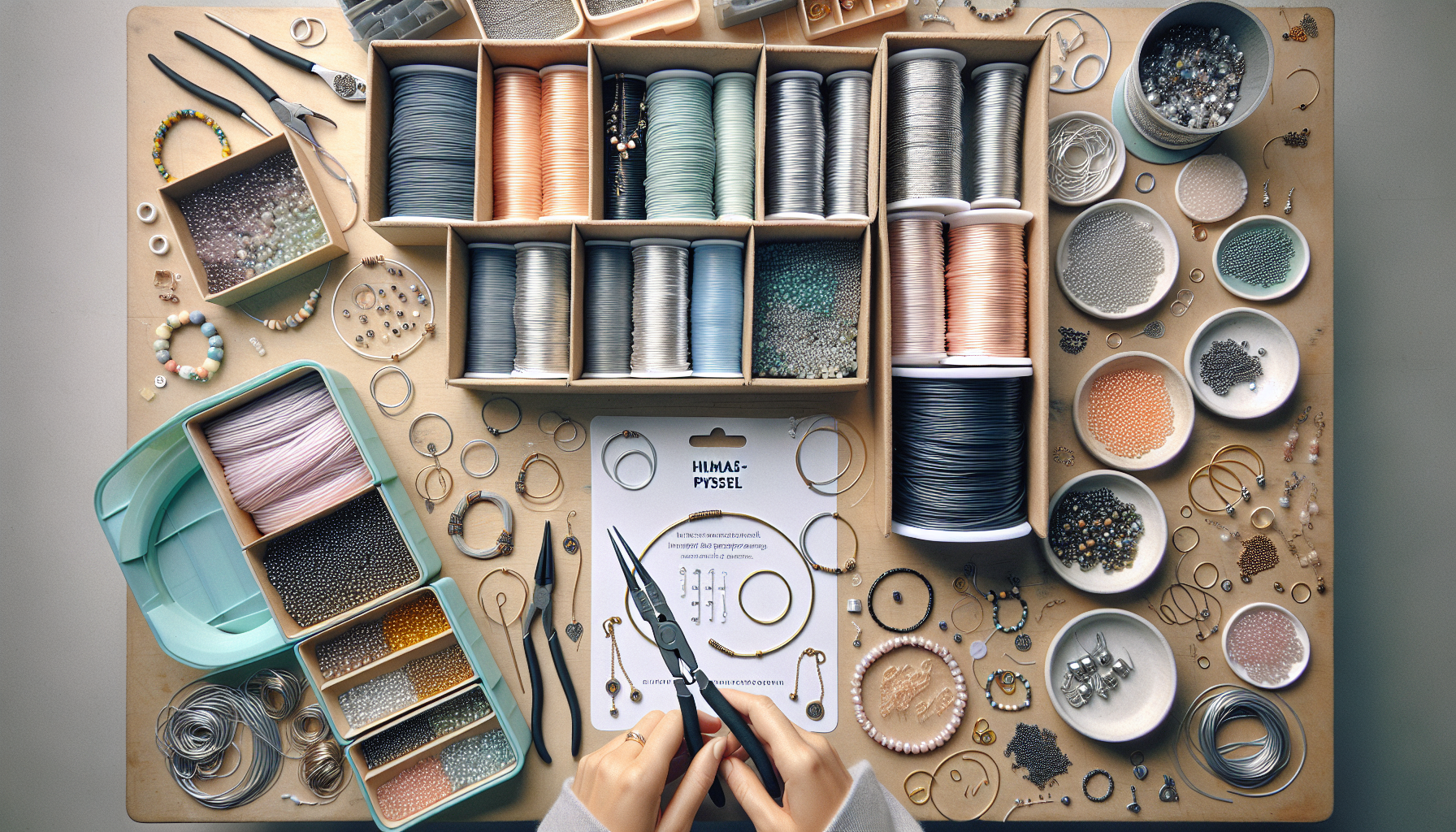
Plastic-coated wire often appears in jewelry-making guides, but what exactly is it – and why do so many creative blogs recommend this particular material? In short, plastic-coated wire is a strong steel wire with a thin, protective plastic coating that makes it both durable and gentle on beads. It combines the strength of metal with the flexibility of thread, making it perfect for both beginners and more experienced jewelry makers.
What distinguishes plastic-coated wire from regular jewelry wire?
Many newcomers to beading wonder whether to choose regular metal wire, nylon thread, or plastic-coated wire. The main differences are:
-
Construction: Plastic-coated wire consists of several thin steel cores that are coated with plastic, providing extra durability compared to single metal wire.
-
Durability: The plastic-coated surface reduces the risk of wear, rust, and sharp edges that can damage beads or skin.
-
Flexibility: Plastic-coated wire is flexible but shape-retaining, meaning the jewelry maintains its shape without feeling stiff.
-
Comfort and finish: The smooth plastic surface makes jewelry feel more comfortable against the skin and look more professional.
In many top-ranked guides, the combination of strength and flexibility is highlighted as the reason why plastic-coated wire is the first choice for beaded necklaces and bracelets.
Advantages and typical uses
The great strength of plastic-coated wire is its versatility. You can use it for:
-
Beaded necklaces and bracelets that need to last a long time without stretching
-
Multi-strand jewelry, where you need a thin but stable base
-
Decorations and crafts, such as pendants, small mobiles, or window decorations
Unlike regular metal wire, plastic-coated wire is particularly gentle on delicate beads, such as glass and crystal beads, as the plastic coating protects against friction. For those who want to create durable, stylish jewelry with a professional result, plastic-coated wire is therefore one of the most cost-effective and practical materials to start with.
Plastic-coated wire from Hilmaspyssel.se – Quality, colors, and variations
Plastic-coated wire is available in many designs online, but at Hilmaspyssel.se, the assortment is clearly adapted for jewelry making and crafting at both beginner and hobby levels. Here you'll find wire in various thicknesses, lengths, and colors that are carefully selected to provide the right balance between strength, flexibility, and aesthetics. The goal is simple: to enable you to create durable, professional-looking jewelry – without hassle.
Overview of the range – thicknesses, lengths, and quality level
At Hilmaspyssel.se, you'll find a range that covers the most common needs:
-
Various thicknesses (diameters): thin, medium, and slightly thicker plastic-coated wire for everything from delicate necklaces to more robust decorations
-
Practical lengths: spools that last for several projects, perfect if you want to make matching sets of bracelets and necklaces
-
Focus on quality: strong metal/steel core and an even plastic coating that doesn't crack or discolor as easily
-
Good flexibility: the wire is flexible enough to form around the wrist yet stable enough for the jewelry to maintain its shape over time
Hilmaspyssel places great importance on the plastic coating being colorfast and gentle on beads, which reduces the risk of chafing on, for example, glass beads and semi-precious stones.
Colors, product descriptions, and how to choose the right variant
One of the great advantages of plastic-coated wire at Hilmaspyssel.se is the well-considered color range. You'll find both neutral basic colors (such as black, steel/silver, and transparent tones) and accent colors like red, blue, or green. This makes it easy to either let the wire blend into the jewelry or become part of the design itself.
When reading product descriptions in the webshop, you should primarily look at:
-
Diameter (e.g., 0.38–0.45 mm) – affects which bead holes fit and how robust the jewelry will be
-
Spool length – determines how many projects you can make from one package
-
Recommended use – many products specify whether the wire is best suited for bracelets, necklaces, or decorations
A practical tip is to always consider your upcoming project when choosing wire. For a discreet pearl necklace, a thin, neutral plastic-coated wire works excellently, while a colorful boho bracelet can become extra vibrant with a matching or contrasting color of wire.
By combining the information in the product texts with your design ideas, it becomes easy to choose the right plastic-coated wire from Hilmaspyssel's assortment – and you avoid unnecessary mispurchases. Hilmaspyssel.se thus functions not only as a shop but also as support in your creative process.
How to Choose the Right Plastic-Coated Wire for Your Project
Choosing the right plastic-coated wire is crucial for both the durability and appearance of your jewelry and decorations. At Hilmaspyssel.se, there are many variations, and by understanding the differences in thickness, strength, and color, it becomes much easier to find a wire that suits your project – whether you're making a delicate pearl necklace or a robust window decoration.
Thickness and Application – Finding the Right Diameter
-
Thin plastic-coated wire (approx. 0.30–0.38 mm): Perfect for delicate necklaces, bracelets, and earrings with smaller beads, e.g., seed beads and small glass or crystal beads. Gives an airy, elegant impression.
-
Medium-thick wire (approx. 0.40–0.45 mm): The all-round choice for most beaded jewelry. Suitable for standard sizes of glass beads, freshwater pearls, and many stone mixes. Good balance between flexibility and strength.
-
Thicker wire (approx. 0.50 mm and up): Used for larger, heavier beads, decorative projects, hanging mobiles, or table/window decorations where extra stability is needed.
Remember that the hole in the bead must accommodate both the wire and any crimp bead. On the product pages at Hilmaspyssel.se, you'll often find recommended uses, which saves both time and mispurchases.
Color Choice, Practical Examples, and Smart Checklist
-
Neutral colors (transparent, black, steel/silver): Blends in and lets the beads take center stage. Ideal for classic jewelry, e.g., a discreet pearl necklace in white or champagne where a silver-colored plastic-coated wire gives a clean, exclusive look.
-
Accent colors (red, blue, green, gold, etc.): Enhances the design and can become part of the jewelry's color theme. Perfect for boho bracelets with colorful glass beads where, for example, turquoise or copper-colored wire elevates the overall look.
A simple way to choose correctly is to ask yourself these questions before ordering:
-
What type of project am I making? (jewelry, decoration, mobile, children's craft)
-
How heavy are the beads I want to use?
-
How visible should the wire be – should it blend in or be visible as a design element?
-
Do I need an all-round wire or a special solution for this particular project?
-
Do I have the right crimp beads and clasps that match the chosen diameter?
By combining diameter, color, and the right accessories from Hilmaspyssel.se, you'll get plastic-coated wire that both lasts over time and enhances your design – instead of limiting it.
Step-by-step: How to Use Plastic-Coated Wire in Jewelry Making
Plastic-coated wire is easy to work with once you know the basics. In this section, we'll go through exactly how to do it, step-by-step – from the first cut to the finished necklace or bracelet. The focus is on practical steps that are often only superficially mentioned in other guides, but which in practice determine whether your jewelry will be durable and professional.
Basic Materials and Preparation
To get started with jewelry on plastic-coated wire, you'll need:
-
Plastic-coated wire: choose thickness according to bead hole size and jewelry type
-
Crimp beads / wire stoppers: to secure wire and clasp components
-
Clasps: e.g., lobster clasp, magnetic clasp, or classic spring ring clasp
-
Jump rings / split rings: to attach the clasp
-
Beads and possibly spacers: glass, acrylic, gemstone, seed beads, etc.
-
Pliers: flat nose pliers, round nose pliers, and wire cutters
A practical tip is to always cut 5–10 cm extra wire beyond the finished length you plan. This gives you leeway to work calmly at the ends without having to compromise on the design if you happen to cut crooked or need to adjust the clasp.
How to Make Necklaces and Bracelets – Step by Step
A basic method works for both necklaces and bracelets:
-
Measure and cut the wire: wrist measurement + approx. 5–7 cm extra for bracelets, neck measurement + approx. 8–10 cm for necklaces.
-
Thread on a crimp bead and clasp component: start with a crimp bead, then a part of the clasp (e.g., ring or lobster clasp).
-
Fold the wire back: thread the wire back through the crimp bead to form a small loop around the clasp.
-
Adjust the loop: leave a small movable loop so the clasp can move freely without rubbing.
-
Flatten the crimp bead: use flat nose pliers and press firmly so the bead locks the wire completely.
-
Thread the beads: let the short end of the wire follow into the first beads for extra stability.
-
Finish with the same technique: repeat steps 2–5 on the other side with the other clasp component.
To avoid kinks and bends: always work with the wire in soft curves, never hard bends. Lay the jewelry on the table in its natural shape before crimping the last crimp bead, so you don't accidentally lock in an unwanted angle.
Common Mistakes – And How to Avoid Them
When looking at forums and guides for beginners, the same problems recur again and again:
-
Over-tightened crimp beads: if you crimp so hard that the plastic is cut through, the wire can break over time. Crimp firmly, but not until the metal "snaps."
-
Wrong size of crimp beads: if the hole is too large, the wire slides; if it's too small, the bead cracks. Adjust the crimp bead size to the chosen wire diameter.
-
Wire cut too short: makes it difficult to mount the clasp neatly. Always add a safety margin.
-
Kinked wire from the spool: gently straighten the wire with your fingers before you start threading beads, instead of trying to "force" it straight when the jewelry is already finished.
By taking it easy during these steps, you'll get jewelry that looks more professional and lasts significantly longer than if you just "winged it." This is the big difference between an amateur and a professional feel – even when using the same plastic-coated wire and beads from Hilmaspyssel.se.
Creative Craft Ideas with Plastic-Coated Wire from Hilmaspyssel.se
Plastic-coated wire isn't just perfect for bracelets and necklaces – it's also an unexpectedly versatile craft material for both children and adults. With the right ideas, you can create everything from simple small gifts to eye-catching home decorations, and Hilmaspyssel.se has everything you need to get started.
Easy Projects for Beginners and Families with Children
Here are easy projects suitable for beginners or those who want to craft with children (always under adult supervision):
-
Beaded bookmarks: Thread beads onto plastic-coated wire, finish with a small charm at one end and make a simple loop at the other. Perfect as a gift with a book.
-
Keychains with plastic-coated wire: Use keyrings and small charms from Hilmaspyssel.se. Form a short loop of wire, thread on beads, and attach to the keyring with crimp beads.
-
Child-friendly jewelry: Colorful plastic beads on soft plastic-coated wire are easier for small hands than elastic thread, and the risk of the jewelry breaking is reduced.
It's a good idea to start with short lengths of wire and limited material choices, making the projects manageable and fun rather than frustrating. A small "craft box" with a few spools of plastic-coated wire, mixed beads, and simple charms goes a long way.
Advanced Decorations and Multi-Strand Jewelry
Once you feel confident with the basic technique, you can take your projects to the next level:
-
Multi-strand necklaces: Combine 2–4 strands of plastic-coated wire in different colors. Use bead separators or bead caps to keep the strands in place and create a professional look.
-
Hanging mobiles: Create lightweight mobiles with crystal beads, glass drops, and plastic-coated wire. Attach the wire to a metal ring or a piece of driftwood for a bohemian feel.
-
"Sun catchers" and window decorations: Use transparent or silver-colored plastic-coated wire with faceted beads. Hang in windows where the sun reaches – the light breaks beautifully through the beads.
A simple example project:
- Materials: 2 colors of plastic-coated wire, mixed glass beads, a few crystal beads, small charms, and crimp beads.
- Main steps: Cut several lengths of wire, thread beads in a repeated pattern, attach each strand to a ring or bar with crimp beads, and finish with a hanging attachment.
By combining plastic-coated wire with Hilmaspyssel.se's wide range of beads, charms, chains, and jewelry components, you can create projects that look advanced but are technically relatively simple. Think in "layers": first wire and shape, then beads and color, and finally small details that make each craft personal and unique.
Care, Durability, and Storage of Plastic-Coated Wire
Plastic-coated wire is inherently very durable, but just like with all jewelry materials, care determines how long your jewelry remains beautiful. By taking proper care of both the wire and the finished jewelry, you can significantly extend its lifespan and avoid unnecessary re-stringing. Here, we'll go through practical tips that are often only briefly mentioned in other guides – but which make a big difference in everyday life.
How to Protect Plastic-Coated Wire in Everyday Life
-
Plastic coating as protection: The plastic coating reduces the risk of rust, discoloration, and sharp edges that rub against the beads. Nevertheless, avoid prolonged contact with moisture and strong chemicals.
-
Proper handling of jewelry: Remove bracelets and necklaces when showering, bathing, exercising, and cleaning – sweat, shampoo, and cleaning products degrade the plastic over time.
-
Soft storage: Lay jewelry flat or hang it, not crumpled in a bowl. This reduces the risk of kinks and the wire "remembering" an unsightly bend.
By thinking of plastic-coated wire a bit like a thin metal cable with a protective jacket, it becomes easier to understand why you should avoid strong tugs, hard knots, and repeated sharp bending at the same point.
Storage of Spools and Environmentally Friendly Habits
- Storage of spools:
- Store spools on a hook or spool holder so the wire maintains its natural curve.
- Use zip-lock bags or small boxes to protect against dust and sunlight, which can affect the color over time.
- Secure the end with a piece of tape or a small wire clip so the entire spool doesn't unravel.
- Durability and reuse:
- Create timeless jewelry that you know you'll use for a long time – it's a simple way to think sustainably.
- When a piece of jewelry breaks, try to cut it open and salvage beads and wire for new projects. Often, large parts of the wire can be perfectly reused in shorter pieces of jewelry or decorations.
By combining gentle use, smart storage, and a bit of a reuse mindset, you'll get the maximum out of every spool of plastic-coated wire from Hilmaspyssel.se – both financially and from a sustainability perspective.
How to shop smart for plastic-coated wire at Hilmaspyssel.se
Shopping for plastic-coated wire online can feel confusing if you don't know where to start. At Hilmaspyssel.se, the assortment is wide but structured – which makes it easy to find the right wire for both jewelry and craft projects if you know how to navigate and compare the options.
Find the right product in the store – filtering and comparison
Here's how to use the webshop smartly:
-
Navigate to the correct category: Go via menus like Jewelry Components → Wire / Thread → Plastic-Coated Wire (the designation may vary slightly, but search for "plastic-coated wire" in the search box if you're unsure).
-
Filter by need: Use available filters (e.g., color, thickness, length, price) to quickly sort out the right option for your project.
By combining filters, text, and images, you minimize the risk of ordering the wrong thickness or color, something many beginners struggle with according to several guides and forum discussions.
Plan smart purchases – from the first order to larger projects
To shop economically and thoughtfully at Hilmaspyssel.se, you can think like this:
-
Start with a small but well-considered "starter kit":
-
2–3 base colors of plastic-coated wire (e.g., transparent, silver-colored, and black).
-
One roll of slightly thinner wire (for more delicate jewelry) and one roll of medium thickness (all-purpose).
-
Crimp beads, wire stoppers, clasps, and a few chains so you can finish your jewelry professionally.
-
Think in projects, not individual products: Write down 2–3 projects you want to make (e.g., a beaded necklace, a bracelet, and a window decoration) and work backward to determine the length and colors you need.
-
Buy several colors when you're already ordering: Shipping is the same whether you buy one or three rolls. Several top articles emphasize that a small "color library" quickly makes you more creative – you avoid being held back by not having the right color at home.
-
Look out for packs and sets: General tips from online craft stores suggest that combo kits often offer more value per meter of wire. If Hilmaspyssel.se offers packages with mixed colors or beginner kits, they are perfect when you are building up your initial stock.
How to avoid mispurchases – practical checklist before clicking "buy"
Before adding plastic-coated wire to your cart, you can ask yourself these questions to shop as smartly as possible:
-
What beads will I use? Check that the wire diameter fits through the holes – especially important for freshwater pearls and gemstones with smaller holes.
-
Should the jewelry be delicate or substantial? Choose thinner wire for light, elegant jewelry and thicker wire for statement pieces and decorations.
-
Do I want the wire to be visible or "disappear"? If you want the beads to be the focus – choose transparent or neutral colors. If you want the wire itself to be part of the design – choose an accent color that picks up a tone in the beads.
-
How many projects do I want to cover with this order? It might be more cost-effective to get a longer roll if you plan several necklaces or decorations.
By combining these checklist questions with the clear structure of Hilmaspyssel.se, you get a purchasing process that is both smooth and economical. Feel free to start with a small, manageable project, get a feel for how the plastic-coated wire behaves – and then gradually build up with more colors, dimensions, and accessories as your ideas and jewelry making grow.
Frequently Asked Questions (FAQ)
Q: What thickness of plastic-coated wire should I choose for my jewelry?
A: As a general rule, 0.38–0.45 mm works well for most bracelets and necklaces with normal-sized beads. For small glass beads and seed beads, you can go down to 0.30–0.35 mm for a more delicate look, while larger beads or heavier decorations often require 0.45–0.50 mm to maintain their shape. Always consider: the bead's hole size, how flexible the jewelry should be, and how much stress it will be subjected to. On Hilmaspyssel.se, you can read the diameter in the product description and match it to your project.
Q: What is the difference between plastic-coated wire and regular jewelry thread or nylon thread?
A: Plastic-coated wire is a thin steel wire with a plastic coating, which makes it strong, shape-stable, and gentle on beads. A classic nylon or elastic thread is softer but much more susceptible to wear and stretching. Plastic-coated wire is ideal when you want durable, professional-looking necklaces and bracelets that won't stretch or break easily. Nylon thread is better suited for woven bracelets, embroidery, or when you want maximum flexibility rather than strength.
Q: Can I use plastic-coated wire for children's jewelry and crafts with children?
A: Yes, but with some important safety considerations. Use soft, relatively thin plastic-coated wire (that doesn't have sharp edges) and ensure that all finishes are made with crimp beads that are properly crimped so that no wire ends protrude. Preferably choose larger beads that are easy to string and avoid very small parts for younger children. All crafting with wire should take place under adult supervision, especially with younger children, as both wire and small beads can pose risks if used incorrectly.
Q: How do I avoid plastic-coated wire kinking or breaking when I work?
A: Store the wire on its original spool and carefully pull out the length you need. Never bend the wire sharply at 90-degree angles – think gentle curves. When stringing beads, avoid pulling the jewelry hard over sharp edges or around small objects. Use round-nose pliers or flat-nose pliers with smooth jaws so as not to pinch and damage the plastic coating. If you still get a distinct kink, it's usually better to cut off that section than to try to straighten it completely.
Q: How long do jewelry made with plastic-coated wire last?
A: With the right wire quality and normal care, jewelry made with plastic-coated wire can last many years. The plastic-coated surface protects against moisture and oxidation, but jewelry wears out with use. If you take them off when showering, swimming, exercising, or sleeping and store them in a box or jewelry pouch, you reduce the risk of tangles, kinks, and discoloration. If you also keep an eye on crimp beads and clasps and replace them as needed, you can further extend their lifespan.
Q: Can I reuse plastic-coated wire from old jewelry?
A: In some cases, yes. If the wire is still straight, without visible kinks, cracks in the plastic, or discoloration, you can cut off usable pieces and reuse them for shorter projects like earrings, keychains, or bookmarks. However, it's rarely worth reusing wire from very worn or heavy jewelry – in those cases, it's safer to opt for new plastic-coated wire for the best durability and finish.
Q: Which plastic-coated wire is best if I only want to buy one type to start with?
A: If you are a beginner, a good all-around choice is to buy a neutral plastic-coated wire around 0.38–0.45 mm in silver or steel color. It works for most beads and suits both bracelets and necklaces. Feel free to complement with black or transparent wire if you know you like darker jewelry or transparent beads. On Hilmaspyssel.se, you can easily find these basic variations and then build up with more colors once you know what style you like best.
Create more with less – your next creative favorite is plastic-coated wire
Plastic-coated wire shows how much a single material can do for both jewelry making and creative crafts. In this guide, you have learned what plastic-coated wire is, how thickness and color affect the result, and how you can gradually create durable jewelry, decorations, and personalized gifts. You have also received tips on care, smart storage, durability, and how to shop for the right products on Hilmaspyssel.se without fumbling in the dark.
Now the next step is simple: choose a small project – a bracelet, a bookmark, or a simple window decoration – and put your new knowledge into practice. Visit Hilmaspyssel.se, filter for plastic-coated wire in suitable thickness and color, complement with some favorite beads and a clasp, and let yourself be inspired by product images and descriptions. The more you create, the clearer you will notice how versatile, affordable, and user-friendly plastic-coated wire is. Start today and gradually build up your own personal "jewelry and craft assortment" at home.