


Paros® Par Puca® from Hilmaspyssel.se – Creative Bead Design at the Next Level
Do you want to create jewelry that looks thoughtful, professional, and unique – without spending hours on complicated patterns? Then Paros® Par Puca® beads from Hilmaspyssel.se are a perfect choice. These popular 2-hole pressed glass beads create stable, geometric shapes, making it easy to build everything from elegant bracelets to eye-catching earrings.
In this guide, we'll go through what Paros® beads are, why they are so popular among Swedish jewelry makers, how to combine them with other Par Puca® beads, and what colors and finishes you'll find at Hilmaspyssel.se. You'll get practical tips, concrete project ideas, and a smart buying guide to help you choose the right beads for your next favorite projects.
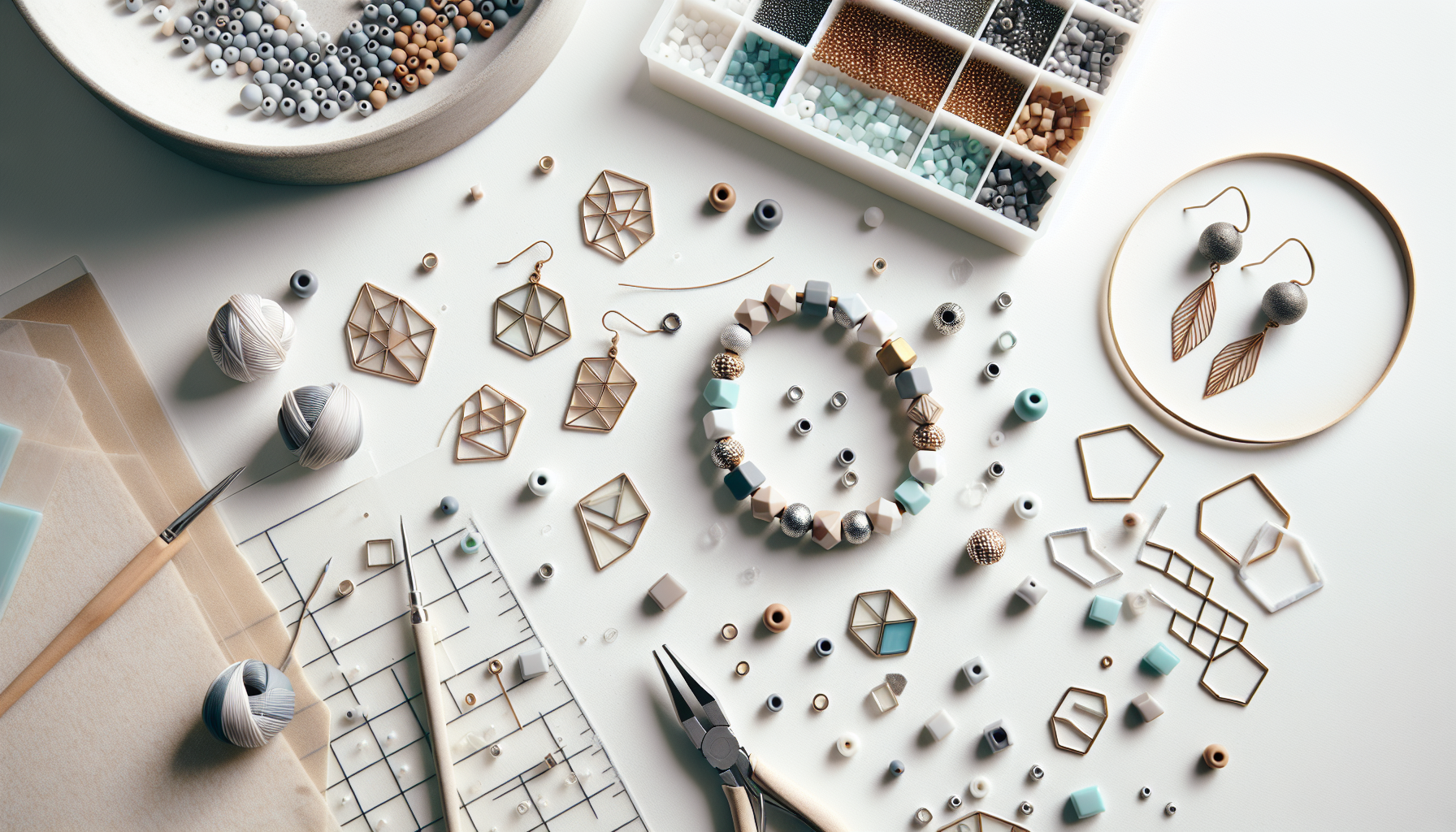
Paros® Par Puca® is one of the most versatile 2-hole beads on the market and has quickly become a favorite among Swedish beaders. The bead is part of the well-known Par Puca® concept, created by French designer Puca, who specializes in shapely glass beads that can be combined into advanced, yet logical, constructions. At Hilmaspyssel.se, you'll find a wide selection of Paros® beads carefully chosen to suit both beginners and experienced jewelry makers.
Background, Shape, and Construction
Paros® is a pressed glass bead with two parallel holes, providing a stable base for both flat and three-dimensional designs:
-
Shape: Irregular rectangular/"tile"-like shape with soft edges, perfect for building structured patterns.
-
Size: Compact format (approx. 7x4 mm, may vary slightly depending on the series) that makes it easy to combine with seed beads in sizes 11/0 and 8/0.
-
Hole Placement: The two holes run parallel along the length of the bead, providing extra stability and making it possible to create bands, frames, and bezels without the construction twisting.
-
Material and Finish: Made of high-quality Czech pressed glass with durable color treatments such as metallic, luster, Picasso, and matte surfaces.
This makes Paros® significantly more shape-stable than many simple 1-hole glass beads, while also being easier to "read" in a pattern than some more complex 2-hole shapes.
How Paros® Interacts with Other Par Puca® Beads
One of the great strengths of Paros® Par Puca® is how well it is designed to interlock with other Par Puca® beads. Puca has designed a modular system, meaning that measurements and hole placement are adapted to work together:
-
With Arcos®: Paros® can be used as straight "bridges" between the curved Arcos®, perfect in rounded bracelets and necklaces.
-
With Minos®: Small cylindrical Minos® can be placed between Paros® to create rhythm and extra height in the design.
-
With Amos® and Samos®: Pointed and oval shapes that, together with Paros®, build flower and mandala-like structures with clear geometry.
-
In Advanced Projects: Paros® often serves as a supporting "frame" around cabochons, rivoli crystals, or in wide cuff bracelets where you need both structure and flexibility.
By understanding this modular concept, it becomes easier to read international bead diagrams, adapt existing patterns, and create your own designs. Hilmaspyssel.se has an advantage here by gathering several Par Puca® shapes in one place, so you can build complete projects with a secure fit and professional results.
Advantages of Paros® Par Puca® in Jewelry Making
Paros® Par Puca® stands out among two-hole beads precisely because they combine stability, clear shape, and high design freedom. For many Swedish jewelry makers, Paros® quickly becomes a favorite when wanting to move from simpler stringing projects to more advanced, woven constructions – without unnecessarily complicating the technique.
Stability, Shape, and Visual Effects
-
Sturdy constructions: The two holes ensure that bracelets, necklaces, and earrings retain their shape better, even with frequent use.
-
Geometric and modern expression: The special silhouette provides clear lines, angular details, and attractive 3D effects that are difficult to achieve with seed beads alone.
-
Complex patterns with simple stitches: With basic techniques like right-angle weave, peyote, or simple bead weaving, you can create advanced structures because the bead's shape does much of the work for you.
-
Time-saving: Instead of building volume with many small rocailles, a few strategically placed Paros® can provide the same fullness – in significantly less time.
This is particularly noticeable in wide bracelets or statement necklaces where Paros® act as supporting "beams" that hold the design together. By combining them with smaller seed beads, you enhance both stability and detail.
Practical Examples in Real Projects
A concrete example is a cabochon bracelet where Paros® act as building blocks around the edge of the cabochon. The two holes allow you to attach them in multiple directions and create a decorative, almost lace-like frame that also holds the cabochon in place. Another popular project is earrings with a modern, angular look, where 2–3 Paros® are stacked vertically and framed with crystals or fire-polished beads for extra sparkle.
By starting with these types of projects, you can quickly see how Paros® both simplifies construction and elevates the aesthetic expression – a combination that makes them particularly attractive for professionally marketable jewelry.
Explore the Assortment at Hilmaspyssel.se – Colors, Finishes, and Sizes
Once you've discovered the possibilities with Paros® Par Puca®, the next step is to choose the right colors and finishes. Here, Hilmaspyssel.se stands out with a carefully selected assortment that reflects the most popular trendy colors among Swedish jewelry makers. In this section, we'll guide you through the most common color groups and how you can use them strategically to get the most out of your Paros® beads.
Color Palettes and Popular Finishes at Hilmaspyssel.se
At Hilmaspyssel.se, you'll often find Paros® in clear color families:
-
Metallic and galvanized tones: Provide a luxurious, jewel-like expression – perfect for party bracelets and statement necklaces.
-
Pastels and soft shades: Ideal for romantic, boho-inspired jewelry and bridal jewelry.
-
Transparent and semi-transparent colors: Create lightness and depth, especially in combination with crystals or beads with an AB finish.
-
Matte and Picasso/marbled finishes: Give a more organic, handcrafted feel and work excellently in ethnic and nature-inspired designs.
To simplify your choice, product images on Hilmaspyssel.se are often photographed up close, with color codes and finishes clearly indicated in the description. A practical tip is to have your planned project next to you and compare color names and finishes with the seed beads (e.g., TOHO or Miyuki) you already own, to ensure a harmonious match.
How to Choose Smart Base Colors and Accent Colors
A common problem among beaders is buying the "wrong" color – beautiful in itself, but difficult to combine. The solution is to build up a small Paros® basic stock:
-
Base colors to start with: matte black, metallic bronze, silver or steel tone, and a neutral beige/cream colored variant. These serve as the "framework" in almost all projects.
-
Accent colors: some strong color (e.g., turquoise, fuchsia, or emerald green) and one or two Picasso/marbled shades that bring life to the pattern.
-
Match with seed beads: preferably choose Paros® first and then select two or three complementary seed bead colors using the color wheel – a nearby tone, a contrast, and a metallic.
By thinking in terms of base and accent colors, it becomes much easier to fully utilize the assortment at Hilmaspyssel.se. You reduce the risk of having beads gather dust and instead get a flexible palette where the same Paros® can be included in many different pieces of jewelry – from discreet everyday bracelets to expressive statement earrings. In this way, each order becomes more thoughtful, more useful, and significantly more creative.
Compatible Beads and Materials – Building Complete Projects with Paros®
To truly get the maximum effect from your Paros® Par Puca® beads from Hilmaspyssel.se, it's not enough to just choose a nice color. The secret behind the professional-looking jewelry you see in beading groups and on Pinterest lies in combining Paros® with the right complementary beads, thread, and metal components. In this section, we'll go through which materials work best – and how to think even when planning your project.
Other Par Puca® Beads and Seed Beads that Match Perfectly
-
Arcos®, Amos®, Minos®, Samos® etc.: These are designed to geometrically "lock" into the Paros® shape and create stable, filled surfaces in, for example, cuff bracelets and statement necklaces.
-
Seed beads 11/0 and 8/0: TOHO and Miyuki in size 11/0 work excellently as spacers and filler beads around Paros®; 8/0 are suitable for edging and for more robust bracelets.
-
Glass beads & crystals: Round 3–4 mm glass beads or faceted crystals add extra sparkle in the center of a Paros® flower or between link sections.
When building a project, you can, for example, combine Paros® + Arcos® + 11/0 seed beads in a classic Par Puca® bracelet, or Paros® + Minos® on elastic cord for a quick everyday ring. Feel free to start with a pattern and swap out 2-hole beads for Paros® where the shape fits – this opens up completely new variations.
Thread, Clasps, and Metal Components for a Professional Result
-
Thread choice:
-
FireLine / other braided fishing line – best for tight, durable weaves with a lot of weight, e.g., cabochon bezels with Paros® as "bricks".
-
Nylon thread (e.g., Nymo, S-Lon) – good for softer bracelets and necklaces where you want more drape.
-
Elastic thread – only for simple rings and stretch bracelets with Paros® + Minos® or small crystals.
-
Clasps and metal:
-
Lobster clasps or magnetic clasps give a clean, modern finish to Paros® bracelets.
-
Jump rings and chains in matching metal color enhance the overall impression and make the jewelry more durable.
Think about the overall look: choose metal color (silver, gold, rose gold, bronze) that harmonizes with the finish of the Paros® beads. At Hilmaspyssel.se, you can easily add seed beads, thread, and clasps to the same order – a smart way to ensure you really have everything you need to complete your Paros® project without unnecessary interruptions. With the right combination of beads and materials, your designs will have both stability, luster, and long-lasting durability.
Step-by-Step Inspiration – Simple Projects with Paros® Par Puca®
Paros® Par Puca® beads are perfectly suited for quick, stylish projects where you still want that typical "designer feel". In this section, you'll get concrete ideas that you can pick up immediately, even if you're a beginner or just want a relaxing evening project with beads from Hilmaspyssel.se.
Simple Projects You Can Start Today
-
Simple Bead Woven Paros® Bracelet: String a row of Paros® beads with 11/0 seed beads as spacers between each bead. Use FireLine for best stability and finish with a small lobster clasp for a clean, professional look.
-
Quick Statement Earrings: Use 2–3 Paros® in a stacked design, complementing them with a small crystal or fire-polished bead in the middle. Attach everything to an ear hook for a pair of light but graphic earrings.
-
Minimalist Pendant: A single Paros® surrounded by seed beads in a simple circle around a small rivoli or cabochon creates a modern necklace with a focus on form.
Once you master these basic projects, you can easily scale up – add more rows, work in multiple colors, or combine with other Par Puca® beads you find at Hilmaspyssel.se.
Adapt, Vary, and Find More Patterns
To get maximum variation without needing completely new patterns, you can:
-
Change Color Theme: Try monochromatic jewelry in different finishes (e.g., matte + metallic) or strong contrasts, like black/white or gold/turquoise.
-
Change Components: The same basic bracelet can have completely different expressions by changing the clasp, adding chain, drops, or extra crystals at the end of the pattern.
-
Replace Similar 2-Hole Beads: Do you have a favorite pattern for other 2-hole beads (e.g., Tile or SuperDuo design)? Try swapping them out for Paros® and adjust the seed bead size until the overall piece is stable.
If you want to delve deeper into ideas, a smart trick is to search for "bead patterns Paros Par Puca Hilmaspyssel". You'll find both finished patterns and inspiration from other Swedish beaders. Feel free to save your favorite combinations in a note or image folder – it makes it easy to revisit winning color and shape ideas next time you order Paros® from Hilmaspyssel.se.
Technique and Design Tips for Paros® – Success Every Time
Paros® Par Puca® allows for incredibly beautiful and stable designs – but only if the technique is solid. In this section, you'll get concrete, tested tips that are often missing from shorter pattern descriptions, so you can avoid frayed thread, warped motifs, and beads that "have a mind of their own."
Beading, Thread Choice, and Needles – The Foundation for Durable Jewelry
-
Utilize both holes consciously: Often start with a "base pass" through one hole of all Paros®, then build up and stabilize by returning through the other hole. This creates a compact, shape-retaining structure.
- Choose thread according to the project:
-
FireLine or other braided PE thread – best for tight, advanced weaves and bracelets that need to withstand daily wear.
-
Nylon thread (e.g., Nymo, S-Lon) – good when you want a bit more drape in necklaces and earrings.
-
Elastic thread – only for simple rings/bracelets where you don't pass multiple times through the same hole.
-
Correct needle size: A thin beading needle, size 10–12, allows you to pass through Paros® multiple times without getting stuck, especially when combining with 11/0 seed beads.
It's a good idea to first test a mini-section of the pattern with the correct thread and needle. If the thread frays or the section bends strangely, you know you need to adjust before making the entire piece of jewelry.
Design Principles with Paros® – From Stable Foundation to Impressive Details
-
Work with symmetry for calm designs: Place Paros® mirrored around a center point (e.g., a cabochon or rivoli) and fill the gaps with seed beads. This creates classic, mandala-like shapes that lie neatly flat.
-
Asymmetry for a modern, artistic feel: Let Paros® "break the line" on one side of a necklace or bracelet and balance it with crystals or drops on the opposite side.
-
Build in layers: Create a 3D effect by first making a flat base row with Paros® and then sewing additional rows on top, for example, with Minos® or small crystals higher up in the composition.
-
Fine-tune thread tension: The thread should be taut enough to hold the pattern's shape, but not so tight that the work cups. A good trick is to lay the work flat on the table after every few passes – if it lies flat, you're on the right track.
When you work methodically in this way, each new Paros® project becomes easier. Your jewelry will have a more professional look, whether you're following a ready-made pattern from the internet or experimenting freely with beads from Hilmaspyssel.se.
How to Smartly Buy Paros® Par Puca® at Hilmaspyssel.se
Knowing what you want to create is one thing – knowing how to buy the beads smartly is another. In this section, we focus on how to best utilize Hilmaspyssel.se when buying Paros® Par Puca®, so you avoid wrong purchases, missed colors, and unnecessary shipping costs.
Navigate Correctly and Understand Product Information
When you visit Hilmaspyssel.se and search for Paros®, it's worth using the filters consistently:
-
Filter by color and finish: For example, choose metallic, matte, or Picasso finish to quickly find beads that match your project.
-
Read the product text carefully: Always check the quantity per package, size, and any information about color variations between batches.
-
Note color codes: It's a good idea to write down the color codes for Paros® and matching seed beads, so you can easily order the same tones again.
By zooming in on the product images, you can see how the finish behaves in light – important if you want bracelets and earrings to match, or if you're mixing several types of Par Puca® beads in the same piece of jewelry.
Plan Your Purchases – Save Time, Shipping, and Frustration
A well-thought-out purchase makes the entire jewelry-making process more enjoyable. Consider the following when placing your order for Paros® Par Puca®:
-
Start with a specific pattern: Count how many Paros®, seed beads, and complementary beads are needed and add at least one extra package for test pieces.
-
Build a small basic wardrobe: Choose neutral "base colors" (e.g., metallic, silver, gold, black, cream) that you can use in many projects, and supplement with 1–2 accent colors.
-
Collect everything in one order: Also add Arcos®, Minos®, and suitable clasps in the same purchase to avoid chasing complementary materials afterward.
Hilmaspyssel.se generally has a wide assortment and quick processing, but it's always worth ordering a little in advance – especially if you create jewelry for sale or as gifts.
Maximize design possibilities with every order
What often distinguishes experienced beaders from beginners is how they think about combinations already at the time of purchase. When you buy Paros® Par Puca®:
- Consider at least three projects you can make with the same color scheme, e.g., bracelet + earrings + small ring.
- Choose compatible sizes of seed beads (11/0 and 8/0) in colors that enhance Paros® rather than compete with them.
- Write down your favorite combinations (e.g., Paros® Picasso + Arcos® metallic + TOHO 11/0 matte black) so you can easily recreate popular designs.
By shopping strategically at Hilmaspyssel.se, you gradually build up a well-thought-out stock of Paros® and other Par Puca® beads – and each new order opens up more advanced, personalized jewelry without you having to start from scratch every time.
Frequently Asked Questions (FAQ)
Q: What is the most important thing to know before I start creating with Paros® Par Puca®?
A: The most important thing is to understand that Paros® is a 2-hole glass bead with a specific shape designed to interact with other Par Puca® beads. This means you get the most out of the bead when you follow patterns or design principles adapted specifically for Paros®. Make sure to use the right thread (e.g., FireLine or strong nylon), don't pull too hard, and always check that both holes are open before you start weaving an entire piece of jewelry.
Q: What mistakes do beginners most often make with Paros® beads?
A: Common mistakes are:
-
Too thick thread or wrong needle, which makes it difficult to pass through the holes multiple times
-
Uneven thread tension, which results in bumpy or "slack" jewelry
-
Wrong combination of bead sizes, e.g., seed beads that are too large around Paros® causing the pattern to lose shape
-
Too few beads purchased, which means you cannot finish a pattern
The solution is to always test-weave a small section, read product info carefully, and start with simpler projects before tackling large necklaces.
Q: How do I choose the right colors and finishes at Hilmaspyssel.se?
A: Start with 2–3 base colors that you know you use often, e.g., metallic bronze, matte black, and a light neutral tone. Then complement with 1–2 accent colors in AB or Picasso finish. A good approach is:
-
Decide on metal color (silver, gold, bronze) first
- Match Paros® with seed beads from TOHO or Miyuki in similar or contrasting shades
- Use the product images on Hilmaspyssel.se to see how the finish behaves in light – luster and AB can strongly shift in color
Q: Is it possible to replace other 2-hole beads with Paros® in existing patterns?
A: Yes, often it is – but not always directly. Paros® has its own shape and dimensions, so you sometimes need to adjust the number of seed beads or rows in the pattern. First, test a small part of the design and compare how the tension in the work turns out. Many beaders use Paros® as a substitute in patterns for other two-hole beads to achieve a more geometric and structured expression.
Q: How do I get started right away if I've never used Paros® before?
A: A simple way to start is:
- Choose 2 colors of Paros® + a matching seed bead 11/0 at Hilmaspyssel.se
- Make a straight bracelet: Paros® in a row with one seed bead between each bead
- Use a sturdy thread (e.g., FireLine 0.15–0.20 mm) and a simple carabiner clasp
- When you feel confident – add an extra row and experiment with circles or small "flowers" around a crystal
This way, you quickly gain experience with how Paros® behaves in thread work without getting stuck in overly advanced patterns from the beginning.
Conclusion: Unleash your creativity with Paros® Par Puca®
Paros® Par Puca® are more than just two-hole beads – they are smart building blocks that open the door to stable, detailed, and modern jewelry designs. In this guide, you have gained a clear understanding of what Paros® are, how they differ from other glass beads, which techniques work best, and how you can combine them with Arcos®, Minos®, and seed beads for professional results. You have also seen how Hilmaspyssel.se makes it easy to choose the right colors, finishes, and materials through clear product descriptions and a well-thought-out assortment.
Now the next step is yours. Start with a simple bracelet or a pair of earrings, try some of the tips on thread choice, thread tension, and color combinations – and build from there. Visit Hilmaspyssel.se, add some favorite shades of Paros® to your cart, and complement them with matching Par Puca® beads. Document your combinations, share your finished jewelry in DIY groups, and let the feedback guide your future projects. The more you play with Paros®, the more you will discover how powerful they are in modern bead design.