


Paracord from Hilmaspyssel.se – a complete guide to creative and durable projects
Do you want to make your own dog leashes, bracelets, or durable keychains but are unsure which paracord to choose, how much cord is needed, or which buckles fit? You're not alone. Paracord – the popular parachute cord – has quickly become a favorite material among Swedish crafters, outdoor enthusiasts, and dog owners who want to create both stylish and durable products at home.
In this guide, we'll go step by step through what paracord is, how to use it in practice, and how to choose the right cord and accessories for your specific project. We'll focus on the range available at Hilmaspyssel.se, a Swedish online store specializing in paracord and accessories, so you can easily go from idea to finished project – with concrete tips, examples, and clever shortcuts along the way.
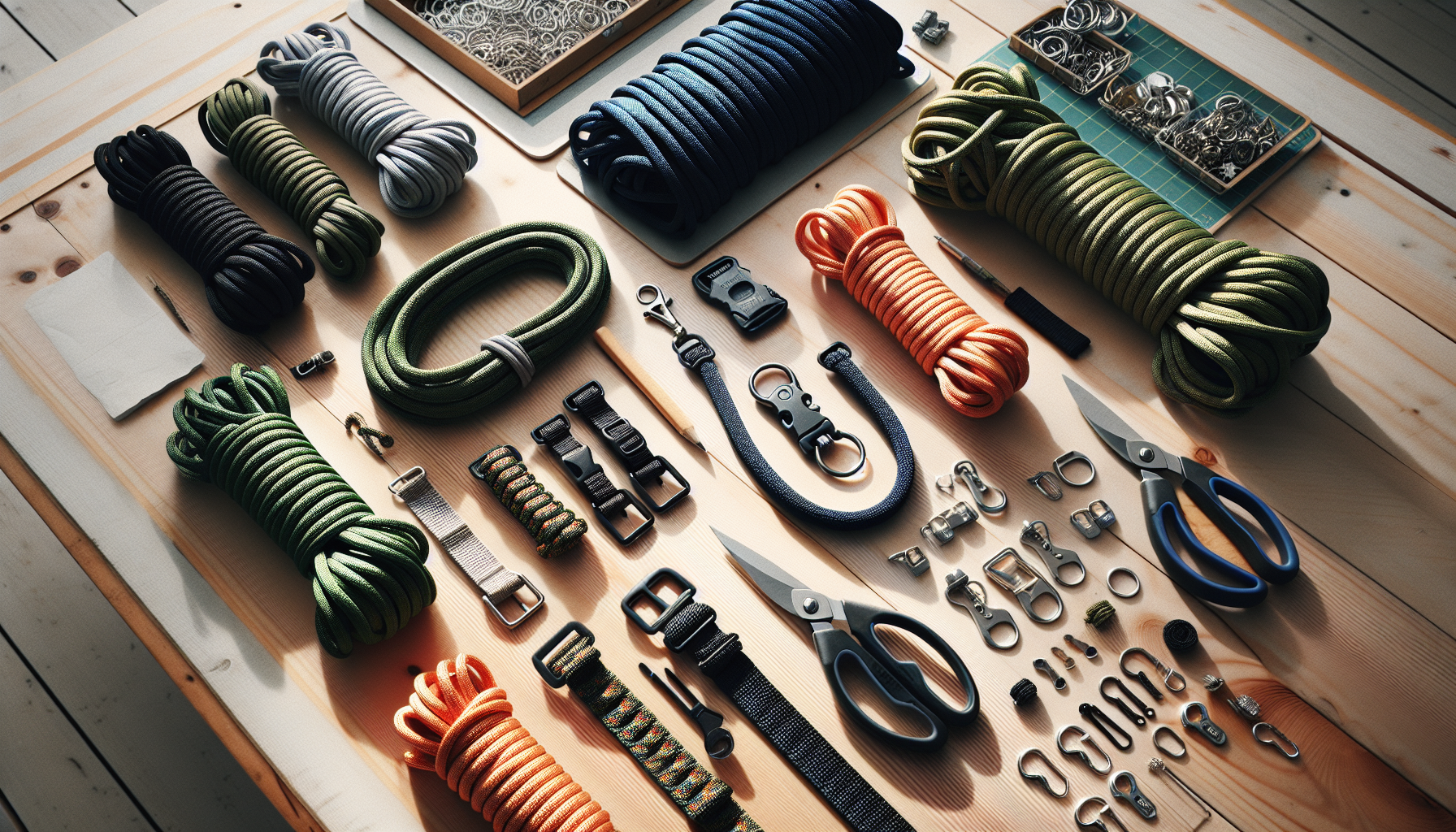
Paracord is popping up everywhere today – in bracelets, dog leashes, on backpacks, and as clever survival cords. But what exactly is paracord, and why has it become so popular in Sweden among both outdoor enthusiasts and crafters? To choose the right cord from, for example, Hilmaspyssel.se, it's helpful to understand how paracord is constructed, what "550" means, and when the different variants are most useful.
What is paracord? Construction, material, and meaning
Paracord is a type of parachute cord originally developed for military use. The classic variant, paracord 550, typically consists of:
-
A braided outer sheath of nylon or polyester that provides durability and color
-
Several inner strands (cores) that provide load-bearing capacity and flexibility
-
Stretchability and low weight, making the cord comfortable to wear and easy to work with
The number "550" refers to the approximate breaking strength in pounds (approx. 249 kg). Thinner variants such as microcord and nano cord have fewer or no core strands, are narrower, and are used more for details and decoration. This construction gives paracord a unique combination of strength, flexibility, and versatility that few other cords can match.
Common uses for paracord in everyday life, hobbies, and outdoor activities
What truly explains paracord's popularity is the many different ways it can be used:
-
Outdoor & survival: Spare cord for tarps and tents, shoelaces, attaching equipment, emergency situations where strong cord is needed
-
EDC (Everyday Carry): Survival bracelets, keychains, lanyards, and zipper pulls that are both stylish and practical
-
Hobbies & crafts: Bracelets, dog leashes, collars, camera straps, bottle holders, and accessories in personalized color combinations
-
Pet and stable environments: Leashes, collars, reins, and headbands that withstand weather, dirt, and daily use
In addition to its functionality, paracord is appreciated by Swedish users because it is affordable, easy to order online, and available in hundreds of colors and patterns from stores like Hilmaspyssel.se. The combination of practical utility and creative freedom has given paracord a natural place both in the craft corner and in outdoor equipment.
Why buy paracord from Hilmaspyssel.se? – Advantages, selection, and service
Once you've decided to buy paracord online, the next question quickly arises: where should you shop to get the right quality, good prices, and everything you need for your projects in one place? This is where Hilmaspyssel.se stands out as a specialized Swedish paracord store with a clear focus on beginners and experienced crafters, dog and horse owners, and outdoor enthusiasts alike.
Here's why Hilmaspyssel.se is a smart choice for paracord in Sweden
-
Specialized assortment: Large selection of paracord 550, thinner and thicker variants, in a multitude of colors, patterns, neon, and reflective – suitable for everything from bracelets to dog leashes and horse equipment.
-
Good price levels and packages: Opportunity to buy both by the meter and in ready-made kits, making it easy to try new projects without breaking the bank.
-
Fast, secure deliveries within Sweden: Short delivery times, clear stock status, and payment solutions that Swedish customers recognize and trust.
-
Personal customer service: Help with choosing the right paracord, buckles, and quantity based on your specific project – something many general hobby stores lack.
This means you can go from a vague idea to a real, durable project without unnecessary hassle. You'll find the right rope, matching accessories, and can also get tips through product descriptions, inspiration images, and guides directly in the store.
From idea to finished paracord project – a practical example
Imagine you want to make your first dog leash out of paracord. At Hilmaspyssel.se, you can:
-
Choose the right paracord through categories like "paracord 550" or "paracord for leashes"
-
Select accessories such as a suitable carabiner, rings, and decorative slides in a matching color
-
Calculate the quantity using product descriptions and size recommendations for different projects
-
Find inspiration from images and ideas on the site for color combinations and braiding techniques
The result will not only be a stylish leash but also a safe and well-designed craft. It's precisely this combination of broad assortment, clear structure, and personal support that makes many Swedish crafters return to Hilmaspyssel.se every time they need paracord.
Different types of paracord and how to choose the right one for your project
Choosing the right type of paracord is crucial for the appearance, safety, and durability of your project. Many people are content with buying "any paracord 550," but Hilmaspyssel.se offers several variants with different thicknesses, load capacities, and properties – something often overlooked in simpler guides. Here, we'll go through the most common types and how to match them to your specific needs.
The most common paracord types at Hilmaspyssel.se
-
Paracord 550 (standard): Approx. 4 mm thick, constructed with cores inside a smooth outer braid. Perfect for bracelets, dog leashes, keychains, stroller leashes, EDC straps, etc.
-
Thinner variants (microcord, nano cord): Used for details, edging, decoration, braided patterns on top of wider leashes, as well as for small projects like zipper pulls and markers.
-
Thicker ropes and multiparacord: More stable ropes for stronger dog leashes, horse items, belts, and leashes where you want more "fullness" and a clearer structure in the braid.
In addition to dimension, feel and flexibility are important. A child's bracelet benefits from softer paracord, while a working dog's collar should preferably be slightly stiffer to maintain its shape over time.
How to choose the right paracord for the right application
Always start with three questions before ordering:
-
What are you making? Bracelet, leash, reins, lanyard, or decoration? Think function first, then design.
-
How much load is required? For ornamental projects, thinner cords are sufficient, while products under tensile stress should be made from paracord 550 or stronger ropes – preferably in multiple strands.
-
Who will use the product? Child, large dog, pony, or adult outdoor enthusiast – adapt thickness, weight, and color accordingly.
Example:
- For a dog leash for a medium-sized dog, a braided leash of 550 paracord (4–6 lengths) is a good benchmark, complemented by a sturdy snap hook from Hilmaspyssel.se.
- For children's bracelets, 550 works well, but many choose thinner cord for a more delicate result and comfortable fit.
By considering the type, dimension, and use already at the time of ordering, you reduce waste, achieve better results, and can utilize Hilmaspyssel.se's large assortment in a more thoughtful way. This makes every meter of paracord more cost-effective – and every project both safer and more enjoyable to use.
Essential accessories for paracord – buckles, keyrings, and tools
For your paracord projects to be both beautiful, durable, and safe, the cord alone is not enough. The right paracord accessories make a huge difference – especially when knotting bracelets, dog leashes, horse tack, or keychains. At Hilmaspyssel.se, you'll find a well-thought-out assortment where buckles, rings, and tools are specifically adapted for paracord, so you don't have to guess.
Which accessories do you need for paracord?
Here are the most common accessories you'll use, and what they're best suited for:
-
Side release buckles (plastic/metal): Perfect for bracelets, children's projects, and EDC accessories. Choose stronger buckles for survival bracelets and leashes.
-
Keyrings, O-rings, and D-rings: The basis for lanyards, zipper pulls, and as attachment points in dog leashes and horse tack.
-
Carabiner hooks and snap hooks: Used as quick releases in leashes, reins, camera straps, and bottle holders. Choose stainless or nickel-free options for outdoor use and sensitive skin.
-
Slides, adjusters, and cord locks: Make it possible to create adjustable collars, belts, and straps that fit well on both humans and animals.
-
Tools (paracord needles, jigs, good scissors, and heat source): Provide more consistent results, neater finishes, and save a lot of time, especially on larger projects.
A smart way to start is to focus on a specific project and then select accessories based on function: "What needs to attach where?" and "Does it need to be adjustable or just fixed?".
Starter kits and rules of thumb – how to avoid buying the wrong items
Many guides mention accessories, but few talk about quantity and practical combinations. Here are some concrete examples, based on common projects at Hilmaspyssel.se:
-
Beginner bracelet (cobra):
– approx. 2.5–3 m of paracord 550 per bracelet
– 1 x 10–15 mm side release buckle
-
Simple keyring:
– approx. 1–1.5 m of paracord 550
– 1 keyring or small carabiner hook
-
Dog leash (approx. 1.5 m finished):
– 10–15 m of paracord 550 depending on the braid
– 1 strong snap hook + possibly a D-ring in the handle
Hilmaspyssel.se often offers ready-made starter kits where paracord, buckles, and rings are already matched. This is invaluable if you're a beginner – you can focus on learning the knots instead of chasing the right dimensions.
Once you get started, you can begin to build up a small "basic stock" at home: a few standard buckles, various ring sizes, a couple of types of carabiner hooks, and good scissors. Then you can spontaneously start new projects as soon as creativity strikes, and supplement with more specific accessories from Hilmaspyssel.se when planning larger or more advanced work.
Simple paracord projects for beginners – step-by-step ideas
Starting with paracord doesn't have to be difficult or expensive. With the right type of cord, a few simple accessories, and clear steps, you can quickly create both stylish and useful items – perfect if you're completely new to paracord crafting or just want to test it out before tackling larger projects. Here, we'll go through concrete beginner projects you can do immediately with materials from Hilmaspyssel.se.
Project 1: Classic paracord bracelet (Simple Cobra)
-
Recommended paracord: Paracord 550, 1-color or 2-color for effect
-
Length: Approx. 2.5–3 meters for an adult bracelet, approx. 2 meters for a child's bracelet
-
Accessories: 1 side release buckle
Here's how to do it in brief:
-
Measure your wrist and add about 1–2 cm for comfort.
-
Thread the paracord through the buckles and adjust to get the correct bracelet length.
-
Knot the Simple Cobra stitch tightly all the way between the buckles.
-
Trim any excess and carefully melt the ends with a lighter or heat source.
At Hilmaspyssel.se, you'll find both color-matched buckles and paracord in sets, making it easy to order everything you need in one go.
Projects 2–3: Keychain, lanyard & zipper pull
-
Keychain / lanyard
-
Paracord: Paracord 550 or slightly thinner cord for a more flexible feel
-
Length: 1–1.5 meters for a keychain, 2–2.5 meters for a lanyard
-
Accessories: Keychain ring, carabiner hook, or snap hook
-
Brief workflow: Attach the paracord to the ring with a lark's head knot, choose a simple knotting technique (e.g., cobra or spiral), and finish by melting the ends.
-
Zipper pull for a jacket or backpack
-
Paracord: Scraps of 550 or microcord
-
Length: 20–40 cm per pull
-
Accessories: Optional small carabiner hook or directly onto the zipper slider
-
Brief workflow: Fold the paracord in half, attach it to the zipper, and tie a few decorative knots – e.g., a simple diamond knot or a mini stopper knot – and melt the ends.
These small projects are perfect for practicing even knots, tension, and how much cord is actually used – experience that will be very useful when you later make leashes, belts, or horse tack.
More advanced paracord projects – dog leashes, horse tack, and accessories
Once you've mastered simpler knots and bracelets, a whole new world of more advanced paracord projects opens up. Here, your creations will not only be beautiful – they will also be functional and durable in everyday life. Many Swedes start with bracelets and quickly move on to dog leashes, horse tack, belts, and practical accessories, and this is where Hilmaspyssel.se comes in as a reliable material partner with the right cord, the right accessories, and the right inspiration.
Popular advanced projects and the right material choices
-
Dog leashes and dog collars: Often use paracord 550 combined with sturdy carabiner hooks and D-rings. Double or triple braiding provides extra strength.
-
Horse items (reins, bridle details, headbands): Focus on round braided patterns and preferably multi-colored combinations to match stable colors or competition outfits.
-
Belts, camera straps, and shoulder straps: Wide, flat-braided paracord provides both comfort and an exclusive handcrafted look.
-
Survival bracelets and outdoor accessories: Integrate a compass, fire steel, or whistle into the buckles for practical EDC equipment.
When planning a larger project, it's wise to sketch out the design, note down which buckles, rings, and hooks you need, and then calculate the length of paracord. Many experienced crafters add 10–20% extra length as a safety margin – something that can easily be ordered from Hilmaspyssel.se in your preferred colors.
Safety, durability, and planning before braiding
For advanced paracord projects, especially dog leashes and horse tack, safety is crucial. Always choose high-quality hardware and check that both the paracord's breaking strength and the buckles' construction match the animal's size and strength. Test the tensile strength by gradually loading the leash or strap before using it actively.
A smart approach is to first make a short "prototype" in simpler colors to fine-tune the length, pattern, and fit. Once you are satisfied, you can then order your favorite colors from Hilmaspyssel.se and create the final version. This way, you minimize waste, save time, and achieve professional results that both you and your animal can rely on for years to come.
Care, storage, and durability – how to make your paracord last longer
For your paracord projects from Hilmaspyssel.se to remain both safe and attractive over time, you need to take care of them properly. Many guides mention that paracord is durable, but few go into depth about care, washing, and storage – despite it being crucial for dog leashes, horse tack, and bracelets used daily.
How to wash and care for paracord correctly
-
Washing paracord products: Hand washing in lukewarm water with mild detergent is gentlest. For heavy dirt (e.g., dog leashes), you can use a laundry bag in a machine on a delicate cycle, about 30 °C.
-
Drying without damaging the fibers: Always air dry paracord flat or hanging. Avoid tumble dryers and direct radiator heat, which can affect the nylon's strength and shape.
-
Protection against discoloration and wear: Rinse off salt, sand, and mud as soon as possible. For outdoor products – choose darker or patterned colors from Hilmaspyssel.se if you know they will be exposed to a lot of dirt.
By implementing a simple routine after walks, rides, or weekend hikes – rinsing, checking, and allowing to dry – you significantly extend the lifespan and keep colors sharp longer, even on intense neon or patterned cords.
Smart storage, repurposing, and safety checks
-
Storing loose paracord: Roll or braid your lengths and store them in a dry, dark place, preferably in boxes or bags labeled with length and type. This makes the next project quicker to start and reduces tangles.
-
Use scraps smartly: Shorter remnants can become zipper pulls, small keyrings, markers for backpacks, or color-coded loops for stables and storage. This way, you reduce waste and get more value out of every meter from Hilmaspyssel.se.
-
Regular safety checks: Inspect dog leashes, collars, and horse tack regularly – look for frayed sections, sun-bleached and weakened areas, as well as wear around buckles and rings.
By combining proper care, thoughtful storage, and a simple safety checklist, you’ll ensure your paracord projects last longer, look better, and feel safer to use. This makes every investment in paracord and accessories from Hilmaspyssel.se even more cost-effective over time.
Common questions about paracord and Hilmaspyssel.se
Q: How many meters of paracord do I need for a bracelet, leash, or collar?
A: As a rule of thumb, approximately 1 meter of paracord is needed per 1 cm of finished length for a standard cobra bracelet in paracord 550. A 18 cm bracelet therefore requires about 2 x 2 m (depending on the pattern). For dog leashes (approx. 1.8–2 m), 15–25 m of paracord is often needed, depending on the braiding technique and thickness. A dog collar in paracord 550 often requires 5–10 m. Hilmaspyssel.se usually specifies recommended lengths in many product descriptions – a good guide if you are unsure.
Q: Is paracord 550 safe to use for dog leashes and horse equipment?
A: Paracord 550 has a stated breaking strength of around 250 kg, which makes it strong enough for most dogs – but safety also depends on how you braid, how many strands you use, and which fasteners/buckles you choose. For large, strong dogs or horse equipment, it's wise to:
- Braid in multiple layers or use wider patterns
- Combine with sturdy high-quality carabiners and D-rings
- Always test the tensile strength before using the equipment in real-life situations.
Paracord should never replace approved safety equipment when life and health are at stake, but rather be seen as a complement.
Q: Can I wash paracord products in a washing machine without damaging them?
A: Yes, nylon or polyester paracord usually tolerates gentle machine washing, but there are a few things to consider:
- Place the product in a laundry bag so that buckles and metal parts do not get caught
- Choose 30–40 °C and mild detergent without bleach
- Let paracord air dry – avoid tumble dryers, which can deform the material.
For extra delicate projects or where metal parts may rust, hand washing in lukewarm water is often safest.
Q: What distinguishes paracord from ordinary braided string or rope in a craft store?
A: Genuine paracord (especially 550) has a core with several inner strands and a tightly woven outer sheath. This provides:
- Higher strength relative to thickness
- Better shape stability in advanced braids
- The ability to use the inner strands separately for sewing, repair jobs, or decoration.
Cheaper craft ropes may suffice for simple decorations, but if you want to make durable bracelets, leashes, or outdoor equipment, real paracord from a specialty store like Hilmaspyssel.se is a safer choice.
Q: What's the best way to start with paracord if I've never tried it before?
A: Start simply and structured:
1. Choose paracord 550 in 1–2 colors and a couple of side release buckles – perfect for bracelets.
2. Try the "simple cobra" pattern, which is easy to learn and looks professional.
3. Follow a picture or video guide's steps – Hilmaspyssel.se often links to inspiration in product texts or social media.
4. Then move on to keychains, lanyards, or zipper pulls.
This way, you learn the basics, how much paracord is needed, and how the material behaves – without risking expensive mistakes on larger projects.
Conclusion: Time to turn ideas into paracord projects
You have now received a complete overview of what paracord is, how to choose the right cord and accessories, as well as concrete examples of both simple and advanced projects – from bracelets and keychains to dog leashes and horse equipment. We have also covered care, durability, and smart storage, so that your creations last a long time and are used safely in everyday life, outdoor activities, and for pets.
The next step is to put inspiration into action. Start with a small project – for example, a simple cobra bracelet – and then let the difficulty increase as your technique improves. Visit Hilmaspyssel.se to choose the right paracord, buckles, and tools, or ready-made starter kits if you want to get started right away. Explore colors, patterns, and guides, fill your shopping cart with what you need, and start your next paracord adventure today.