


Awl from Hilmaspyssel.se – the small tool hero in your craft box
Do you want to make neat, precise holes in fabric, leather, or paper without a hassle? Then an awl is one of the most useful small tools you can have. At Hilmaspyssel.se, you'll find well-designed awls and accessories tailored for Swedish crafters, seamstresses, and hobbyists who want professional results – even at the kitchen table.
In this guide, we'll cover everything you need to know: what an awl is, how it differs from a punch and hole pliers, how to use it safely step-by-step, clever craft ideas, ergonomics tips, and how to choose the right model at Hilmaspyssel.se. The goal is for you to feel confident, inspired, and ready to start creative projects right away.
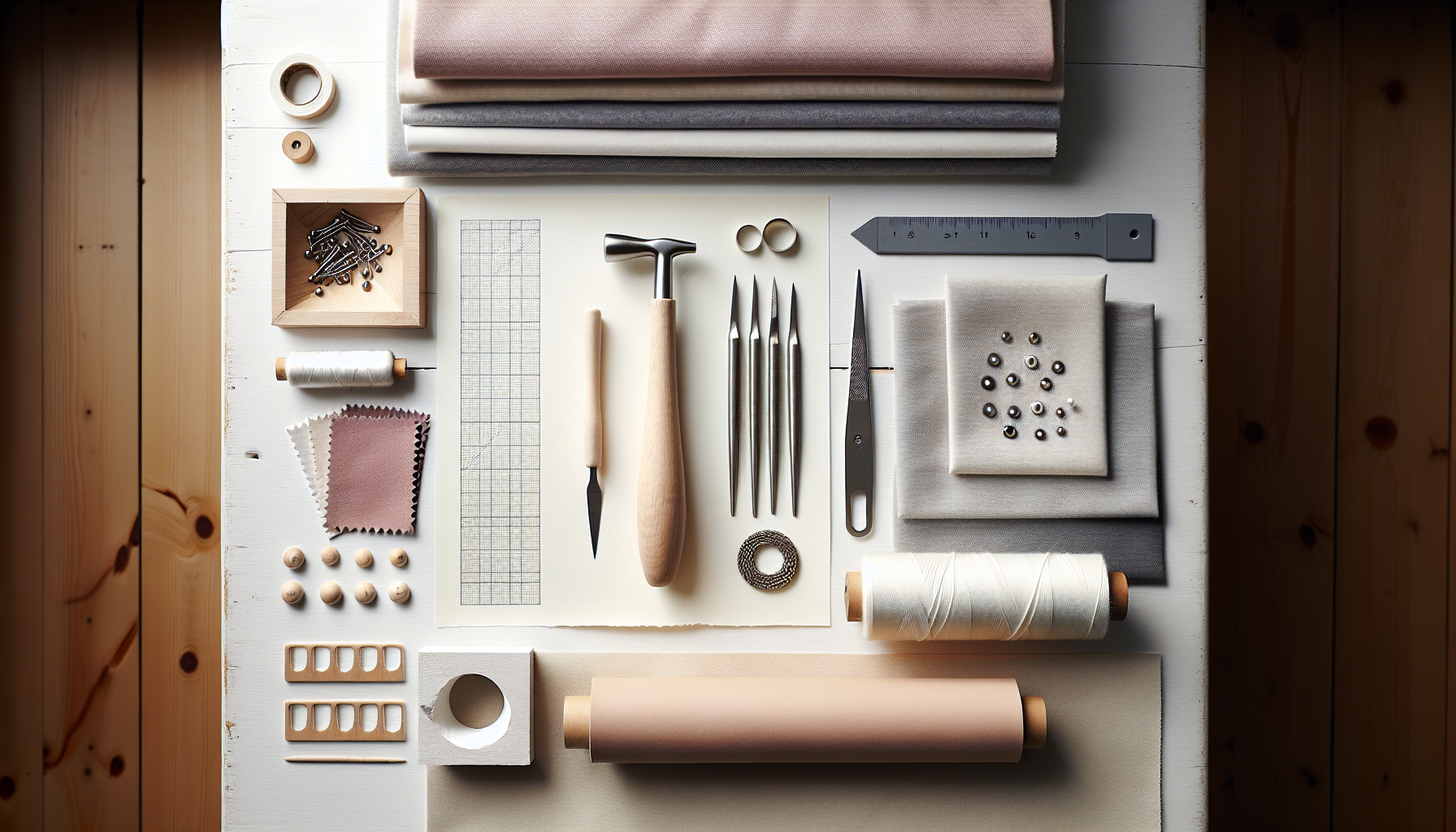
An awl is a small but incredibly useful hand tool that you'll quickly realize you don't want to be without in your craft corner. Briefly described, it's a pointed stick with a handle, designed to make controlled holes in materials like fabric, leather, felt, paper, and cardboard – without tearing or splitting the material. Where many start with scissors or a needle and are dissatisfied with the result, an awl provides a clean, precise opening that can be controlled in both size and placement.
The difference between an awl, stiletto, hole punch pliers, and similar tools
Many wonder: "Do I really need an awl if I already have a stiletto or hole punch pliers?" Here it's good to distinguish between the tools:
-
Awl: Narrow, conical tip that opens up the fibers of the material rather than cutting them. Perfect for sewing, leather details, and paper crafts where you want to maintain the material's strength.
-
Stiletto: Similar to an awl but often coarser and more suited for harder materials or thick leather; doesn't always provide the same precision in thin fabrics.
-
Hole punch pliers: Punches out actual holes by removing material, best when you need identical holes in e.g., belts or straps.
-
Needle: Good for sewing, but too thin and difficult to grip when making many or slightly larger holes.
By choosing the right tool for the right job, you'll get both neater results and greater durability for your projects.
Types of awls and why it belongs in every craft box
On the market – and at stores like Hilmaspyssel.se – there are several variants of awls:
-
Classic awl with wooden handle: Timeless, durable, and comfortable to hold for extended periods. Wood provides a good grip even if hands get a little warm or damp.
-
Ergonomic awl with rubber grip: Designed for those who make many holes in a row, e.g., for leather crafting or intensive sewing work. Reduces strain on hand and wrist.
-
Awl with interchangeable tips: Smart solution if you work with different materials and need to switch between thinner and thicker tips without changing the entire tool.
An awl is, in other words, a true basic tool: it helps you prepare holes for buttons, eyelets, lacing, decorative seams, and jewelry details. Once you've tried it in your textile projects, leather crafts, or scrapbooking, it quickly becomes clear why so many experienced crafters always have at least one awl close at hand.
Awl from Hilmaspyssel.se – Assortment, quality, and advantages
When you're looking for an awl that feels secure in your hand and delivers precise results, there's a big difference between brands. At Hilmaspyssel.se, a Swedish online store completely focused on crafts, sewing, and hobbies, the assortment is carefully selected to work in real life – at the kitchen table, in the sewing studio, or in the classroom. Here you'll find models suitable for everything from quick hole punching in paper to more demanding leather and textile projects.
Quality in focus – materials, precision, and the right accessories
Hilmaspyssel.se places great importance on both feel and durability in their tools:
-
Well-designed handles: Awls with wooden handles for a classic feel, as well as models with easy-grip plastic or rubber for those who work for long periods.
-
Sharpness and precision in the tip: Hard, durable metal tips that create clean holes without tearing fabric, faux leather, or paper.
-
Matching accessories: Complementary products like eyelets, cords, decorative ribbons, needles, and thread make it easy to create a complete finish directly from the same store.
Unlike many general e-retailers, the assortment is curated for crafters. This is evident in details such as tip sizes, handle lengths, and how the tools work with other hobby products in the store.
The advantages of a niche hobby store – and how the assortment follows the season
Shopping for awls at a specialized craft store offers several concrete advantages. You get personal support, knowledgeable customer service that understands the difference between a thin cotton fabric and thick leather, and fast delivery adapted to Swedish buying patterns (for example, before Christmas crafts or the start of school).
An additional strength of Hilmaspyssel.se is that they continuously adjust their assortment according to Swedish craft trends and seasons. Before Christmas, for example, you can combine your awl with glittery ribbons and tags, while spring offers materials for weddings, christenings, and graduations. The result is that you don't just buy a tool – you gain access to a whole idea bank of projects that suit the time of year you craft the most.
How to use an awl step-by-step – from beginner to skilled hand
Using an awl is easy once you've learned the basics, but many beginners worry about ruining their fabric or pricking their fingers. With the right technique, good support, and a well-thought-out work order, the awl quickly becomes one of your most precise tools – whether you're crafting with fabric, leather, or paper.
Preparations for perfect holes
Before you start making holes, you need to create a safe environment:
-
Choose a stable surface: Use a cutting mat, thick cardboard, or a wooden board that can withstand punctures.
-
Mark the holes carefully: Draw faint dots with a textile pen, pencil, or pattern paper so you know exactly where the tip should be placed.<
-
Choose the right tip and size: Thin, sharp tip for cotton and paper, slightly thicker for denim, leather, and thick cardboard.
-
Work in good light: Good lighting makes a big difference for precision and reduces the risk of crooked punctures.
Place the material flat against the surface and always test on a scrap piece first. This gives you a feel for how much pressure is needed for the specific material you're working with.
Step-by-step: Technique, materials, and common mistakes
-
How to hold the awl: Grip the handle like a pen but with a slightly firmer hold. Keep your other hand at a safe distance behind the direction of the tip.
-
Making holes in fabric: Press the tip straight down into the fabric, preferably in two stages rather than one brutal push. On thicker fabric like denim, you can gently "rotate" the tool to open the hole without tearing the fibers.
-
Making holes in leather and faux leather: Work calmly and straight. Let the tip do the work and avoid bending, as this can cause the hole to crack or become oval.
-
Making holes in paper: Use minimal force and support the paper properly to avoid tearing.
-
Enlarging holes controllably: Once the hole is made, gently rotate with small circular movements instead of pressing harder.
A common mistake is to press too hard too quickly, which results in uneven holes and unnecessary strain on the wrist. Another is to skip marking – then the holes are rarely straight, especially for long rows for lacing or eyelets.
For extra even series of holes, you can:
-
Use a ruler or tape measure for exact distances
-
Create simple templates in cardboard with pre-pricked holes
-
Lightly tape the fabric to the surface to prevent it from slipping
Finish with a small beginner project, such as a simple pierced card or a lacing detail on a fabric bag. This allows you to practice marking, pressure, and rotation without risking an "important" garment – and your awl from Hilmaspyssel.se will begin to feel like a natural extension of your hand.
Craft ideas with an awl – creative projects you can do at home
An awl is more than just a practical aid – it can become your best friend when you want to create personal, durable, and unique projects at home. With a single tool, you can switch between textile, leather, paper, and mixed materials, making it perfect for those who enjoy varying their crafts. Here are concrete ideas that are easy to adapt to your skill level, style, and the materials you find at Hilmaspyssel.se.
Textile, leather, and paper – creative projects step-by-step
-
Decorative lacing on textiles: Pre-punch holes in cushion covers, fabric bags, gym bags, or toiletry bags and thread ribbons, cords, or leather laces through for a corset-like lacing. Combine with eyelets for extra durability.
-
Curtains, pennants, and flags with eyelets: Use the awl to mark and pre-punch holes before pressing in eyelets – perfect for curtain rods, party pennants, or outdoor flags.
-
Leather and faux leather projects: Create keychains, simple bracelets, bag tags, and labels by first making holes with the awl and then attaching rings, rivets, or cords. An excellent way to utilize leather scraps.
-
Scrapbooking and card making: Create dotted outlines around photos, card edges, or labels by perforating the paper at regular intervals. Thread thin yarn through for embroidered cards or let the holes stand for a discreet, tactile effect.
-
Child-friendly piercing cards: Create thick cardboard cards with hole patterns – hearts, stars, letters – that children can "sew" through with yarn and blunt needles (always under adult supervision).
By starting with simple basic shapes – rectangles, circles, ribbon edges – you can quickly build up a collection of reusable patterns that make crafting both faster and neater time after time.
Seasonal projects with materials from Hilmaspyssel.se
The awl truly comes into its own in seasonal crafting. Before Christmas, you can make paper tags with perforated edges, Christmas stockings with lacing, or leather tags for gifts. For Easter, the same technique works for pennants, place cards, and decorative ribbons around napkins. For school start, it's the perfect time to make personalized lanyards, name tags, and bookmarks in leather or thick cardboard. For christenings and weddings, you can create delicate invitation cards with perforated patterns, holes for silk ribbons, and handmade place cards.
By combining the awl with paper, ribbons, eyelets, cords, leather pieces, and decorations from Hilmaspyssel.se, you can create a common thread through all your projects – while keeping costs down and achieving a more durable, personal expression than what is available ready-made in stores.
Safety, ergonomics, and sustainable use of your awl
An awl is a small tool with great power – and therefore, it is especially important to use it safely and in a way that is gentle on your body. Many guides mention sharp tips in passing, but rarely go into depth about safe handling, ergonomics, and sustainable use. Here you'll find a thorough review so that your awl from Hilmaspyssel.se becomes a reliable companion for many years.
Safe handling in everyday life
-
Store child-safe: Always keep the awl in a case, tool roll, or drawer where the tip is protected. Place it high up if you have children at home.
-
Work away from your body: Always point the tip away from yourself and away from the hand holding the material, especially when making stronger holes in leather or multiple layers of fabric.
-
Use the right base: A cutting mat or a piece of thick cardboard reduces the risk of slipping and puncturing the table – or your hand.
Also consider the work environment: good lighting and a clean work surface make a big difference for precision and reduce the risk of careless mistakes that can lead to puncture injuries.
Ergonomics, care, and sustainability perspective
-
Vary your grip: If you hold it tightly for a long time, the risk of pain in your thumb and wrist increases. Change your grip sometimes and preferably choose an ergonomic handle if you craft often.
-
Take micro-breaks: When making many repetitive holes (e.g., for eyelets or lacing) – pause every 5–10 minutes, shake your hands, and stretch your shoulders.
-
Clean and protect the tip: Wipe the metal tip after use, especially after leather and glued paper, and put on a protective sleeve if one is included.
-
Replace worn tips in time: A bent or dull tip requires more force, produces uglier holes, and increases strain on the wrists. Invest in spare tips instead of struggling with a tired tool.
-
Think sustainably: With a quality awl, you can repair jackets, bags, and belts instead of throwing them away – a simple effort that benefits both your wallet and the environment.
By combining smart safety awareness, ergonomic habits, and regular care, you get a tool that lasts a long time and feels safe to use even during longer crafting sessions. This, in turn, encourages you to tackle larger projects – from bags and leather bracelets to advanced textile decorations – without compromising on either safety or comfort.
How to choose the right awl at Hilmaspyssel.se – buying guide for different needs
When buying your first – or next – awl at Hilmaspyssel.se, it's easy to get caught up in details: wooden handle or rubber, thin or thick tip, simple model or professional variant? Instead of guessing, it pays to consider how you actually craft. This part of the guide will help you make a thoughtful choice so that your awl feels comfortable in your hand, lasts a long time, and works optimally with the materials you use most.
Questions to ask before adding the awl to your cart
Before you click "buy," it's smart to reflect on:
-
Which materials you work with most: thin cotton, thick denim, leather/faux leather, paper, or cardboard
-
How often you will use the awl: single projects, every week, or daily
-
How important ergonomics are to you: do you have sensitive wrists, do you craft for long periods?
-
What precision you need: coarse holes for eyelets or small, discreet holes for seams and decorations
-
What other tools you already own: hole punch pliers, sewing machine, cutting mat, rulers, etc.
By answering these questions honestly, it becomes much easier to sift through the models at Hilmaspyssel.se and find an awl that truly matches your way of creating – not just one that looks good in the product image.
Features to compare – and how to find the right one at Hilmaspyssel.se
Once you know what you need, you can start comparing details:
- Handle type:
- Wooden handles provide a classic feel and good grip.
- Plastic or rubber handles can be lighter and more ergonomic for long sessions.
- Tip shape and size:
- Thin, pointed needle for paper and thin textiles.
- Stronger, possibly conical tip for leather and thick layers.
- Interchangeable tips are perfect if you want to cover several uses with one tool.
- Complementary tools:
- Hole punch pliers and eyelet tools if you make many holes in straps, belts, and bags.
- Cutting mat, rulers, and marking pens for precise patterns and series of holes.
-
Scissors and rotary cutters that match your projects, especially if you sew into the holes afterwards.
At Hilmaspyssel.se, you can use categories and filters to quickly find the right type of tool. Also, look at related products under each item – matching accessories often appear there, making your craft box more complete without buying unnecessary duplicates. Valuable information is often also hidden in the product descriptions, such as recommended materials and care instructions, which many other guides don't mention but which make a big difference to your satisfaction in the long run.
Combine an awl with other hobby tools from Hilmaspyssel.se for best results
An awl is most useful when it interacts with other smart hobby tools. At Hilmaspyssel.se, you'll find everything you need to go from simple home crafting to projects that look professional – without it becoming complicated or expensive. In this section, we show you how to build effective tool combinations around your awl for textiles, leather, and paper.
How the awl interacts with your other favorite tools
-
Sewing machine and hand sewing thread: Pre-punch holes with the awl for decorative stitches on thicker materials where the sewing machine has difficulty getting through.
-
Eyelet tool and hole punches: Use the awl to mark and pre-punch holes before pressing in eyelets – provides better precision and reduces the risk of the fabric tearing.
-
Cutting mat, rulers, and pattern paper: A cutting mat protects the surface when you work, while a ruler and pattern paper help you keep hole rows perfect and symmetrical.
-
Scissors and rotary cutters: Combine clean cuts with pinpoint holes where you want lacing, decoration, or the ability to attach details.
Together, these tools create a workflow where you work faster, more ergonomically, and with significantly more consistent results than if you only used one individual tool at a time.
Suggestions for smart starter kits – build a flexible craft box
To make it easy to get started, you can think in terms of small, well-thought-out kits instead of buying everything at once:
- Textile craft kit:
- Awl with good grip
- Cutting mat and ruler
- Sewing machine needles and quality thread/hand quilting thread
-
Eyelets and a simple eyelet setting tool
-
Leather and faux leather kit:
- Robust awl, preferably with a stronger tip
- Hole punch for different hole sizes
- Rivets/snaps and mounting tools
-
Cutting knife and cutting mat
-
Scrapbooking and paper kit:
- Fine-tipped awl for precise holes
- Cutting mat, metal ruler, and craft knife
- Decorative ribbons, cords, and brads/clips
- Patterned paper and card bases
By building your craft toolbox step by step through Hilmaspyssel.se, you can focus on tools that are actually used, instead of filling boxes with impulse buys. Start with the projects you actually want to do next season – Christmas cards, wedding decorations, back-to-school crafts – and choose tools that work broadly for many types of materials. This way, you get a durable, flexible setup where the awl is the hub that ties everything together.
Frequently asked questions about awls
Q: What is the difference between an awl, a punch, and a hole punch?
A: An awl has a thin, pointed metal tip that is pushed through the material, creating a controlled hole by pushing the fibers apart rather than cutting them. A punch is often coarser, used more in woodworking and leatherwork, and provides less precision in thin fabrics and paper. A hole punch punches out a circle and removes material, which is perfect for eyelets and belts but less suitable when you want to maintain the material's strength. For sewing, scrapbooking, and finer crafts, the awl is therefore the most versatile basic tool.
Q: Can I use the same awl for fabric, leather, and paper?
A: Yes, but you will get the best results if you adjust the size and shape of the tip to the material. For thin fabrics and paper, a narrow, pointed awl is ideal. For thick leather or multiple layers of paper, a slightly stronger tip may be better. A good tip is to have:
- A fine tip for cotton fabric, denim, and paper
- A more robust tip for leather and faux leather
- A separate craft awl for children's projects, so your finest one isn't worn out on cardboard and thick materials
Q: Is it safe to let children use an awl in crafts?
A: Yes, but always under adult supervision. Let the children work sitting at a table, with clear rules: the tip should always point away from the body and fingers. For younger children, you can pre-punch the holes and let them sew or thread string through. Always store the awl safely, high up or in a locked drawer when not in use.
Q: How do I know if my awl needs to be replaced or sharpened?
A: Signs that the tip is worn include:
- Frayed holes in fabric or paper edges that tear
- Having to exert abnormal force to get through the material
- Visibly bent or chipped tip
Then it's time to replace the tip if it's replaceable, or invest in a new quality awl. Always clean the tip lightly after use, especially after working with leather, to extend its lifespan.
Q: What other tools from Hilmaspyssel.se go well with an awl?
A: For best results, it's smart to combine the awl with:
- Cutting mat – protects the table and provides a stable surface
- Rulers and pattern paper – for straight lines and accurate patterns
- Eyelet setting tool and eyelets – when you want to reinforce holes in curtains, banners, and bags
- Scissors, needles, and thread – to be able to sew or decorate through the holes immediately
At Hilmaspyssel.se, you'll find ready-made categories and related products that make it easy to build a well-thought-out craft kit.
Q: I'm a complete beginner – what first project do you recommend?
A: Start with something small where you quickly see results. Three popular "first projects" are:
- Simple sewing card in sturdy paper where you follow pre-dotted lines
- Faux leather key ring with pre-punched holes for stitching or rivets
- Decorative lacing on a simple fabric pouch or tote bag
Focus on practicing even spacing between the holes rather than perfection. Once you're comfortable, you can move on to more advanced projects such as bracelets, pennants, or personalized gift tags.
Conclusion: Do more with your crafting with the help of a simple awl
Now you know how an awl can transform everything from simple repairs to advanced textile, leather, and paper projects. We have covered what the tool is, how to use it step by step, smart safety and ergonomics tips, creative craft ideas, and how to choose the right model and combine it with other hobby tools. Together, this gives you a solid foundation for working more precisely, sustainably, and creatively – whether you are a beginner or an experienced crafter.
The next step is to actually try it. Choose a small project – a bracelet, a card, or a simple lacing on a bag – and feel the difference when you work with the right tool. Explore the range of awls, accessories, and matching hobby products at Hilmaspyssel.se, access more guides, and gradually build a well-thought-out craft box. This way, you can create more, throw away less, and give your ideas a professional finish at the kitchen table.