


Nylon & Polyester for Crafts and Sewing – A Complete Guide with Hilmaspyssel.se
Are you weighing up between nylon webbing and polyester webbing for your next project – a dog collar, bag, lanyard, or interior detail? The choice of material affects everything: durability, feel, function, safety, and the actual appearance of your finished craft. In this guide, we clarify the differences between nylon and polyester, with a particular focus on the webbings, cords, and fabrics you’ll find at Hilmaspyssel.se.
Many wonder: which material withstands weather best, which chafes least against the skin, and what holds its shape longest? Here, you'll get clear answers, practical comparisons, and concrete tips for both beginners and experienced sewing enthusiasts. You'll also receive care instructions, sustainability perspectives, and a simple buying guide so you can confidently choose the right products from Hilmaspyssel's range for your specific project.
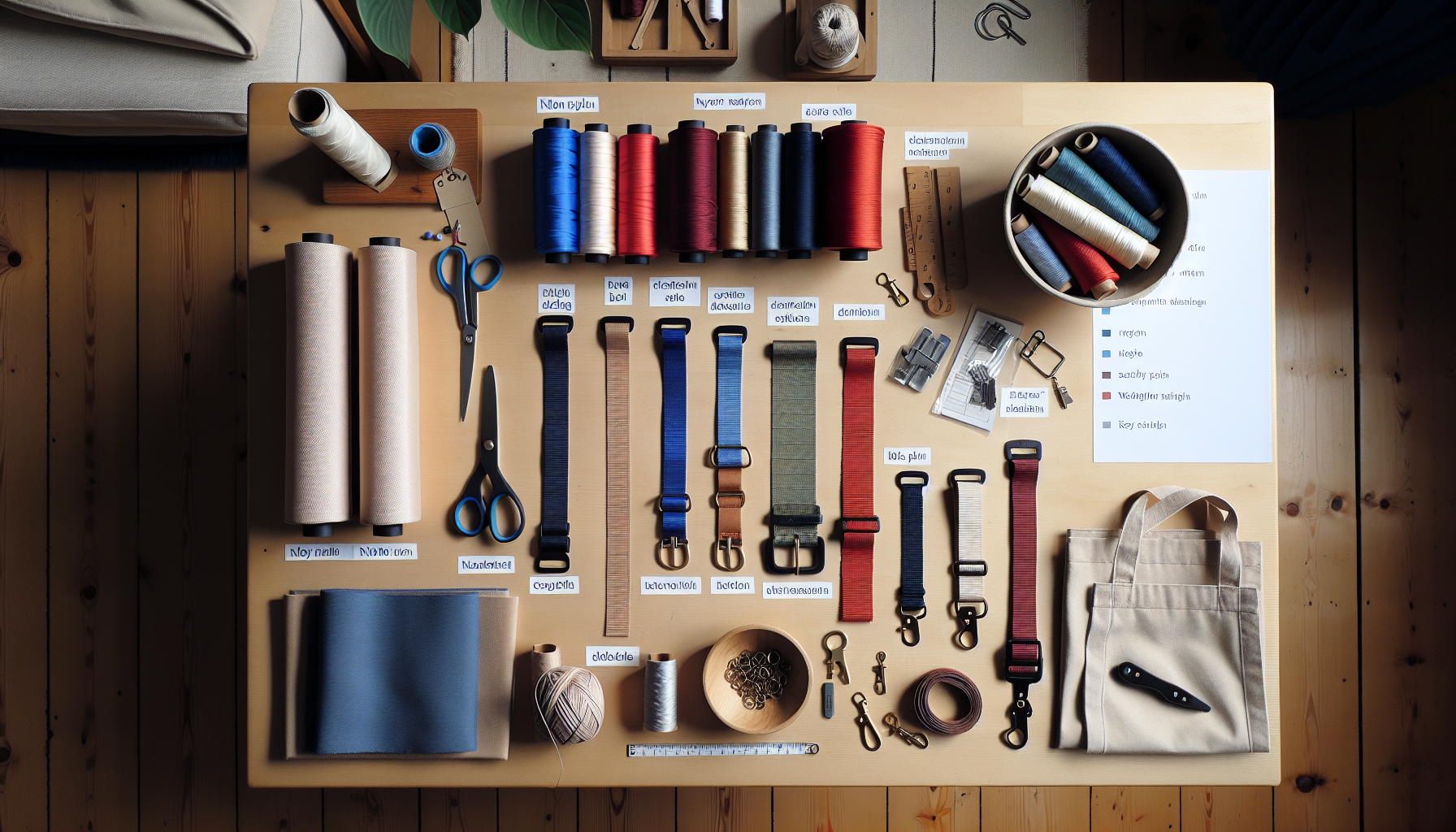
When choosing webbing, cords, or fabrics for your projects at Hilmaspyssel.se, the question quickly arises: should you choose nylon or polyester? To make smart, durable, and attractive choices, you need to understand what these synthetic materials actually are – and why they behave the way they do in your finished products.
Brief Material History & What Synthetic Fibers Are
Nylon was the first fully synthetic fiber to achieve commercial success in the 1930s-40s, developed to mimic and replace more expensive natural materials like silk. Polyester was developed shortly thereafter and quickly became popular due to its durability and low maintenance requirements.
Synthetic fibers like nylon and polyester are made from petrochemical raw materials (oil/natural gas), in contrast to natural fibers like cotton, linen, and wool, which come from plants or animals. This gives them different properties:
-
High strength: resists pulling and stress without breaking
-
Elasticity: nylon, in particular, has a certain springiness
-
Water resistance: fibers do not absorb water like cotton
-
Colorfastness: often fades slower than many natural materials
This combination means that nylon and polyester webbings, straps, and fabrics handle both everyday use and tougher environments very well.
Why Nylon and Polyester Are So Common in Webbings, Cords, and Straps
In sewing, dog accessories, bags, and crafts, the requirements are often clear: the material should be strong, dimensionally stable, and easy to care for, preferably at a reasonable price per meter. Both nylon and polyester excel here, which is why you'll find so many variations of them at Hilmaspyssel.se.
Generally speaking, one can say:
-
Nylon is best suited when you need a bit of extra strength and flexibility, e.g., in dog collars, leashes, or load-bearing straps where comfort plays a role.
-
Polyester is best suited when UV resistance, colorfastness, and dimensional stability are more important, e.g., in decorative ribbons, bag straps, outdoor projects, or where the webbing is frequently exposed to sun and moisture.
By understanding this fundamental difference, you'll have a clear starting point for the rest of the guide, where we delve deeper into how to choose the right material for your specific project.
Nylon vs. Polyester – Noticeable Differences in Properties
When you hold a piece of webbing or fabric and wonder, "Should I choose nylon or polyester?", in practice, it's the feel, durability, and how the material behaves in everyday life that determines your choice. In this section, we go beyond the usual superficial comparisons and focus on what you'll actually notice in your finished project – from dog collars and backpacks to lanyards and interior details.
Mechanical Properties, Feel, and Appearance
- Abrasion Resistance and Tensile Strength: Nylon is generally slightly stronger and more resilient, making it popular for leashes, harnesses, and load-bearing straps. Polyester is also very durable, but it retains its shape better over time and stretches less.
- Elasticity and Stretchability: Nylon can give a bit more under load, which can feel comfortable in, for example, dog collars. Polyester is more dimensionally stable – perfect when you want a webbing to maintain its length and shape, as in bag straps or backpacks.
-
Feel, Sheen, and Stiffness: Nylon often feels somewhat softer and more "silky" with a discreet sheen, while polyester can more easily be made matte or textured (like grosgrain ribbon). This makes polyester excellent when you want decorative ribbon with a clear texture or webbing that should lie neatly without slipping.
In practice, this means nylon often feels a bit softer against skin and fur, while polyester webbing gives a more rigid, "crisp" impression – perfect for projects where you want edges and folds to stay neat for a long time.
Moisture, Heat, Color, and Comfort – Choose Right for the Application
- Moisture and Water: Polyester absorbs very little water and dries quickly, which is an advantage for outdoor use and sports accessories. Nylon can absorb slightly more moisture but is still significantly more water-resistant than natural materials.
- Heat Resistance: Polyester generally tolerates slightly higher temperatures than nylon. This is noticeable when ironing, using a heat gun, or heating the ends of webbing to prevent fraying. Nylon requires more caution – too much heat can cause shiny spots or melt the fibers.
- Colorfastness and UV Resistance: Polyester is better at retaining color in strong sunlight and with repeated washing. Nylon can fade faster from UV light, which is important if the product will be used outdoors frequently, for example, on a boat, during dog sports, or on a stroller.
-
Odor and Comfort Against the Body: Both materials are synthetic, but thanks to their low moisture absorption, they often smell less "stuffy" than some natural materials after sweat or rain – especially if washed correctly and allowed to dry thoroughly.
In summary: choose nylon if you want a slightly softer, very strong material for, e.g., leashes, harnesses, and load-bearing straps that are not constantly exposed to direct sunlight. Choose polyester when you prioritize dimensional stability, colorfastness, UV resistance, and quick-drying properties – perfect for decorative ribbons, bag straps, lanyards, and outdoor projects with materials from Hilmaspyssel.se.
Common Applications – From Hobby Projects to Hard-Working Products
Nylon and polyester webbing appear in significantly more contexts than many realize. That's why it's smart to base your material choice at Hilmaspyssel.se on the intended application. Here, we'll explain how you can utilize the strength, dimensional stability, and water resistance in practice – whether you're sewing bags, dog collars, or making creative lanyards with printing.
Clothing, Accessories, and Everyday Interiors
-
Clothing and Sports: Polyester is standard in athletic wear, lined jackets, and rain gear due to its quick drying time and good colorfastness. Nylon is often used where extra durability is required, such as reinforcements on knees, elbows, or in performance apparel.
-
Bags, Toiletry Bags, and Laptop Sleeves: Here, both nylon and polyester webbing do a great job as handles, shoulder straps, and reinforced edges. Nylon often provides a slightly softer feel against the skin, while polyester webbing (e.g., grosgrain) offers an attractive texture and holds its shape very well.
-
Interior Design and DIY: Polyester webbing is excellent for curtain tape, decorative trim on cushions, pillows, and covers. For outdoor use, such as cushion ties or straps for furniture covers, polyester's better UV resistance is a clear advantage.
When planning a home project, you can advantageously combine materials: durable nylon straps where there's pulling and stress – and decorative polyester webbing where you want color and dimensionally stable edging.
Tech, Outdoor Life, and Creative Crafts with Hilmaspyssel.se
-
Tech and Outdoor Details: Nylon paracord, strong nylon webbing, and straps are used in backpacks, tension straps, harnesses, and other equipment that must withstand heavy loads. Here, tensile strength and abrasion resistance are crucial.
-
Dog Collars, Leashes, and Harnesses: A classic application where many choose nylon webbing for its soft feel and high strength. Polyester can be a good choice if the equipment is often in the sun, for example, on a patio or in the car.
-
Creative Crafts: At Hilmaspyssel.se, you'll find reflective webbing, safety webbing, brightly colored decorative ribbons, and bias tape in polyester – perfect for lanyards, bracelets, reflective products for strollers or jackets, and personalized giveaways.
-
Matching Accessories: Always complement with the right clips, buckles, D-rings, and snap hooks that are sized for the webbing's width and intended load. This makes your projects both safer and more professional.
Some popular projects to start with include a personalized dog collar, a colorful lanyard for all the family's keys, or new, adjustable straps for your favorite bag. By choosing the right type of nylon or polyester webbing from Hilmaspyssel.se, you'll get projects that both last longer and look more polished.
Advantages and Disadvantages – An Honest Review for Informed Choices
When you're choosing between nylon webbing and polyester webbing at the Hilmaspyssel.se checkout, it's rarely the chemistry of the fibers you care about – you want to know what lasts, what feels good, and what looks good over time. In this section, we'll go through the strengths and weaknesses of both materials so you can make an informed, long-term choice based on your specific project.
Nylon and Polyester – Strengths, Weaknesses, and Price Point
-
Advantages of nylon: Very high tensile strength, good abrasion resistance, and often a soft, supple feel that's perfect for, e.g., dog collars, leashes, and equipment that needs to be comfortable against skin or fur. Nylon often feels more "textile" and flexible than simpler polyester qualities.
-
Disadvantages of nylon: More sensitive to UV light, can become more stretchy over time (especially under load and moisture), and tolerates heat less well – something to consider when ironing and using a glue gun or heat gun.
-
Advantages of polyester: Very good colorfastness, better UV resistance than nylon, good dimensional stability, and very easy to care for. Perfect for decorative ribbons, bias tape, bag straps, and outdoor projects where color and shape need to last a long time.
-
Disadvantages of polyester: Can feel somewhat stiffer and sometimes more "plasticky" in simpler weaves, and doesn't always feel as luxurious as a tightly woven, soft nylon webbing.
Many top articles mention price but rarely delve into long-term value. In practice, you often get the most value per meter by matching the right quality to the right application – something Hilmaspyssel.se facilitates through clear product descriptions and different webbing types for different purposes.
Common Misconceptions – and a Quick Decision Checklist
A common misconception is that "all polyester feels plasticky." In reality, weaving technique, width, and thickness make an enormous difference. For example, a grosgrain ribbon made of polyester can feel significantly softer and more textile than a cheap, shiny decorative ribbon. The same goes for the claim "nylon is always better" – in strong sunlight, high heat, or projects where dimensional stability is important (like bag straps), polyester often wins in the long run.
A simple checklist for your next purchase at Hilmaspyssel.se:
-
Choose nylon if… the project needs to be soft, supple, and strong (e.g., collars, leashes, outdoor details that bear weight).
-
Choose polyester if… color, dimensional stability, and UV resistance are most important (e.g., decorations, bag straps, outdoor textiles).
-
Always compare the product description, recommended use, and width/thickness – this often provides more guidance than just the material name.
By weighing these pros and cons against your actual application, you'll get projects that not only look good on first use but remain attractive and functional for a long time.
Sustainability & Environment – How Good (or Bad) Are Nylon and Polyester Really?
When discussing nylon, polyester, and the environment, many get stuck on the fact that these materials are plastic-based – but the picture is more nuanced than that. For those who sew, build harnesses, dog collars, or make decorations with webbing from Hilmaspyssel.se, it's important to understand both the climate impact and how to make smarter, more sustainable choices without sacrificing functionality.
Synthetic Fibers, Lifespan, and Microplastics
Both nylon and polyester are made from fossil raw materials, which results in a higher climate burden in production than many natural materials. At the same time, they are:
-
Very durable: resistant to pulling, abrasion, and moisture, which makes products last longer
-
Dimensionally stable: especially polyester, which retains its shape and color for a long time
-
Resource-efficient over time: a collar or strap that lasts for 10 years is usually more sustainable than three that break after a year or so
One aspect often overlooked in top articles is how design choice affects the environment. Choosing the right width, the right thickness, and sturdy buckles reduces the risk of having to discard the entire product prematurely. Here, Hilmaspyssel.se becomes a key player by offering strong webbing and durable accessories that can withstand real use.
Practical Tips for More Sustainable Craft Projects
Environmental impact isn't just about the material; it's also about how you use and care for it:
-
Wash less often: air out bags, harnesses, and leashes instead of unnecessarily machine washing (reduces both energy consumption and microplastic emissions)
-
Use a laundry bag: when washing synthetic textiles, some microfibers are captured
-
Repair instead of discarding: just replace the buckle, resew a seam, or shorten a strap – you'll find spare parts at Hilmaspyssel.se
-
Plan smartly: make adjustable products (e.g., growing dog collars or harnesses) so they can be used longer
Recycled polyester (rPET) is becoming increasingly common in the textile world. It reduces the need for new fossil raw materials, but you still face the same microplastic challenge during washing. Therefore, long lifespan, good care, and thoughtful design are at least as important as the material choice itself. When you combine quality webbing and fittings from Hilmaspyssel.se with these habits, you get projects that both last better – and burden the environment less.
Care Instructions for Nylon and Polyester – How to Make Your Projects Last Longer
Proper care is crucial for how long your nylon and polyester webbing, straps, and fabrics from Hilmaspyssel.se remain attractive and functional. Synthetic materials are durable, but they can be damaged by excessive heat, incorrect detergents, or improper storage. With a few simple routines, you can significantly extend their lifespan – and simultaneously reduce the need to buy new.
Washing, Drying, and Stain Removal
-
Washing temperature: Generally stick to 30–40 °C. Higher temperatures can shorten the lifespan, especially for woven webbings and straps.
-
Laundry bag: Place smaller items like dog collars, lanyards, and bag straps in a laundry bag to protect both the material and the washing machine.
-
Mild detergent: Avoid bleach and strong stain removers – they can degrade color and fiber strength.
-
Drying: Air dry flat or hanging. Avoid high heat in tumble dryers, which can deform plastic buckles and make the webbing shiny or stiff.
-
Stains: Always start with lukewarm water and a little dish soap. Test stronger agents on a hidden area first.
Also, remember not to overfill the machine when washing straps and webbing – mechanical wear against sharp edges in the drum increases the risk of pilling and surface fiber damage.
Storage, Heat, and Typical "Accidents"
-
Storage: Roll webbing and straps loosely or hang them. Store in a dark, dry place to prevent sun fading and drying out.
-
Melting ends: Cut straight and gently melt the ends of nylon and polyester webbing with a lighter or heat gun – quickly and at a distance. Press lightly with the back of a spoon for a smooth edge.
-
Glue gun and heat: Always test glue and heat on a scrap piece. Too much heat can distort the webbing or cause shiny spots.
-
If the material has become shiny or shrunk: This is almost always due to excessive heat. Adjust the iron/tumble dryer, and always use a pressing cloth when you need to iron synthetics.
By treating your nylon and polyester products as thoughtful crafts rather than disposable items, you'll get projects that last longer, look more professional, and withstand the stresses of everyday life significantly better.
How to Choose the Right Material at Hilmaspyssel.se – Practical Buying Guide
Choosing between nylon and polyester isn't just about color and price – the right choice determines how safe, durable, and comfortable your finished project will be. In this section, we'll turn all the theory into a concrete buying guide that helps you click home the right webbing, cord, and accessories from Hilmaspyssel.se the very first time.
Step-by-Step: From Idea to the Right Webbing
-
Step 1 – Determine Use: Will the project bear weight (e.g., dog collar, leash, backpack strap) or is it mostly decorative (bows, binding tape, curtain ties)?
- Step 2 – Choose Material:
- Choose nylon for high load, soft feel, and when you want a more flexible webbing (e.g., leashes, harnesses, sporty bags).
-
Choose polyester for outdoor use, strong sun, high colorfastness, and when the shape needs to be stable (e.g., decorative ribbons, reflective details, straps).
Here, it pays to read product descriptions carefully – top-rated guides specifically highlight that many problems arise from incorrect dimensions or weak buckles, not the webbing itself.
Common customer scenarios & smart online tips
-
Dog collars & leashes: Nylon webbing 20–25 mm with strong metal buckles and D-rings. For large, strong dogs – always go up a size rather than down.
-
Lanyards: Polyester webbing 15–25 mm, often grosgrain or plain ribbon, complemented with key clips or carabiners.
-
Backpacks and bags: Polyester or nylon straps 25–40 mm for shoulder straps, preferably with adjustable buckles and matching carabiners.
When shopping online at Hilmaspyssel.se:
-
Compare measurements: Measure an existing strap at home to better visualize the width.
-
Consider screen vs. reality: Colors may vary – if unsure, start with a few meters or different shades to test.
-
Plan the whole: Add webbing, buckles, and other accessories to the cart simultaneously to ensure everything fits together, both technically and aesthetically.
In this way, Hilmaspyssel.se transforms into your digital sewing and craft shelf, where you can confidently choose the right nylon webbing, polyester webbing, and accessories for every new project.
Frequently asked questions about nylon & polyester
Q: Is nylon or polyester better if I want to sew something that will last a long time?
A: Both nylon and polyester are very durable, but they excel at slightly different things. Nylon often has higher tensile strength, making it particularly suitable for load-bearing components like dog collars, leashes, and bag straps. Polyester, on the other hand, is more UV-resistant and color-stable, making it better for long-term outdoor use, such as on cushions, backpack straps, or decorative ribbons on strollers. Think: heavy load = often nylon, prolonged sunlight and colorfast decoration = often polyester.
Q: Do the ends of nylon and polyester webbing melt in the same way?
A: Both nylon and polyester are thermoplastics and can be "sealed" at the ends with heat. However, they don't behave exactly the same way. Nylon often becomes slightly softer and can contract more, while polyester can feel a bit stiffer once cooled. Always use:
- A low, controlled flame (e.g., a lighter)
- Quick, light passes through the flame instead of holding it still
- A heat-resistant surface and preferably an old spoon/spatula to press down the edge
Always test on a scrap piece first, especially with reflective and printed webbing from Hilmaspyssel.se.
Q: Which material is most comfortable against the skin – nylon or polyester?
A: This largely depends on the weave and quality, not just the fiber itself. A matte, tightly woven polyester webbing can feel softer than a cheap, rigid nylon webbing. Generally, many people find that:
- Nylon can feel somewhat "softer" and more pliable in many webbing qualities
- Polyester can feel a bit drier and stiffer, but causes less chafing when properly woven (e.g., grosgrain)
For collars, lanyards, and bracelets, it's smart to choose webbing described as soft or pliable in the product text, and ideally combine it with binding or lining for extra comfort.
Q: Are nylon and polyester bad for the environment – should I avoid them entirely?
A: Synthetic fibers come from fossil raw materials and release microplastics when washed, so they are not without problems. At the same time, they are very durable, meaning that a good nylon or polyester webbing can be used for many years. In practice, this can be more sustainable than a weak natural material that quickly needs to be replaced. To make smarter choices:
- Choose quality over quantity – rather one good webbing from Hilmaspyssel.se than several cheap ones that break.
- Wash less often and at lower temperatures.
- Repair, replace buckles, and reuse webbing in new projects when something has served its purpose.
Q: How do I know what width and thickness of webbing to choose?
A: Always consider what the webbing needs to withstand:
- Dog collar for a medium-sized dog: often 20–25 mm strong nylon webbing, with buckles of the same width.
- Leashes and bag straps: 20–30 mm, depending on weight and how comfortable it needs to feel in the hand/on the shoulder.
- Lanyards: typically 20–25 mm softer polyester webbing.
- Decorative ribbon and bias tape: dimensions based on fabric thickness and how prominent you want the decoration to be.
Always read the product description on Hilmaspyssel.se – it often states recommended uses and suitable accessories.
Q: Can I combine nylon and polyester in the same project?
A: Yes, this often works perfectly well. Many professional products blend materials, for example, nylon straps for strength combined with polyester decorative ribbon for color and pattern. Some things to consider:
- Match the width so that the ribbons lie neatly edge-to-edge.
- Be cautious with heat (iron, glue gun) as the materials can react slightly differently.
- Always test seams, glue, and any binding on a small piece first.
By combining the strength of nylon with the wide range of colors and patterns of polyester webbing, you get both function and design in the same project.
Conclusion: Make smarter material choices for durable and attractive projects
Now you know how nylon and polyester differ in strength, feel, moisture resistance, heat resistance, color fastness, and environmental impact – and, most importantly, what that means in practice for your specific sewing and craft projects. By considering the application, wear and tear, comfort, and care, you can choose the webbing, cord, or fabric that will both last longer and look better over time. With proper care and a focus on quality instead of disposability, synthetic materials can actually be a sustainable choice in everyday life.
The next step is to put this knowledge into action. Feel free to start with a smaller project – a dog collar, a lanyard, or a simple bag – to "get a feel" for the difference between nylon and polyester. Explore the range at Hilmaspyssel.se, filter by width, material, and color, and match with suitable buckles and accessories. This way, you'll get the right materials from the start, reduce the risk of wrong purchases, and create projects that are functional, attractive, and durable.