


Mood Beads at Hilmas Pyssel: Create Jewelry That Changes Color
Do you want to make your own jewelry that feels alive? Mood Beads are thermochromic beads that change color depending on temperature – from skin warmth to cold outdoor air – giving bracelets, necklaces, and earrings a unique effect. At Hilmaspyssel.se, you’ll find mood beads along with everything from wire to clasps and jewelry components, making it easy to get started regardless of your skill level.
In this guide, you’ll get both inspiration and practical tips: how color changes work, how to choose the right materials, and how to design with style (even minimalist) so that the bead takes center stage. You’ll also get smart shopping tricks to quickly find what you need in the assortment – sort by Featured, Most Relevant, or Bestsellers, and use search with suggestions to save time when you want to buy exactly the right Mood Bead.
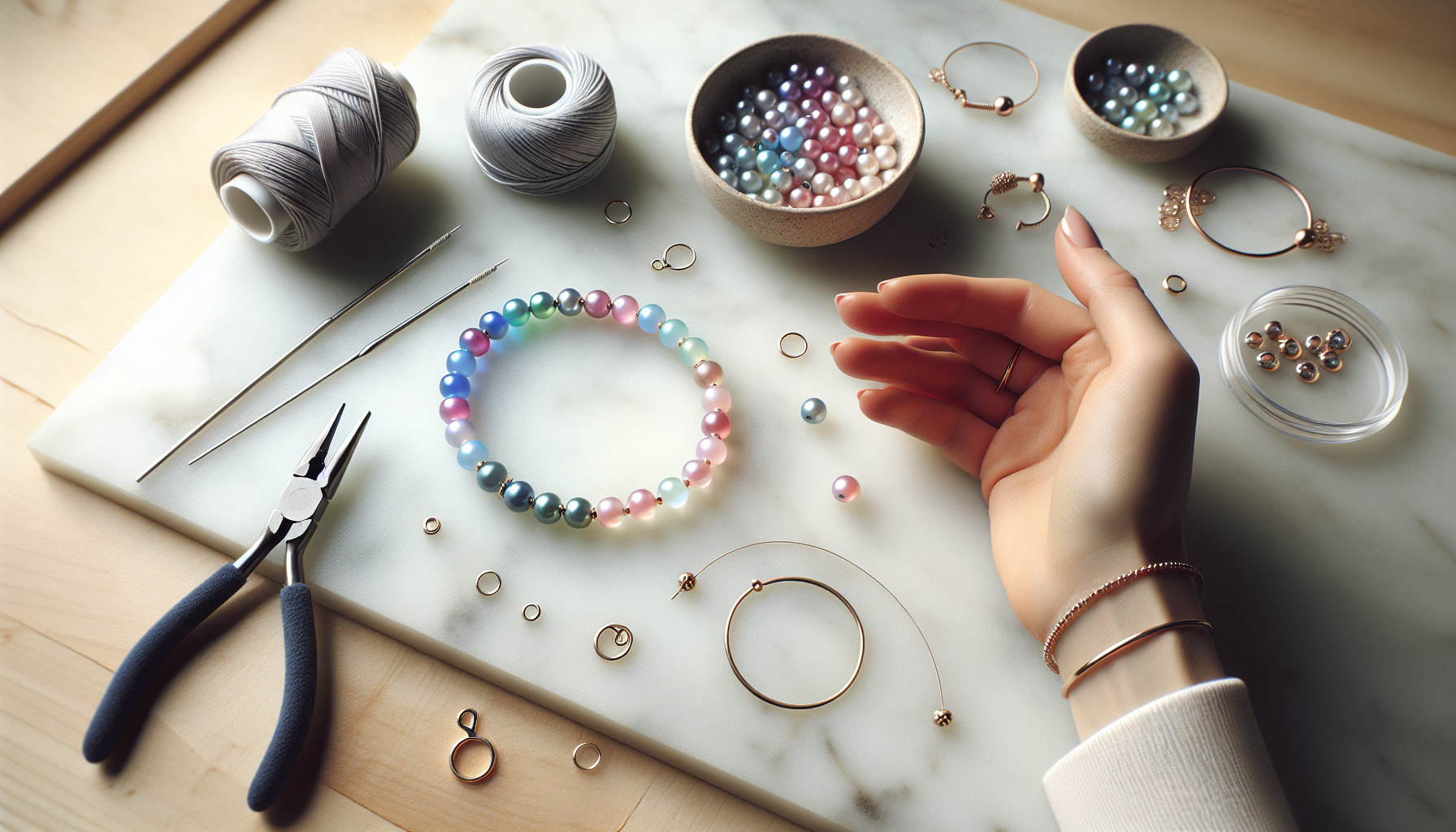
Mood Beads, or "humörpärlor" (mood beads in Swedish), are a favorite in DIY jewelry because they make bracelets, necklaces, and earrings come alive: the beads change color as the temperature changes. So it's not magic – but the effect feels magical when you see how a bead goes from dark to light (or vice versa) just by resting against your skin. At Hilmas Pyssel, you'll find mood beads suitable for both beginners and those who want to create more thoughtful designs with a "wow factor."
Thermochromism: "Mood" is actually about temperature
Mood beads are thermochromic: they contain pigments that react to heat and cold. A common misconception is that the colors show exactly how you feel – in practice, they show skin warmth and ambient temperature. You can instead use this as part of the story in your jewelry (especially if you're making jewelry to give away or sell):
-
Cold outdoor air: the beads often tend towards darker/more "closed" shades
-
Indoor warmth: the color often becomes lighter or more transparent
-
Directly against the skin: fastest shift – perfect for bracelets and rings
-
Not close to the body (e.g., long hanging necklaces): slower, softer transitions
This means that the same Mood Bead can be perceived differently depending on the season, activity, and how you wear the jewelry.
Unique design angle: build color changes into the form
Do you want the color change to be clearly visible? Place 1–3 Mood Beads as an accent near the pulse (inside of the wrist) and surround them with neutral beads so that the contrast highlights the shift. Do you want a more "mysterious" effect? Let Mood Beads sit further from the skin in a necklace and combine with metal or glass details that catch the light.
By considering placement and jewelry type, you can "design" how active the color change becomes – a simple trick that yields a more professional result.
Section 2: Find the Right Mood Bead on Hilmaspyssel.se – Sorting, Filter Logic, and Quick Navigation
Once you know what feeling you want to create with mood beads, the next step is to quickly find the right variant. On Hilmaspyssel.se, the Mood Bead category is structured as a clear product list where sorting helps you reduce scrolling, compare smarter, and get to purchase faster – whether you are a beginner, designer, or making jewelry for sale.
How to use the sorting menu to find what you need faster
Choose sorting based on your goal – it's the easiest shortcut when the selection is large:
-
Featured: Perfect when you want to see curated favorites or get started without analyzing everything. Good for beginner projects and safe choices.
-
Most relevant: Use when you have a clear idea (e.g., "mood bead bracelet" or a certain style) and want the list to prioritize what matches best.
-
Bestsellers: The fastest way to see which Mood Beads are most popular – great for trend-spotting and if you want to choose "tried and tested" for gift-making or small-scale sales.
-
Alphabetical A–Z / Z–A: When you already know the name/variant and want to find it without detours.
-
Price low–high / high–low: When budget dictates (bargains) or when comparing premium options for a more exclusive look.
-
Date new–old / old–new: For those who want to see new arrivals first – or find older variants you might have used in previous collections.
Common questions, quick answers: Do you want to sort by relevance? Choose Most relevant. Do you want to see the most popular first? Choose Bestsellers. Do you want to sort by letter? Choose Alphabetical A–Z or Z–A.
Three “shopping paths” that save the most time (unique shortcut)
If you want to shop even more efficiently, try one of these routes:
-
Quick and safe: Featured → choose 1–2 color-changing beads → proceed to wire and base components in the same order (Hilmas as a “one-stop shop”).
-
Trend & social proof: Bestsellers → choose a best-seller → match with neutral beads for a more minimalist piece of jewelry.
-
Budget or new arrivals: Price low–high (for testing and prototypes) or Date new–old (for the latest releases).
With the right sorting, you don't just find a bead – you find the right bead for your project faster, and can put your energy into the design instead of searching.
Material Guide for Mood Bead Jewelry – Beads, Wire, and Jewelry Components That Last
For your Mood Bead jewelry to look as professional as it feels, pretty mood beads aren't enough – you also need the right wire, suitable base beads, and stable jewelry components. At Hilmas Pyssel, the strength is that you can find everything in one place: beads, jewelry components, and accessories that allow you to build a complete bracelet, necklace, or a pair of earrings without compromising on quality.
Choose the right thread/line based on jewelry type
-
Elastic thread (e.g., Opelon): Perfect for Mood Bead bracelets that should be easy to take on/off. Choose a thickness that adequately fills the beads' holes – this reduces friction and improves durability.
-
Nylon thread or jewelry wire: Good for necklaces where you want more form stability and less "stretch." Wire provides an extra clean drape, especially in minimalist designs.
-
The knot trick that saves your jewelry: Use double thread on elastic, make a surgeon's knot (or double knot), tighten carefully, and secure with a small drop of jewelry glue – but avoid saturating the knot so it doesn't become stiff and chafe.
What is often missing in simpler guides is how Mood Beads are affected by the construction. Since the beads are temperature-sensitive, you want to avoid excessive tension (which can stress the material) and sharp metal edges that chafe when the bead moves – especially in bracelets worn daily.
Jewelry components you almost always need (and why)
A smart basic kit for Mood Bead projects includes: clasps, jump rings, crimps/terminators, chain/extension chain, and ear wires. Unique rule of thumb: let Mood Beads take "center stage" and choose metal and base beads in neutral tones – this makes the color shift more visible and the design feels more thought-out.
Designing with Mood Beads in a Minimalist Style – Color Scheme, Balance, and Placement
Minimalist jewelry design and Mood Beads are an unexpectedly perfect match: when you strip away the "noise," the bead's color change takes center stage. Just as in minimalist jewelry, it's not about using few parts at random, but about a conscious composition where color, form, material, and placement interact. The result is modern jewelry that feels more "design" than craft – and is easy to wear every day.
Color scheme that enhances the mood bead's effect
To make the Mood Bead effect look exclusive, start with a calm base expression and let the color change be your accent:
-
Choose neutral "carriers": metal tones (silver/gold), transparent glass beads, or discreet seed beads make the Mood Bead's shifts more visible.
-
Stick to 1–2 accent colors: a well-thought-out color scheme gives a sophisticated impression and reduces the risk of the jewelry feeling cluttered.<
-
Work with negative spaces: leave gaps between beads (e.g., with small spacer beads) so that each detail gets "breathing room."
Unique detail often missed: match metal color to the bead's cool/warm tone. If your Mood Bead often tends towards blue/purple in cold, silver can enhance the coolness; if it tends towards green/yellow in warmth, gold can create a softer overall look.
Placement: how to "design" the color shifts
Since mood beads react to temperature, you can control the experience by where you place them:
-
Close to the skin (bracelets, short necklaces): faster and clearer shifts due to body heat.
-
Further from the skin (longer necklaces, pendants): slower shifts that are more influenced by ambient temperature – nice if you want a more subtle effect.
-
Mood Bead as an accent (1–3 beads): gives a premium feel, especially in minimalist bracelets and necklaces where you want a single bead to "speak."
Finally: think of the Mood Bead as a focal point rather than filler. When everything around it is balanced and stripped down, you get a piece of jewelry that looks well-thought-out – whether you're building with simple base beads or more exclusive components from Hilmas Pyssel.
5 Easy Mood Bead Projects You Can Do at Home (with Professional Results)
Mood Beads are perfect when you want to create personalized and "living" jewelry without advanced designs. With the right basic materials from Hilmas Pyssel – beads, wire, and jewelry components all in one place – you can quickly go from idea to finished bracelet, necklace, or earring. Here are five projects that are easy to get started with, yet still look well-thought-out, especially if you work with balance, color scheme, and placement (minimalist thinking).
Project Bank: 5 Ideas + Materials, Time, and "Fail-safes"
-
Elastic Mood Bead Bracelet (Beginner): Mood Beads + elastic thread (e.g., Opelon) + optional small spacer beads. Time: 10–20 min. Fail-safe: too tight pulling causes beads to chafe against each other – leave a little play and tie with a double knot.
-
Minimalist Necklace with 1 Central Mood Bead: 1 Mood Bead + seed beads as discreet accents + chain/nylon thread + clasp. Time: 20–40 min. Fail-safe: ensure hole size matches thread/wire so the bead doesn't "slip" or crack.
-
Earrings with Mood Bead Drop: 2 Mood Beads + ear wires + headpins/eye pins + small metal beads. Time: 15–30 min. Fail-safe: use the correct pliers and close loops completely so the bead isn't lost.
-
Stacking Bracelet (Layer on Layer): Mood Beads mixed with neutral glass beads for a more mature look. Time: 15–25 min. Fail-safe: stick to 2–3 colors so the mood effect takes center stage.
-
Gift Set: Matching Bracelet + Necklace: the same Mood Bead variant in both pieces of jewelry. Time: 45–60 min. Fail-safe: do a quick length check before attaching the clasp.
This setup makes it easy to choose projects based on your goal: if you want quick gratification – start with the bracelet. If you want a more "premium" look – choose the necklace with one Mood Bead as the focus and build around it with few, carefully selected components.
Quick tip: how to choose the "right" Mood Bead for your project
If you want the color change to be clearly visible, choose jewelry that lies close to the skin (bracelets, shorter necklaces). If you want a more subtle effect, use Mood Beads as an accent further from the skin (e.g., in a longer necklace or in earrings). The next step is to smartly pick materials – in the next section, I'll show you how to shop efficiently on Hilmaspyssel.se using search and autosuggest.
Smart Shopping on Hilmaspyssel.se: Search, Autosuggest, and Sorting to Save Time
Once you know what feeling you want your Mood Bead jewelry to evoke (minimalist, colorful, or as a gift), the next step is to quickly find the right beads. On Hilmaspyssel.se, it's clear that the focus is on a friction-free shopping experience: you can navigate the Mood Bead assortment with smart sorting and use search to go directly to the right product—perfect when you want to build an entire piece of jewelry from the same "one-stop shop" with beads, wire, and jewelry components.
How to use the sorting menu in the Mood Bead category
Choose sorting based on your goal, not just "what happens to be at the top." This will help you find the right variant faster and compare in a more structured way:
-
Featured: Good if you want to start with curated favorites or beginner-friendly choices that often suit many projects.
-
Most relevant: Use when you already have a clear idea (e.g., size/finish) and want the list to match your intention as closely as possible.
-
Bestsellers: Perfect for seeing which mood beads others are actually choosing—smart if you're making jewelry for gifts or sale and want to be on-trend and in demand.
-
Alphabetical A–Z / Z–A: When you know the name/variant and want to avoid scrolling.
-
Price low–high / high–low: For budget builds or when you want to spend more on a statement bead and keep the rest neutral.
-
Date new–old / old–new: To spot new trends or find previously released favorites.
This answers the most common questions directly: yes, you can sort by relevance, see bestsellers first, and sort alphabetically.
“Power user” tips: combine autosuggest + sorting (desktop & mobile)
When autosuggest appears as you type in the search field, you can work extra fast: on a keyboard, use up/down to scroll through suggestions and Enter to select, while on mobile/tablet you can tap or swipe through the options. An effective approach is to first search (to narrow down the selection) and then sort by Bestsellers or Price low to high—this way you'll find the right Mood Bead without losing your creative flow.
Care, Durability, and Troubleshooting – How to Make Your Mood Bead Jewelry Last Longer
Mood Beads are magical because they change color with temperature – but this very property also means they benefit from a little care. Whether you're making bracelets on elastic thread or a minimalist necklace, proper care is crucial for the color change and finish to last over time. Here's a practical guide to help you avoid common pitfalls and also set the right expectations if you're creating jewelry for sale.
What affects color change – and how do you protect it?
-
Temperature fluctuations: Mood beads react to skin warmth and surroundings. Avoid leaving jewelry in a car, sauna, or on a radiator, where extreme temperatures can stress the material.
-
Sunlight and UV: Prolonged exposure to direct sunlight can eventually weaken the effect. Store the jewelry in a dark place when not in use, especially during summer.
-
Water, perfume, and cleaning products: Remove jewelry when showering, washing dishes, and exercising. Chemicals and high heat are often what most quickly deteriorate the surface.
Instead, clean gently: wipe with a soft, slightly damp cloth and air dry. For metal components (clasps, rings, chains, ear-wires), a dry microfiber cloth may be enough to restore shine without the need for harsh agents.
Quick troubleshooting + pro tips (also for those who sell)
If the bead "stops changing color": first test at room temperature and then against the skin – sometimes it's just the environment that's too warm/cold for a clear contrast.
If the bracelet feels brittle or breaks: it's often due to elastic thread tied too tightly or the thread chafing against sharp metal edges. A pro tip is to always use smooth spacer beads/finishes and leave a little "play" in the knot so that the beads are not under constant tension.
Do you sell your Mood Bead jewelry? Write a clear product description: emphasize that the effect is temperature-sensitive (not a literal "mood test"), and add simple care instructions. This reduces returns and builds trust – just like a smooth shopping journey does on Hilmaspyssel.se.
Frequently Asked Questions
Q: What is most important to know about Mood Beads before I start?
A: That a Mood Bead is thermochromic – it changes color based on temperature (skin warmth and ambient), not "mood" itself. This means the color change can vary between people and situations. If you want a clear effect: place the bead close to the skin (bracelet) or choose a design where it sometimes rests against the skin, sometimes over clothes (necklace).
Q: How do I sort Mood Beads on Hilmaspyssel.se to find the right ones fastest?
A: In the Mood Bead category, you can use sorting to reduce scrolling and find what you need directly: select "Most relevant" when looking for a specific type/variant, "Bestsellers" if you want to see popular choices first, and "Alphabetical A–Z / Z–A" when you know the product name. For budget: "Price low to high". For new arrivals: "Date new to old". "Featured" is perfect when you want curated favorites without overthinking.
Q: Which thread and jewelry components are best suited for Mood Bead jewelry?
A: For bracelets, elastic thread (e.g. Opelon) is a safe choice for comfort and quick assembly. For necklaces, nylon thread or wire provides more shape stability and a "professional" drape. Complement with the right jewelry components such as clasps, rings, crimps, chains, and ear-wires – Hilmas Pyssel is a convenient "one-stop shop" for all of these.
Q: Why isn't my Mood Bead changing color as much as I expected?
A: Common reasons are that the bead isn't getting enough temperature difference (e.g. it's resting on a thick sweater), that your hands are warm/cold, or that the bead is affected by sun/cold. Try holding it between your fingers for 10–20 seconds, or move the bead closer to your skin in the design for a stronger effect.
Q: How do I care for Mood Bead jewelry to make it last longer?
A: Avoid high heat, strong sunlight for extended periods, and chemicals (perfume, cleaning agents). Wipe with a soft, slightly damp cloth and store the jewelry separately to reduce scratches and wear. For elastic bracelets: don't tie too tightly and leave some "give" so the beads aren't compressed.
Q: I want to sell my Mood Bead jewelry – how do I set the right customer expectation?
A: Describe them as temperature-sensitive color-changing beads and explain that the colors can vary depending on the wearer's body heat and the weather. Feel free to add simple care instructions and mention that the "mood" effect is a fun interpretation – this creates both transparency and more satisfied customers.
Q: How do I get started right away – without choosing incorrectly?
A: Start with a simple elastic bracelet: choose 1–3 Mood Beads as the focus, combine with neutral glass beads/seed beads, and use the sorting option "Bestsellers" or "Featured" to quickly find proven options. At the same time, add to your cart: elastic thread, scissors, and (if you want to upgrade) suitable spacers for a more minimalist, premium-like look.
Create vibrant jewelry with Mood Beads – and find the right beads faster
Mood Beads make jewelry making extra fun because they change color with temperature – and with smart placement, the right thread, and a more minimalist design, you can make the effect feel both modern and "premium". You've also gained a clearer understanding of what the colors actually signal (temperature, not mood) and how to care for your jewelry so that the color change lasts longer in everyday life.
Next step: visit Hilmaspyssel.se and make it easy for yourself by sorting the Mood Bead category by Featured, Most relevant, or Bestsellers – or choose Price and Date if you're looking for budget finds or new arrivals. Do you know what you're looking for? Use alphabetical sorting (A–Z/Z–A) for a quick match. Choose one of the projects in the guide and order everything in one place – beads, thread, and jewelry components – and get started today.