


Miyuki Seed Beads Hexcut 11/0 – complete guide at Hilmaspyssel.se
Are you looking for beads that offer maximum luster, perfect precision, and a professional result in your jewelry? Then Miyuki Seed Beads Hexcut 11/0 are something you definitely want to take a closer look at. The hexagonal, faceted rocaille beads from Japanese Miyuki reflect light in a way that ordinary round seed beads simply cannot match – perfect for everything from subtle bracelets to detailed bead embroidery projects.
In this guide, we will go through everything you need to know to choose and use Miyuki Hexcut 11/0, with a focus on how to easily order the right beads from Hilmaspyssel.se. You will learn about their properties, color types, techniques, concrete project ideas, smart purchasing strategies, and care advice – so you can create durable, glittering jewelry that looks as uniform as in top designers' tutorials.
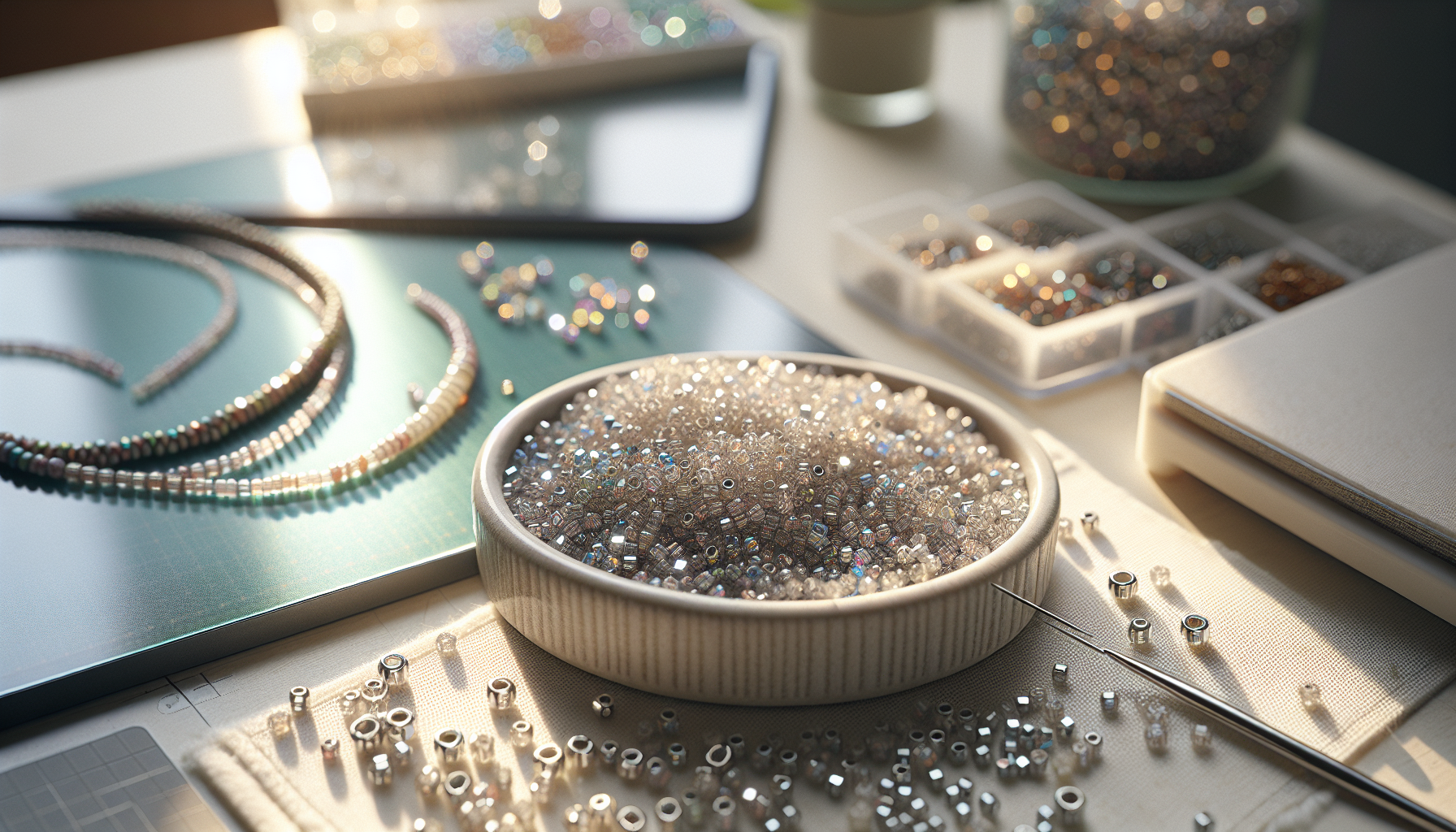
When you're searching for small, uniform glass beads with maximum luster, Miyuki Seed Beads Hexcut 11/0 often emerge as the primary choice in both Swedish and international guides. To be able to select the right bead at Hilmaspyssel.se, it's helpful to understand what each part of the name actually means – from the brand Miyuki to the size 11/0 and the special hexcut shape.
Miyuki, seed beads, and size 11/0 – what do they mean?
-
Miyuki: A Japanese premium brand, world-renowned for its extreme precision, uniform size, and high-quality glass. Used by both hobby crafters and professional jewelry designers.
-
Seed beads (rocailles): Small rounded glass beads used in weaving, embroidery, bead knitting, and strung jewelry. They function as “building blocks” in detailed patterns.
-
Size 11/0: One of the most commonly used sizes globally. A Miyuki 11/0 is approximately 2.0–2.2 mm in diameter with a relatively generous hole, allowing you to pass the thread through multiple times – perfect for techniques such as peyote, brick stitch, and bead weaving.
This combination – small measurement, large hole, and uniform shape – makes 11/0 especially appreciated in technique-intensive work where the slightest irregularity would otherwise quickly show in the pattern.
What does Hexcut mean and how does it differ from round beads?
Hexcut refers to the bead's hexagonal shape with faceted edges. Instead of being completely round, the bead has flat sides that act like tiny mirrors when light hits the jewelry. The result is:
-
More shine and reflections than ordinary round seed beads
-
Clearer structure in patterns and outlines, especially in graphic designs
-
More "life" on the surface of bead-woven bracelets, edgings around cabochons, and details in bead embroidery
Many beaders describe Miyuki Hexcut 11/0 as the perfect compromise between workability and a "wow" effect: you get all the precision and compatibility of classic 11/0, but with an extra glittery finish without having to change technique or thread. This makes them ideal when you want to elevate an existing pattern a notch – without making it more complicated.
Advantages of Miyuki Hexcut 11/0 for jewelry making
Miyuki Seed beads Hexcut 11/0 are popular not only because they are beautiful, but because they solve several everyday problems encountered by both beginners and experienced beaders: uneven bead rows, flimsy patterns, and jewelry that quickly loses its shine. Thanks to Miyuki's meticulous manufacturing and the hexagonal cut, you get beads that behave predictably – row after row, project after project.
Precision, luster and combination possibilities
-
Uniform size for professional results: Miyuki is known for its extreme precision. Hexcut 11/0 beads are very uniform in size, which means that patterns, edgings, and bead weaving become straight and stable. Perfect when you want to create clear geometric designs or text in bead weaving.
-
Extra glittery surface thanks to the hex-cut: The hexagonal edges act as small facets. This means that light is caught from multiple angles, giving more life to both simple and advanced jewelry compared to ordinary round rocaille beads.
-
Easy to combine with other Miyuki shapes: Hexcut 11/0 pairs well with Delica, bugle, and drops. You can build structured surfaces, add glittering details to an otherwise matte design, or create transitions between different shapes without the overall look appearing cluttered.
-
Durability for daily wear: Correctly strung on good thread, these beads maintain their shape and color for a long time, even in bracelets and keychains that endure more wear than earrings and necklaces.
This is clearly evident in practical projects: a bead-woven bracelet with sharp zigzag patterns, an even edge around a cabochon, or subtle highlights in bead embroidery on clothing. In all these cases, the precision allows you to focus on creativity instead of struggling with beads that don't fit together.
When does Hexcut 11/0 have the greatest effect in your projects?
For maximum benefit, Miyuki Hexcut 11/0 are particularly strong in projects where pattern readability and play of light are crucial. In a graphic brick stitch earring, for example, they enhance the contours and make the motif more visible from a distance. In a subtle peyote bracelet, you can use a mix of matte and glossy Hexcut to create depth without needing many different colors.
A good way to start is to choose one neutral base color and one accent color in Hexcut 11/0 and test them in your favorite pattern. You'll quickly notice how small adjustments in shape and sheen make a big difference to the overall impression – something often underestimated in simpler guides but crucial for jewelry that feels truly well-thought-out.
Color types and finishes – choose the right Miyuki Hexcut 11/0
Choosing the right color and finish for your Miyuki Seed beads Hexcut 11/0 is just as important as choosing the right technique. Different finishes behave completely differently in the finished piece of jewelry – both in terms of expression, luster, and how well they withstand daily wear. Here we go through the most common types you'll find at Hilmaspyssel.se, among other places, and how to use them smartly in your projects.
Common color and surface variations for Miyuki Hexcut 11/0
-
Opaque: Opaque color, intense and stable. Perfect for graphic patterns, text, and bead weaving where you want sharp lines.
-
Transparent: See-through beads that let light pass through. Creates light, almost glass-like effects – beautiful in layered designs and bead embroidery.
-
Frosted / matte: A dulled surface that gives a softer, more textile-like impression. Nice to combine with shiny metallics for contrast.
-
Metallic & galvanized: Mirror-like, metallic surface with a lot of luster. Galvanized varieties can be more delicate, but provide luxurious gold, copper, or antique metal finishes.
-
AB (Aurora Borealis): Iridescent shimmer on top of the base color, providing extra "glow" and depth – perfect for details that need to catch the light.
-
Color lined / inside color: Transparent bead with a colored core. Provides subtle color shifts and works well in soft transitions and ombré effects.
By considering, even before ordering, what kind of feel you want to achieve – graphic, soft, luxurious, or subtle – you can avoid disappointment once your jewelry is finished.
Durability, thread choice, and smart color combinations
One aspect often overlooked in simpler guides is how different surface treatments affect durability. Generally, opaque and standard transparent colors hold up very well with normal use, while some heavily galvanized or intensely coated metallic and iris finishes can be more delicate on exposed areas such as rings or heavily used bracelets.
- Use more durable finishes (opaque, standard metallic) for jewelry worn daily.
- Save extra delicate galvanized colors for earrings, pendants, and details that don't rub as much against skin and clothing.
- Adjust thread color: light thread for transparent and light beads, dark thread for dark shades. For color-lined beads, you can first test on a small sample – sometimes the thread enhances the core color, sometimes it dampens it.
A simple yet powerful trick is to always combine at least one matte and one glossy bead in the same project. This adds depth and a "designer feel" even to very simple patterns. At Hilmaspyssel.se, you can save favorite colors and build small palettes: a base with neutral opaque shades, a metallic trio (gold, silver, bronze), and a few strong accent colors with an AB or metallic finish. This way, you always have a well-balanced color foundation to work from, no matter what new project catches your eye.
How to use Miyuki Hexcut 11/0 in different techniques
Miyuki Seed beads Hexcut 11/0 truly come into their own when you start using them in various beading techniques. The hexagonal shape and small facets give each stitch more life, whether you're weaving, embroidering, or creating free-standing motifs. Here, we'll go through how you can leverage the unique luster of Hexcut beads in some of the most popular techniques – focusing on practical tips often missing from shorter guides.
Popular techniques where Hexcut 11/0 shines
-
Peyote stitch (even/odd count): The uniform size of Miyuki Hexcut creates smooth, clear rows. The facets make otherwise simple patterns look more advanced, perfect for subtle yet luxurious bracelets.
-
Brick stitch: The graphic, "pixelated" feel of brick stitch is enhanced by the sharp edges of Hexcut beads. Ideal for earrings, small symbols, and geometric figures.
-
Loom weaving (bead weaving): On a bead loom, you get extremely precise patterns. Hexcut 11/0 adds extra depth to text, stripes, and pixel-inspired motifs – especially if you mix matte and glossy finishes.
-
Bead embroidery: Around cabochons, filigree details, or on fabric, Hexcut acts as tiny light catchers. Perfect for outlines, bezels, and details that need to "pop" in the embroidery.
A good starting project is brick stitch earrings: choose two or three colors, sew a simple triangle shape, and let the facets do the rest of the "wow" effect. For beginners in peyote, a narrow bracelet with two contrasting colors is an excellent way to feel how the beads lay uniformly.
The right needle, thread, and work surface for best results
To truly utilize Miyuki Hexcut 11/0 in techniques like peyote, brick stitch, and bead weaving, the right tools are crucial:
-
Needles: Use thin beading needles, preferably size 10–12. They pass easily through the relatively generous hole multiple times without getting stuck.
- Thread:
- Fireline or other braided fishing line produces stiff, shape-stable jewelry (perfect for brick stitch earrings).
-
Nymo, S-Lon, or Miyuki Beading Thread work well for softer bracelets and embroidery where you want more flexibility.
-
Surface: A beading mat with a bit of "grip," such as a bead mat or a piece of mock suede, prevents the small Hexcut beads from rolling away.
As a rule of thumb: choose a thinner thread and needle when you know you will pass through the same bead many times, for example, for bezels or detailed embroidery. Always test a few stitches before starting your real project – that way you'll quickly find the combination of thread, needle, and technique that suits both your style and the specific Miyuki Hexcut 11/0 you chose from Hilmaspyssel.se.
Project Ideas with Miyuki Seed Beads Hexcut 11/0
Miyuki Hexcut 11/0 are perfect when you want to go from "pretty beads in a jar" to finished jewelry you actually wear. In this section, you'll get concrete project ideas for different skill levels, along with practical tips on quantity, color choice, and things often missing from shorter online guides.
Projects for beginners, intermediate, and advanced levels
-
Beginner – quick, stylish projects
- Simple stretch bracelets where Miyuki Hexcut 11/0 are interspersed with larger stone or glass beads for texture.
-
Small charms and mini-pendants for keychains, zippers, or bags – perfect for testing color combinations on a small scale.
-
Intermediate – more structure and technique
-
Bead-woven bracelets on a loom with simple geometric patterns or text (e.g., names or short words).
-
Edging around a cabochon or rivoli with Hexcut 11/0 for extra sparkle around the stone – ideal for pendants and rings.
-
Advanced – statement and details
- Multi-row statement necklaces where you work tone-on-tone or in a color gradient (ombré effect).
-
Embroidered jewelry and accessories where Hexcut 11/0 are used as light-reflecting details around larger elements.
For all levels: it's a good idea to start with two to three main colors plus a metallic accent, making the design process feel more controlled and harmonious.
Color schemes, quantities, and common mistakes to avoid
When planning a project with Miyuki Hexcut 11/0, it's smart to think backward from the final result:
-
Plan your color scheme
- Start with a main color (e.g., petrol blue), add a light contrast (cream, silver), and a dark, deep color (dark gray, hematite).
-
Use Hilmaspyssel.se as a "color chart" – open multiple tabs with similar shades and compare before ordering.
-
How many grams are needed? (approximate values)
- Narrow peyote or woven bracelet: 5–7 g is usually enough.
- Smaller earrings/brick stitch motifs: 2–4 g per color is often more than enough.
-
Larger statement necklaces or embroidered projects: expect 15–25 g to have margin and matching dye lots.
-
Common mistakes – and how to avoid them
- Thread too short: rather cut longer lengths (arm's length x 1.5) and use "thread conditioner" if working with Nymo.
- Wrong needle size: choose beading needle size 10–12 to easily pass through Hexcut 11/0 multiple times.
- Mixed dye lots: for larger projects, buy enough bags of the same color code and dye lot at once for a consistent result.
By planning colors, technique, and materials in advance, your projects with Miyuki Seed beads Hexcut 11/0 will be both more relaxed and more professional. Feel free to use one of the beginner projects as a "test bench" for your personal color palette before attempting a larger necklace or embroidery – that way, you'll get to know how the Hexcut beads' luster and shape behave in different combinations.
How to choose the right Miyuki Hexcut 11/0 at Hilmaspyssel.se
Choosing the right Miyuki Seed beads Hexcut 11/0 online can feel overwhelming – especially when there are hundreds of colors, finishes, and article numbers. At Hilmaspyssel.se, the assortment is structured to make the choice easier, but it helps a lot to understand how to read product information and plan your purchases strategically. In this section, we will go through how to step-by-step choose the right beads for your specific projects.
Find and understand products on Hilmaspyssel.se
Here's how you can navigate and interpret the information on the product pages:
-
Categories and filtering: Go via Miyuki → Seed beads → Hexcut 11/0 and use filters for color palette, finish, and price to quickly narrow down the selection.
-
Size and quantity: Check that it says Hexcut 11/0, and how many grams you get per package (usually 10 g). This gives an indication of how many projects you can make.
-
Color code and finish: Note both Hilmaspyssel's color name and Miyuki's original number (e.g., 4202). The finish (e.g., galvanized, matte, AB) affects both appearance and durability.
As you start saving color codes and favorite finishes, you'll quickly get a feel for which beads you frequently return to. This makes it easier to complement an ongoing project without the risk of ordering a "nearly right" color.
Build a smart basic palette and plan your purchases
To shop more thoughtfully – and avoid panic orders in the middle of a project – you can use a simple strategy:
-
Create a basic palette: Choose 3–5 neutral colors in Hexcut 11/0 (e.g., black, white, silver, gold, and a warm neutral like beige or champagne). These work in almost all projects.
-
Add accent colors: Choose a color scheme you are often drawn to, e.g., a blue/green sea palette, a pink/purple pastel, or earthy tones. Order 2–4 shades within the same range for nice tone-on-tone effects.
-
Order complementary accessories at the same time: Needles in size 10–12, thread (e.g., Fireline 0.006" or Nymo B/D), and possibly bead looms or felt mats. This saves on shipping and allows you to start immediately when the package arrives.
An extra tip is to create a physical or digital color chart where you attach a small amount of each color along with Miyuki's number and a note about where you bought it. This way, you can quickly see what's missing before your next order at Hilmaspyssel.se and build a well-thought-out, personal assortment of Miyuki Hexcut 11/0 that you actually use.
Care, storage, and long-term durability
For your jewelry made with Miyuki Seed beads Hexcut 11/0 from Hilmaspyssel.se to retain its luster for many years, good technique isn't enough – care and smart storage are just as important. Here, we go through practical routines that many top creators use but are rarely explained clearly in standard guides.
Storage for overview and color protection
Well-planned storage makes both creation smoother and beads more durable:
-
Small jars or boxes with lids: Minimize dust, moisture, and the risk of the finish wearing out unnecessarily.
For extra control, you can sort by project, not just color. Have one box per ongoing project where all colors, threads, and needles are together – this reduces waste and makes it easier to pause and resume without losing track of nuances.
Gentle care for finished jewelry
Proper care extends the life of both the bead and the finish, especially on metallic and galvanized surfaces:
-
Cleaning: Wipe gently with a soft, slightly damp cloth. Avoid soaking, ultrasonic cleaning, and strong detergents.
-
Avoid chemicals: Remove jewelry before using perfume, hairspray, lotion, or cleaning products – these can dull the surface over time.
-
Protect from moisture and sweat: Preferably remove bracelets and rings during exercise, showering, and bathing, especially if you have used more sensitive finishes.
By including simple care instructions when you sell or give away jewelry, you show professionalism and reduce the risk of complaints.
Minimize waste and work sustainably
Sustainability also concerns how you use your Miyuki Hexcut 11/0 in everyday life:
-
Work on a bead mat or felt: The beads roll less, and you won't drop as many on the floor.
-
Have a "scrap jar": Collect odd beads, cuttings, and remnants. They can be used for embroidery, test swatches, or small charms.
-
Reuse old projects: Restring jewelry you don't use, sort the beads by color, and label them with new tags.
By combining good storage systems, gentle cleaning, and a conscious approach to reuse, you can build a long-term, sustainable bead inventory – where every small Miyuki Hexcut 11/0 from Hilmaspyssel.se actually gets used. This saves both money and resources, while you always have fresh, inspiring materials ready for your next design idea.
Frequently Asked Questions (FAQ)
Q: How many Miyuki Hexcut 11/0 do I need for a bracelet or necklace?
A: A standard peyote or bead weaving bracelet (approx. 17–18 cm long and 2–3 beads wide) usually requires 5–7 grams of Hexcut 11/0. A wider cuff bracelet can amount to 15–20 grams depending on the pattern. A simpler necklace with other beads often manages with 5–10 grams, while a fully beaded statement necklace can require 20–30 grams. On Hilmaspyssel.se, you can clearly see how many grams are included in each package, making it easy to plan purchases based on your pattern and design idea.
Q: Do Miyuki Hexcut 11/0 lose their color over time?
A: Most Miyuki beads are very colorfast, but durability depends on the surface treatment. Opaque, many transparent, and “duracoat” varieties are generally very durable. Galvanized and some metallic finishes can be more sensitive to wear, sweat, and chemicals. If you use beads in heavily worn bracelets/rings, opt for durable finishes and avoid the most sensitive galvanized colors in exposed areas. On Hilmaspyssel.se, this is usually indicated in the product description, so always read the finish description before purchasing.
Q: Which thread is best for Miyuki Hexcut 11/0?
A: For woven and sewn jewelry, Fireline, Miyuki Beading Thread, or Nymo are popular choices. Fireline is very durable and holds its shape well in, for example, peyote and brick stitch. Nymo and Miyuki Beading Thread are more flexible and well-suited for bead embroidery and projects where you want a softer drape. Choose thread color based on the bead's transparency: dark thread for dark/opaque beads, light or transparent thread for transparent and light tones.
Q: Can I mix Hexcut 11/0 with other Miyuki beads in the same project?
A: Yes, that's one of the great advantages. Hexcut 11/0 works excellently with Delica 11/0, regular seed beads, bugle beads, and drops. Just remember that Hexcut reflects more light thanks to its facets, so feel free to use them as accent beads: in outlines, in details, or as "highlight" rows in an otherwise matte pattern. Many designers use Delica for clean graphic surfaces and strategically place Hexcut to create depth and shine.
Q: How do I avoid waste and prevent beads from mixing between different color codes?
A: Always work over a bead mat or soft surface so the beads don't roll away. Only keep one or two colors out at a time and store the rest closed in their containers. A practical tip is to immediately label each container with Miyuki's original number and preferably also a small color swatch on the label. Then you can always reorder the exact same color from Hilmaspyssel.se. If you accidentally mix two similar shades – use them in a “scrap project”, such as a variegated bracelet, instead of trying to sort them by hand.
Q: Can I reuse Miyuki Hexcut 11/0 from old or broken jewelry?
A: Absolutely. Carefully cut open the jewelry, remove the thread, and rinse the beads in lukewarm water with a drop of mild dish soap. Let them dry completely on paper towels before returning them to labeled containers. This is both cost-effective and sustainable, and thanks to Miyuki's high quality, the beads retain their shape even after several projects. Hilmaspyssel.se can easily replenish your collection with complementary colors when you want to build on your recycled base.
Create more magic in your jewelry with Miyuki Hexcut 11/0
Miyuki Seed beads Hexcut 11/0 combine Japanese precision, outstanding luster, and great creative freedom – and that's precisely why they have become a favorite among both beginners and experienced jewelry makers. In this guide, you have gained a comprehensive overview: what Hexcut is, how different color types and finishes affect the expression, which techniques they are best suited for, concrete project ideas, and how to choose the right beads on Hilmaspyssel.se and care for both beads and finished jewelry in the long term.
The next step is to translate inspiration into action. Start with a smaller project – for example, a simple peyote bracelet or a pair of brick stitch earrings – and order a well-thought-out starter kit with Hexcut 11/0, thread, and needles from Hilmaspyssel.se. Then build towards your own signature palette of favorite colors, save color codes, and try combining different finishes for more depth and shine. If you want to develop even further, follow Hilmaspyssel.se on social media, discover new color releases, and use this guide as your recurring reference when planning your next unique jewelry collection.