


Miyuki Quarter Tila from Hilmaspyssel.se – your guide to thin two-hole beads
Do you want to create thin, detailed jewelry with a professional look – without getting bogged down in advanced techniques? Then Miyuki Quarter Tila beads are for you. These super-thin two-hole beads give you full control over patterns, colors, and texture, and at Hilmaspyssel.se, you’ll find one of the clearest selections online in Sweden.
In this guide, we’ll cover everything you need to know: what Quarter Tila are, how to choose the right colors and finishes, what materials work best, and how to get started step-by-step with bracelets, earrings, and necklaces. You’ll also get concrete project ideas, professional tips, and common pitfalls to avoid, so you can confidently order your Miyuki beads and start creating right away.
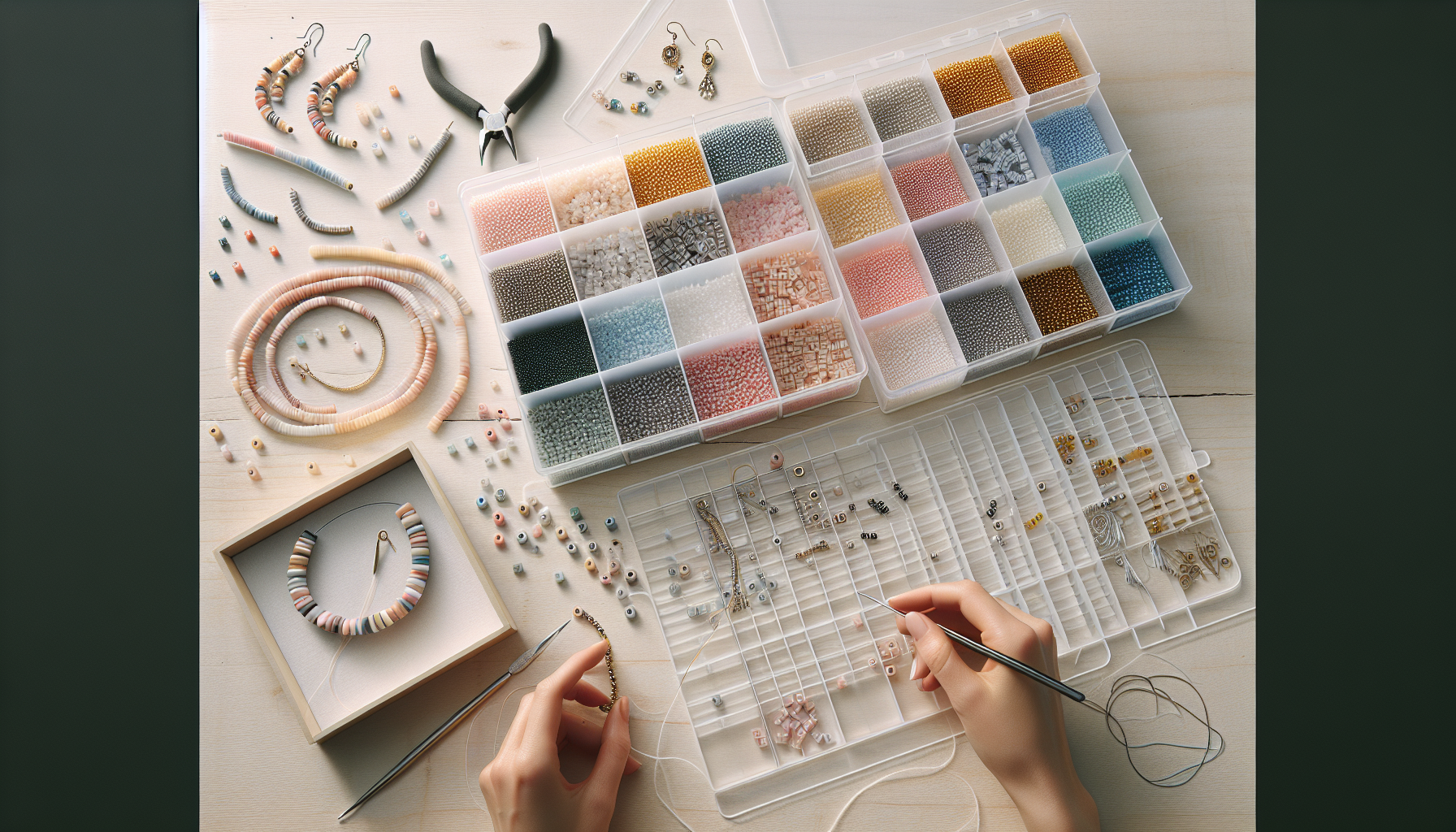
Miyuki Quarter Tila are among the most appreciated two-hole beads by jewelry makers who want to work with precision, thinness, and graphic design. To understand why they are so popular, we need to start with the brand itself. Miyuki is Japan’s leading producer of seed beads, known for their extreme uniformity in shape, size, and color. This makes their beads particularly suitable for techniques where the slightest deviation disrupts the pattern, such as bead weaving, brick stitch, and peyote.
Shape, size, and construction
Miyuki Quarter Tila are rectangular, super-thin two-hole beads that are approximately one-quarter the length of a classic Tila bead. This provides:
-
Dimensions & proportions: Very narrow and low profile, perfect for delicate bracelets, rings, and detailed edges.
-
Two parallel holes: Provides high stability in woven work and makes it easy to build structures in multiple rows without the jewelry "twisting".
-
Even precision: Each bead is almost identical, resulting in clean lines and sharp graphic patterns.
Many guides mention the size in millimeters, but the practically important aspect is that four Quarter Tila beads correspond to the length of one full Tila bead. This makes them intuitive to combine in patterns and modular designs.
Comparison with Tila and Half Tila
Compared to Tila (full) and Half Tila, Quarter Tila offers a completely different level of detail. Tila is often used as a base in wider bracelets, Half Tila for more intricate patterns – while Quarter Tila excels in microbeading, thin jewelry, and intricate edges. For example, you can:
- Build pixel-like patterns where each Quarter Tila functions as a "mini-square"
- Create soft curves in geometric jewelry by alternating Quarter Tila with round seed beads
- Enhance an existing Tila or Half Tila bracelet with a thin frame of Quarter Tila for a more exclusive feel
By using all three sizes together, you open up possibilities for advanced yet stable designs where Quarter Tila provides the finish, precision, and those small details that make the jewelry look professional.
Why buy Miyuki Quarter Tila from Hilmaspyssel.se?
Finding the right place to buy Miyuki Quarter Tila is almost as important as choosing the right color and technique. As a Swedish bead maker, you want genuine Miyuki quality, a good price, fast deliveries, and someone to ask when something goes wrong. Here, Hilmaspyssel.se clearly stands out among online bead stores – with a niche assortment for those who love precision beads and two-hole beads like Quarter Tila.
Advantages of buying Miyuki Quarter Tila from a Swedish online store
When you choose Hilmaspyssel.se, you get both security and convenience:
-
Fast delivery within Sweden: You avoid waiting weeks for packages from abroad and reduce the risk of lost shipments.
-
No customs or currency hassle: You shop in SEK, see clear total prices, and avoid unexpected import fees.
-
Swedish customer service: Questions about color numbers, thread choices, or techniques are answered in Swedish, by someone who actually knows beads.
-
Carefully selected assortment: Hilmaspyssel focuses on well-known quality brands like Miyuki beads, which reduces the risk of uneven size or poor finish.
In addition, the webshop is designed to make it easy to find what you're looking for: you can filter by color, finish, and bead type, saving time when planning a specific project.
Large selection of colors, finishes, and packaging
A great strength of buying Miyuki Quarter Tila at Hilmaspyssel.se is the breadth of the offering. You will find, among other things:
-
Matte and opaque shades for graphic, modern jewelry
-
Metallic and galvanized tones for luxurious bracelets and earrings
-
Transparent and luster beads that provide light, reflective details
-
Duracoat variations where the color is extra resistant to wear
Many foreign stores only sell large quantities, but Hilmaspyssel often offers convenient packaging sizes that suit both beginners and professionals. This makes it easy to try several colors without committing a large budget – perfect when you want to try new combinations or follow a design trend.
Choosing the right Miyuki Quarter Tila – colors, finishes, and combinations
Choosing the right color and finish for your Miyuki Quarter Tila beads is just as important as the technique itself. The colors determine whether the jewelry is perceived as exclusive, bohemian, everyday, or truly eye-catching. At Hilmaspyssel.se, there is a wide selection, but precisely because of this, it can feel difficult to know where to start. This section will help you go from overwhelmed to strategic in your color choices.
Color strategy for different styles
-
Elegant & festive: Opt for metallic, matte metallic, and classic metal tones such as gold, silver, hematite, and rose gold. Combine with black or deep jewel tones (emerald, sapphire blue, burgundy) for maximum luxury.
-
Bohemian & organic: Choose turquoise shades, earth tones, matte surfaces, and slightly subdued colors. Transparent beads mixed with opaque beads create a "layered" depth often seen in top inspiration on Pinterest and Instagram.
-
Everyday & capsule wardrobe: Build a base with neutral colors – white, cream, gray, black, and soft beige tones. Add a single accent color (e.g., petrol, rust red, or forest green) to make the jewelry match many outfits.
A simple strategy for beginners is to always start with: base color + accent color + metallic color. For example: matte sand (base) + petrol (accent) + gold (metallic). This makes it easier to order the right colors without overbuying.
Finishes and clever combinations with other beads
Miyuki offers several different finishes, and Hilmaspyssel.se often has a selection including Opaque, Matte, AB (Aurora Borealis), Galvanized, and Duracoat. A good rule of thumb is:
-
Opaque & matte: Perfect as a clear base, creating sharp patterns and legible graphic lines.
-
AB & luster: Ideal as details; use sparingly to elevate an otherwise simple bracelet or necklace.
-
Galvanized & Duracoat: Excellent for a "metallic feel" and can replace metal beads where you want to keep the weight down or achieve a more uniform shape.
Quarter Tila beads work particularly well with Miyuki Delica 11/0 or round seed beads 11/0 and 15/0. For example, you can let Quarter Tila build a graphic edge, while Delica beads fill the center. A practical tip is to order small sample bags in 2–3 color schemes and bead small color swatches before committing to a larger project. This saves time, money, and frustration – and helps you find your own signature palette.
Essential materials and tools for working with Miyuki Quarter Tila
To achieve maximum precision and durability in your jewelry with Miyuki Quarter Tila, it’s not enough to have the right beads – the right materials and tools make all the difference. Many guides only mention "needles and thread," but here we will go through exactly what you need, why you need it, and how to choose smartly based on your specific projects.
Basic materials you should have at home
-
Beading needle (size 10 or 12): Thin enough to pass multiple times through Quarter Tila’s two holes, yet stiff enough for controlled stitching.
- Thread:
- Fireline or other braided fishing line for bracelets, rings, and projects that need to withstand daily wear.
-
Nymo or Miyuki Beading Thread for softer, more pliable necklaces and earrings.
-
Seed beads (11/0 and 15/0): Perfect as fillers between Quarter Tila, e.g., Miyuki Delica or round rocaille beads for smooth edges.
- Clasps and findings:
- Lobster clasps or magnetic clasps for bracelets and necklaces
- Ear hooks/posts for earrings
-
Crimp beads and crimp bead covers for neat thread finishing
When planning a project, you can advantageously create a small "starter tray" where you place all components from the beginning – this reduces the risk of needing to change thread type or needle halfway through.
Specific tips for Quarter Tila + simple checklist
Quarter Tila are super thin and have two holes, which places slightly higher demands on material selection than ordinary seed beads.
-
Choose the right thread thickness: A 0.12–0.15 mm Fireline works excellent for most projects with multiple passes through the holes.
-
Avoid bent needles: Change your needle immediately if it starts to bend – otherwise, with two-hole beads, the work quickly becomes uneven.
-
Work on a bead mat: Quarter Tila are small and light; a bead mat will keep them still and reduce spills.
-
Organize colors: Use small containers or bead trays, especially if you are working with pixel patterns and many shades.
Checklist – “Here’s what you need before you start”:
- Miyuki Quarter Tila in at least 2–3 colors
- Seed beads 11/0 (and preferably 15/0 for details)
- Beading needle size 10 or 12
- Suitable thread (Fireline/Nymo/Miyuki Beading Thread)
- Clasps, ear hooks, or other findings
- Bead mat, scissors, and possibly flat-nose pliers for crimp beads
All of this can be easily found divided into clear categories at Hilmaspyssel.se – navigate through the menus Pärlor (Beads), Tråd (Thread), and Lås & smyckesdelar (Clasps & jewelry components) to quickly assemble a complete starter kit. Once you have your basic setup in place, the rest of your journey with Quarter Tila will be both easier, more enjoyable, and result in a significantly more professional outcome.
Basic techniques for Miyuki Quarter Tila – step by step
To get the most out of your Miyuki Quarter Tila beads, it's smart to start with some proven basic techniques. Top-ranked guides often highlight the same favorite stitches – brick stitch, peyote, and bead weaving – but rarely go into depth on how to actually adapt them for two-hole beads. Here, you'll get a more practical overview, focusing on how to avoid beginner mistakes right from the first row.
Techniques especially suitable for Quarter Tila
-
Brick stitch – stable base for bracelets
Brick stitch creates a dense, stable structure where Quarter Tila beads lie like small bricks. - Use Quarter Tila as the main bead and fill edges with seed beads 11/0.
- Perfect for simple yet luxurious bracelets where you want straight edges and clear patterns.
-
Peyote stitch – narrow rings and details
With peyote, you can create narrow, comfortable rings or small strips for earrings. - Alternate Quarter Tila with Delica 11/0 for a flexible, pliable result.
- The two-hole structure makes it easy to reinforce the edges afterwards.
-
Bead weaving (loom beading) – graphic patterns
In bead weaving, Quarter Tila act like tiny "tiles" that create extremely sharp lines. - Use a simple bead loom and stick to 2–4 colors initially.
- Ideal technique for narrow bracelets and chokers with a pixelated feel.
When trying a technique for the first time, make a 1–2 cm test piece before starting your actual jewelry. This gives you time to get a feel for thread tension, pattern, and how the beads lay without having to undo a half-finished bracelet.
How to read two-hole patterns and avoid tangles
Many patterns for Miyuki Quarter Tila can look messy because both holes are drawn out. A simple trick is to mark the first hole with one color pen and the second hole with another color. Always follow one thread path at a time – first all passes through the top hole, then through the bottom, if the design allows.
To avoid tangles:
- Use shorter thread lengths (about an arm's length) and add new thread more often.
- Work on a bead mat so that the Quarter Tila beads don't slide away.
- Finish by weaving the thread back through several beads and making 1–2 small half hitches between the beads before trimming.
Once you master these basic techniques with Quarter Tila, you'll have a stable toolkit for almost all future projects – from minimalism to advanced statement jewelry.
Creative project ideas with Miyuki Quarter Tila from Hilmaspyssel.se
Many who discover Miyuki Quarter Tila get stuck just "collecting" beautiful colors without really knowing what to do with them. In this section, you'll find concrete, proven project ideas that are moderately advanced – perfect for both beginners and those who want to develop their design. All examples can be adapted with colors and materials that you can easily find at Hilmaspyssel.se.
Project ideas for bracelets, earrings, and necklaces
-
Minimalist layered bracelet: Use 2–3 narrow strips in brick stitch with Quarter Tila and small seed beads (e.g., Miyuki 11/0) and attach them to the same clasp. Choose a neutral base (e.g., matte gray) and a metallic accent for a stylish everyday look.
-
Geometric statement earrings: Build simple triangles or diamond shapes in bead weaving with Quarter Tila as a "frame" and Delica beads as filling. Combine metallic + a strong accent color (e.g., gold + petrol) for maximum effect with few rows of bead weaving.
-
Thin choker necklace with pixel pattern: Create a graphic band where Quarter Tila become small "pixels". Go black/white for a minimalist style or earth tones for a bohemian feel and finish with a chain or suede cord at the back of the neck.
Start with the same basic technique (brick stitch or bead weaving) and just change the color scheme and width – you'll quickly have an entire jewelry collection that still ties together. A practical tip is to make matching sets: bracelet + earrings in the same color palette but with different dominant colors, so the jewelry looks well-thought-out without being "too matchy".
Get the most out of your Miyuki Quarter Tila
To avoid waste – but still have creative freedom – you can let your projects be guided by what you have left in your jars. Quarter Tila are perfectly suited for:
-
Small details: thin edges around woven bracelets or as a frame in a larger pattern
-
Color tests: make mini-samples of 5–6 beads in a row to test new combinations before committing to an entire piece of jewelry
-
Personal signature details: for example, decide that a certain metallic color or a specific luster bead always recurs in your work
This way, you gradually build a recognizable style, while also using up even small remnants from previous orders at Hilmaspyssel.se.
Common mistakes and pro tips when beading with Miyuki Quarter Tila
When you start working with Miyuki Quarter Tila, it’s easy to think that the tiny beads will “take care of themselves.” In practice, it’s precisely the details – thread choice, tension, and workflow – that determine whether your jewelry will be luxurious and durable, or crooked and flimsy. This section collects common mistakes often mentioned in forums and guides, and supplements them with concrete pro tips adapted for Quarter Tila beads from Hilmaspyssel.se.
Common pitfalls when working with Quarter Tila
-
Incorrect thread tension: If you pull too tight, bracelets and necklaces become stiff, twist, and can crack at the edges. If you pull too loosely, you’ll get gaps between the beads and an unstable pattern.
-
Inappropriate thread and needle choice: A needle or thread that is too thick will cause you to get stuck in the holes or crack the beads, especially when passing through the same hole multiple times.
-
Missed holes and pattern jumps: Since Quarter Tila have two holes, it's easy to accidentally go in the wrong row or turn the bead incorrectly, which only becomes noticeable much later in the work.
A smart way to avoid these problems is to always start with a small test piece – 3–4 rows using the same technique you intend to use – where you test thread, needle, and tension before starting your “real” project.
Pro tips, work routines, and a simple checklist
-
Reinforce edges by making an extra pass with the thread along the outer edges – especially on bracelets that will withstand daily use.
-
Combine formats: Mix Quarter Tila with Half Tila and Tila for more advanced structures, such as wider cuff bracelets or graphic necklaces. All variants can be found at Hilmaspyssel.se.
-
Draw first, bead later: Sketch the pattern on graph paper or in a simple grid on the computer. Think of each square as a Quarter Tila or a seed bead – perfect for pixel and geometric patterns.
-
Optimize your workspace: Work on a bead mat, with good lighting, and preferably a bead tray, to reduce dropped beads and immediately see if any are facing the wrong way.
A short checklist to keep by your side for every project:
- Check thread tension every 2–3 rows
- Double-check the direction of each new row of Quarter Tila
- Count the holes before turning the work
- Always finish by reinforcing clasps and exposed edges
With these routines in place, you can unleash the full potential of Miyuki Quarter Tila and create jewelry that looks professional and lasts a long time – whether you're beading for pleasure or selling your creations.
Frequently Asked Questions (FAQ)
Q: What is the most important thing to know about Miyuki Quarter Tila before I order?
A: The most important thing is to understand that Miyuki Quarter Tila are very small, two-hole beads that are a quarter of a regular Tila. They offer extreme detail but also require thin thread, the correct needle size, and a little patience. Plan your project before ordering: what width do you want for the bracelet/necklace, what colors, and if you'll be combining them with Delica or other seed beads. This way, you won't have to reorder later.
Q: How many Miyuki Quarter Tila do I need for a bracelet?
A: It depends on the design and wrist circumference, but as a rule of thumb, you'll need about 18–22 Quarter Tila per centimeter for a compact, multi-row bracelet. For a standard 17 cm bracelet, you can expect around 300–350 beads. If you choose a looser design, where Quarter Tila are combined with seed beads, you'll need fewer – perhaps around 200 beads. A tip is to always buy a little extra for mistakes, adjustments, and matching jewelry.
Q: Which thread works best for Miyuki Quarter Tila?
A: For dense work and bracelets that need to withstand everyday wear, Fireline 0.10–0.12 mm is a safe choice – it's durable and holds its shape well with two-hole beads. For more flexible projects, such as earrings, Nymo or Miyuki Beading Thread works excellently. Always choose a thread that easily passes through the holes at least 3–4 times, especially at edges and clasps.
Q: How do I prevent the pattern from becoming crooked or flimsy?
A: The most common causes are uneven thread tension and incorrect needle/thick thread. Work on a bead mat, pull the thread just enough – not so tight that the work bends, but not so loose that the beads gape. It's a good idea to make a 2–3 cm sample piece to get the right feel before starting your actual project. Also, regularly check that you are going through the correct holes and not skipping any beads.
Q: Can I mix Quarter Tila with other Miyuki beads in the same project?
A: Yes, that's one of their greatest strengths. Quarter Tila works particularly well with Miyuki Delica 11/0, seed beads 11/0 and 15/0, as well as with Half Tila and regular Tila. For example, you can use Quarter Tila as "building blocks" in the middle of a bracelet and seed beads as an edge or filler. At Hilmaspyssel.se, you can easily pick colors from the same palette and create harmonious combinations.
Q: Are Miyuki Quarter Tila difficult for a beginner?
A: They are small – but not impossible. Start with simple brick stitch or straight bead weaving, use a clear design with 2–3 colors, and keep the bracelet narrow. Follow a step-by-step guide (preferably with a picture or diagram) and choose a durable thread like Fireline so you can unravel without it breaking. After a first small project, most people find that Quarter Tila quickly becomes a favorite in their bead box.
Create your own signature style with Miyuki Quarter Tila
Now you have a complete overview of what Miyuki Quarter Tila are, why they are so popular, and how you can use them in everything from simple everyday jewelry to detailed, graphic designs. We have covered the difference between Tila and Half Tila, how to choose the right colors and finishes, what materials you need, basic techniques like brick stitch and peyote, creative project ideas, and common mistakes – and how to avoid them. Together, this gives you a solid foundation for creating durable, professional jewelry with a personal touch.
The next step is to turn inspiration into action. Start with a small project: a narrow bracelet or a pair of earrings is enough to get acquainted with the beads' behavior and find your favorite thread, color scheme, and technique. Visit Hilmaspyssel.se, explore the assortment of Miyuki Quarter Tila, stock up on thread, clasps, and seed beads – and feel free to save your own favorite list of colors. Sign up for newsletters and follow the guides to continue developing. The more you create, the faster you will find your very own signature style in the world of beading.