


Crimp Beads & Crimp Covers – How to Make Professional Jewelry with Hilmaspyssel.se
Have you spent time and effort on a necklace or bracelet – only to find that the clasp comes loose, the wire chafes, or the finish looks clumsy? Then it's time to get to know crimp beads and crimp covers. They are small details, but absolutely crucial for your jewelry to be both durable and truly professional. At Hilmaspyssel.se, you'll find everything you need for neat finishes, from sterling silver crimp beads to convenient crimp covers that hide the crimp.
In this guide, we'll go through what crimp beads and crimp covers are, how to choose the right size and material, exactly how to use them step-by-step – and how to avoid common beginner mistakes. You'll also get concrete design ideas, professional tips, and product recommendations from Hilmaspyssel.se, so you can create jewelry that both lasts and looks store-bought.
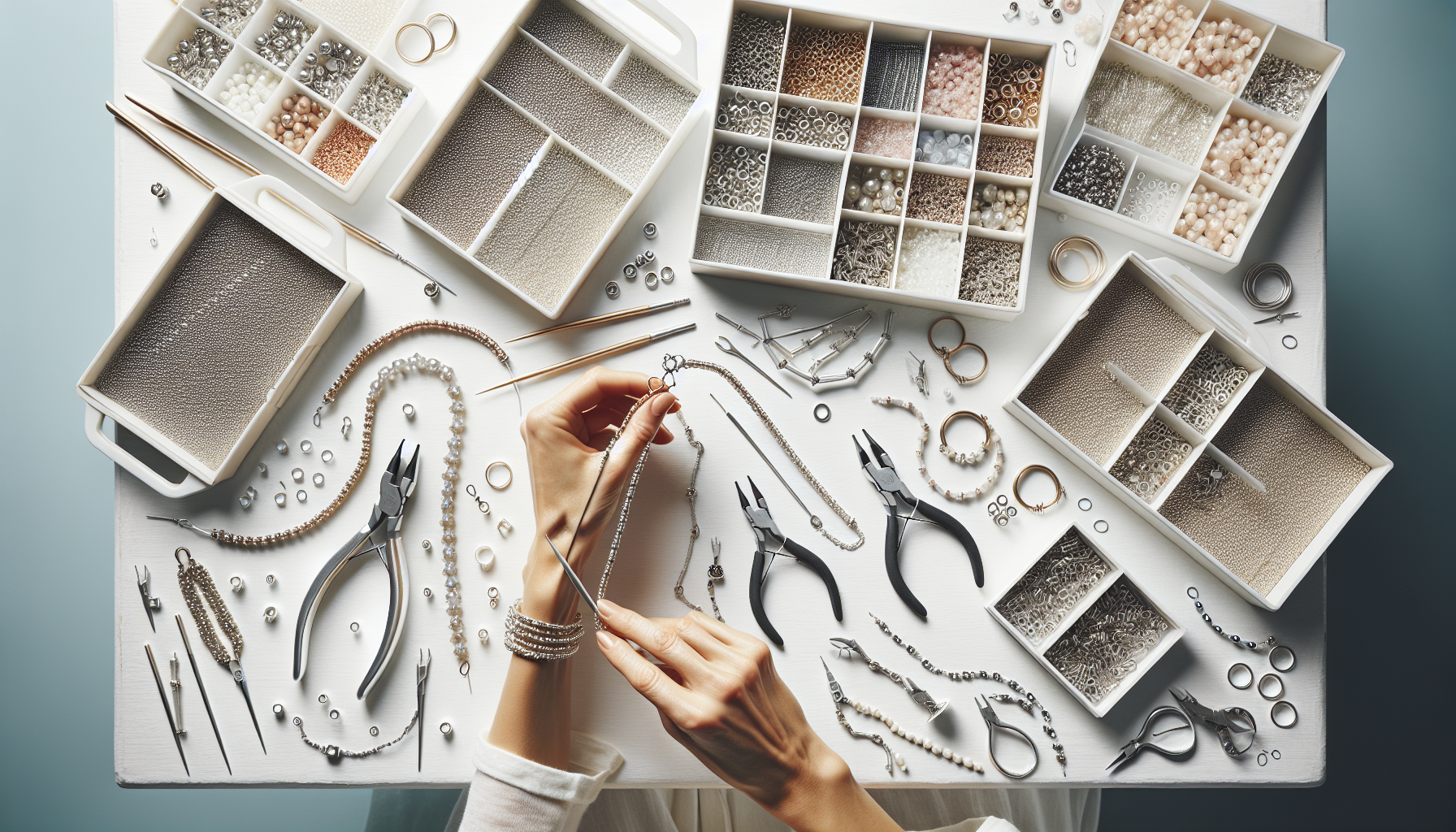
Crimp beads and crimp covers are small details that make a huge difference in how your handmade jewelry both lasts and looks. Many guides only mention them quickly, but if you want to create necklaces and bracelets that feel professional, it's important to truly understand what they do and how they are used. Here, we'll go through the basics in an easy-to-follow way – even if you're completely new to jewelry making.
What are crimp beads – function, form, and use
Crimp beads are small metal beads or tubes that are crimped around wire, beading wire, or stronger thread to lock everything in place.
-
Function: Holds wire/thread in place and attaches clasps, wire guardians, or jump rings so that the jewelry doesn't come apart.
-
Form: Usually found as small round beads or small metal tubes (crimp tubes) – e.g., sterling silver, gold-plated, or stainless steel.
-
When they are used: For finishing necklaces, bracelets, anklets, and all jewelry where you use beading wire or jewelry cable.
-
Difference from knots: Unlike knots (which you often use with beading thread or silk ribbon), crimp beads provide a more durable and controlled finish, especially with heavier beads or metal components.
A common beginner problem is simply tying a knot around the clasp – which then comes undone. With the right crimp bead, properly crimped, you avoid the jewelry breaking prematurely.
What are crimp covers – neat, professional finishes
Crimp covers are small, open metal balls that you place over a pre-crimped crimp bead to hide it and give a clean, professional look.
-
Why they are used: They make the finish look like a regular round metal bead instead of a flattened crimped bead or tube.
-
Difference from other methods: Many skip crimp covers, but then crimp marks, sharp edges, and uneven finishes are often visible – especially on metal jewelry or with finer stone beads.
-
Areas of use: Perfect for necklaces, bracelets, and anklets where you want the finish to be both comfortable against the skin and aesthetically pleasing.
At Hilmaspyssel.se, you'll find both crimp beads and crimp covers in various materials, colors, and sizes, specially selected to fit common jewelry cable and wire – something that many simpler online guides don't explain clearly enough. By combining the right type of crimp bead with a matching crimp cover, you lay the foundation for jewelry that both lasts longer and looks significantly more elaborate.
Choosing the Right Crimp Beads – Material, Size, and Quality
Choosing the right crimp beads is one of the most important details for durable and professional jewelry. The wrong material or wrong size can cause bracelets and necklaces to break, or the finishes to look clumsy. With a few simple guidelines, however, you can achieve discreet, strong fastenings that last for many years – and this is where beginners often differ from more experienced jewelry makers.
Material Choice – Silver, Gold, and Stainless Steel for Different Needs
-
Sterling silver (925): The classic choice when you want an exclusive feel, high durability, and the option to polish the surface if needed. Suitable for jewelry with gemstones and freshwater pearls.
-
Gold-plated/Silver-plated: A more affordable option that provides the same color aesthetic as real silver or gold, but with a thinner surface coating. Perfect for fashion and collection jewelry that is replaced more frequently.
-
Stainless steel: Very durable, color-stable, and often more hypoallergenic. Excellent for everyday jewelry exposed to sweat, perfume, and water.
-
Other metal alloys: Good budget alternatives when you want to test design ideas or make larger quantities, but always choose nickel-safe variants out of consideration for sensitive skin.
Consider how the jewelry will be used: is it a favorite necklace worn daily, or a trendy bracelet for the season? At Hilmaspyssel.se, you can easily filter for crimp beads in, for example, sterling silver or stainless steel depending on durability and skin-friendliness requirements.
Correct Size and Quality – How to Avoid Sliding Crimp Beads
For the crimp bead to grip the wire or jewelry cable properly, its inner diameter needs to be slightly larger than the wire's thickness – but not too large. As a rule of thumb, for example:
-
0.38–0.45 mm wire → crimp beads approx. 1.3–1.5 mm
-
0.45–0.60 mm wire → crimp beads approx. 1.8–2.0 mm
-
Elastic cord → use smaller crimp beads and always test several times before finishing the knot
Always choose harder, dimensionally stable crimp beads – cheap, overly soft varieties easily crack when crimped or loosen after a period of use. A good trick is to first buy smaller packs of high-quality crimp beads, test them in your favorite projects, and then stock up on larger bags when you've found a favorite. At Hilmaspyssel.se, you'll find clear measurements in the product descriptions, making it easy to match crimp beads to the wire or cord you already use.
Crimp Covers – How to Achieve Professional, Neat Finishes
Crimp covers are small but crucial details when you want to elevate a handmade piece of jewelry from "homemade" to professional. They are used with crimp beads to conceal the crimp itself and create a smooth, round finish that looks like a regular metal bead. This way, your necklaces and bracelets get both a softer expression and a more reliable construction – something that is often highlighted in the most appreciated online guides.
How Crimp Covers Work and How to Choose the Right Size
-
What does a crimp cover do? It encloses the crimped crimp bead and gently closes around it, so that the crimp bead is not visible and no sharp edges protrude.
-
Size in relation to the crimp bead: As a rule of thumb, a crimp cover should be one size larger than the crimp bead. A 3 mm crimp bead often fits well in a 4 mm crimp cover.
-
Shape and surface: At Hilmaspyssel.se, you'll find round, smooth crimp covers for minimalist jewelry, but also decorated and more robust models for those who want the metal to be more visible.
Keep in mind that hardness and material also play a role. A slightly stronger metal is less likely to crack when you pinch it, which is especially important if you are using thicker wire or multiple strands that need to be covered.
Color Matching, Design, and the Before/After Difference
For a consistent look, let the color of the crimp cover follow the other metal parts: sterling silver for silver clasps, gold-plated crimp covers for gold-toned chains, and stainless steel when you want maximum durability in everyday jewelry. Many also miss that crimp covers can be used as part of the design, not just at the ends – for example, as small metal accents between beads to tie the whole piece together.
Compare a simple pearl necklace with visible, flat-crimped crimp beads with the same necklace where the crimp is hidden in crimp covers: the difference in finish is enormous. At Hilmaspyssel.se, you can easily filter for crimp covers in the right size, material, and color, so you can quickly find a combination that suits your style and your projects.
Step-by-step: How to Use Crimp Beads Correctly
To get durable jewelry with professional finishes, it's not enough to have the right materials – the technique you use when working with crimp beads is absolutely crucial. Many online guides quickly gloss over the details, but it's precisely small steps like how tightly you crimp or how you plan the length of the wire that determines whether your bracelet lasts for years or breaks after a week.
Preparations: The Right Wire, Planning, and Measuring
-
Choose suitable wire/beading wire: Adjust thickness to bead hole size and the weight of the jewelry. A heavy stone bracelet requires stronger wire than a thin pearl necklace.
-
Measure length with margin: Always add at least 5–7 cm extra for finishes at both ends. This makes assembly calmer and reduces the risk of having to start over.
-
Plan the design in advance: Lay out the beads on a bead board or soft surface before you start stringing. Then you can adjust patterns and length without affecting the finishes.
When everything is prepared, the actual work with crimp beads becomes both easier and more precise. This is often where beginners differ from experienced jewelry makers – the experienced never rush the planning stage.
The Assembly Itself: From First Crimp Bead to Finished Necklace
-
Thread the crimp bead onto the wire, followed by the clasp component (e.g., lobster clasp) and possibly a wire guardian to protect the wire from wear.
-
Loop the wire back through the crimp bead to form a small loop around the clasp. Adjust the size of the loop – it should be small but not so tight that the clasp locks up.
-
Pull excess wire through the first beads so you don't have a "tail" sticking out at the end.
-
Crimp the crimp bead correctly: preferably use a crimp tool. First, shape the bead in the back notch (like a small "sausage"), then round it in the front notch. With flat-nose pliers: press evenly and firmly, not so hard that the wire is damaged.
-
Repeat on the other end and check that the jewelry has a little room for movement – it should not be taut like a strung instrument.
A practical beginner project is a simple necklace with beads along the entire wire and crimp beads at both ends. If you use quality pliers and crimp beads from, for example, Hilmaspyssel.se, you will quickly notice the difference: the crimping is cleaner, the wire holds better, and the finishes immediately look more professional. Always finish with a durability test – pull firmly on the jewelry before calling it finished. That way, you'll discover any mistakes calmly at your workbench, not when you're wearing the jewelry out.
Step-by-step: How to Place Crimp Covers Over Crimp Beads
Crimp covers are what transform a good piece of jewelry into a truly professional piece of jewelry. Once the crimp bead is in place, the next step is to hide it and create a smooth, round metal bead around the end. Here's exactly how to do it – without cracked crimp covers, crooked finishes, or marks from the pliers.
When and How to Mount the Crimp Cover
-
Use the crimp cover last in the finish: First, you thread, crimp, and test the crimp bead – the crimp cover is always placed over an already crimped crimp bead.
-
Gently open with the right pliers: Use flat-nose pliers with smooth jaws or a special crimp cover tool. Grip the opening, not the middle of the crimp cover, and only open it enough to fit around the crimp bead.
-
Place exactly over the crimp bead: The crimp cover should enclose the entire crimp bead without pinching the wire. Test that it sits "like a bowl" around the crimp bead before closing.
-
Close in two steps for a round shape: First gently squeeze the opening, then rotate the crimp cover and press again to round it. A crimp cover tool makes this especially easy.
Here's a practical example: You're making a bracelet with beading wire, a crimp bead, and a lobster clasp. Once the crimp bead is crimped and excess wire trimmed, you place a suitable crimp cover (e.g., 4 mm) over the crimp bead and gently close it – the result looks like a neat little metal bead. At Hilmaspyssel.se, you'll find both crimp covers and the right pliers adapted for small parts.
Common Problems & Correct Crimp Cover Size – A Small Cheat Sheet
-
Cracked crimp cover: Often a sign of too much pressure or too small a size in relation to the crimp bead. Go up one size and crimp in several gentle steps instead of one hard squeeze.
-
Crimp cover doesn't close: Check that the crimp bead is not too large. As a rule of thumb, for example, 3 mm crimp covers fit approximately 1.3–1.5 mm crimp beads, and 4 mm crimp covers fit approximately 2 mm crimp beads (always check measurements in the product description at Hilmaspyssel.se).
-
Uneven or angular appearance: Rotate the crimp cover while closing, and finish with a light squeeze in the middle to round it out. A crimp cover tool with rounded grooves makes a big difference.
By combining the right size crimp bead and crimp cover, plus gentle, controlled crimping, you'll get finishes that look like expensive store-bought jewelry. Save your favorite combinations (e.g., 0.45 mm wire + 1.3 mm crimp bead + 3 mm crimp cover) and buy the same measurements again at Hilmaspyssel.se – then every new project will be both faster and more attractive.
Design Ideas with Crimp Beads & Crimp Covers – Creative Ways to Use Them
Crimp beads and crimp covers are often associated only with "invisible finishes," but used smartly, they can become as important a part of the design as the beads themselves. In this section, you'll find ideas and concrete projects that show how you can utilize Hilmaspyssel.se's assortment to create jewelry that looks thoughtful and professional – without advanced techniques.
Creative Ways to Use Crimp Beads in Design
-
Crimp beads as spacer beads: Place small crimp beads between glass or stone beads for an airier, more graphic feel.
-
"Station" jewelry: Let individual beads be fixed on the wire using crimp beads on each side – perfect for minimalist necklaces.
-
Asymmetric effects: Secure a few beads closer to one side for a modern, asymmetric look.
A simple project is a minimalist station necklace: choose a thin beading wire, 5–7 favorite beads, small sterling silver crimp beads, and a discreet clasp. Secure each bead with a crimp bead on each side – the result is an airy, trendy necklace suitable for both everyday wear and special occasions.
Crimp Covers as Design Detail & Finished Project Ideas
Crimp covers don't just have to hide crimp beads – they can replace regular metal beads and create a unified metal tone throughout the piece of jewelry.
-
Decorative "metal beads": Use crimp covers closed around a thin wire as small, shiny balls in the pattern.
-
Mix of materials: Combine natural stone, glass, and metal with visible crimp covers for an elegant lift.
-
Matched sets: Use the same type of crimp covers in both necklaces and bracelets for a clear "set concept."
Three projects you can easily build with materials from Hilmaspyssel.se:
-
Minimalist station necklace with few, selected beads and silver-colored crimp beads.
-
Necklace with hidden finishes where crimp covers make the clasp area look like part of the design, not a makeshift solution.
-
Bracelet on wire with alternating stone beads and crimp covers, providing clear metal accents.
By thinking of crimp beads and crimp covers as design tools – not just technical components – you open up possibilities for much more personalized and exclusive jewelry. Here, Hilmaspyssel.se's wide selection of beads, wire, crimp beads, and crimp covers is a great advantage when you want to try different styles and combinations.
Common Mistakes, Troubleshooting, and Pro Tips from Hilmaspyssel.se
The more you work with crimp beads and crimp covers, the clearer it becomes how small details determine whether a piece of jewelry lasts for years – or breaks after the first use. In this section, we collect the most common mistakes beginners make, how to solve problems when they arise, and concrete pro tips from Hilmaspyssel.se that make your finishes both more secure and more attractive.
Common Mistakes and How to Avoid Them
-
Wrong size of crimp beads: A crimp bead that is too large for the wire will slip; one that is too small will easily crack. Always start from the wire thickness and follow size recommendations.
-
Wire cut too short at the end: Many cut too sparingly. Always leave a few extra millimeters so you can adjust before crimping.
-
Not using crimp covers: Without crimp covers, the finish can look sharp and "hobby-like." Crimp covers round off and protect against sharp edges.
-
Wrong tools: Crimping with regular household pliers instead of a crimping tool results in uneven and weak crimps.
When something goes wrong – the crimp bead cracks, loosens, or slips – cut off the end and start over with a new crimp bead. Don't try to "save" a damaged crimp bead; it will almost always fail later.
Pro Tips and Smart Solutions from Hilmaspyssel.se
-
Always test the tensile strength before attaching crimp covers and trimming excess wire – pull firmly on the jewelry as if you're trying to tear it apart.
-
Work in the correct order: thread beads → crimp bead → clasp/wire guardian → adjust slack → crimp → check → only then crimp cover.
-
Organize small parts in boxes or sorting trays so you can quickly find the right size and color, instead of compromising with a "nearly right" part.
-
Have a small starter kit ready: a few standard sizes of crimp beads, matching crimp covers, and a good crimping plier. At Hilmaspyssel.se, you'll find pre-made kits and carefully selected basic tools specifically adapted for jewelry making.
By being aware of these mistakes, incorporating troubleshooting into your routine, and using quality components from the start, you will quickly elevate your skill level from beginner to confident hobby designer – with jewelry that is both durable and professional-looking.
Frequently Asked Questions about Crimp Beads & Crimp Covers
Q: What is the most important thing to understand about crimp beads and crimp covers?
A: The absolute most important thing is that crimp beads are responsible for the structural integrity of your jewelry, while crimp covers provide the neat, professional finish. A correctly chosen and properly crimped bead ensures that the necklace or bracelet will withstand daily wear without the wire slipping. The crimp cover is placed over the crimp bead, transforming the "technical" part into something that looks like a regular round metal bead – perfect if you want your handmade jewelry to look store-bought.
Q: How do I know what size of crimp beads and crimp covers to choose?
A: Always start with the thickness of your wire or jewelry cable. A rule of thumb is that the inner diameter of the crimp bead should be at least twice the thickness of the wire/cable, preferably a little more if you thread the wire back through the bead. Then, choose crimp covers that have an inner diameter large enough to accommodate both the crimp bead and the wire. At Hilmaspyssel.se, you can compare product measurements and, for example, combine 1.3–1.5 mm crimp beads with 3 mm crimp covers for discrete, neat finishes.
Q: Why do my crimp covers crack or deform when I close them?
A: This is usually due to three things: too much pressure, the wrong pliers, or the wrong size. Use flat-nose pliers with smooth jaws, close the crimp cover in small, controlled steps, and angle the pliers around the bead instead of crimping straight from the front. Also, make sure the crimp cover is not too small for the crimp bead – otherwise, the metal will be forced out and easily crack. Feel free to test on a scrap piece of wire first before working on your finished piece of jewelry.
Q: Do I always have to use crimp covers, or are crimp beads enough?
A: Technically, a correctly crimped bead is sufficient for the jewelry to hold. However, if you want a professional and gentle finish, crimp covers are highly recommended. They hide sharp edges, protect the crimp bead, and give a clean, well-thought-out look. Especially for jewelry you sell or give as a gift, crimp covers make a big difference in how "finished" the work appears.
Q: Which material is best for sensitive skin – and does it affect durability?
A: If you have sensitive skin, sterling silver, gold-plated silver, and stainless steel are good choices. They are more hypoallergenic than simple metal alloys and retain their color better over time. Stainless steel is very durable and perfect for everyday jewelry, while sterling silver provides a classic, exclusive feel. Hilmaspyssel.se offers crimp beads and crimp covers in several quality materials, so you can match comfort, appearance, and budget.
Q: How can I quickly get started if I've never used crimp beads and crimp covers before?
A: Start with a simple necklace or bracelet on jewelry wire. Choose: wire, a pack of crimp beads, suitable crimp covers, a clasp, and basic pliers. Then follow this quick start guide:
-
Thread the beads onto the wire
-
Add a crimp bead + clasp component, thread the wire back through the crimp bead
-
Adjust the length, crimp the crimp bead with the correct pliers
-
Trim any excess wire and place the crimp cover over the crimp bead
If you want to make it even easier, you can choose a starter kit with crimp beads, crimp covers, and tools from Hilmaspyssel.se – then you'll have everything you need to succeed right away.
Conclusion: How the Right Small Parts Elevate Your Entire Piece of Jewelry
Now you've seen how crimp beads and crimp covers are key to both durable and professionally beautiful jewelry – whether you're making simple bracelets or elaborate necklaces on wire. By choosing the right materials and size, using correct techniques, and daring to think creatively in design, you can avoid common problems like slipping finishes, chafing wire, and jewelry breaking at the wrong moment. You've also received expert tips on troubleshooting, tools, and smart storage that are often missing in simpler guides.
The next step is to put this knowledge into practice. Start with a small project – for example, a station necklace or a simple bracelet – and focus on clean, secure finishes with crimp beads and crimp covers. Visit Hilmaspyssel.se to find matching crimp beads, crimp covers, wire, beads, and tools, or choose a ready-made starter kit if you want to get started right away. Feel free to save this guide as your permanent reference and share it with friends who also want to take their jewelry from hobby level to a truly professional finish.