


Heishi beads on Hilmaspyssel.se: choose the right size, color, and thread for professional jewelry
Do you want to create trendy bracelets, necklaces, or anklets that feel both modern and comfortable to wear? Then heishi beads are one of the simplest ways to achieve a stylish, boho-inspired look – thanks to their flat "disc" shape and lightweight polymer clay material. But for the result to be truly durable, you need to know which size (3 mm, 4 mm, or 6 mm) suits your project, how a 1 mm hole affects thread choice, and how many beads you actually need.
In this guide, you'll get a clear size and quantity check, design ideas with colors like turquoise, lilac-pink, black/white, and green mix – plus how to shop smarter on Hilmaspyssel.se using "Sort by" (e.g., Bestsellers, price, or new arrivals) to quickly find what you're looking for.
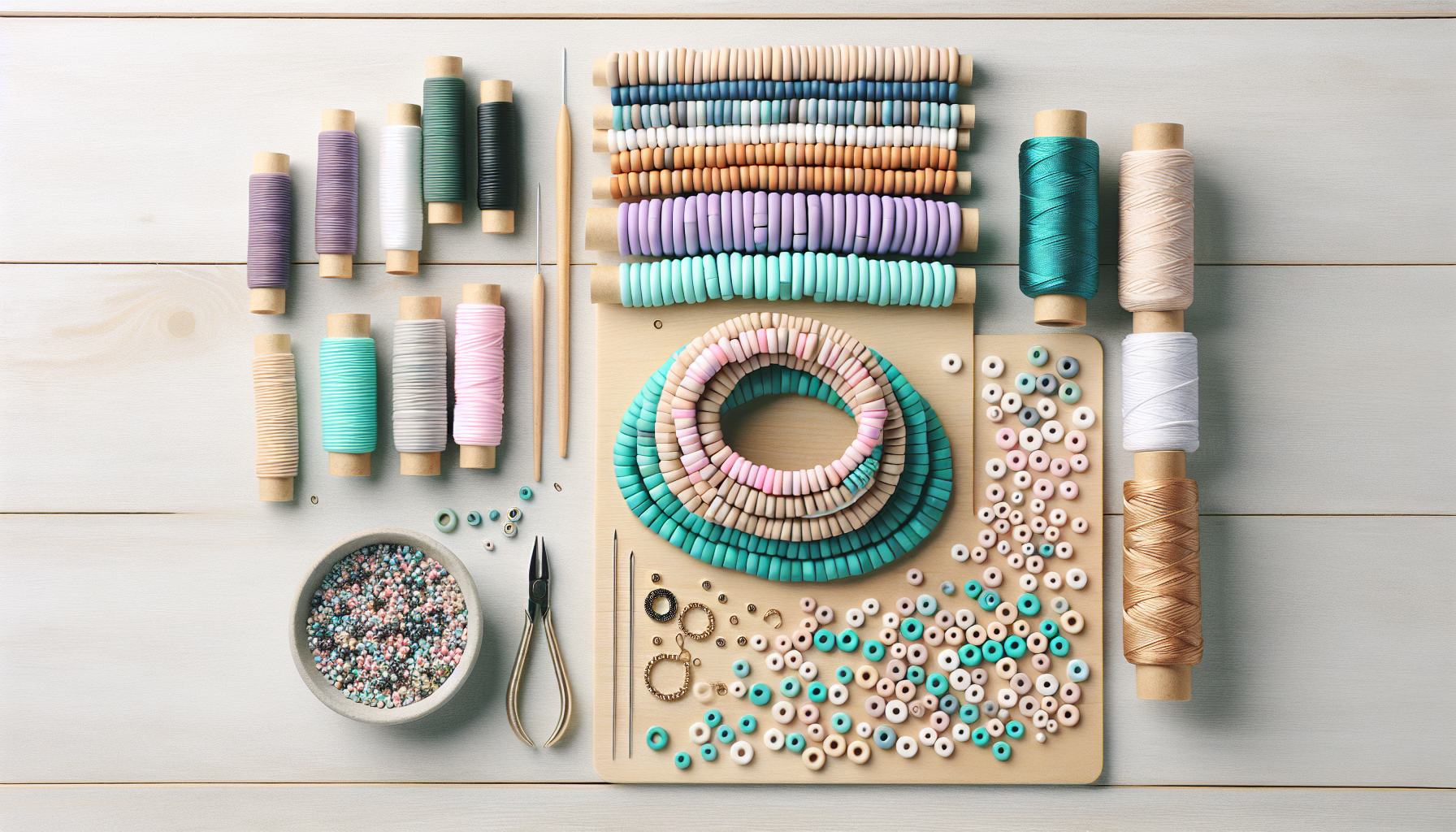
Heishi beads are those flat, disc-shaped beads that give a modern (sometimes boho) look with minimal effort. On Hilmaspyssel.se, you'll find heishi in several colors and sizes, often on a strand with many beads—perfect when you want to make bracelets, necklaces, anklets, or earrings that feel trendy yet are easy to wear. A crucial detail common to the products is the polymer clay material and the practical standard of approximately 1 mm holes, which makes them compatible with much of your usual jewelry thread.
Polymer clay: lightweight, durable, and comfortable for everyday wear
Polymer clay is one of the biggest reasons why heishi beads have become so popular for DIY jewelry. It offers a "soft" feel visually and in wearing comfort, especially when you use many beads in a row.
-
Low weight: You can create wide, bead-dense bracelets without them feeling heavy on your wrist.
-
Durability for daily use: The beads are tough enough for jewelry worn frequently, such as stacked bracelets and everyday necklaces.
-
More comfortable against the skin: Polymer clay often feels less "cold" than glass/stone, which makes a big difference in larger jewelry pieces.
Unique insight: compared to glass beads and natural stone, a heishi strand often has a more "textile" drape. The flat discs lie close together, creating a smooth surface that looks almost woven—especially nice in layered necklaces and minimalist bracelets.
When polymer clay is best – and when you should reinforce your design
Polymer clay is great for beginners, children's projects, and quick gift ideas because it's forgiving and easy to work with. But if you plan to attach heavier details (e.g., large pendants or metal components), it might be smart to reinforce with jewelry wire, better finishes, and a sturdy clasp. A simple professional trick is to add small metal beads closest to the clasp—this reduces wear where the jewelry moves most.
Heishi size guide: 3 mm, 4 mm, and 6 mm – how to choose the right one
When buying heishi beads on Hilmaspyssel.se, the size is what most quickly determines both the feel of the jewelry and how easy it will be to work with. In the assortment, you'll find 3 mm (e.g., Turquoise and Lilac-pink), 4 mm (Black/White), and 6 mm (Green mix). All typically have a hole size of approximately 1 mm, making them compatible with many threads – but the expression will be completely different depending on the diameter.
Measurements in practice: how they affect the design
-
3 x 1 mm (approx. 380–400 beads/strand): Perfect when you want to create detailed patterns and soft color shifts. The smaller diameter gives the jewelry a more "delicate" look and is well-suited for stacking bracelets and thin, layered necklaces.
-
4 x 1 mm (approx. 320 beads/strand): A clear midpoint—you get more graphics and contrast without it becoming bulky. For example, black/white quickly gives a modern expression and works great with metal accents or letter beads.
-
6 x 1 mm (approx. 290–320 beads/strand): Provides quick effect and larger color fields. Very good for minimalist bracelets where you want the color (e.g., a green/white mix) to "speak" without extra decorations.
A unique rule of thumb: consider the design's tempo. Smaller beads are like more "pixels" in a pattern (more detail), while larger beads create cleaner color blocks.
The hole (approx. 1 mm) – what determines how you can string
That the hole is around 1 mm means you can usually choose between elastic cord, nylon, or jewelry wire. But the choice is influenced by the size: 3 mm beads often look best on thinner cord for a smooth drape, while 6 mm can tolerate slightly thicker cord without feeling "heavy".
For a safe choice: start with 3 mm if you want to build patterns and test color combinations, 4 mm for a clear statement feel, and 6 mm when you want to quickly achieve a stylish result.
How many heishi beads are needed? Count the strand content and plan smartly
One of the most common questions when making jewelry with heishi beads is: "Is one strand enough?" The answer depends on the size (3/4/6 mm), how tightly you string, and whether you mix in spacer beads/pendants. On Hilmaspyssel.se, it's clearly stated how many beads a strand usually contains, making it easier to plan before you start – and to avoid ending up with a half-finished bracelet without matching beads.
Strand contents – quick overview per size
Here's a practical rule of thumb based on product information:
-
3 mm (approx. 3 x 1 mm): roughly 380–400 beads per strand (e.g., Turquoise 3mm and Lilac-pink 3mm). Perfect when you want to create detailed patterns or several slender bracelets.
-
4 mm (approx. 4 x 1 mm): about 320 beads per strand (e.g., Black/White 4mm). Good balance between "statement" and delicacy, especially for graphic expressions.
-
6 mm (approx. 6 x 1 mm): roughly 290–320 beads per strand (e.g., Green mix 6mm). Provides quick impact and covers length quickly – often one strand goes a long way in minimalist designs.
Since the thickness is often about 1 mm, this practically means that the beads build length relatively predictably, but gaps (metal beads, knots, chain parts) alter the result.
Project calculation: how to estimate bead count without guessing
A simple way is to count in "modules": do you string, for example, 20 heishi + 1 metal bead and repeat? Measure one module (in cm) and see how many are needed for a 17 cm bracelet or a 45 cm necklace. It's a good idea to make a 3–5 cm sample piece before stringing everything – it saves both time and waste, especially if you're mixing several colors.
Mixed strands (like green/white mix) also provide an instantly harmonious look, reducing the need to buy many separate colors to achieve an even palette.
Plan for margin and matching
Always add a small buffer (approx. 5–10%) if you're making matching sets (bracelet + anklet) or if you want to be able to discard any single bead that deviates. This will give you a more professional end result – and avoid compromising on the design at the last minute.
Thread, elastic cord, or jewelry wire? How to match a 1 mm hole to the right technique
When working with heishi from Hilmaspyssel.se, the hole size (approx. 1 mm) is your most important starting point. It determines which threads will pass through smoothly – and how durable your bracelet, necklace, or anklet will actually be. Since heishi beads are made of polymer clay (light but durable), they work well for both elastic and more "professional" stringing techniques, but the choice affects the feel: soft and pliable or more shape-stable.
How to choose the right thread for heishi beads (1 mm hole)
-
Elastic cord: Best for bracelets and anklets where you want to put on/take off without a clasp. Choose a quality cord that doesn't feel "rubbery" and glides through the beads without snagging.
-
Jewelry wire: Perfect for necklaces and designs with clasps. Wire provides a more stable drape and reduces the risk of the jewelry stretching over time – especially good if you incorporate metal, pendants, or heavier components.
-
Strong nylon thread: Good when you want to make knotted finishes, work with sections, or create a delicate design without a wire feel. Nylon can also be gentle when making tight patterns with 3–4 mm heishi (e.g., turquoise 3 mm or black/white 4 mm).
The unique thing about polymer clay is that its surface can create a bit more friction than glass. If the thread is too "rough," it can slow down when you're stringing – so choose a thread that is both strong and has good glide.
Durability tips (and common mistakes to avoid)
An elastic heishi bracelet will last longer if you string with double thread, make a secure knot, and test by gently stretching before cutting. For wire: use crimps and findings that securely lock the wire for a more professional result.
Avoid the classics: too thick thread that snags in 1 mm holes, stretching elastic thread too tightly (beads "bulge"), and letting heishi rest directly against sharp rings/clasps without a small spacer bead for protection.
Section 5: Color and style – create trendy combinations with heishi beads
One of the biggest advantages of polymer clay heishi beads is that you can quickly control the feel of a piece of jewelry with color choices and pattern rhythm. On Hilmaspyssel.se, you'll find everything from vibrant 3 mm shades to more graphic 4 mm variations and larger 6 mm mixes – all with approximately 1 mm holes, making them easy to combine with other beads and metal components. Here's a practical color and style guide to help you create bracelets, necklaces, and sets that feel both thoughtful and personal.
Four color schemes that always work (with examples from Hilmaspyssel.se)
-
Turquoise 3 mm: Builds a summery, boho look. Perfect as the main color in an entire heishi bracelet or as an accent with white, gold, and small shell/charm details.
-
Lilac-pink 3 mm: Creates a soft, romantic expression. Try tone-on-tone with light purple and mother-of-pearl, or create contrast with dark grey/silver for a modern twist.
-
Black/White 4 mm: A safe bet for those who want graphic minimalism. The striped feel looks extra good with smooth metal beads and clean lines (few, but distinct, accents).
-
Green mix 6 mm: The ready-made mix of green/white provides a unified result immediately and suits everyday jewelry that needs to match "everything." Good when you want larger color fields and quick impact.
The unique key to making heishi look "designer" is to think in proportions. Try the 70/25/5 rule: 70% base (e.g., green mix), 25% secondary (white/silver), 5% accent (turquoise or a charm). This provides balance without feeling cluttered.
Texture and contrast: how to add more depth to the design
Polymer clay has a soft, matte feel – take advantage of this by incorporating metal beads, letter beads, or faceted beads as "points of light." A simple trick is to insert a metal bead every 10–15 heishi beads: you maintain the heishi look, but get a clear rhythm and a more exclusive impression.
Finally: let the size dictate the style. 3 mm is best for detailed patterns, 4 mm for graphic statements, and 6 mm for clean, minimalist blocks of color.
DIY ideas with heishi: bracelets, necklaces, anklets, and earrings (easy to professional)
Heishi beads made of polymer clay are perfect for DIY because they are lightweight, durable, and comfortable to wear – even when you use many beads in the same piece of jewelry. With a hole of approximately 1 mm (common on Hilmaspyssel.se), they are also easy to string on elastic cord, nylon thread, or jewelry wire. Here are ideas that utilize sizes like 3 x 1 mm, 4 x 1 mm, and 6 x 1 mm, and help you achieve a smooth, durable result.
4 projects you can do right away (with the right material choices)
-
Bracelet (beginner): String heishi beads tightly on elastic cord and finish with a secure double knot + a small drop of jewelry glue. 3 mm (e.g., turquoise or lilac-pink) gives a delicate look, while 4 mm (black/white) becomes more graphic.
-
Necklace (intermediate): Build in sections: heishi parts + metal spacer beads and finish with jewelry wire + crimps for a professional clasp. Perfect when you want the necklace to hold its shape and withstand everyday use.
-
Anklet (summer): Choose 3 mm heishi and insert small metal beads every 10–15 beads for an airy feel. Turquoise gives a "beach" vibe, lilac-pink provides a soft tone-on-tone look.
-
Earrings (light & comfortable): Take advantage of polymer clay's light weight: create color blocks with heishi on a headpin/loop and top with a small metal bead so that the heishi doesn't rub directly against the finding.
What is often missing in guides is the "finish": always test the jewelry by gently pulling the thread and bending it as if in use. Heishi can "grip" the thread more than glass, so work calmly so that the beads lie evenly without the thread fraying.
Quick pro tips for prettier and more durable jewelry
For a more thoughtful look: let one main color dominate and use 1–2 accent elements (metal, letter beads, or natural stone). And preferably place a small "buffer" (metal bead) near clasps and pendants – this reduces wear and keeps your heishi jewelry looking good longer.
Find the right heishi on Hilmaspyssel.se – how to use "Sort by" to shop smarter
Once you know what size, color, and threading technique you're looking for, the next step is to find the right beads quickly. On Hilmaspyssel.se, the heishi category is designed for you to filter and compare without hassle – and the Sort by function is key when you want to go from "inspiration" to a well-considered purchase. It saves both time and reduces the risk of missing, for example, the correct dimensions (3x1, 4x1, or 6x1 mm), the polymer clay material, or the important detail that the hole is approximately 1 mm.
Sorting options – what they mean and when to use them
On the heishi page, you can usually sort in several ways. Here's how to use the options strategically:
-
Featured: Perfect when you want to see hand-picked favorites and get a quick feel for trends (e.g., graphic black/white 4 mm or harmonious mixes).
-
Most relevant: Best when you're looking for something specific, like turquoise 3 mm or "4 mm" and want to get the right match early in the list.
-
Bestsellers: Smart if you're a beginner and want to start with popular choices that work in many designs.
-
Alphabetical: Makes it easier when you're looking for a specific color name and want to avoid scrolling.
-
Price (low–high / high–low): Helps you stay on budget, especially if you also need elastic cord, wire, and findings.
-
Date (new–old / old–new): Choose new–old to find new arrivals; old–new if you want to see older, proven colors first.
A pro tip often missing in simpler guides: make a mini-shopping list before you sort. Write down 1) size (3/4/6 mm), 2) color theme, 3) approximate number of strands, and 4) thread/findings. Then sorting becomes a tool to confirm your choice – not a way to "chance buy."
Quick check before adding to cart
To avoid mispurchases, always check the product description for:
-
Material: should say polymer clay if you want lightweight, comfortable everyday jewelry.
-
Dimensions: for example, 3x1 mm, 4x1 mm, or 6x1 mm (affects the look and how quickly you build length).
-
Hole size: usually approx. 1 mm – determines if your elastic cord or jewelry wire will fit smoothly.
-
Quantity per strand: varies (e.g., around 380–400 for 3 mm and about 320 for 4 mm), which helps you plan your project better.
When you use Sort by together with this quick check, you'll find the right heishi on Hilmaspyssel.se faster – and you'll get beads that match both your design idea and your technique on the first try.
Frequently Asked Questions
Q: What are heishi beads and why are they so popular in jewelry making?
A: Heishi are flat "disc" beads that create a smooth, modern bead strand with a boho feel. Many heishi beads on Hilmaspyssel.se are made of polymer clay, which makes them lightweight, comfortable to wear, and sufficiently durable for everyday jewelry. Their shape also provides a "textile" drape that is perfect for bracelets, necklaces, and anklets.
Q: How large are heishi beads and which size should I choose (3 mm, 4 mm, 6 mm)?
A: Common measurements are 3 x 1 mm (e.g., turquoise/lilac-pink), 4 x 1 mm (black/white), and 6 x 1 mm (green mix). 3 mm gives a finer, more detailed look, 4 mm is more graphic and "statement," and 6 mm provides a quick effect with larger color areas. Also, note that the hole is often about 1 mm, which affects thread choice.
Q: How big is the hole in heishi beads and which thread works best?
A: Many heishi beads have approx. 1 mm holes. For bracelets, elastic cord is most common (preferably double for heavy designs). For necklaces, jewelry wire + crimps often give a more durable and professional result. Choose a thread that glides well through the beads – polymer clay can have a bit more friction than glass.
Q: How many beads do I get per strand – and is one strand enough for a bracelet?
A: Count approximately 380–400 beads/strand for 3 mm, about 320 for 4 mm, and 290–320 for 6 mm. One strand is often enough for several bracelets, but it depends on whether you make a completely “dense” heishi bracelet or mix in spacer beads, letter beads, and charms. A smart tip is to make a 2–3 cm sample piece and count up to your wrist length.
Q: What are the most common mistakes when making jewelry with heishi?
A: Three classic mistakes are choosing too thick thread (gets stuck in the 1 mm hole), pulling elastic thread too tight (the bracelet becomes stiff and wears out faster), and skipping proper finishes (knot without glue or wire without crimps). Always test the fit and do a “stretch test” before cutting the thread.
Q: How do I find the right heishi on Hilmaspyssel.se using the "Sort" function?
A: Under Sort, you can choose, for example, Featured (curated favorites), Most relevant (good when searching for a specific color/size), Best sellers (safe choices), as well as sorting by price and date if you're looking for a budget or new arrivals. Always check the product's material (polymer clay), dimensions, and hole size before adding to the cart.
Time to create: choose heishi that matches your style and project
Heishi beads in polymer clay are one of the easiest ways to achieve a modern, boho, or graphic look in your DIY jewelry – without compromising on comfort. Now you know about the most common sizes (3 x 1 mm, 4 x 1 mm, 6 x 1 mm), why the approx. 1 mm hole dictates the thread choice, and how to plan both color and quantity based on the strand's content (approx. 380–400, 320, or 290–320 beads). The key to a professional result is to match the technique (elastic thread/wire) with use and wear.
The next step is simple: 1) choose a project (bracelet, necklace, anklet, or earrings), 2) decide on size and color theme (e.g., turquoise, lilac pink, black/white, or green mix), 3) calculate the length and ensure the correct thread/finish. When shopping at Hilmaspyssel.se, you can use Sort smartly: choose Best sellers if you want to start with proven favorites, Price for budget, or Date to find new arrivals. Pick your strands and get started – your next piece of jewelry could be finished tonight.