


Make your own jewelry with Hilmaspyssel.se – your complete beginner's guide
Do you want to make your own jewelry that feels personal, trendy, and completely unique – without needing expensive specialized courses? More and more people in Sweden are discovering how relaxing and fun it is to create bracelets, necklaces, and earrings at home at the kitchen table. With the right materials from Hilmaspyssel.se, you can quickly get started, even if you are a complete beginner.
In this guide, you will get a clear step-by-step path into the world of jewelry making: which beads, tools, and jewelry components you need, how to avoid classic beginner mistakes, and what professional tips will make your jewelry look "store-bought." We will also cover sustainable materials, hypoallergenic choices, design ideas, and how you – if you wish – can take the next step and sell or give away your handmade favorites.
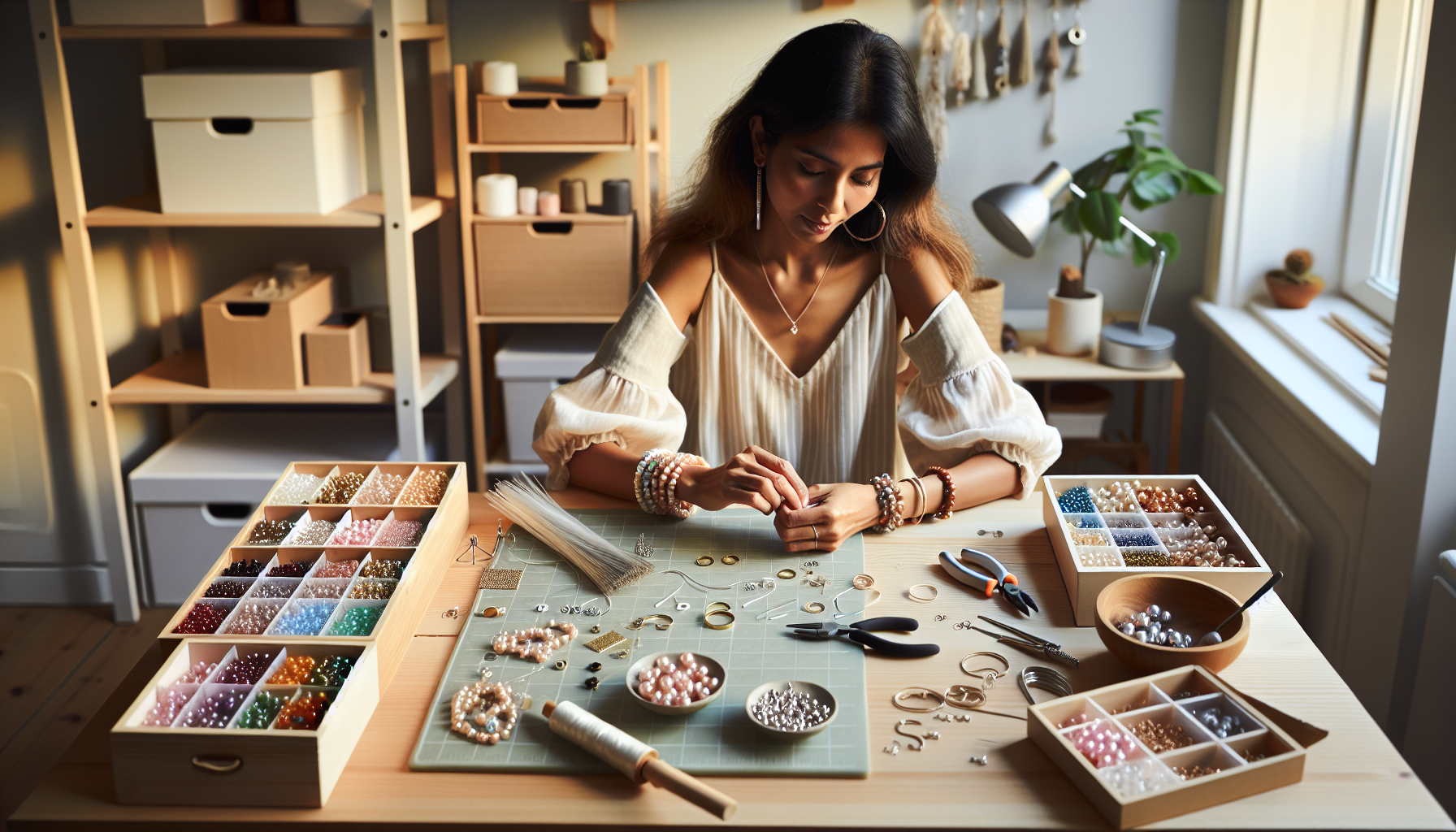
Making your own jewelry has become a strong DIY trend in Sweden, and more and more people are choosing beads, wire, and charms over mass-produced accessories in stores. Several driving forces are behind this trend: the desire to express one's own style, an interest in sustainable consumption, and the need for a creative break in everyday life. With the help of Hilmaspyssel.se, it also becomes easy to find both materials and ideas gathered in one place.
Trends, personal style, and economics
When you create custom-designed jewelry, you get complete freedom to shape bracelets, necklaces, and earrings that truly reflect you – not the standard store selection:
- Unique style: Combine colors, materials, and shapes so that no one else has exactly the same piece of jewelry as you.
- Economically smart: By buying materials and making your own jewelry, you can often get several pieces of jewelry for the price of one store-bought item.
- Flexibility: Adjust length, size, and details to your body and your wardrobe – something many ready-made pieces miss.
-
Current trends: Beaded bracelets, letter beads, boho-inspired necklaces, and minimalist chains are easy to recreate with the right components.
This is where you stand out from the crowd: instead of chasing the "right" piece of jewelry in a store, you build your own capsule collection at home at the kitchen table.
Sustainability, recycling, and inspiration from Hilmaspyssel.se
One aspect often underestimated in other guides is how sustainable jewelry making can be. You can disassemble old jewelry, reuse favorite charms, and combine them with new chains, clasps, and beads from Hilmaspyssel.se. This way, you extend the life of materials you already have and reduce the need for newly produced accessories.
Hilmaspyssel.se functions as both a store and an inspiration hub. By browsing categories like boho, minimalist, colorful, or children's crafts, you get concrete ideas for everything from playful children's bracelets to stylish everyday jewelry. This lowers the barrier to entry – whether you are a complete beginner or want to take your creative hobby to the next level.
Get started – basic materials and tools from Hilmaspyssel.se
To succeed in making your own jewelry, you need two things: the right materials and the right tools. Many beginners get overwhelmed by all the options, but with a well-thought-out basic set from Hilmaspyssel.se, you will quickly get started without unnecessary purchases. Here, we'll go through exactly what you need – and why.
Basic materials you'll almost always find useful
-
Beads: e.g., glass beads, acrylic beads, letter beads, and seed beads for bracelets, necklaces, and earrings.
-
Wire and thread: jewelry wire for necklaces/bracelets, elastic thread for simple beaded bracelets, strong nylon or polyester thread for lightweight jewelry.
-
Jewelry components: clasps, chains, extender chains, ear hooks, pins (headpins/eyepins), crimps, and jump rings to securely attach everything.
-
Charms and pendants: small details that personalize the jewelry – hearts, letters, symbols, animals, etc.
Once you have these basic components, you can combine them in a multitude of different projects. A smart approach is to start with a couple of favorite colors and a metal color (e.g., silver) and build your first "mini-stock" around that, instead of buying a little bit of everything.
Tools, metals, and important terms for beginners
-
Tools you should have: round nose pliers (for loops), flat nose pliers (for holding and pressing), wire cutters (for cutting wire and pins), needles, and preferably a bead mat so that the beads don't roll away.
- Metals:
-
Stainless steel – durable, often good for sensitive skin, perfect for everyday jewelry.
-
Sterling silver – genuine silver, oxidizes but can be polished, valued in gift jewelry.
-
Gold-colored/metal alloys – affordable, good for beginners and trendy projects.
- Terms to know:
- Headpins/eyepins – pins you thread beads onto for pendants.
- Jump rings – small rings that connect parts.
-
Crimps – small crimp beads that lock wire and hold clasps in place.
A good working method is to always start with the type of jewelry: do you want to make bracelets, necklaces, earrings, or anklets? Then choose the right thread/wire, suitable clasps, and jewelry components. On Hilmaspyssel.se, you can easily filter product categories by jewelry type, so you don't have to guess and instead build a well-thought-out basic set that will work for many different projects in the future.
Beads, stones, and details – choose the right style and quality
The choice of beads, stones, and small details determines whether your jewelry feels cheap or exclusive, playful or stylish. Here, we'll go through how to choose the right material, both based on appearance, quality, and how the jewelry will actually be used – with concrete examples of products and solutions that you can easily find through Hilmaspyssel.se.
Different types of beads and when to use them
-
Glass beads: Provide weight and a more "authentic" impression, perfect for bracelets and necklaces that should feel a bit more luxurious.
-
Acrylic beads: Lightweight, affordable, and durable – ideal for children's crafts, larger jewelry, and colorful projects.
-
Wooden beads: Natural feel and boho style. Suitable for longer necklaces, macrame, and combinations with cotton cords.
-
Letter beads: For name bracelets, message bracelets, and personalized gifts. Feel free to combine with neutral spacer beads.
-
Seed beads (rococo/rocaille): Small beads for woven bracelets, embroidery, or details around larger stones.
-
Gemstones and semi-precious stones: For those who want more weight, natural variation, and sometimes a connection to the "energy" of crystals.
In addition to the type of bead, you also need to consider hole size, weight, and how the material interacts with chains and metal color, something many guides fail to explain clearly.
Color, feel, and a common thread in your jewelry
The colors you choose affect the entire expression of the jewelry. Feel free to start with:
-
Your wardrobe: Choose beads that match the clothes you wear most often, so you get jewelry you actually wear.
-
Season and holidays: Muted tones and metal for autumn/winter, pastels for spring, strong colors for summer, red/gold for Christmas.
- Color combinations:
- Contrasts (e.g., blue–orange) add life and energy.
- Tone-on-tone (different shades of the same color) gives a calmer, more sophisticated impression.
Create a "signature style" by sticking to a recurring metal color, a certain shape (e.g., many round beads), or a color theme. This will make your jewelry feel like a well-thought-out collection rather than individual projects.
Hypoallergenic choices, children's crafts, and smart filtering
If you have sensitive skin, or are making jewelry for children, the choice of material is especially important. In that case, opt for:
-
Nickel-safe metals, preferably stainless steel or platings known to be gentle.
-
Smooth beads without sharp edges for children's bracelets and necklaces, as well as sturdy elastic thread.
-
Lighter materials like acrylic or wood for younger children, so the jewelry doesn't become too heavy.
A unique advantage of shopping through Hilmaspyssel.se is that you can filter beads by material, color, shape, and size, which makes it much easier to plan an entire jewelry collection. By considering style, feel, and practical needs already when choosing materials, you get jewelry that is beautiful, comfortable – and actually used in everyday life.
Step-by-step: making your own bracelets, necklaces, and earrings
Once you've mastered the materials and tools, the next step is to actually create your first pieces of jewelry. Here, we'll go through three simple but stylish basic projects – bracelets, necklaces, and earrings – which top articles often mention as perfect beginner projects. With clear steps and concrete measurements, it will be easy to succeed from the start.
1. Elastic beaded bracelet – the quickest way to your first piece of jewelry
-
Measure wrist: Measure your wrist and add about 1–1.5 cm for freedom of movement.
-
Thread beads: Use elastic thread from Hilmaspyssel.se and thread on beads until you reach the desired length.
-
Tie the right knot: Make at least a double or triple knot, pulling slowly and evenly.
-
Reinforce and hide the knot: Secure with a drop of jewelry glue and hide the knot in a larger bead.
Common mistakes are too short bracelets and too loose knots. Always try the bracelet on your wrist before cutting off excess thread. A smart beginner's tip is to make several bracelets in the same color scheme – it immediately gives you a small collection that feels well-thought-out.
2. Simple necklace with clasp & 3. Classic earrings with hooks
For a simple necklace with a clasp:
- Measure desired length (e.g., 42 cm for a short necklace).
- Use jewelry wire, thread on beads, and finish with crimps and a clasp attached with jump rings.
- Crimp the crimps firmly with pliers for a professional finish.
For classic earrings with hooks:
- Thread beads onto headpins and create a loop with round nose pliers.
- Attach the dangle to ear hooks with a jump ring – always open it sideways, never straight apart.
- Consider weight and length for comfortable earrings, especially for sensitive ears.
A unique added value is to create a small starter kit: choose one roll of elastic thread, a set of wire, a set of clasps, jump rings, a few bags of mixed beads, and a pair of ear hooks from Hilmaspyssel.se. With such a kit, you can make several matching sets – perfect both for yourself and as personalized gifts.
Pro tips – technique, durability, and finish for your jewelry
Once you've learned the basics of making your own jewelry, the next step is to make them look truly professional. This isn't just about good design, but about technique, durability, and a well-thought-out finish that makes your jewelry last a long time – and feel "store-bought" rather than homemade. With the right approach and small adjustments, you can elevate every bracelet, necklace, and earring several levels.
How to make your jewelry look professional
-
Work with symmetry and proportion: Place heavier beads in the center, balance colors, and repeat shapes for a harmonious overall impression.
-
Perfect finishes and fastenings: Crimp crimps firmly, use the correct size jump rings, and ensure no sharp wire ends protrude.
-
Work on the right surface: A bead mat from Hilmaspyssel.se provides better control, reduces the risk of beads rolling away, and makes the thread less static.
-
Reinforce knots and connections: A small drop of jewelry glue on knots, especially on elastic bracelets, makes a huge difference to durability.
By consistently following the same working method – for example, always measuring carefully, always double-checking clasps, and always test-pulling the jewelry before wearing it – you build an "invisible" quality that only becomes noticeable when the jewelry is used in everyday life.
Storage, care, and your own quality checklist
For your jewelry to stay beautiful longer, you also need to consider storage and care. Store jewelry dry, preferably in small bags or boxes, and separate metals if you want to reduce the risk of discoloration. Feel free to include simple care instructions when giving away or selling jewelry, such as: remove jewelry when showering, exercising, and swimming, store in a dark, dry place, avoid perfume directly on the jewelry.
Also, create your own quality checklist to go through before you declare a piece of jewelry finished: Is the thread properly tensioned? Are all crimps secure? Are the jump rings fully closed? Does anything rub against the skin? This extra minute is often the difference between "homemade" and "handmade with care" – and makes your jewelry from Hilmaspyssel.se truly feel luxurious.
Design with heart – ideas, sketches, and personal jewelry
Once you've mastered the basic techniques, the next step is to make jewelry that truly feels like you. Here, it's all about ideas, feeling, and stories – not just beads and wire. By working more with the design process, you get jewelry that is beautiful, comfortable to wear, and easy to recreate. Hilmaspyssel.se then becomes not just a store, but a creative tool to realize your ideas.
From idea to finished jewelry – your creative process
- Start with a mood board: Collect images, color tones, fabric samples, and photos from nature. This can be anything from a summer evening by the sea to a favorite garment.
- Sketch simply: You don't need to be able to draw – stick figures and simple shapes are enough. The point is to think through proportions, length, and balance before you start threading beads.
- Test stringing is invaluable: Lay out beads on a bead mat or string them onto a loose thread without a clasp to test the order before "locking" the design.
-
Consider the recipient: Is the jewelry for you, a child, a friend, or a customer? Adapt the size, weight, color, and material to who will wear it.
When you work this way, every bracelet, necklace, or earring becomes a small project with a clear thought behind it – something many top articles mention but rarely break down into concrete steps.
Personalized jewelry, gifts, and creative self-care
Personal touches make a huge difference, especially in gifts:
- Name jewelry and letter beads: Create jewelry with names, initials, or short messages. Perfect for baptisms, birthdays, and best friends.
- Birthstones and symbols: Use beads in "month colors" or symbols like hearts, stars, crosses, animals, or sports that mean something to the recipient.
- Mindfulness at the bead board: See the time spent with beads as a break from screens and stress. Focus on the rhythm as you thread, on the colors, and on the feeling in your hands – many find that jewelry making acts as active meditation.
- Document your designs: Take pictures, write small "recipes" (number of beads, order, length, material), and save them in a notebook or digital folder. This way, you can easily recreate favorites or build an entire collection.
-
Use Hilmaspyssel.se as an idea bank: Check out ready-made kits, new arrivals, and customer photos as a basis for your own variations – just change the color scheme or metal color to make the design your own.
When you start designing with your heart, every piece of jewelry becomes more than a project – it becomes a little story you can wear, give away, or sell. This is exactly where your personal style is born and develops over time.
Next steps – selling, gifting, and building a small jewelry business
Once you've started making your own jewelry, the next natural question is: what do I do with all these beautiful creations? Here, a new world opens up – everything from personalized gifts to a small side business. With the right strategy, simple routines, and a reliable material source like Hilmaspyssel.se, your hobby can grow in a sustainable and inspiring way.
From hobby to extra income – sell your jewelry safely and smartly
- Where to sell: Local markets, Christmas markets, cafés, pop-up shops, as well as online via e.g., Instagram, Facebook, Etsy, or Tradera. Start where you already have friends and followers – it lowers the barrier.
- Basic pricing: Always include material cost, labor time, and a reasonable profit margin. A simple setup is: material × 2–3 + hourly wage. Don't forget packaging.
-
Simple branding: Choose a name, a well-thought-out style, and stick to 2–3 recurring colors/metals. Consistently order materials from the same supplier (e.g., Hilmaspyssel.se) to ensure consistent quality and expression.
When you work more professionally, information becomes important. Always include brief info about materials, any metals, and how the customer should care for the jewelry. For allergy sufferers, it can be crucial to know if you use stainless steel, sterling silver, or nickel-safe components – this builds trust and repeat customers.
Gifts, customer service, and basic legal foundations
- Gift-friendly ideas: Create small sets – e.g. bracelet + earrings – for birthdays, graduations, christenings or Christmas. Personal touches like letter beads, birthstones or favorite colors make the gift extra memorable.
- Small-scale customer service: Offer adjustments such as extension chains, extra loops or re-stringing of favorite jewelry for a small fee. It's simple for you, but perceived as luxurious service.
-
Practical and legally light: For simpler sales, clear receipts, contact details and material information are often sufficient. Save purchase receipts from Hilmaspyssel.se, so you have track of both costs and content if anyone asks.
By thinking in small, manageable steps – first giving away, then selling to friends, then at a market or online – you can build a secure, personal jewelry business at your own pace. The most important thing is to maintain the joy of creation and let your heart guide both design and customer interaction. Then every piece of jewelry becomes more than a product – it becomes a story that others are happy to pay to wear.
Frequently Asked Questions about Making Your Own Jewelry
Q: What do I need at a minimum to start making my own jewelry at home?
A: You can get a long way with a simple starter kit. For beginners, an elastic cord, a selection of beads, some jewelry findings (e.g., clasps and jump rings), and three basic tools: round-nose pliers, flat-nose pliers, and wire cutters are often sufficient. Hilmaspyssel.se offers ready-made kits that include all of these, so you don't have to guess what you need and can start creating right away.
Q: What material is best if I have sensitive skin or allergies?
A: If you have sensitive skin, it's wise to choose stainless steel, sterling silver, or plated genuine silver/gold over simpler metals. Avoid unclear alloys and choose products that are nickel-, lead-, and cadmium-tested. Many ear hooks and chains on Hilmaspyssel.se are clearly marked, making it easier to filter for allergy-friendly options. You can also test a piece of jewelry for shorter periods initially to see how your skin reacts.
Q: How do I prevent elastic bracelets from breaking or stretching?
A: The secret is the right thread dimension and correct knotting technique. Use an elastic thread that properly fills the hole in the beads, tie at least one surgeon's knot (double knot), pull it tight, and secure it with a drop of jewelry glue. Let it dry before wearing the bracelet. For extra durability: avoid heavy metal beads on very thin elastic thread and roll the bracelet on and off instead of stretching it hard over your hand.
Q: How can I make my handmade jewelry look more "professional"?
A: Focus on the finish. A few things make a big difference:
-
Use crimps correctly and crimp them with the right pliers
-
Open jump rings sideways, never "gape them open"
-
Work on a bead mat so that the beads lie straight and symmetrically
-
Choose a consistent metal color throughout the jewelry for a unified impression
An extra tip is to create your own quality checklist: check the clasp, tensile strength, joints, and that no sharp ends protrude before you deem the jewelry finished.
Q: How do I store materials and finished jewelry so they don't tarnish?
A: Store jewelry dry, dark, and dust-free. Small zip bags, boxes, or organizing trays with compartments are perfect. Keep silver- and gold-colored parts separate from cheap base metals, and avoid bathrooms where humidity is high. Wood and natural material beads are best kept from direct contact with moisture barriers or plastic for long periods. An added bonus is to label your compartments with metal type and size, which will speed up your next creation session.
Q: How do I know if I'm ready to start selling my handmade jewelry?
A: A good sign is when you receive recurring inquiries from friends and acquaintances and feel that you can replicate your designs with consistent quality. Review each piece of jewelry with your quality checklist, carefully calculate material cost + time + margin, and ensure you can provide clear information about materials and care instructions. You don't need a perfect logo or webshop from the start – many begin small through Instagram, markets, and friends, with Hilmaspyssel.se as a stable supplier in the background.
Conclusion: Dare to start creating your own jewelry world
Now you have a complete overview of how you can make your own jewelry – from the first inspiration and choice of materials to technique tips, design process, and how you can take your hobby further. You know how to choose the right beads, metals, and tools, how to avoid common beginner mistakes, and how to give your handmade jewelry a professional finish. Above all, you have seen how jewelry making can be both creative relaxation and a way to express your personal style – while making more sustainable choices.
The next step is simple: choose a small project, such as an elastic bracelet or a pair of earrings, and decide to complete it today. Visit Hilmaspyssel.se, put together a basic kit with beads, jewelry findings, and tools, and follow the steps in the guide. Save your first design, write down your "recipe," and build from there. Let each new piece of jewelry be a step towards a more personal wardrobe – and perhaps a future small jewelry business. Your creative journey begins now.