


Flex-Rite from Hilmaspyssel.se – your guide to durable and stylish jewelry wire
Tired of bracelets breaking, necklaces feeling stiff, or fishing line looking cheap? Then Flex-Rite jewelry wire from Hilmaspyssel.se is a material you really want to get to know. Flex-Rite is a professional jewelry wire with a steel core and nylon coating that gives your jewelry a soft drape, high durability, and a neat, clean finish – perfect for when you want to make your own jewelry that both looks and feels exclusive.
In this guide, we'll go through everything you need to know to choose the right Flex-Rite, buy jewelry supplies online at Hilmaspyssel.se, and avoid common beginner mistakes. You'll get practical tips, clear examples, project ideas, and pro tricks so you can confidently create durable, beautiful jewelry with Flex-Rite – whether you're a beginner or an experienced jewelry maker.
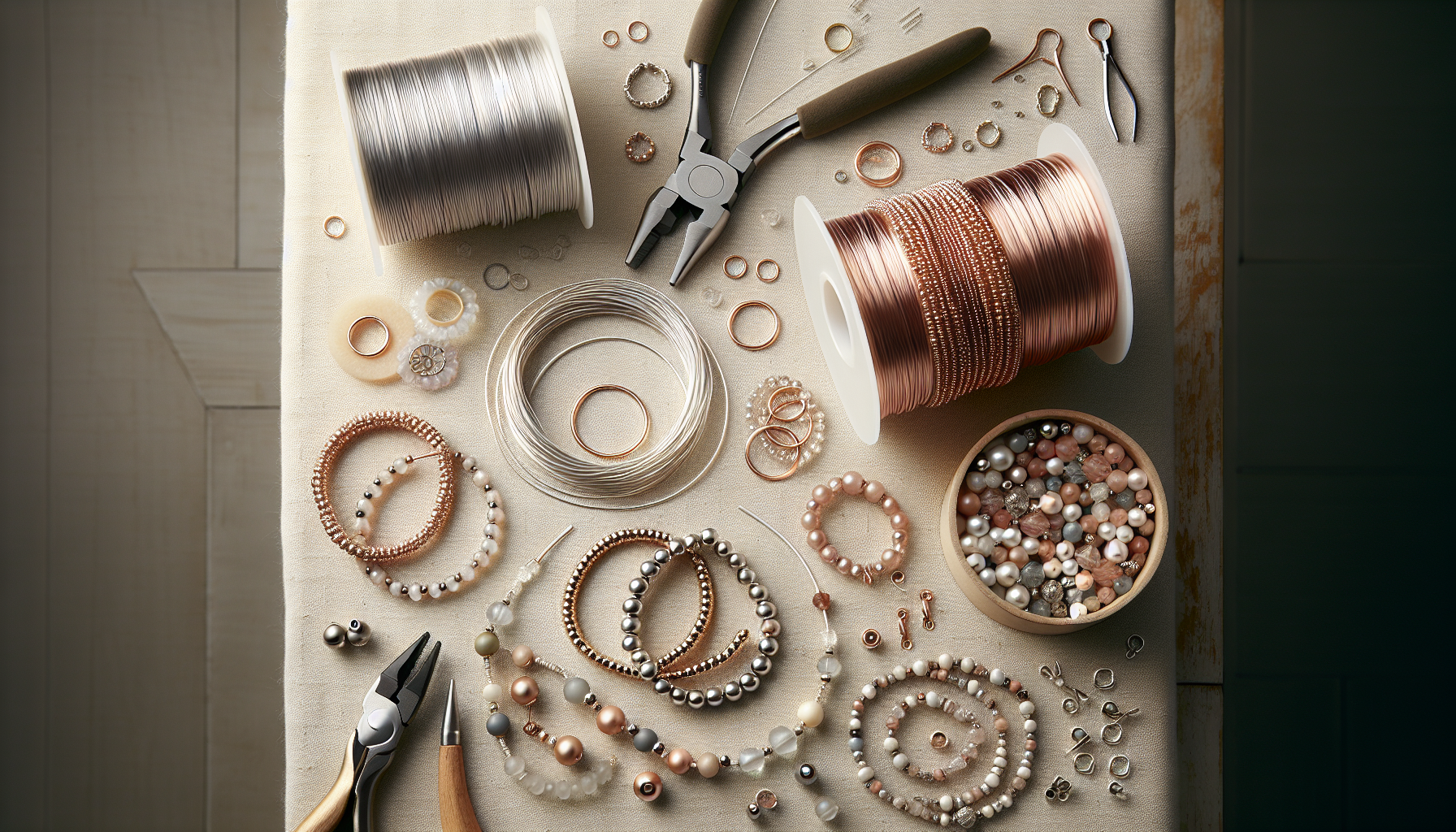
Flex-Rite is a high-quality jewelry wire specifically developed for beadwork and professional jewelry making. Unlike ordinary thread or fishing line, Flex-Rite consists of a multi-strand steel core covered with a protective layer of nylon. The result is a wire that combines the strength of metal with the soft, pliable feel of textile thread – perfect for creating durable jewelry that also drapes beautifully around the neck or wrist.
Construction, material, and comparison with other options
Flex-Rite is made up of several thin stainless steel strands twisted together, for example, 7, 19, or 49 strands, and then coated with nylon:
-
7-strand: Slightly stiffer, good for simpler projects and when you want more "shape."
-
19-strand: Balance between flexibility and strength – a popular all-round wire.
-
49-strand: Very pliable and soft, gives an exclusive feel and beautiful drape, ideal for beaded necklaces.
Compared to fishing line, Flex-Rite does not crack as easily and does not get the same "memory effect" (ugly kinks). Compared to chain, it is easier to string beads on and offers more control over the design, while feeling significantly more robust than ordinary sewing thread or nylon thread.
Why Flex-Rite is so popular with both beginners and professionals
What makes Flex-Rite particularly appreciated in both hobby and professional contexts is the combination of strength, durability, and flexibility. The wire withstands daily use, handles heavier glass beads and gemstones without giving way, and is still so soft that necklaces don't feel "edgy" against the skin. At the same time, it comes in several diameters and colors, making it easy to adapt the wire to bead holes, jewelry type, and metal color. This versatility is one of the main reasons why Flex-Rite has become a natural choice for those who want to create stylish, professional jewelry that lasts.
Why choose Flex-Rite from Hilmaspyssel.se – Quality, range, and service
Buying Flex-Rite jewelry wire online becomes significantly easier when you shop with a specialist. Hilmaspyssel.se is a Swedish webshop entirely focused on beads and jewelry supplies, which is evident both in the assortment and in how the products are presented. Here you don't have to guess – you get clear information about thickness, number of strands, area of use, and color, directly on the product page.
Why Hilmaspyssel is the right store for Flex-Rite
-
Broad and well-thought-out assortment: Several thicknesses, colors, and variations of Flex-Rite, from thin wire for delicate beads to stronger thread for stone and heavier jewelry.
-
Clear product descriptions in Swedish: Clear recommendations on which wire is suitable for necklaces, bracelets, or earrings – something many international sites lack.
-
Secure Swedish e-commerce: Fast delivery within Sweden, secure payment solutions, and Swedish customer service if you need to ask about your specific project.
-
Matching jewelry accessories: Often links to suitable crimp beads, clasps, and wire guardians, so you can add everything to the same shopping cart.
When you combine quality wire like Flex-Rite with a well-developed surrounding assortment, you reduce the risk of mistaken purchases and get jewelry that lasts longer. This is a clear advantage compared to buying "any old wire" from a general hobby store.
How a beginner finds the right Flex-Rite in the shop
A smart way to start on Hilmaspyssel.se is to start from your project rather than the product. Think like this:
-
Step 1: Choose jewelry type – are you making a simple beaded bracelet, a beaded necklace, or a lighter earring?
-
Step 2: Filter wire – sort by thickness (e.g., around 0.45 mm for necklaces) and color that matches your metal parts (silver-colored, gold, rose, black).
-
Step 3: Read the description – check recommended uses; Hilmaspyssel often states which beads and projects each Flex-Rite is suitable for.
-
Step 4: Add basic materials – follow the tips on the page and immediately add crimp beads, clasps, and any wire guardians.
In this way, "buying Flex-Rite online" becomes not a random click, but a conscious choice where your entire project is thought through even before the package arrives in your mailbox.
Choose the right Flex-Rite for the right project – thickness, number of strands, and color
Choosing the right Flex-Rite jewelry wire is crucial for both durability, feel, and appearance of your jewelry. Here we go through how thickness, number of strands, and color interact, so you can make informed choices whether you are designing a thin "floating" necklace or a robust bracelet with heavy stone beads.
Thickness and number of strands – how jewelry durability and drape are affected
-
Thinner wire (approx. 0.30–0.38 mm): Perfect for light beads, earrings, and delicate necklaces. Fits smaller holes, e.g., faceted glass and crystal beads.
-
Medium-thick wire (approx. 0.45 mm): The all-round choice for necklaces and bracelets, particularly popular for pearl necklaces with freshwater or glass/crystal beads.
-
Thick wire (approx. 0.50–0.60 mm): Best for heavier stones, masculine bracelets, and jewelry exposed to harder wear.
-
7 strands: Slightly stiffer, good for simpler projects where the shape can be somewhat more "firm."
-
19 strands: Good balance between strength and flexibility, works for most everyday projects.
-
49 strands: Very soft and luxuriously pliable, gives an exclusive drape – ideal for elegant necklaces and bracelets.
Think of it this way: the more strands, the more "fabric-like" feel. For a classic pearl necklace, 0.45 mm Flex-Rite with 49 strands is a safe professional choice.
How to choose the right color – subtle or designed effect?
The color of your Flex-Rite affects the overall impression more than many people think. Start with two questions: should the wire blend in or be visible as part of the design?
-
Silver-colored wire: Match with silver-plated parts, cooler tones, and crystals for a classic, bright look.
-
Gold-colored or rose-colored wire: Perfect for warm tones, freshwater pearls, beige, brown, and dusty pink beads.
-
Black or dark wire: Gives a clear graphic effect – nice for men's jewelry, hematite, lava stone, and contrast projects.
-
"Invisible" look: Choose a color close to skin tone/metal color and a thinner diameter to let the beads take center stage.
As a rule of thumb: match the wire's color with the metal color you use for clasps, crimp beads, and jump rings for a well-thought-out, professional finish. On Hilmaspyssel.se, you can quickly test different combinations by comparing product images of Flex-Rite, clasps, and beads side-by-side before ordering.
How to use Flex-Rite step-by-step – Technique, tools, and basic methods
Once you've chosen the right Flex-Rite from Hilmaspyssel.se, the next step is to use the wire correctly. Many guides online jump straight to finished projects, but here we methodically go through the technique so that your jewelry becomes both durable and beautiful – right from the first attempt.
Basic technique: cutting, stringing, and finishing Flex-Rite
-
Cutting the wire correctly: Use sharp flush cutters adapted for jewelry wire, not ordinary household pliers. Cut straight to avoid frayed ends that scratch the nylon and get stuck in the beads.
-
Stringing beads gently: Keep the Flex-Rite straight when stringing, and never angle the bead against the wire with force. Let the bead "slide on" rather than being pushed – especially important with glass and stone beads that have sharp edges in the hole.
-
Finishing with crimp beads: Insert the wire through crimp bead → clasp → back through the crimp bead. Leave a small loop so the clasp can move freely, then crimp with flat-nose pliers or crimping pliers until the crimp bead is firmly in place, without crushing the wire.
-
Using wire guardians: For more exclusive jewelry, especially necklaces, thread the wire through a wire guardian before attaching to the clasp. This greatly reduces wear and tear and gives a professional appearance.
This order – cutting, stringing, finishing – is the foundation of almost all jewelry wire projects and makes a big difference to both durability and finish.
Mini-guide: simple beaded bracelet with Flex-Rite
Here's how you can make a stylish bracelet step-by-step with materials from Hilmaspyssel.se:
-
1. Prepare materials: Choose, for example, 0.45 mm Flex-Rite, glass or stone beads, 2 crimp beads, 2 wire guardians (optional), and a lobster clasp + jump ring.
-
2. Measure and cut: Measure wrist size + approx. 10 cm extra wire for finishing. Cut with flush cutters.
-
3. First finish: Thread on crimp bead → wire guardian → clasp → back through wire guardian and crimp bead. Adjust the loop, crimp the crimp bead, and thread the end through the first 2–3 beads.
-
4. String the beads: Fill the wire with beads until the length feels appropriate on the wrist (leave a few mm play so the bracelet doesn't become stiff).
-
5. Finish the other side: Repeat the same finish with a crimp bead and jump ring. Pull gently so the bracelet is pliable but not slack, then crimp the crimp bead firmly.
-
6. Trim excess: Trim the visible wire end close to a bead, without damaging the nylon casing around the main wire.
By following this clear process and using the right tools from Hilmaspyssel.se, you'll quickly adopt a working method that applies to everything from simple bracelets to advanced multi-strand necklaces. It saves time, reduces waste, and produces a professional result – every time you work with Flex-Rite.
Creative jewelry projects with Flex-Rite – Inspiration and ideas
Flex-Rite opens up significantly more design possibilities than many beginners realize. The flexible yet strong jewelry wire allows you to create everything from classic pearl necklaces to trendy men's bracelets and airy "floating necklaces." Here you'll find a concrete idea bank, plus suggestions for materials and accessories that you can easily find at Hilmaspyssel.se.
Project ideas where Flex-Rite truly shines
-
Classic pearl necklace with a luxurious feel
Choose, for example, 0.45 mm Flex-Rite 49-strand for freshwater pearls or glass beads. Combine with crimp beads, wire guardians, and a beautiful lobster clasp in the same metal color. The result will be a necklace that drapes softly against the skin and withstands frequent use.
-
Multi-strand necklaces and bracelets
Use thinner Flex-Rite, e.g., 0.30–0.35 mm, and work with several parallel strands. Attach all wire ends in a multi-row finish or end caps. Perfect for when you want to mix small glass and metal components for a full, yet light piece of jewelry.
-
Floating necklace with "floating" beads
Here, a neutral color of wire (e.g., steel or clear) and small transparent bead stoppers are key. Place a few individual crystals or beads at intervals – Flex-Rite makes the necklace look airy yet exclusive.
-
Men's bracelets with stone or wood beads
Choose a slightly thicker diameter, e.g., 0.45–0.50 mm, preferably in black or steel gray. Combine matte natural stones or wooden beads with stronger clasps for a durable everyday piece of jewelry.
For every project, you can easily find suitable wire, beads, crimp beads, and clasps through the categories at Hilmaspyssel.se, making planning quick and easy.
Smart shopping lists for your Flex-Rite projects
To get started without missing anything, you can use small standard lists when shopping for jewelry supplies online:
-
Pearl necklace: Flex-Rite 0.45 mm (49-strand) + freshwater or glass beads + crimp beads + wire guardians + clasp + any jump rings
-
Multi-strand bracelet: Flex-Rite 0.30–0.35 mm + small glass/metal components + crimp beads + multi-row end pieces or end caps + clasp
-
Floating necklace: Thin or medium-thick Flex-Rite in a neutral color + crystals or faceted beads + small bead stoppers + discreet clasp
-
Men's bracelet: Flex-Rite 0.45–0.50 mm in a dark color + stone/wood beads + crimp beads + strong clasp (e.g., magnetic or strong lobster)
By thinking in terms of complete project packages already when you visit Hilmaspyssel.se, you save time, reduce the risk of forgetting important components, and ensure that everything you order truly works together – both aesthetically and technically.
Common mistakes with jewelry wire – and how to avoid them with Flex-Rite
Even experienced jewelry makers sometimes encounter problems with jewelry wire: bracelets suddenly breaking, necklaces feeling stiff, or clasps coming undone after just a few uses. Many of these issues are not due to the technique itself, but to the wrong choice of wire, incorrect dimensions of accessories, or rough handling during assembly. Here, Flex-Rite offers significant advantages compared to simpler wires – but the right working method is still crucial.
The most common mistakes – and what actually happens
-
Wire breaking prematurely: Often caused by sharp bead edges, crimp beads squeezed too tightly, or wire that is too thin for heavy beads.
-
Stiff, "edgy" jewelry: Almost always due to wire that is too stiff (too few strands or too large a diameter) and pulled too tightly when finishing.
-
Crimp beads sliding or cracking: Wrong size or wrong material of crimp bead, or using the wrong pliers when crimping.
-
Beads not threading properly: Wire too thick in relation to the bead holes, especially common with freshwater pearls and small glass beads.
With Flex-Rite jewelry wire, you reduce the risk of breakage thanks to the strong steel core and even nylon coating, but it is still important to carefully match the diameter, beads, and crimp beads. A good trick is to always test string a few beads and a crimp bead before starting an entire project.
Checklist: how to avoid mistakes before finishing your jewelry
Before you crimp the last crimp bead – go through this quick checklist:
-
Check bead holes: Test the thickest wire you want to use on 3–4 random beads from the strand.
-
Choose the right crimp beads: Small projects with thin wire → smaller crimp beads; heavier necklaces → slightly larger and stronger crimp beads.
-
Allow movement at the clasp: Make sure the jewelry can "hang" freely; leave a small arc of wire at the clasp and wire guardian, not a rigidly taut line.
-
Avoid kinks: If the wire has sharp kinks – cut that piece off. A kink is a weak point that can break later.
By combining the technical quality of Flex-Rite with a conscious working method, you get jewelry that both looks professional and withstands everyday use. This is where the difference truly shows between "hobby results" and jewelry you can proudly sell or give away. Hilmaspyssel.se also makes it easy to choose the right dimensions through clear product texts and matching recommendations for crimp beads and accessories.
How to maximize durability and finish – Care, storage, and pro tips
This section is about how to keep your jewelry on Flex-Rite jewelry wire looking newly made for a long time. Many guides stop at how to string the beads, but here we focus on the next step: how to actually take care of finished jewelry so that the wire doesn't break, discolor, or lose its beautiful flexibility.
Everyday care – how to treat your Flex-Rite jewelry
-
Avoid water and chemicals: Take off jewelry before showering, bathing, sauna, cleaning, and exercising. Sweat, shampoo, and cleaning agents break down both metal components and nylon coating over time.
-
Put on last, take off first: Wear jewelry after applying makeup, perfume, and hairspray – not before. These products can otherwise leave a residue on the wire and beads.
-
Be gentle with the wire during use: Avoid pulling hard on necklaces and bracelets, especially at the clasp. Gentle movements put less strain on both Flex-Rite and crimp beads.
A practical tip is to have a small jewelry dish on your sink or nightstand where you always place your jewelry before washing your hands or going to bed. This simple routine significantly extends the lifespan, especially for your favorite bracelets you wear daily.
Storage and professional finish with the right accessories from Hilmaspyssel.se
-
Store correctly: Lay Flex-Rite jewelry flat in jewelry boxes or hang them on jewelry hooks. Avoid cramming them into small bags where they are forced to bend sharply – this can create permanent kinks in the wire.
-
Protect critical points: Use wire guardians at the clasp loop to reduce wear where the wire bends most. Combine with good quality crimp beads for secure finishes.
-
Match metals for a more luxurious impression: Keep the same color on clasps, crimp beads, jump rings, and any chain extenders. This creates a cohesive, professional look.
-
Neatly hide wire ends: Thread the wire back through a few beads and/or finish in end caps to avoid visible, sharp ends that can snag on clothing.
A smart way to always achieve neat and durable results is to create a small standard kit from Hilmaspyssel.se: a spool of your favorite Flex-Rite, matching crimp beads, wire guardians, some basic clasps, and end caps in your most used metal color. Then you will always have the right components at home to finish jewelry in a way that both looks professional and withstands frequent use.
Frequently Asked Questions about Flex-Rite and Hilmaspyssel.se
Q: What thickness of Flex-Rite should I choose as a beginner?
A: As a beginner, you'll go a long way with 0.45 mm Flex-Rite with many strands (preferably 49). It's an all-round thickness that works for most necklaces and bracelets with glass, stone, and mother-of-pearl beads. It's strong, flexible, and fits through most standard holes. At Hilmaspyssel.se, you can start with 0.45 mm as a base and supplement with a thinner one (0.30–0.35 mm) for small beads and a thicker one (0.50–0.60 mm) for heavier stones or men's jewelry.
Q: How do I know if Flex-Rite fits into my beads?
A: Look at both the diameter of the wire and the size of the bead holes. A practical tip is to have three basic sizes at home (e.g., 0.30 / 0.45 / 0.60 mm) and test thread on a short piece before making the entire piece of jewelry. Many Swedish bead makers forget to test thread first and then have to backtrack. Hilmaspyssel.se usually specifies hole size or recommendations in the product text – use them actively and combine with a needle for really small holes.
Q: What is the biggest difference between cheap jewelry wire and Flex-Rite?
A: The big difference lies in flexibility, durability, and finish. Cheap wire can feel stiff, break at bends, and have sharp ends that chafe. Flex-Rite has an even nylon coating and a tightly twisted steel core, which makes the jewelry fall softly against the skin and maintain its shape over time. The result is more "store quality" in your jewelry, even if you are a beginner.
Q: Can I use Flex-Rite for bracelets that will be worn every day?
A: Yes, Flex-Rite is excellent for everyday jewelry, provided you choose sufficiently thick wire and make a proper finish with crimp beads. For daily worn bracelets with heavier beads, 0.45–0.60 mm is usually appropriate. Combine with wire guardians at the clasp and avoid excessive strain (pulling, bending, sleeping with the bracelet) for maximum lifespan.
Q: What do I need to buy at Hilmaspyssel.se to start with Flex-Rite?
A: A simple starter kit could be:
-
1 spool of Flex-Rite 0.45 mm (preferably 49-strand for extra flexibility)
-
Crimp beads in appropriate size
-
Clasps (lobster or magnetic clasp depending on taste)
-
Jump rings or wire guardians for the clasp points
-
One wire cutter and one flat-nose or crimping pliers
With this, you can make both necklaces and bracelets immediately.
Q: Is it possible to repair a piece of jewelry made with Flex-Rite if I cut it too short?
A: If you're only a few millimeters short, you can sometimes save the jewelry by replacing crimp beads and redoing the finish with minimal waste. However, if the wire is too short to work comfortably, it's usually better to cut it open and re-string it on a new piece. A professional tip is to always add 10–15 cm extra when cutting your Flex-Rite – that margin saves both time and frustration.
Conclusion: Create durable favorite jewelry with Flex-Rite and Hilmaspyssel.se
Flex-Rite has proven to be more than "just" a jewelry wire – it's a combination of strength, flexibility, and professional finish that makes a big difference in both simple and advanced projects. By choosing the right thickness, number of strands, and color, you can tailor each necklace, bracelet, or earring to both design and durability requirements. Together with knowledge of common mistakes, the right technique, and care, you get jewelry that holds its shape, doesn't break, and feels comfortable to wear every day.
The next step is to put the inspiration into practice. Go to Hilmaspyssel.se, filter for the Flex-Rite wire that suits your next project, and supplement with crimp beads, wire guardians, clasps, and beads directly in the same order. Start with a simple beaded bracelet or a classic beaded necklace and build from there. With the right materials, clear product descriptions in Swedish, and fast delivery, the threshold is low – now it's only your creativity that sets the limits for what personal, durable jewelry you can create.