


Fimo Beads at Hilmaspyssel.se: How to Choose the Right Beads for Beautiful Jewelry
Do you want to quickly get started with jewelry making that looks professional – without it being heavy, complicated, or expensive? Fimo beads are one of the most grateful materials: they are light, durable, and come in ready-made patterns like striped and floral, which gives a simple bracelet or necklace a lot of character right away. At Hilmaspyssel.se, you'll find a wide selection suitable for both beginners and experienced crafters.
In this guide, you'll find inspiration and practical choices: when 6 mm is better than 8 mm, what hole size approx. 1.5 mm means for thread selection, and how to use the store's smart sorting options (e.g., Most relevant, Bestsellers, or A–Z) to find the right beads faster – whether you want affordable basic beads or trendy new arrivals.
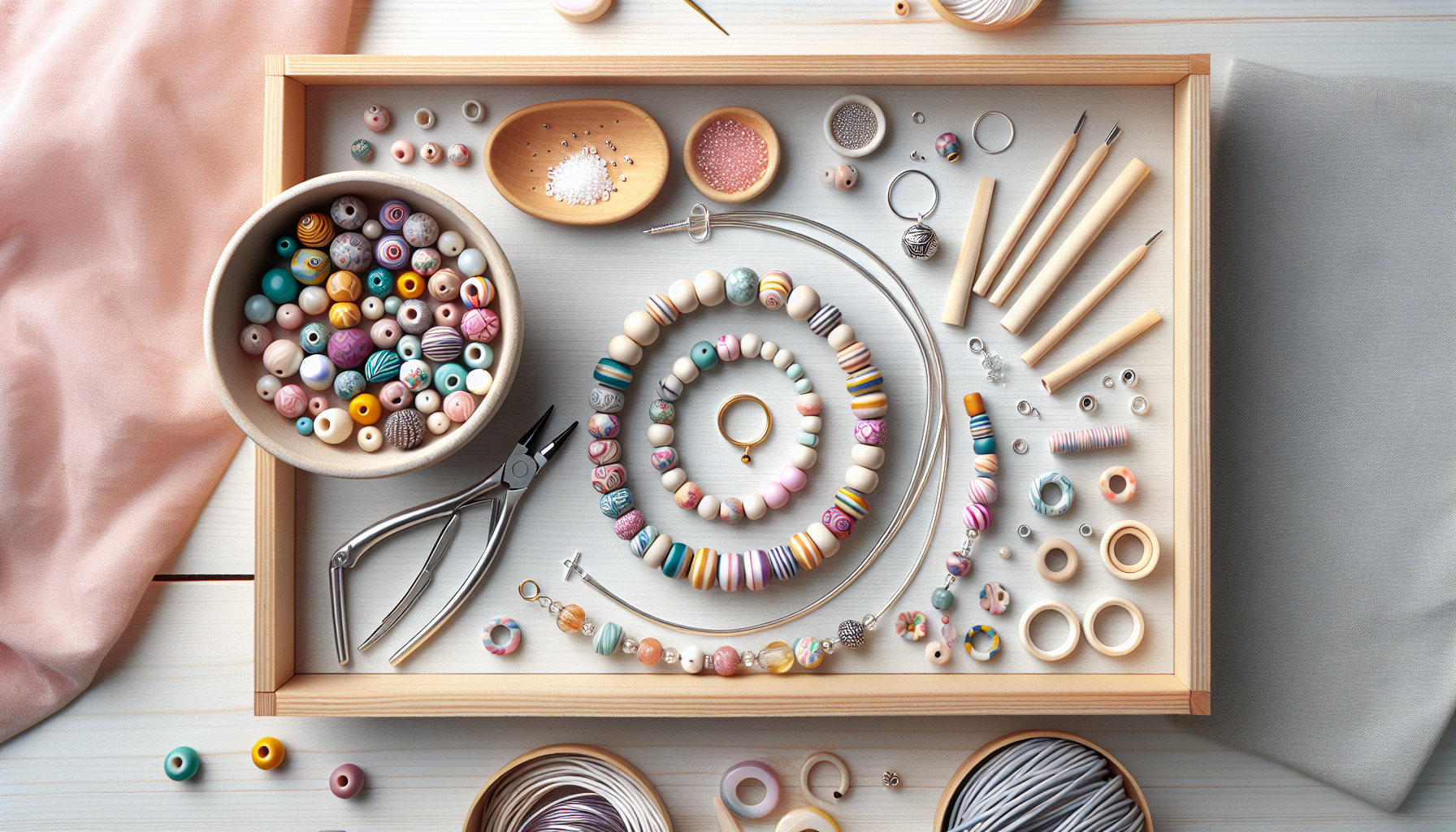
Fimo beads are one of the easiest materials to work with for those who want to get started with jewelry making – or take their designs to the next level. Fimo (a polymer clay) is shaped and hardened into beads that are light, durable, and often have built-in motifs like striped or floral patterns. The result is jewelry that looks elaborate without you having to spend hours on advanced techniques.
Why both beginners and pros love fimo beads
-
Low weight = high comfort: Fimo beads feel comfortable in longer necklaces and especially in earrings, where heavy materials can quickly become uncomfortable to wear.
-
Clear patterns that build the design for you: Striped 6 mm beads or floral 8 mm beads create a "finished look" instantly – perfect when you want to achieve maximum effect with few components.
-
Smooth surface and even shape: Many fimo beads are round and even, making them easy to string and combine with spacer beads in metal, glass, or wood.
-
Flexibility in technique: With a common hole size around 1.5 mm, they often fit elastic cord, jewelry wire, and thin beading wire – so you can adapt depending on whether you're making bracelets, anklets, or necklaces.
Compared to glass, fimo can offer a softer expression and less "clinking," and compared to acrylic, the patterns often appear more vibrant and artisanal. An added bonus is that you can mix different colors and textures and still achieve a harmonious whole, as the pattern in the bead helps to "tie together" the palette.
Common mistakes (and how to avoid them)
What most often determines whether the jewelry lasts is not the beads – but the assembly. Avoid pulling elastic cord too tightly (it causes it to wear out faster), and make sure fimo doesn't rub against sharp metal parts. Also, choose your cord according to its use: elastic for bracelets, and stronger cord/wire for necklaces that need to withstand everyday wear and tear.
Shop Fimo Beads at Hilmaspyssel.se – How to Use the Sorting Smartly
Once you've decided to create jewelry with fimo beads, the next step is to quickly find the right style, size, and price level. At Hilmaspyssel.se, the sorting function makes a big difference – it reduces "scroll fatigue" and helps you find beads that fit your project, whether you're looking for a ready-made beginner's kit feel or more unique statement beads.
Sorting options – what they mean and when to use them
-
Featured: Perfect when you want to see a curated selection and get started quickly without comparing everything.
-
Most relevant: Use when you have a clear idea (e.g., "round," "striped," "floral," "6 mm/8 mm") and want the most accurate matches to appear first.
-
Bestsellers: If you want to choose safe bets that many others already like – good for stocking up on basic beads or avoiding bad purchases.
-
A–Z / Z–A: Convenient when you're looking for a specific name or color and want to "navigate like in an index."
-
Price ascending/descending: For budget shopping or when you want to maximize "beads for your buck" for multiple projects.
-
Date (new–old / old–new): When you're hunting for news, trends, and seasonal colors first.
Frequently asked questions, short answers: you sort by relevance by choosing Most relevant, you see the most popular first via Bestsellers, and yes – alphabetical sorting is available via A–Z/Z–A.
A simple shopping strategy that saves time (and yields better results)
Start with Bestsellers to find reliable favorites, then switch to Price ascending if you want to complement with neutral beads, and finish with Date: new–old to add a couple of trendy beads that elevate the entire design. Bonus: open interesting products in new tabs and quickly compare diameter and hole size so you know they fit your thread and intended technique.
Size Guide: 6 mm vs 8 mm Fimo Beads – How to Choose the Right One?
When purchasing fimo beads at Hilmaspyssel.se, size often determines how the jewelry feels, looks, and lasts over time. In our assortment, you'll find round beads in 6 mm (usually more per strand) and 8 mm (larger motifs and more "statement"). Both work excellently for jewelry making, but they are better suited for different purposes depending on whether you're making bracelets, necklaces, anklets, or earrings – and what style you want to achieve.
Quick comparison: choose size based on jewelry type and style
-
6 mm Fimo Beads (round): Perfect for delicate bracelets, stacking, and layering. Smaller beads offer a more detailed and flexible expression, and you can easily build patterns (e.g., striped) without the jewelry feeling clunky.
-
8 mm Fimo Beads (round): More visible from a distance and particularly good when the beads have motifs, such as floral patterns on a beige base. They look lovely as a focal point in necklaces and bracelets, or as larger accent beads in a mix.
-
Hole size approx. 1.5 mm (common for both): Provides great freedom – you can use elastic cord for bracelets or wire/strong thread for necklaces, without having to "force through" the material.
A simple rule of thumb: smaller beads = more possibilities and more movement, larger beads = quicker effect and clearer motifs. This is also why a 6 mm strand often suffices for more projects than an 8 mm strand.
Unique tips: proportions, comfort, and "bead budget"
For a comfortable result, match the size to the wearer: 6 mm often feels lighter on a slender wrist and in longer earrings, while 8 mm looks good on a slightly thicker chain/cord or as a central section in a necklace. Also, plan your "bead budget" before you shop: if you want to get several bracelets from one strand, 6 mm is a safe choice; if you want a statement piece with a strong motif, 8 mm is hard to beat.
Product Inspiration: Fimo Beads Round Striped 6 mm (1 strand) – color, shape, and use
Do you want a bead that immediately gives a "designer feel" without you having to spend hours planning patterns? Then Fimo Beads Round Striped 6 mm is one of the most rewarding choices at Hilmaspyssel.se. They are round, have a smooth and even shape, and the striped color combinations make a simple bracelet or necklace look well-thought-out from the start. Additionally, fimo is a light and durable material, making the jewelry comfortable to wear – even when you want to make several bracelets to stack.
Facts to help you plan your jewelry before you start
On the product pages, the specifications are invaluable when you want to figure out what will actually suffice for a project:
-
Type: Round fimo beads with a striped pattern – color and vibrancy without extra decoration
-
Diameter: approx. 6 mm – perfect for delicate bracelets, layering, and anklets
-
Hole size: approx. 1.5 mm – fits many types of thread, cord, and elastic string
-
Quantity per strand: approx. 65 beads – often enough for several pieces of jewelry, not just one
Unique insight: 6 mm is a "sweet spot" if you like detailed rhythm in the pattern. You get more repetitions per centimeter than with larger beads, which means the stripes create a vibrant expression even in short pieces of jewelry.
How to make striped fimo beads look professional (without complicated techniques)
A simple approach that almost always works:
- Alternate 3–5 striped beads with 1 small spacer bead (metal or solid color) to create breaks in the design
- Let the stripes "work" – keep the rest of the beads more neutral if you want the colors to pop
- Build a set: a tighter bracelet + a slightly looser "stacking" bracelet for a coordinated look
Finally: if you want the bracelet to feel cohesive without everything matching exactly, choose an accent color (e.g., blue or pink) and repeat it in a small detail like a charm or a spacer bead. Striped fimo beads do the rest of the work.
Product Inspiration: Fimo Beads Round Beige with Flowers 8 mm (1 strand) – Soft Statement with a Summer Vibe
If you want to create jewelry that feels both romantic and modern, fimo beads with flowers are one of the easiest ways to get a "finished" look right away. The round beige with flowers 8 mm variant from Hilmaspyssel.se provides a soft base that makes the colorful motif pop, without the jewelry becoming too garish. And because the beads are made of fimo, you get a light and comfortable piece of jewelry that works equally well for everyday wear as for summer festivities.
Facts to help you plan your design correctly
When you know the measurements and quantity, it becomes much easier to calculate how long a bracelet or necklace can be – and which thread choice is suitable:
-
Diameter: approx. 8 mm – clearly visible and perfect as a focal point in necklaces or as a "main bead" in bracelets
-
Hole size: approx. 1.5 mm – works with many common jewelry threads, elastic cord, and thinner wire
-
Quantity: approx. 40 beads per strand – suitable for a statement bracelet and often enough for a necklace with mixed spacer beads
-
Material: fimo – light and durable, making larger beads more comfortable to wear for extended periods
A practical approach: let 5–9 flower beads form a central section and fill in the sides with neutral beads (e.g., beige, white, transparent, or metallic) towards the clasp. This gives you a professional "designer drape" and saves flower beads for more projects.
Styling Idea: Build a "Capsule" with Matching Jewelry
For extra value from one strand: create a small set where the same floral motif recurs in several pieces.
- Bracelet: flower beads + small spacer beads for rhythm
- Necklace: flowers in the middle, neutral beads outwards
- Earrings: 1 flower bead + 1 small bead above for balance
The result is a cohesive look that feels well-thought-out – without requiring complicated techniques.
Thread, Cord, and Tools – What Works Best for a Hole Size of Approx. 1.5 mm?
One of the biggest advantages of fimo beads from Hilmaspyssel.se is that many models have a hole size of approximately 1.5 mm. This is a "sweet spot" that makes the beads very flexible: you can string them on elastic cord for quick bracelets, but also build more durable necklaces with wire or strong jewelry thread. When you match the right thread with the right project, you reduce the risk of the jewelry breaking, losing its shape, or chafing – and you get a result that holds up to everyday use.
Choose the Right Thread Based on Jewelry Type (and How it Will Be Used)
-
Elastic cord (stretch cord): best for bracelets because it's quick, comfortable, and easy to put on/take off. Opt for a slightly thicker elastic cord if the bracelet will be used often, and tie with a double knot for better durability.
-
Jewelry wire or strong nylon thread: a safer choice for necklaces that need to withstand daily wear. Wire holds its shape well and reduces the risk of the jewelry "stretching out." Complement with crimp beads and clasps.
-
Thinner cord (e.g., waxed cotton/nylon): perfect for bohemian knotting projects or when you want a softer, more textile look. With a 1.5 mm hole, you can often double the cord for extra strength – test before stringing the entire design.
A common mistake is pulling elastic cord too tightly: fimo beads are light, so you don't need to "tension" them to get a nice drape. Leave a little play so the knot lasts longer and the beads have less friction against each other.
Tool Checklist + Smart Durability Tips
For a smooth beading experience, you often only need: scissors, jewelry pliers (if using clasps), a beading needle (for smaller threads), and preferably crimp beads/knot covers for wire projects. Want to extend the lifespan even further? Insert a small spacer bead (metal or glass) next to the clasp so that the fimo beads don't rub against sharp metal parts, and consider double thread in vulnerable areas like at the knot or clasp.
Design Ideas and Finished Projects with Fimo Beads: 3 Approaches from Beginner to "Expensive Look"
Fimo beads are perfect when you want a lot of design for little effort: they are light, durable, and often have ready-made patterns (like striped or floral) that make the jewelry look well-thought-out immediately. With common sizes like 6 mm and 8 mm and a hole size around 1.5 mm, you can also vary thread choice and technique without hassle – and get multiple projects from a single strand.
Projects 1–3: Clear Recipes You Can Follow at Home
-
Project 1 (Beginner): Striped 6 mm Bracelet on Elastic Cord
Use round striped fimo beads 6 mm (approx. 65 beads/strand) and string them on elastic cord. Go for a simple rhythm: 4 striped + 1 small spacer bead (metal or solid color) and repeat. A knot + a drop of jewelry glue makes a big difference for durability.
-
Project 2 (Intermediate): Floral 8 mm Necklace with "Center Section"
Choose beige fimo beads with flowers 8 mm (approx. 40 beads/strand). Build a focal point at the front: 7–11 floral beads in the middle and fill out the sides with neutral beads. For a necklace that can withstand everyday wear: use jewelry wire/strong thread and finish with a clasp.
-
Project 3 (Advanced Look, Simple Technique): Mixed Texture (8–6–6)
Create a "designer feel" through contrast: 1 floral bead 8 mm as an accent, followed by two striped 6 mm, and repeat. The result is a rhythmic pattern that looks planned without you having to sketch anything.
The smart thing here is to let the fimo beads' patterns do the work: stripes tie colors together, florals make a soft statement. Want to maximize your "bead budget"? Roughly estimate: more beads/strand (6 mm) = more bracelets, fewer beads/strand (8 mm) = quicker statement in necklaces and earrings.
How to Plan Before Stringing – and Avoid Common Mistakes
Always lay out the beads in the correct order on the table first and test the length around your wrist/neck before tying or clasping. Avoid pulling elastic cord too tightly (it makes the jewelry feel strained and wears out faster), and protect fimo beads from chafing by placing a small spacer bead between beads and sharp metal parts. Once the basics are in place, you can easily scale up: make a set (bracelet + necklace + earrings) and let the same bead type be your common thread.
Frequently Asked Questions (FAQ)
Q: How do I sort fimo beads on Hilmaspyssel.se to find the right ones quickly?
A: Go to the fimo beads category and use the Sort menu. Choose Most relevant when searching for a specific style (e.g., "striped" or "floral"), Bestsellers if you want to start with popular favorites, or Featured for a more curated selection. If you want to compare costs, Price ascending/descending can save time, and if you want to see new variations first, choose sorting by date (new–old).
Q: Can I sort fimo beads alphabetically (A–Z or Z–A)?
A: Yes. Alphabetical sorting is particularly smart when you're looking for a certain color/designation or want an overview of similar products. Tip: combine alphabetical sorting with a quick "skim" of product images to find the right pattern immediately.
Q: What should I choose – 6 mm or 8 mm fimo beads?
A: 6 mm (e.g., round striped) gives a delicate look and often suffices for more projects per strand (approximately 65 beads). Perfect for stacking bracelets and detailed patterns. 8 mm (e.g., beige with flowers) is more visible and works well as a statement or center beads in necklaces; a strand can contain approximately 40 beads. A simple trick is to mix sizes for rhythm: large–small–small.
Q: Which thread is best when the hole size is approximately 1.5 mm?
A: A hole size around 1.5 mm works with many materials: elastic cord for quick bracelets, jewelry wire/strong thread for necklaces that need to withstand everyday wear, and thinner cords for knotting and boho style. For durability: consider double elastic cord for children's bracelets or if the jewelry will be used often.
Q: What are the most common mistakes when making jewelry with fimo beads?
A: Three classic mistakes are (1) using the wrong thread for the purpose (e.g., elastic cord for a long necklace without support), (2) tying elastic cord too tightly so it "cuts in" and breaks, and (3) allowing beads to rub against sharp metal parts. Use spacer beads/knot covers and check the edges of metal components.
Q: How do I get started immediately with a first fimo bead bracelet?
A: Cut elastic cord, try the length around your wrist, thread on the fimo beads, leaving about 8–10 cm at the ends. Tie a double knot, pull gently, secure with a small drop of jewelry glue (optional), and hide the knot in a bead. If you want it to look "designed" straight away: alternate 3–5 striped beads with a small metal or plain spacer bead.
Time to create: choose the right fimo beads and get started quickly
Fimo beads are one of the most rewarding materials for jewelry making: they are light, durable, and have ready-made patterns such as striped and floral that give an immediate "design feel." Choose 6 mm when you want to make delicate bracelets, multiple projects per strand, and more detail, and go for 8 mm when you want statement beads that are clearly visible in necklaces and earrings. With a hole size of around 1.5 mm, it's also easy to match with both elastic cord and jewelry wire – depending on whether you're making bracelets or a more durable necklace.
Next step: visit Hilmaspyssel.se and use the sorting function smartly. Start with Bestsellers for safe bets, switch to Most relevant when you're looking for a specific style, or sort A–Z/Z–A if you're looking for a certain color. Finish with Newest first to find new favorites. Choose a strand, get out your thread and scissors – and make your first piece of jewelry today.