


Fasteners, End Caps & Counterparts – How to Succeed with Every Piece of Jewelry at Hilmaspyssel.se
Have you spent time on a beautiful bracelet or necklace – only for the clasp to open, the end cap to detach, or the metal color to clash with the rest? Then you know how crucial the right fasteners, end caps, and counterparts are for both durability and appearance. In Hilmaspyssel.se's category "Fasteners, End Caps & Counterparts – Other" you will find all those small but important parts that make your jewelry feel well-thought-out, secure, and professional.
In this guide, we will go through the types of clasps, end caps, and counterparts available, how to choose the right ones for your specific project, and common mistakes you can easily avoid. You will get concrete examples, step-by-step tips, and a smart shopping guide to help you shop efficiently at Hilmaspyssel.se – so that your jewelry, keyrings, and craft projects both last longer and look more exclusive.
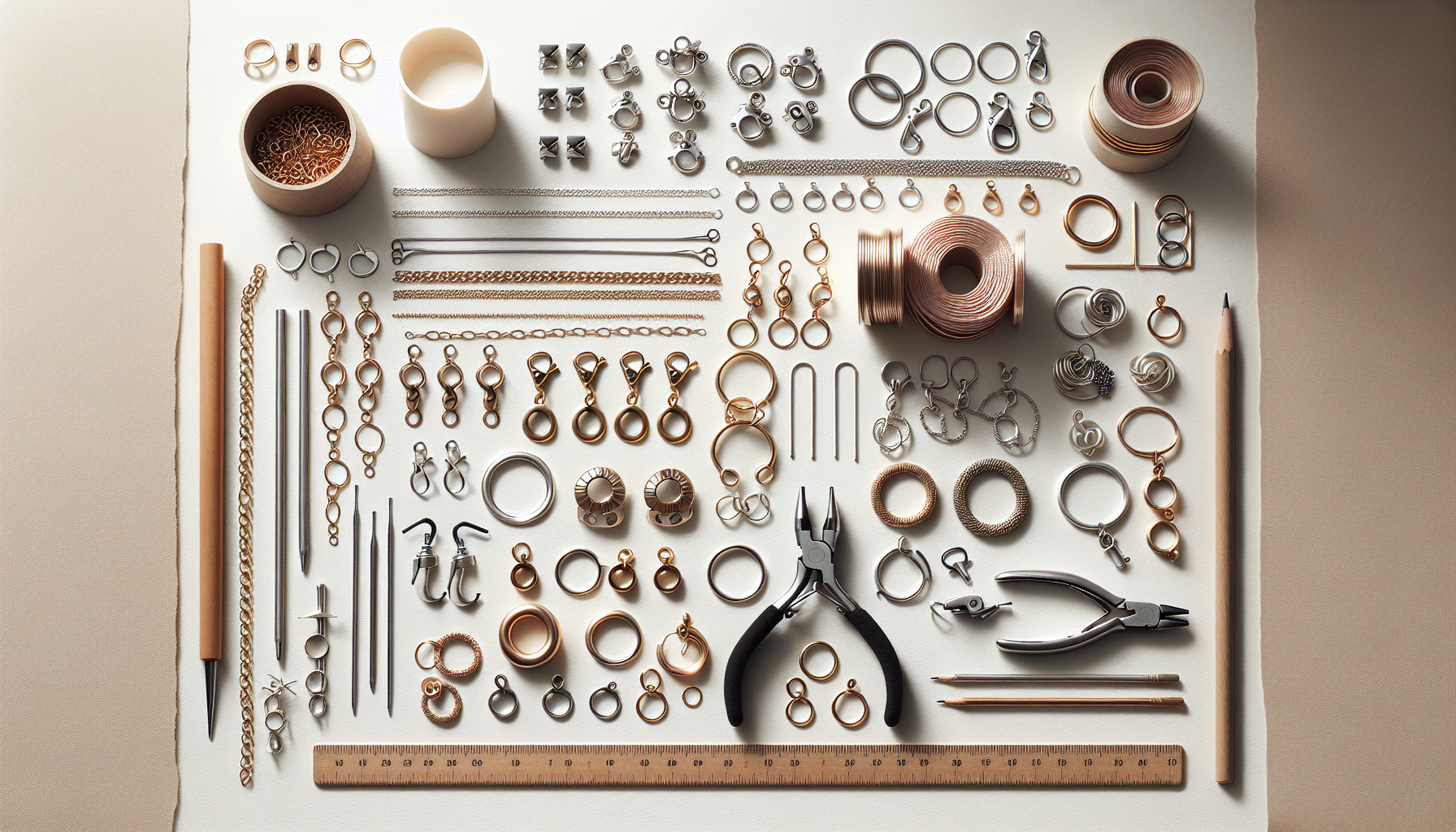
The category "Fasteners, End Caps & Counterparts – Other" at Hilmaspyssel.se gathers all the small, clever jewelry parts that make your projects both more durable and more professional-looking. Here you will find components that don't always get attention in guides, but which in practice determine whether a bracelet, necklace, or lanyard feels well-designed and safe to use.
Fasteners, end caps, and counterparts – what do they mean?
To choose correctly, it's important to understand the three basic concepts:
- Fasteners: Parts that connect two components, for example, a clasp that joins the ends of a bracelet, a lobster clasp on a keyring, or a bail that holds a charm on a chain.
- End Caps: Parts that neatly and securely finish ribbons, threads, or chains, for example, crimp ends, cord ends, or small details that hide knots and wire ends.
-
Counterparts: The parts that "receive" the fastener – for example, a jump ring for a lobster clasp, a ring for a toggle clasp, or a loop on a chain where you attach the clasp.
Here, questions that top-ranked articles don't fully answer often arise: What part actually does what? and do I need both a fastener and a counterpart? The answer is almost always yes – it's the interplay that makes the construction strong and user-friendly.
What does "Other" mean – and how does it complement the assortment?
In the subcategory "Other", special parts and accessories are collected that don't quite fit into the standard categories "clasps" or "rings", but which you directly miss when they're not available. This can include:
- Extra small jump rings for thin chains
- Special bails for charms or modular jewelry
- Extension pieces, small chain segments, and link parts
-
Adaptor parts for connecting unusual materials or mixed techniques
This category acts as a flexible complement to other jewelry parts at Hilmaspyssel.se. Once you have chosen beads, chains, and cords, it is often here you find the last pieces of the puzzle that make everything fit perfectly – both technically and aesthetically. By understanding how fasteners, end caps, and counterparts interact, you can plan your projects smarter and avoid common beginner mistakes, such as weak joints, uneven finishes, or clasps that are difficult to use in everyday life.
Different Types of Fasteners – From Simple Hooks to Clever Special Solutions
The right jewelry fasteners determine whether your bracelet or necklace feels cheap and insecure – or reliable and professional. At Hilmaspyssel.se, you'll find everything from classic lobster clasps to smooth magnetic clasps and decorative toggle clasps, so you can adapt each project to both style and function.
Common fastener types and when to use them
-
Lobster clasps and claw clasps: Very secure, especially suitable for bracelets, necklaces, and lanyards that need to withstand everyday use.
-
Magnetic clasps: Perfect for bracelets and necklaces that need to be easy to put on and take off, e.g., for seniors or people with reduced fine motor skills.
-
S-hooks, toggle clasps, and bar/ring clasps: Decorative alternatives that become part of the design, often used in heavier necklaces and boho-inspired jewelry.
-
Loop fasteners and jump rings: Small but important parts that connect clasps to chains, wires, or cords and create flexible attachments.
By considering the type of jewelry (bracelet vs. necklace), weight, and who will wear the jewelry, you can choose a fastener that is both secure and comfortable. For example, a children's bracelet benefits from an easy-to-use magnetic clasp, while a keyring requires a sturdy lobster clasp.
How to choose the right fastener for durable and user-friendly jewelry
Always consider how the jewelry will be used in practice. A delicate beaded bracelet worn daily should have a bracelet clasp that can withstand pulling and movement, while a party necklace can feature a more decorative toggle clasp as a design accent. Feel free to combine different fasteners in the same project – for example, a lobster clasp with an extension chain – to create adjustable length and extra security. At Hilmaspyssel.se, you can easily match fasteners with suitable jump rings, end caps, and chains, making it easier to build complete, well-thought-out solutions that last over time.
End caps for cord, thread and chain – how to achieve a professional result
End caps are the detail that often determines whether your jewelry is perceived as a hobby project or as something you could sell. The right type of end cap for cord, thread, and chain not only makes the jewelry more secure – it also provides a clean, professional finish that withstands everyday use. At Hilmaspyssel.se, there are many variations, and the key is to match the right end cap with the right material and technique.
Common types of end caps and when to use them
-
Crimp ends / crimp cord ends: Perfect for cords, suede cords, leather straps, and wider textile ribbons. They "grip" the material and create a finished attachment point for a clasp or jump ring.
-
Cord ends: Ideal for jewelry wire, chains, and thin cords. Thread the end, glue if necessary, and then attach the clasp to the loop.
-
Crimp beads and crimp covers: Primarily used for jewelry wire for beaded necklaces and bracelets. Provides a discreet, secure finish that can be hidden in a crimp cover.
-
Chain ends and chain stoppers: Used for finished ball chains, link chains, and adjustable necklaces where you want to limit or secure the length of the chain.
A common mistake for beginners is to try to tie off directly onto the chain or wire. With the right end cap, you avoid unsightly knots, weak points, and unnecessary wear – and the jewelry immediately looks more refined.
How to choose and assemble the right end cap – step by step
Always start by considering the material you are working with. For leather cord or waxed cotton, it is best to choose crimp ends that are slightly larger than the cord's diameter. Insert the end into the crimp end, making sure it reaches all the way in, and gently squeeze it shut with flat-nose pliers in two stages for even pressure. This minimizes the risk of the cord slipping out.
If you are working with jewelry wire and beads, the combination of a crimp bead + cord end is hard to beat. Thread the wire through the crimp bead, through the loop of a cord end or jump ring, and then back through the crimp bead. Pull tight so that the loop is small but not stiff, crimp with special pliers, and trim off excess wire. For an extra professional impression, you can hide the crimp bead with a crimp cover in the same metal color as the clasp.
When working with metal chain, you can either finish with cord ends or use a final link as an attachment point for jump rings and clasps. Here it is important to open and close the links correctly (twist sideways, not pull apart) to maintain strength.
Refinements for durability and a neat finish
To elevate your end caps from "okay" to truly professional, there are a few simple rules of thumb:
-
Match metal color: Keep the same shade on crimp ends, jump rings, clasps, and chains – silver-colored with silver-colored, antique bronze with antique bronze, etc., for a uniform look.
-
Hide joints: Use crimp covers, decorative bead caps, or small metal beads to hide crimp beads, knots, and transitions.
-
Test durability: Always gently pull on the end cap before "approving" the jewelry. If something moves – reinforce with an extra crimp bead or switch to a larger crimp end.
By putting a little extra care into the end cap itself, you will get jewelry that both feels and looks professional. With the right combination of crimp ends, cord ends, and crimp beads from Hilmaspyssel.se, the final step in your project will be just as enjoyable as the beading itself.
Counterparts and Complementary Small Parts That Make a Big Difference
Counterparts are those small, often overlooked components that make your entire piece of jewelry function in practice. Without the right counterpart for your clasp, lobster clasp, or magnetic clasp, it doesn't matter how beautiful the rest of the bracelet or necklace is – it won't be secure or feel well-thought-out. In this section, we'll take a closer look at how counterparts, extension chains, and small extra parts can transform a simple craft project into a smooth, adjustable, and professional piece of jewelry.
What counterparts are there – and what are they used for?
Here are some of the most important counterparts you'll find at Hilmaspyssel.se and how to use them in your projects:
-
Jump rings and split rings: Round rings that serve as "receivers" for lobster clasps, S-hooks, and other clasps. Perfect for necklaces, bracelets, and keyrings.
-
Bails and pendant bails: Small fasteners that create a stable loop for charms or pendants. Makes it easy to change or move decorations.
-
Extension chains: Short chains mounted at one end of the jewelry to make the length adjustable – ideal for gift jewelry and growing children.
-
Chain segments and link pieces: Used to create modular jewelry, multi-strand systems, or decorative details near the clasp.
By combining these small parts, you can, for example, turn a standard necklace into a "one size" necklace with an extension chain, or create a bracelet where the wearer can easily swap charms without tools.
Smart ways to use counterparts in your jewelry projects
Counterparts are not just a technical necessity – they are a creative tool. Some practical and often overlooked uses include:
-
Adjustable gift jewelry: Combine lobster clasp + jump ring + extension chain for necklaces and bracelets that fit various wrists and neck sizes. Perfect for markets and webshops where you can't custom-fit every customer.
-
Modular jewelry: Use lockable jump rings or small lobster clasps as counterparts for pendants. This allows the wearer to easily click different charms on and off depending on the outfit or occasion.
-
Extra security in everyday jewelry: Double-mount jump rings (two rings in series) on, for example, keyrings and bag charms to reduce the risk of something coming loose with heavy wear.
By planning for counterparts already at the sketching stage, you can create jewelry that is both beautiful, functional, and long-lasting. A simple tip is to always ask yourself: "How will the jewelry be used in everyday life – and what counterpart do I need to make it last and feel comfortable?" Once you have that clear, it will also be much easier to choose the right products in the "Fasteners, End Caps & Counterparts – Other" category at Hilmaspyssel.se.
Material, Color, and Quality – How to Choose the Right Jewelry Components
The choice of material, color, and quality for fasteners, end caps, and counterparts not only determines how long your jewelry lasts, but also how comfortable it is to wear and how professional it looks. At Hilmaspyssel.se, you'll find many different metal types and finishes – but to shop smartly, you need to know what suits your specific projects and target audience.
The right material for the right skin and the right use
-
Metal alloys: Perfect for simpler fashion jewelry and craft projects. Good balance between price and durability, but preferably choose nickel-safe options when possible.
-
Stainless steel: Very durable, color-stable, and often a good choice for sensitive skin. Excellent for everyday jewelry, keyrings, and bracelets that need to withstand a lot of wear.
-
Genuine silver details (if available): Gives a more exclusive look and is often appreciated in gift jewelry and more elaborate projects. Requires a little more care but ages beautifully.
-
Hypoallergenic choices: For children, sensitive skin, or pierced areas, it's wise to prioritize stainless steel, silver, or specially marked nickel-safe components.
By considering who will wear the jewelry – children, seniors, people who sweat a lot, or use the jewelry daily – you can choose components that both last and feel good against the skin.
Color, surface finish, and a cohesive overall impression
Color matching is a detail many overlook, but it immediately elevates the overall feel. Try to stick to a well-thought-out color theme per piece of jewelry:
- Match silver-colored fasteners and jump rings with chains in the same tone – avoid mixing cool silver with warm gold colors in the same clasp part if you want a clean expression.
- Use rose gold, antique silver, or antique bronze when creating vintage, boho, or rustic jewelry – these finishes complement natural materials like leather, wood, and glass beads beautifully.
- For heavily used jewelry, such as lanyards and everyday bracelets, darker surfaces or stainless steel are often more forgiving of scratches than highly polished silver-colored.
At Hilmaspyssel.se, you can filter by both material and color, making it easy to build a small base of favorite types: for example, lobster clasps and jump rings in both silver and gold colors, complemented by some robust stainless steel alternatives.
How to build quality from the inside out
Quality is not just about the price of individual parts, but about how well all components interact. By consistently choosing the same metal finish for fasteners, end caps, jump rings, and chains, you get a uniform, "finished" impression even in simple jewelry. Feel free to combine:
-
Durable materials (stainless steel, stable alloys) where the stress is greatest – at clasps, keyrings, and extension chains.
-
Aesthetically strong details (rose gold, antique finish, decorated end caps) where the eye lands first – at front pieces, pendants, and visible end caps.
By considering material, color, and quality already when planning your project, you will get jewelry that lasts longer, looks more professional, and feels more comfortable to wear – something that is especially noticeable if you sell or give away your creations. Hilmaspyssel.se gives you the breadth; with the right knowledge, you choose exactly the jewelry components that elevate your style.
Step-by-step examples – how to use fasteners, end caps and counterparts in real projects
To truly understand how fasteners, end caps, and counterparts work together, it's valuable to see them in practice. In this section, we'll go through three concrete jewelry and craft projects where you'll see step-by-step how parts from Hilmaspyssel.se can be combined for a secure and professional result.
Project 1: Beaded bracelet with wire, lobster clasp and extension chain
-
Materials: jewelry wire, beads, crimp beads, cord ends, lobster clasp, jump ring, and extension chain
-
Assembly: thread beads onto the wire, thread on a crimp bead + jump ring, make a loop and crimp the crimp bead with pliers, thread on a cord end for a neat finish
-
Fastener: repeat on the other end with a lobster clasp instead of a jump ring, finish with a cord end
This combination creates an elegant bracelet where the extension chain allows the bracelet to fit various wrists – perfect for sales or gifts where you don't know the exact size.
Project 2 & 3: Leather necklace and sturdy lanyard
-
Leather necklace with magnetic clasp: cut leather cord to desired length, attach crimp ends to both ends and secure magnetic clasp with small jump rings. The result is a stylish necklace that is very easy to put on and take off, ideal for everyday use and for elderly users.
-
Keyring/lanyard: use strong webbing, crimp ends or sewn loops and combine with strong lobster clasps and keyrings. Here, durability is more important than minimalism – choose sturdier fasteners than you think you need.
Always conclude each project with a quick quality check: gently pull all fasteners, ensure that the jump rings are completely closed, and that no threads or cords slip out of the end caps. This extra minute often makes the difference between a one-time piece of jewelry and a favorite piece that lasts for many years.
Shopping Guide – How to Shop Smart in the "Fasteners, End Caps & Counterparts Other" Category at Hilmaspyssel.se
Choosing the right fasteners, end caps, and counterparts can feel overwhelming when the selection is large. This section will help you go from "inspired but uncertain" to making thoughtful, cost-effective purchases in the "Fasteners, End Caps & Counterparts – Other" category at Hilmaspyssel.se, whether you're making jewelry for fun or for sale.
Plan your projects before ordering your items
Start by translating your ideas into a simple shopping plan:
-
Define jewelry type and use: everyday necklace, children's bracelet, keychain, wedding jewelry, etc.
-
Choose material and color theme: e.g., stainless steel + silver tone, or antique bronze for boho jewelry.
-
Determine clasp and fastening system: lobster clasp + extension chain, magnetic clasp, toggle clasp, etc.
-
Count number of parts per piece of jewelry: 1 clasp, 2 jump rings, 2 crimp ends – multiply by the number of planned projects.
By making this mini-plan, you avoid both unnecessary impulse purchases and the feeling of "missing a single part" when you are finally creating. An extra tip often overlooked in other guides is to always add at least a 10–20% margin on the number of small parts – jump rings, crimp beads, and split rings have a strange tendency to disappear into the carpet.
Build a smart base – and use Hilmaspyssel.se to its full potential
To avoid emergency orders in the middle of a project, it's wise to have a small standard assortment at home:
-
Basic colors: silver and gold-colored clasps, jump rings, crimp ends in the most common sizes
-
Durable parts: stainless steel lobster clasps and keyrings for lanyards and bag decorations
-
Flexibility: a few lengths of extension chains, extra magnetic clasps, and ends for different cord types
On Hilmaspyssel.se you can:
-
Filter by color, material, and type to quickly find matching findings, ends, and counter parts
-
Use keywords like "bracelet clasp," "necklace extension chain," "gold jump rings" to narrow down the selection
-
Look at related products under each item to discover suitable complementary parts (e.g., the correct counter part for the selected clasp)
Also think strategically economically: choose multi-packs of items you know you always use (e.g., lobster clasps, jump rings, crimp beads). This provides a lower unit price and reduces shipping costs over time. Combine this with keeping an eye on campaigns and news – when new special clasps or decorative counter parts arrive, you can elevate your entire jewelry style with small means.
Finally: dare to include something you haven't tried before in each order – a new type of special clasp, a different surface finish, or a model of jump ring you haven't worked with before. It is often precisely these small experiments that make your jewelry stand out and acquire a more professional, personal expression.
Frequently Asked Questions (FAQ)
Q: Which findings and ends are best for jewelry-making beginners?
A: As a beginner, you benefit from starting with lobster clasps, magnetic clasps, crimp ends, and cord ends. They are easier to assemble, require few special tools, and work for many types of bracelets and necklaces. Choose standard sizes in silver and gold tone, as well as simple jump rings. At Hilmaspyssel.se, you can build a small "starter kit" by purchasing multi-packs of these parts, so you always have the right component at home when creativity strikes.
Q: How do I know if a material is safe for sensitive skin or children?
A: Look for nickel-safe or nickel-free options, preferably in stainless steel or high-quality metal alloys. Avoid cheap, unmarked metals if the jewelry is to be worn daily or by children. A good trick is to keep the same material throughout – chain, findings, ends, and counter parts – to reduce the risk of reactions. Always read the product description carefully and choose quality over the lowest price when the jewelry is to be worn close to the skin for a long time.
Q: What do I do if my clasps and jump rings open or the jewelry breaks?
A: This is usually due to too thin rings, wrong tools, or excessive strain. Switch to sturdier jump rings, make sure they are properly closed (no visible gap) and use proper jewelry pliers – not household pliers. For exposed jewelry, such as keychains or bag decorations, it is wise to combine heavy-duty lobster clasps with double jump rings or wire instead of thread. Also check that ends such as crimp ends and cord ends are properly crimped over the cord/wire.
Q: How do I match the color and finish of findings with the rest of the jewelry?
A: Always base it on the main finish of your jewelry. If you have an antique silver chain, choose clasps, ends, and counter parts in the same tone – not shiny silver. For a more exclusive look, stick consistently to one color: silver, gold, rose gold, antique bronze, or black. On Hilmaspyssel.se, you can filter by color and material, making it easy to see which parts belong together visually. A uniform metal color enhances the overall impression and makes even simple beads look more expensive.
Q: How do I plan my purchases so I don't miss the right part in the middle of a project?
A: Start with a project list: write down the jewelry type, material (e.g., wire, leather cord), desired clasp type, and color theme. Then count how many components are needed: 1 clasp + 2 jump rings, 2 crimp ends, any extension chain, crimp beads, etc. Also build up a small standard stock: lobster clasps, magnetic clasps, jump rings in two sizes, crimp ends, and cord ends in your most used metal colors. Then you only need to supplement with more specific parts for each new project.
Q: Can I reuse clasps and ends from old jewelry?
A: Yes – if the parts are in good condition. Check that clasps open and close smoothly, that the spring is not slack, and that the surface is not heavily worn or discolored. Jump rings may sometimes have stretched; it's better to replace them with new ones if you are unsure. A smart approach is to reuse favorite clasps in better materials (e.g., magnetic clasps or silver details) and supplement with new counter parts and ends from Hilmaspyssel.se to give the jewelry a longer lifespan and fresher design.
Stylish, durable jewelry starts with the right small parts
Throughout the article, you have seen how findings, ends, and counter parts are the very foundation of professional jewelry making – whether you are making bracelets, necklaces, keychains, or personal gifts. You have gained an overview of the different types of clasps, crimp ends, jump rings, and extension chains, how material and color choices affect both comfort and durability, as well as concrete step-by-step examples for real projects. Together, this gives you a practical toolbox to avoid common mistakes and create jewelry that is both durable and looks well-crafted.
The next step is to put the knowledge into practice: choose one or two projects, make a simple material list, and use the guide as a checklist when planning your jewelry parts. Visit the category "Fästen, Avslut & Motdelar – Övrigt" (Findings, Ends & Counter Parts – Other) on Hilmaspyssel.se to find the right clasps, counter parts, and ends in matching colors and materials. Start with a small base of standard clasps and jump rings, and then dare to try magnetic clasps, special findings, and clever counter parts to develop your own style. The more you experiment, the more you will see how small details make a big difference in your jewelry.