


Claspgarten at Hilmaspyssel.se – find the right slide clasp for your jewelry faster
Are you looking for a jewelry clasp that is both secure and enhances the overall look? Claspgarten at Hilmaspyssel.se is a popular choice for those who make bracelets and necklaces and want a professional finish – from sleek bronze-colored slide clasps to decorative, copper-colored variations with patterns and protective surface treatment.
In this guide, we'll show you how to navigate the assortment and answer common questions such as: How do I sort by Most relevant? How do I see Best sellers first? Can I sort alphabetically A–Z or by price and date? You'll also get practical tips for choosing the right size (e.g., 19x6 or 25x6 mm), number of strands, and how to attach the clasp so your jewelry lasts a long time.
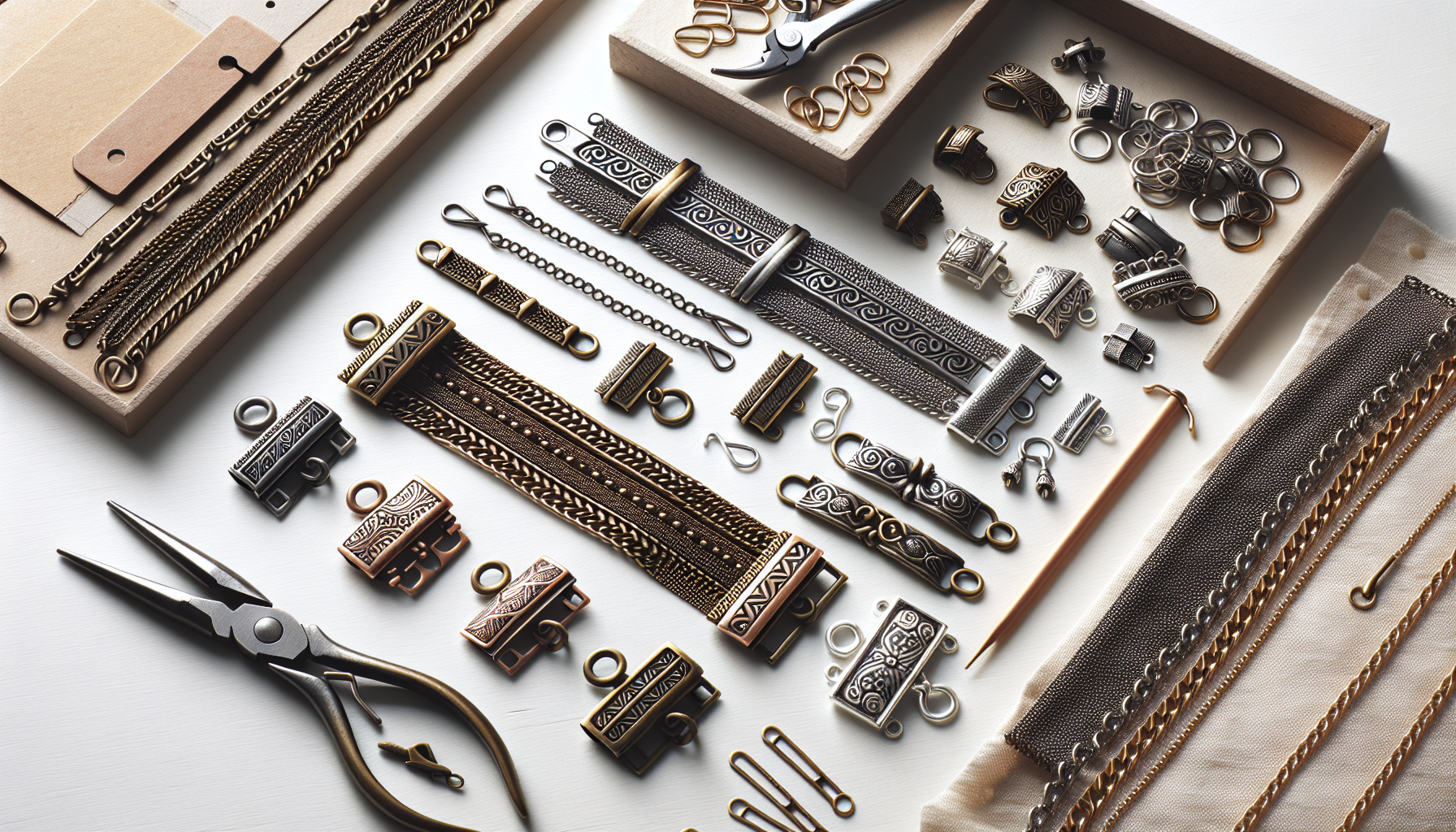
Claspgarten at Hilmaspyssel.se is, in practice, a shortcut to jewelry that looks "bought" – even though it's handmade. In the assortment, you'll primarily find slide clasps and selected jewelry components where the focus is on stable function, attractive finish, and well-thought-out details. For those who make bracelets and necklaces, this means the clasp isn't just the final step in assembly, but a part of the design that can instantly elevate the overall impression.
Design + function: the clasp that makes the jewelry "complete"
Many choose Claspgarten for the combination of form, color, and reliability – and because the clasps are often fine enough to be visible. This is particularly evident in rectangular slide clasps, where you can choose everything from sleek variations to more patterned expressions in, for example, bronze or copper tones.
-
Secure closure with slide mechanism: Easy to use and sits stably when the jewelry is worn – important for bracelets that are subject to tugging and movement.
-
Premium feel in the finish: A smooth, "professional" surface ensures the clasp matches beads, chains, and connectors without looking cheap.
-
Made in Germany: For many, this is a quality marker that signifies precision, better fit, and good durability over time.
-
Right clasp = better overall look: The clasp's size, color, and style can either balance the jewelry or dominate – which is why it's smart to choose clasps as consciously as beads.
A common mistake is to put all your energy into material selection and "grab any clasp" at the end. Instead, think of the clasp as the focal point of the jewelry: on a statement bracelet, a larger clasp can be a stylish detail, while a discreet clasp suits minimalist expressions.
Unique angle: choose clasps based on how the jewelry is used
In addition to style, you should consider everyday use: will the jewelry be worn often, need to be put on/taken off quickly, or withstand heavier beads? When you match design with use, you get a piece of jewelry that both feels luxurious and works in the long run – which is precisely why Claspgarten is so sought after at Hilmaspyssel.se.
How to navigate the Claspgarten category at Hilmaspyssel.se (time-saving sorting)
Once you're in the Claspgarten category at Hilmaspyssel.se, the biggest time-saver is often not to "search longer" – but to sort smarter. Since the assortment can contain many variations of jewelry clasps and components, the sorting menu is an easy way to quickly land among the right products, whether you're hunting for a reliable first purchase or want to compare finishes, prices, and new arrivals.
Understand the sorting: choose based on your goal (not just habit)
-
Featured: Good when you want to see a curated selection first – perfect if you want inspiration or quickly find "safe bets."
-
Most relevant: Use when you have a clear idea (e.g., "rectangular slide clasp" or a certain color). The relevance listing helps you get the best match at the top without unnecessary scrolling.
-
Best sellers: For those wondering "which clasps do others buy?". Here you get social proof and a safe starting point, especially as a beginner.
-
Alphabetically A–Z / Z–A: Perfect when you know what you're looking for and want to systematically skim product names (especially good if you're comparing several sizes in the same series).
-
Price, low to high / high to low: Smart for budget projects or when you want to find more premium clasps first.
-
Date, new to old / old to new: Choose "new" when you want to see the latest arrivals; "old" when you want to rediscover previous favorites and compare over time.
A practical way to reduce impulse buys is to write a mini-requirement list before clicking: size, number of strands (e.g., 3-strand), and color/finish (bronze/copper). Then sorting becomes a tool to confirm your choices – not an endless scroll.
Quick flow: 30 seconds to the right clasp
Start with Best sellers if you want a proven option, or Most relevant if you already have a clear specification. Then switch to Price to quality assure the budget and finish with Date if you want to see if there are newer variants that match the same style. This routine helps you find faster and choose more accurately.
Slide clasps for jewelry – why Claspgarten is a strong choice
A well-chosen clasp is often the difference between a "homemade" piece of jewelry and a design that looks shop-bought. The Claspgarten assortment at Hilmaspyssel.se focuses on rectangular slide clasps – a type of clasp that combines easy handling with a stable feel when the jewelry is worn. Especially relevant for those who make bracelets and necklaces that need to withstand everyday use (and also look truly professional).
What is a slide clasp – and when is it best suited?
Slide clasps consist of two parts that slide together into a fixed position. This makes them popular in jewelry making, especially when you want a neat, clean finish that doesn't overpower the design – or, conversely: becomes a visible detail.
-
Quick to open and close: Perfect for bracelets that are often put on and taken off, without you having to struggle with small springs or lobster clasps.
-
Sits stably: The construction provides a secure "clasp feel," which is a great advantage for jewelry that might otherwise easily slip or twist.
-
Enhances the overall look: With Claspgarten's sleek or patterned variants, the clasp can become part of the design – not just a function at the end.
For necklaces, slide clasps are particularly good when you want a flat profile that lies nicely against the skin and doesn't get caught in hair or collars. For bracelets, they are excellent for multi-strand models (e.g., 3-strand), where a regular clasp often causes the strands to become misaligned.
Unique selection criteria that many miss (comfort + drape)
In addition to size and color, there are three practical "pro details" to consider:
-
Edge profile: A softly rounded clasp feels more comfortable and reduces the risk of it chafing on the wrist.
-
Weight and balance: On necklaces, a heavier clasp can pull the jewelry backward; choose the size according to the weight of the beads/chain for a nice drape.
-
Symmetry in construction: On multi-strand jewelry, each strand needs to have even tension – otherwise, the clasp will twist and the strands will "crawl" over each other.
When you match the right slide clasp with the right project, you get a piece of jewelry that feels secure, sits comfortably, and looks more elaborate – precisely the premium feel Claspgarten is known for.
Product focus: Patterned copper-colored slide clasp 25x6 mm – when the clasp gets to be seen
Do you want the clasp to feel like a deliberate part of the design, not just a "finishing detail"? Then the Claspgarten slide clasp – larger rectangular patterned, copper-colored (approx. 25x6 mm) is a really good choice in Hilmaspyssel.se's assortment. The rectangular format provides a stable finish for bracelets and necklaces, while the ornate pattern allows the clasp to be visible without feeling "technical." The combination of elegance, security, and durability is precisely what makes Claspgarten so sought after among jewelry makers who want to elevate the overall look.
Key facts that make a difference in practice
-
Rectangular slide clasp: easy to handle and provides a professional, "finished" look
-
Patterned front: the clasp functions as a decorative detail (especially nice on bracelets where it's often visible)
-
Copper-colored finish: warm tone suitable for bohemian, vintage, and elegantly luxurious styles
-
Dimensions approx. 25 x 6 mm: ideal for slightly larger/more elaborate projects where proportions matter
-
Zapon lacquer: protective surface treatment that helps preserve color and shine over time
-
Made in Germany: signifies consistent finish, precision, and good fit in the mechanism
A unique advantage of larger clasps is that they can "balance" heavier beads (e.g., stone, glass, or crystal). Think of the clasp as part of the jewelry's weight distribution: a clasp that is too small can make a heavier bracelet feel unbalanced and twist.
Design ideas: how to beautifully match the copper tone
Copper works exceptionally well with earthy shades (terracotta, beige, brown), green/teal tones, and beads with a slight luster (e.g., cream or champagne). A clever trick is to repeat the copper color in at least one other detail – for example, jump rings or connectors – to make the overall piece feel well-thought-out and exclusive.
Product focus: Sleek bronze-colored slide clasp 19x6 mm – perfect for multi-strand jewelry
Do you want your bracelet or necklace to feel "shop-bought" even if it's handmade? Then a stable slide clasp is often the detail that makes the biggest difference. At Hilmaspyssel.se, there's an extra useful option from Claspgarten: a rectangular, bronze-colored slide clasp approximately 19x6 mm, known for its sleek look and robust feel – and especially its clever construction for multi-strand projects.
Why a 3-strand slide clasp is a game changer
What makes this particular model so appreciated is its 3-strand design, which makes it ideal when you're building jewelry with multiple strings that need to lie neatly and parallel.
-
3-strand design: Perfect for multi-strand beaded bracelets and necklaces where you want each strand to have its own clear attachment without everything "clumping together."
-
Dimensions 19x6 mm: Discreet enough not to overpower the design, yet substantial enough to provide a professional finish and good durability in use.
-
German-made & solid: Claspgarten/Claspgarten Neumann is associated with consistent finish and reliable function – an important factor when the clasp is used often and needs to be secure.
A unique advantage of a sleek rectangular shape is that the clasp "disappears" visually in minimalist designs, but at the same time functions as a stable anchor in more decorative, multi-strand jewelry.
Design logic for multi-strand: how to prevent strands from twisting
For best results: plan the strands as a system, not as three separate threads. Maintain even length (measure and cut consistently), use small spacer beads or connectors near the clasp, and do a quick "drape test" before permanently securing the ends. This reduces the risk of the bracelet twisting and ensures an even drape – precisely the finish that makes the Claspgarten clasp truly shine.
Choose the right Claspgarten clasp – the checklist that reduces mispurchases
When you're browsing the Claspgarten assortment at Hilmaspyssel.se, it's easy to get caught up in "prettiest wins." But a slide clasp is both design and technology: the right size, right finish, and right construction determine whether the jewelry feels professional, sits comfortably, and lasts over time. Here's a practical checklist to make the choice easier – whether you're building a simple bracelet or a multi-strand statement.
Checklist: match the clasp to the project (not the other way around)
-
Size (e.g., 19x6 mm vs 25x6 mm): Smaller clasps provide a discreet finish on delicate jewelry, while a larger one (like 25x6) is suitable when the clasp can be visible and give a "luxury feel." Also consider proportions: a wide bracelet often looks unbalanced with a clasp that is too small.
-
Number of strands (single-strand vs 3-strand): If you're making multi-strand jewelry, a 3-strand slide clasp is often the easiest way to achieve a stable and symmetrical result. For single-strand: choose a clasp that doesn't "overpower" the overall design.
-
Color & finish (bronze-colored or copper-colored): Decide on a metal tone early and stick to it for rings, end caps, and chains. Bronze gives a warm but relatively neutral expression; copper can become a distinct accent in the design.
-
Style: patterned vs sleek: A patterned clasp functions as a decorative detail (especially on bracelets). A sleek clasp is perfect when the beads/material should be the focus.
-
Surface treatment & wear (e.g., zapon lacquer): A protective surface treatment can help preserve shine and color – especially relevant if the jewelry is worn often or subjected to friction (e.g., bracelets).
The smartest "pro trick" is to make a mini-spec before shopping: project (bracelet/necklace), number of strands, size, metal tone. Then you can quickly use the sorting in the store (e.g., Most relevant when searching specifically or Best sellers when you want a reliable choice) without drowning in options.
Plan the whole: the clasp dictates construction more than you think
Especially for multi-strand jewelry, it pays to choose the clasp first. It affects what end caps you need, how you get even tension in all strands, and how nicely the jewelry "drapes" when worn. With the right Claspgarten clasp from the start, assembly becomes easier – and the end result looks well-thought-out, not improvised.
Assembly & care of Claspgarten slide clasps – how to get a secure clasp that lasts
A slide clasp from Claspgarten is made to be both attractive and reliable – but the final result often depends on how you assemble and care for the clasp. Whether you choose a patterned copper-colored 25x6 mm with protective zapon lacquer or a sleek bronze-colored 19x6 mm (perfect as a 3-strand clasp), the right technique can reduce the risk of looseness, uneven stress, and unnecessary wear.
Step-by-step: assemble for strength, symmetry, and "professional feel"
-
Attach at the right end – and pre-close early: Attach one side first, close the clasp, and check that it feels stable before securing the other side. This reduces the risk of ending up with a twisted piece of jewelry.
-
Match dimensions of rings/end caps: Use rings and end caps that are proportionate to the clasp size (e.g., 19x6 vs 25x6) so that nothing wobbles or gets caught in the mechanism.
-
Do a "pull test" before use: Gently pull the jewelry (especially bracelets that are subject to tugging). A good slide clasp should close with a clear, firm click and hold when tested.
-
For 3-strand clasps: even lengths and tension: Ensure all strands have the same (or deliberately graded) length. Small differences will cause the strands to be misaligned and put uneven stress on the clasp.
Assembly tip often forgotten: let the clasp be your "template." Especially for multi-strand bracelets, it's smart to start by choosing the clasp (number of strands and width) and then build the strands so they fall naturally and don't twist.
Care & quick troubleshooting (if the clasp feels stiff or is misaligned)
For best durability: store the jewelry dry, avoid perfume and water as much as possible, and wipe the clasp after use. Preferably store jewelry separately so the finish isn't scratched.
If the clasp feels stiff: first check that no rings are catching on the slide mechanism itself, and that strands/end caps are not pulling the clasp sideways. Often, a small adjustment to the size of the rings or an equalization of strand lengths is enough to restore that "click-closure" that makes Claspgarten so appreciated.
Frequently Asked Questions (FAQ)
Q: How do I sort Claspgarten products on Hilmaspyssel.se to find the right one faster?
A: Go to the Claspgarten category and use the sorting menu. Choose Most relevant when you have a clear idea (e.g., "3-strand slide clasp"), Best sellers if you want to see popular and proven choices first, or Featured for a more curated selection. If you need price guidance for a project, choose Price, low to high (budget) or Price, high to low (premium). Date, new to old is smart if you want to see new arrivals first, and Alphabetically A–Z/Z–A is suitable when you are methodically searching for a certain type or description.
Q: What does "Most relevant" mean in sorting – and when should I use it?
A: Most relevant is usually an algorithmic sorting that prioritizes products that best match your search or your behavior on the site. Use it when you want to minimize browsing: enter a clear search phrase, mentally filter by size/color, and let the relevance sorting bring the most likely hits to the top.
Q: Which slide clasp should I choose – 19x6 mm or 25x6 mm?
A: Start with proportions and the project's "weight." 19x6 mm (e.g., bronze-colored, often with a 3-strand design) is suitable when you want a discreet but professional finish, especially on multi-strand bracelets/necklaces. 25x6 mm (e.g., copper-colored and patterned) works best when the clasp can be visible and become a design detail on larger/more elaborate jewelry. Tip: lay out beads/components on the table and visually compare the clasp's width before deciding.
Q: Are Claspgarten clasps secure enough for bracelets that are subject to tugging?
A: Yes, box clasps are generally stable when properly assembled. However, the security often lies in the assembly: choose the correct end caps/rings so that nothing comes loose, close the clasp and perform a simple "pull test" before use. For bracelets (which often get caught on clothing), it is especially important that all fastenings are dimensioned for stress.
Q: What is zapon lacquer and why does it matter on a copper-colored clasp?
A: Zapon lacquer is a protective surface treatment that helps preserve color and shine and increase durability over time. It is particularly valuable on copper-colored details that might otherwise be perceived as more susceptible to wear in everyday use.
Q: What are the most common mistakes when assembling a 3-strand box clasp?
A: The most common mistakes are the strands ending up with different lengths (the piece twists), mixing wire gauges without adjusting the end caps, and neglecting to properly secure wire ends. A quick solution is to measure all three strands in parallel, perform a test assembly, and adjust before permanently securing everything.
Q: How can I get started right away and make a "professional" Claspgarten piece of jewelry?
A: Start with the clasp and build backward: choose a stylish bronze-colored 19x6 mm for multi-strand, or a patterned copper-colored 25x6 mm for a more decorative look. Then match the other metal components in the same tone, plan the lengths, and finish with a pull test + simple care (wipe clean, store dry) for long durability.
Create jewelry that feels "finished" – with the right Claspgarten clasp
Claspgarten at Hilmaspyssel.se makes it easy to give bracelets and necklaces a professional finish: stable box clasps that are both secure and look good. In this guide, you have been given a clear path through the choice of clasp – from how dimensions (e.g., 19x6 or 25x6 mm), color (bronze/copper) and number of strands affect the design, to why German-made quality and surface treatments can matter for long-term durability. You have also seen how the clasp can function as an active design detail – not just an "ending."
Next step: go into the Claspgarten category and use the sorting wisely. Start with Featured or Best Sellers if you want to make a safe choice quickly, or Most Relevant if you are looking for a specific type. Filter in your head with a short checklist (dimensions, strands, finish) before clicking "add to cart." Choose a project today – for example, a multi-strand bracelet – and match the clasp first, and the rest of the construction will be both easier and more aesthetically pleasing.