


Threads & Wire at Hilmaspyssel.se – the guide for jewelry and craft lovers
Have you also stood with a half-finished bracelet in your hand, wondering why the thread breaks, becomes loose, or doesn't behave as you intended? The choice of threads and wire is crucial for how durable, attractive, and professional your jewelry and craft projects will be – and precisely for this reason, the "Threads & Wire" category at Hilmaspyssel.se is so important to master.
In this guide, you will get a clear overview of different materials, strengths, and applications – from elastic thread to metal wire for wire wrapping. You'll receive practical tips, smart buying advice, and concrete recommendations for everything from beginner crafts to advanced jewelry making, so you can confidently choose the right thread or wire for each project.
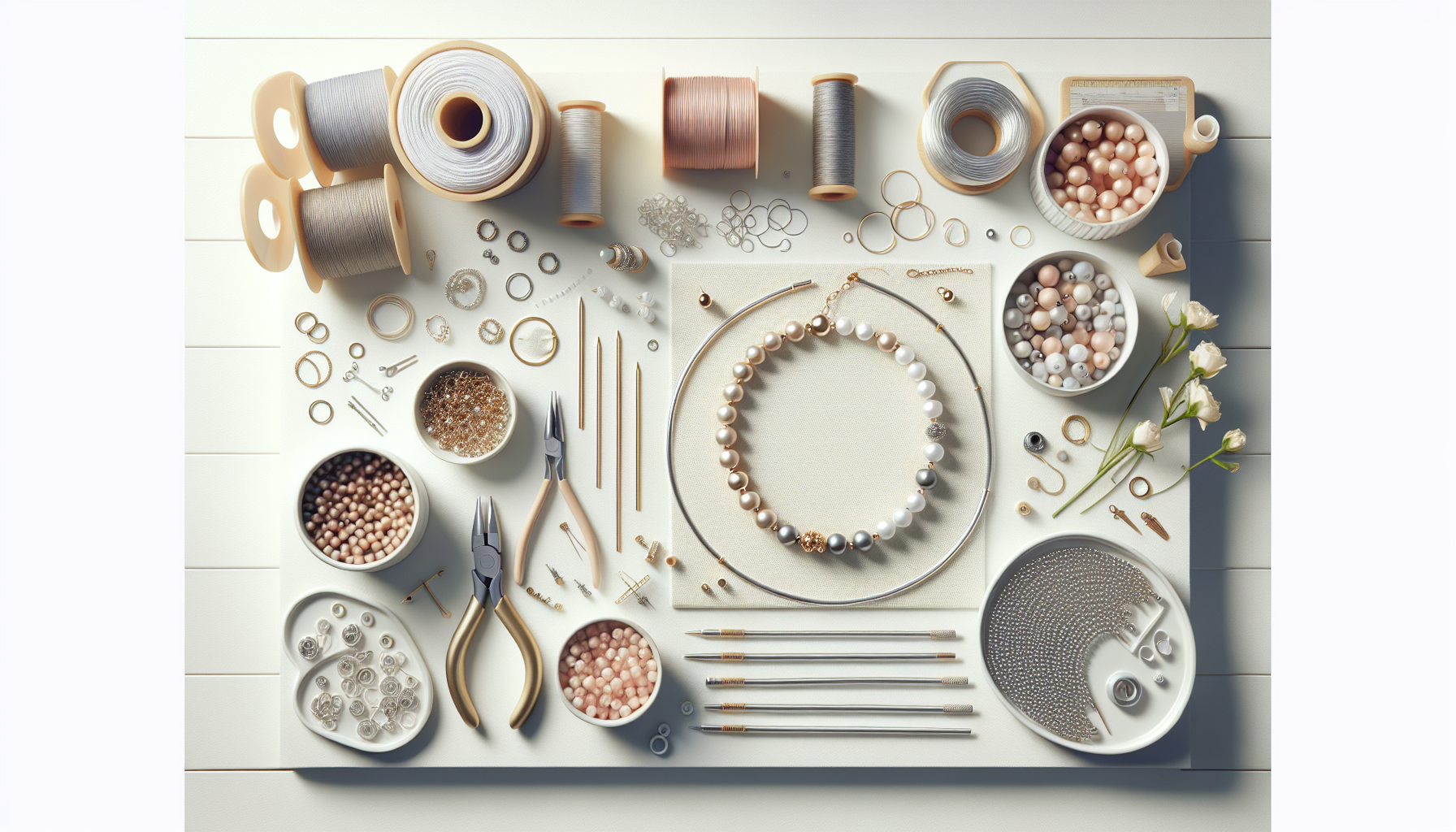
When you start with jewelry making or crafting, two words quickly appear everywhere: thread and wire. In many guides, the terms are confused, making it difficult for beginners to know what is what and what to buy. At Hilmaspyssel.se, the "Threads & Wire" category is clearly divided to help you more easily find the right base material for your specific project.
The difference between thread and wire
In jewelry making, "thread" usually refers to soft, flexible materials, while "wire" refers to malleable metal wire:
-
Thread: Can be, for example, nylon thread, elastic thread, beading thread, silk, or cotton thread. They are soft, cannot be "shaped" to the same extent, but follow the body's movements or hang freely with the beads.
-
Wire (metal wire): Is a thin metal string, e.g., copper wire, brass wire, or aluminum wire. It can be bent, shaped, lightly hammered, and retains its form, perfect for frames, loops, and wire wrapping.
-
Halfway between: Nylon-coated steel cable (jewelry wire) is often called thread but behaves more like a very thin, flexible wire – something many guides fail to explain clearly.
This distinction is crucial when you want to understand why some bracelets break, earrings become crooked, or necklaces don't hang nicely.
Common applications and Hilmaspyssel's assortment
Both thread and wire are used widely: jewelry, decoration, floristry, DIY projects, and mixed media. At Hilmaspyssel.se you will find:
-
Soft threads for beaded necklaces, elastic bracelets, macrame, children's crafts, and knotted beaded jewelry
-
Wire and metal wire in various thicknesses and hardnesses for ear hooks, rings, pendants, frames, flowers, and decorative shapes
-
Special threads, such as beading thread and nylon-coated wire, which combine strength with a beautiful, professional drape
By understanding the basics – what is thread, what is wire, and how they behave – the rest of your choices in the article will become much simpler. This is where you lay the foundation for durable, comfortable, and beautiful jewelry and craft projects.
Different types of threads – materials, properties, and when to use them
Choosing the right thread for jewelry is just as important as choosing the right beads. In this section, we'll go through the most common types of threads you'll find at Hilmaspyssel.se, how they behave in practice, and when each type is best suited. This makes it easier for you to avoid broken bracelets, loose necklaces, and threads that stretch or discolour prematurely.
Jewelry thread, elastic thread, and everyday threads
-
Jewelry wire / beading wire (flex wire, nylon-coated wire, steel cable): Often consists of fine steel wires that are nylon-coated. Provides high strength, good drape, and is perfect for beaded necklaces and bracelets with slightly heavier beads. Ideal when you want a professional, durable result.
-
Elastic thread: A classic for elastic thread bracelets, children's crafts, and jewelry without clasps. Available in various thicknesses and can withstand surprisingly much, but requires the correct knotting technique to prevent it from coming undone.
- Nylon thread, fishing line, sewing thread, and waxed cotton thread:
- Nylon thread/fishing line provides invisible mounting and is strong but relatively stiff.
- Sewing thread is mostly used for textile projects or for sewing beads onto fabric.
-
Waxed cotton thread is flexible, grippy, and perfect for macrame, leather-inspired bracelets, and boho jewelry.
Here, many beginners fail to adapt the thread to the weight and hole size of the beads. A heavy glass bracelet on thin elastic thread will almost certainly break – while the same design on jewelry wire will last for years.
Silk and beading thread – when feel is as important as durability
Silk and beading thread are traditionally used for knotted beaded necklaces, especially with genuine freshwater pearls or cut glass and crystal beads. The thread is soft, drapes beautifully, and the knots between the beads create both a luxurious feel and extra security if the jewelry should break.
Compared to steel cable, silk and beading thread are somewhat more delicate, but provide a unique, textile feel that many premium necklaces are based on. At Hilmaspyssel.se you will find beading thread Hilmaspyssel in various thicknesses so you can perfectly match the bead hole sizes. A good tip is to always choose the thickest thread that still passes through the beads – then you get both better durability and a more attractive shape for your jewelry.
Wire and metal wire – thicknesses, hardness, and the right choice for your project
Wire is at the heart of many projects in jewelry making, crafts, and metal wire artistry. To get stable rings, durable ear hooks, or beautiful wire-wrapped pendants, it's not enough to just "grab a metal wire" – thickness, hardness, and material determine both appearance, durability, and how easy the wire is to work with. At Hilmaspyssel.se you will find several variations adapted for everything from beginners to advanced wire artists.
Thickness and hardness – how they affect your result
-
Thin gauges (approx. 0.3–0.5 mm): Perfect for wire wrapping around stones, small details, floristry, and light decorations. Easy to shape but withstands less stress.
-
Medium gauges (approx. 0.6–0.8 mm): Standard choice for many jewelry makers – good for loops, links, simpler rings, and ear hooks. Balance between strength and malleability.
-
Thick gauges (approx. 0.9–1.0 mm and up): Used as a base for bangle bracelets, larger pendants, and decorative figures where the shape must hold for a long time.
-
Soft, medium, hard wire: Soft wire is easiest to bend and suits beginners and detailed crafting. Medium is an all-around choice for jewelry making. Hard wire provides sharp lines and extra durability but requires stronger pliers and a bit more technique.
By combining a thicker base with thinner wire for details, you can create professional jewelry that both holds its shape and feels light to wear.
Material choice: copper wire, brass, aluminum, and colored wire
The material affects appearance, weight, and price:
-
Copper wire: Warm tone, very malleable, and popular for wire wrapping. Can be patinated for a vintage feel. An excellent choice if you want to practice techniques without using precious metal.
-
Brass wire: Gold-like color, slightly stiffer than copper. Suitable for rings, ear hooks, and details that should look "genuine" without costing as much as gold.
-
Silver and gold-colored wire: Often copper or brass at the core with a colored coating. Perfect when you want to match chains, clasps, and metal parts from Hilmaspyssel.se.
-
Colored aluminum wire: Very light and soft, ideal for larger decorations, letters, figures, and child-friendly crafts where strong colors are part of the design.
When reading product descriptions in the "Threads & Wire" category at Hilmaspyssel.se, always look at: thickness (mm), hardness, material, and whether the wire is lacquered or coated. This will give you a quick indication of whether the wire is best suited for jewelry, floral decorations, or purely ornamental projects – and help you choose correctly from the start, avoiding unnecessary wrong purchases.
How to choose the right thread or wire for your project
Choosing the right thread or wire is what determines whether your jewelry or craft project feels professional – or falls apart after a few days. Here we gather the thinking often spread across several different guides: how to step-by-step match jewelry thread, elastic thread, and metal wire with your specific project, your beads, and your budget. The goal is for you to be able to order from Hilmaspyssel.se with confidence and avoid guesswork.
Ask the right questions before buying
Always start with three simple questions before choosing thread or wire:
-
What are you making?
Beaded necklace, elastic bracelet, earrings, macrame, floral decoration, or children's craft?
-
How much wear and tear should it withstand?
Daily use, child's play, wedding jewelry meant to last, or decoration that mostly stays still?
-
How should it look?
Should the thread be completely hidden, partially visible, or a clear part of the design (e.g., decorative copper wire)?
Based on the answers, you can choose more wisely: jewelry wire/steel cable for heavy beaded necklaces, elastic thread for bracelets without clasps, waxed cotton thread for macrame, and thin wire for loops and settings. Also consider the size of the bead holes – narrower thread for small glass beads, stronger for larger semi-precious stones.
Practical guidelines for different projects
Here is a simple, descriptive "table" to help you choose correctly:
-
Beaded necklaces for everyday use: Jewelry wire/steel cable approx. 0.38–0.45 mm, finish with crimp beads and wire guards.
-
Elastic bracelets (adults): Elastic thread 0.7–1.0 mm; double knots and a drop of glue for extra security.
-
Children's crafts: Thicker elastic thread or soft nylon thread – easy to string beads on, no sharp metal parts.
-
Earrings and pendants: Wire 0.6–0.8 mm for loops, hooks, and simple wire wrapping.
-
Floral decorations and decorative trees: Softer copper or aluminum wire 0.4–0.8 mm, easy to shape yet stable.
-
Macrame and boho jewelry: Waxed cotton thread or nylon thread 0.8–1.0 mm for neat, durable knots.
When comparing products at Hilmaspyssel.se, weigh quality against budget. For quick trend projects, a simpler thread may suffice, but for beloved jewelry and gifts, it almost always pays to choose a more premium jewelry thread or a durable wire for jewelry making. This will give you jewelry that holds its shape, doesn't break – and feels just as good after many uses.
Tools and Techniques – How to Work Smart with Threads & Wire
To get the maximum quality from your threads and wire from Hilmaspyssel.se, it's not enough to have the right materials – you also need the right tools and some simple but well-thought-out techniques. With good basic routines, your jewelry will be both more durable and more professional, whether you're making elastic bracelets or advanced wire-wrapping projects.
Essential tools you should have at home
Most top-ranked guides mention the same basic equipment – here's a refined list, focusing on how you actually use it:
-
Flush cutters: For cleanly cutting wire and jewelry thread without crushing or fraying it.
-
Round nose pliers: Perfect for making neat, even loops for ear hooks, charms, and finishes.
-
Flat nose pliers/combination pliers: For holding, shaping, and gently pressing wire, e.g., around crimp beads.
-
Needles and threaders: Makes it easier when stringing thin beads on soft thread or beading thread.
-
Knotting tool and needle for elastic thread: Makes it easier to tie and hide knots in elastic bracelets.
When you combine these tools with, for example, crimp beads, wire protectors, and findings (which you can find at Hilmaspyssel.se), you get stable, professional jewelry that can withstand everyday use without breaking easily.
Basic techniques for thread & wire (and common mistakes)
Some techniques provide extra effect for little effort:
-
Secure knots on elastic thread: Use double surgeon's knots, tighten slowly, and preferably add a drop of jewelry glue before hiding the knot in a bead or crimp bead cover.
-
Neat loops in wire: First bend the wire at 90°, place the round nose pliers precisely at the bend, and roll until the loop meets the stem. Trim excess and adjust with flat nose pliers.
-
Basic wire wrapping: Wrap the thinner wire evenly, coil by coil, and avoid crossing the loops – this will instantly make the setting look more exclusive.
Common mistakes include wire that is too stiff for small loops, thread that is too thin for heavy beads, and cutting too close to the knots. Always test the technique on a scrap piece before starting your real project – it saves both time and material and gives you the confidence to try more advanced ideas in the future.
Creative Ideas with Threads & Wire – Inspiration for Crafts and Jewelry
Threads and wire are not just "what holds your project together" – they can become the main feature of the design. When you understand how different materials behave, a whole new world of creative possibilities opens up, whether you're crafting with children, making personalized gifts, or creating handmade jewelry for sale. Here, you'll find concrete ideas that build on the most common projects in top articles, but with an extra focus on how you can fully utilize the assortment at Hilmaspyssel.se.
Easy projects for beginners and children's crafts
-
Elastic bracelets: String beads onto elastic thread and tie a hidden double knot. Perfect for children's parties, friendship bracelets, or as a first jewelry project.
-
Beaded necklaces on jewelry wire: Use flex wire/jewelry wire with crimp beads and clasps. Provides a professional result without complicated techniques.
-
Simple earrings: Combine beads, small charms, and headpins with ear hooks – a few tools are enough.
Feel free to incorporate learning into the projects: let children practice color combinations, patterns, and fine motor skills. A starter kit from Hilmaspyssel.se with elastic thread, simple plastic or acrylic beads, and a few clasps or ear hooks for adults goes a long way here.
Level up: wire wrapping, macrame, and decorative projects
For those who want to take the next step, threads & wire are the perfect way to elevate your DIY projects:
-
Wire-wrapped pendants: Use copper wire or brass wire 0.6–0.8 mm to wrap around a larger bead or crystal. Combine with thinner wire for details.
-
Name bracelets and personalized jewelry: Elastic thread + letter beads + spacer beads = appreciated gifts in no time.
-
Macrame bracelets: Waxed cotton thread or nylon thread works excellent for knotted bracelets with sliding knots and embedded beads.
-
Decorative trees and wall hangings: Shape aluminum wire into trees, hearts, or words, and decorate with beads from Hilmaspyssel.se as "leaves" or details.
Also think seasonally: make Christmas stars, angels, and snowflakes from metal wire, Easter decorations with colored wire, or romantic wedding jewelry with silk and beading thread. By combining threads & wire with the store's beads, chains, clasps, and charms, you can create collections that feel well-thought-out – from the simplest bracelet to advanced interior details.
Buying Guide – How to Smartly Shop for Threads & Wire at Hilmaspyssel.se
Buying thread and wire online can feel confusing: different thicknesses, materials, meters on spools, and technical terms in product descriptions. In this section, we guide you step-by-step on how to shop for threads & wire at Hilmaspyssel.se in a smart, time-efficient, and budget-friendly way – whether you're making jewelry for yourself or producing small collections for sale.
Navigate correctly and understand product information
When you enter the "Threads & Wire" category at Hilmaspyssel.se, it's a good idea to start by filtering by product type and material.
-
Length (meters/spool): Smaller projects often manage with 5–10 meters, while recurring favorites are best bought on larger spools (e.g., 50–100 m) for a better price per meter.
-
Thickness (mm): Thinner thread/wire (0.25–0.4 mm) suits small beads and detailed projects, while thicker gauges (0.6–1.0 mm) are suitable for bases, rings, and durable loops.
-
Material description: Look for words like "nickel-free", "nylon-coated", "elastic", or "for bead embroidery" to quickly see if the product matches your needs.
Also, pay close attention to the product images – they often give a sense of color, shine, and how the thread or wire behaves when bent or spooled, something many other online guides fail to emphasize.
How much to buy – and how to save money?
A common question is: "How much thread do I actually need?" Here are rules of thumb that simplify planning:
-
An elastic thread bracelet: count on 30–40 cm per bracelet plus margin for knot – buy at least 2 meters if you want to make several.
-
A classic beaded necklace on jewelry wire: approximately 45–50 cm per necklace, plus extra for clasps and adjustment – 5 meters is enough for several necklaces.
-
Wire wrapping and decorations: projects like wire trees or lanterns consume more length than one might think – here, larger spools are directly more cost-effective.
Often, larger packaging offers significantly better value per meter. If you already know you like a certain "standard wire" (e.g., a favorite flex wire or copper wire), it's smart to upgrade to a larger spool and save the shorter lengths for testing new materials.
Build your personal standard list at Hilmaspyssel.se
To avoid repeating the same research before each order, you can create a simple "standard list" with your most used threads and wire dimensions. For example:
-
0.38–0.45 mm jewelry wire in your favorite color for most beaded necklaces
-
0.6–0.8 mm wire for stable loops, hooks, and frames
-
Elastic cord 0.5–0.8 mm for quick bracelets and children's crafts
At Hilmaspyssel.se, you can easily save recurring products as favorites and then supplement with new colors or special threads when inspiration strikes. By consolidating your purchases at a specialized craft store, you not only get the right threads & wire but also matching beads, clasps, chains, and accessories in the same delivery – which reduces both shipping costs and waiting time, and makes your creative process much smoother.
Frequently asked questions about threads & wire
Q: Which thread is best for bracelets that shouldn't break?
A: It depends on the type of bracelet and beads. For heavily beaded bracelets, jewelry wire/beading wire is safest – it's strong, flexible, and used with crimp beads. For stretch bracelets without clasps, elastic cord is best, but opt for a slightly thicker dimension (e.g., 0.8–1.0 mm if the bead holes allow) and use a double thread and several secure knots. For thin, discreet bracelets with small beads, nylon thread or fishing line works well. At Hilmaspyssel.se, you'll find recommended use in each product text – use that as a guide when choosing.
Q: How do I know what thickness of wire to choose for jewelry?
A: As a rule of thumb: thinner wire (approx. 0.3–0.5 mm) is best for details, wire wrapping, and small beads, while thicker wire (0.8–1.0 mm) is used for frames, rings, and stable shapes. For ear hooks and loops, 0.6–0.8 mm is a good range. Also, consider the size of the bead holes – try with a needle or thin thread at home to estimate the dimension before ordering. Product descriptions at Hilmaspyssel.se always state the thickness in mm so you can easily compare different wires.
Q: Why does my elastic cord break after a while, and how can I prevent it?
A: Common causes are: too thin thread, too tightly pulled knots, sharp bead edges, or the jewelry being frequently pulled hard over the hand. Choose a quality thread, match the thickness to the bead holes, and use double thread for heavier beads. Finish with a surgeon's knot or similar, pull slowly, and optionally apply a small drop of jewelry glue to the knot (not to the entire thread). Let it dry before use. Also, avoid storing stretch bracelets in strong heat or direct sunlight, as some materials age faster.
Q: Are copper wire, brass wire, and aluminum wire hypoallergenic?
A: The metal itself is rarely the problem – usually, people react to nickel. Many copper and brass wires are nickel-free, as is much colored aluminum wire, but always check the product description. If you're making earrings or jewelry for sensitive skin, it's wise to use nickel-free components for parts that are directly against the skin (e.g., ear hooks), and let decorative parts in other metals be more "on the surface." Hilmaspyssel.se clearly states whether the product is nickel-free or not.
Q: How much thread or wire do I need for a project?
A: For a simple necklace, you'll often need about 45–60 cm of jewelry wire (plus a little extra for finishing), a bracelet about 18–22 cm, but always count on at least 10–20 cm margin per piece of jewelry for knots, loops, and mistakes. If you're doing wire wrapping or decorative shapes, material consumption can quickly increase – in that case, it's better to buy a whole spool. A smart trick is to first measure with a regular string at home, add extra, and then order the nearest larger length available in Hilmaspyssel's assortment.
Q: Can I mix different types of thread and wire in the same piece of jewelry or craft project?
A: Absolutely, and that's often when the design becomes most interesting. For example, you can use jewelry wire for the necklace itself, elastic cord for a matching bracelet, and wire for a coordinating pendant. In decorative projects, a combination of waxed cotton thread, metal wire, and perhaps silk ribbon is an easy way to create texture and depth. Just consider durability: load-bearing parts should be made of stronger materials, while softer threads can be used more for decoration and finish.
Conclusion: Let the right thread and wire elevate your jewelry and crafts
Now you have a complete overview of threads and wire – from basic material knowledge to smart tools, techniques, creative ideas, and a practical buying guide. You know how thickness, hardness, and material affect durability and appearance, how to choose the right thread for bracelets, necklaces, and decorations, and how small details like knots, loops, and finishes make an enormous difference to the finished result.
The next step is to put this knowledge into practice. Start with a simple project – perhaps an elastic bracelet or a wire-wrapped pendant – and see which materials you like best. Explore the "Threads & Wire" category at Hilmaspyssel.se, compare different options, and save your favorites for future projects. When you dare to try new techniques, combine several types of thread and wire, and shop smartly online, you will gradually build up a personal toolkit that makes your jewelry and crafts both more beautiful and more durable.