


Pliers for Jewelry Making at Hilmaspyssel.se
Are you tired of crooked loops, loose clasps, and jewelry that breaks after just a few uses? Then it's time to discover what an enormous difference the right pliers for jewelry making can make. At Hilmaspyssel.se, you'll find carefully selected jewelry pliers that are designed for beads, wire, chains, and other small jewelry components – not heavy-duty construction work.
In this guide, we'll go through which pliers you actually need, what distinguishes round-nose from flat-nose pliers, when crimping pliers are indispensable, and how to choose the right tools for your specific projects. You'll also get concrete examples of simple jewelry to start with, as well as tips for care, ergonomics, and smart purchases at Hilmaspyssel.se – so your jewelry becomes both more attractive and more durable.
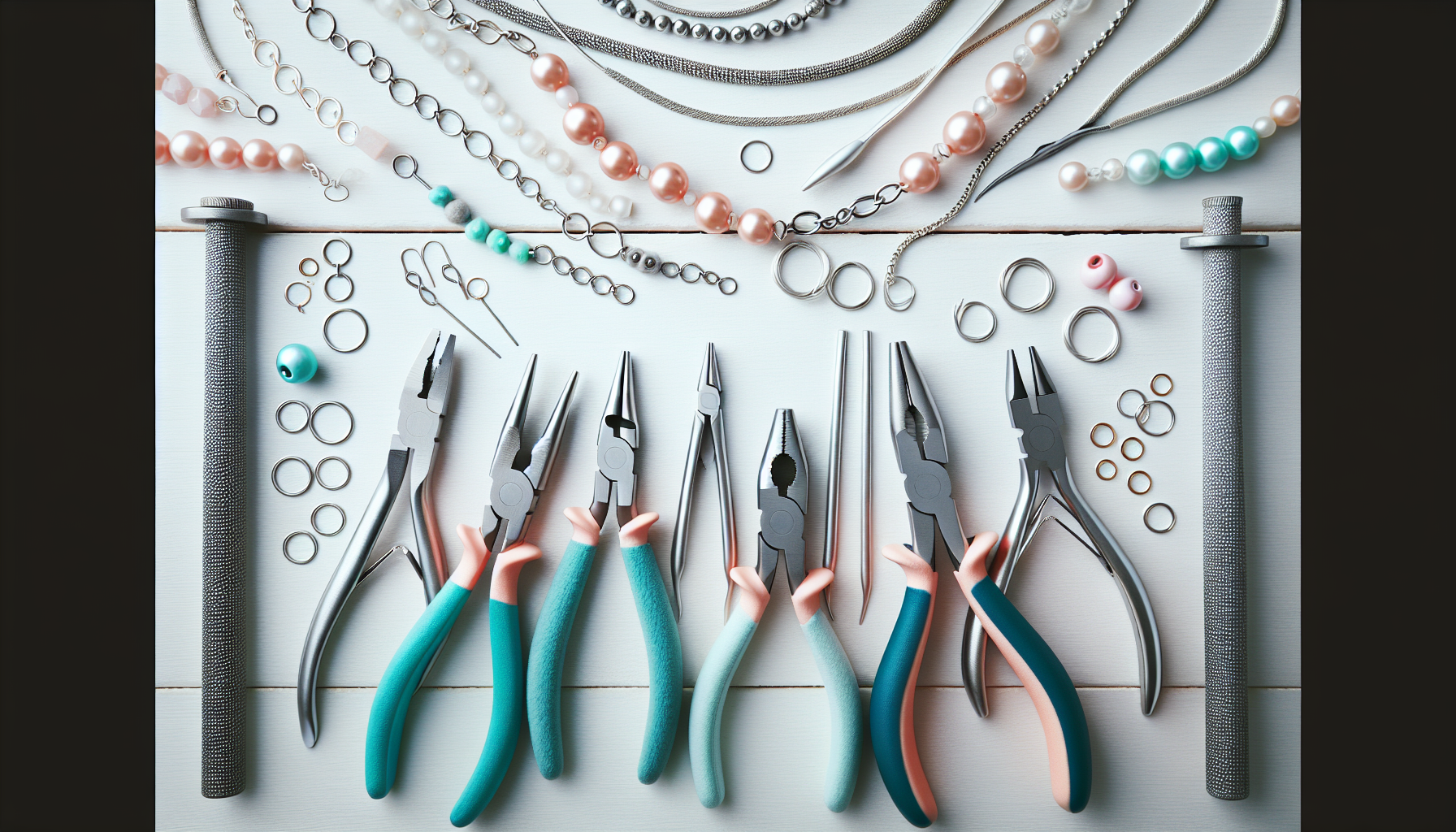
When you start making your own jewelry or craft projects, you quickly realize that pliers for jewelry making are just as important as beads, wire, and chains. A good pair of pliers acts as an extension of your hand, allowing you to bend, hold, cut, and shape small metal components with precision – something impossible to do with just your fingers.
What is a Pliers in the Craft and Jewelry World?
Essentially, pliers are a hand tool with two jaws that meet when you squeeze the handles. In hobbies, crafts, and jewelry making, jewelry pliers are used for everything from:
-
Holding small parts steady while you work
-
Forming loops and hooks on jewelry pins and metal wire
-
Opening and closing jump rings and links in chains
-
Cutting wire and chains cleanly and safely
Many beginners start with common pliers from the hardware store, but quickly discover that they are too coarse, leave marks, and lack the precision required for small jewelry components.
The Difference Between Hardware Store Pliers and Precision Pliers
A key insight from experienced jewelry makers is that the choice of pliers affects both results and enjoyment of work:
-
Hardware store pliers are made for heavier jobs: harder steel, thick jaws, and often serrated surfaces that easily scratch soft metal and plated jewelry components.
-
Precision pliers for jewelry, like those you find at Hilmaspyssel.se, have narrower jaws, smooth surfaces, and a better fit – perfect for small rings, thin pins, and detailed work.
With the right pliers, you save time, avoid frustrating crooked cuts and warped loops, and achieve a more professional look for your jewelry. At Hilmaspyssel.se, you'll primarily find round-nose pliers, flat-nose pliers, chain-nose pliers, and flush cutters – the foundation of any well-thought-out pliers set for jewelry making. In the next section, we'll go through these types in more detail so you can easily see which pliers you need for which task.
Different Types of Pliers at Hilmaspyssel.se – A Complete Guide
To succeed in jewelry making, "a good pair of pliers" is rarely enough. Different tasks require different tools, and that's why Hilmaspyssel.se has built up a wide range of jewelry pliers adapted for everything from simple earrings to more advanced designs. Here we go through the most important types of pliers so you can quickly understand what is needed for each project.
Main Categories of Pliers for Jewelry Making
-
Round-nose pliers: Perfect for forming even loops, hooks, and spirals in metal wire. A must-have for making earrings and pendants.
-
Flat-nose pliers: Used for holding small parts, straightening wire, and flattening links without damaging the metal. Provides control and stability in your work.
-
Chain-nose pliers: Narrow, pointed jaws that make it easy to reach small jump rings and chain links, especially in detailed jewelry.
-
Flush cutters / side cutters: Cut jewelry wire, pins, and chains cleanly and neatly, without leaving sharp, frayed edges.
-
Crimping pliers: Special pliers for crimping beads (crimps) around wire, so that clasps and terminations are secure and durable.
-
Multi-function pliers: Smart all-in-one solutions where you often get gripping, cutting, and sometimes round-nose plier functions in the same tool – practical for travel or small workspaces.
By understanding the differences between these categories, it becomes much easier to build a well-considered basic kit and then supplement with specialized pliers as needed.
When to Use Which Pliers?
In practice, you can think of it this way: round-nose pliers every time you need to make a loop, flat-nose pliers when something needs to be held or shaped, flush cutters when something needs to be cut, chain-nose pliers when working inside small tight links, and crimping pliers as soon as wire and crimp beads are involved. Multi-function pliers are good if you are a beginner or want an extra "all-rounder" on your craft table. As you progress to more advanced designs, you will notice how the right pliers not only make the job easier – they also open up completely new creative possibilities.
Round-nose pliers, flat-nose pliers, and flush cutters – the basic kit for every crafter
To get started with jewelry making, a well-thought-out basic kit of pliers is often enough. At Hilmaspyssel.se, it's clear that three tools recur in almost all projects: round-nose pliers, flat-nose pliers, and flush cutters. Together, they cover most tasks – from forming loops to cutting wire and adjusting finished jewelry – and provide you with a stable base to build upon.
What's included in a smart starter kit?
-
Round-nose pliers: Perfect for making neat, even loops, hooks, and gentle bends in metal wire.
-
Flat-nose pliers: Used for holding small parts, straightening wire, flattening links, and closing jump rings with control.
-
Flush cutters: Cut jewelry wire, pins, chains, and headpins cleanly without crushing or fraying the metal.
With just these three pliers, you can make simple earrings with beads and pins, shorten or lengthen chains, and quickly change earring hooks that chafe or have lost their color. Many beginners buy individual pliers first, but a ready-made pliers set from Hilmaspyssel.se is almost always more cost-effective – you get matching quality, the right combination of tools, and often better ergonomics than mixed "emergency solutions."
Why a pliers set pays off in the long run
A well-thought-out starter set allows you to follow most free patterns and tutorials without lacking tools in the middle of your work. In addition, the pliers in a set are often adapted in size and grip, which provides a more comfortable working posture and more consistent results. As you develop, you can supplement with special pliers, but the basic kit will accompany you in every project – whether you are making advanced necklaces or just repairing a favorite bracelet. That's why experienced jewelry makers recommend investing in a good basic package from the start.
Specialty Pliers for Jewelry – Crimping Pliers, Chain-Nose Pliers, and More Smart Tools
Specialty pliers are the next step when you want to go from simple basic projects to jewelry that feels truly elaborate. At Hilmaspyssel.se, you'll find several types of specialty pliers for jewelry making that solve specific tasks: everything from secure wire clasps to fiddly chain repairs and perfect loops. Here, we'll go through what they do – and when you actually benefit from using them instead of your usual basic kit.
Crimping Pliers, Chain-Nose Pliers, and Other Precision Tools
-
Crimping pliers: Shape crimp beads in two steps so they grip tightly around wire without damaging it. Creates clasps on bracelets and necklaces that last significantly longer than when simply flattening with regular flat-nose pliers.
-
Chain-nose pliers: Narrow, tapering jaws that make it easy to access small jump rings, chain links, and tight corners. Perfect when extending necklaces, changing clasps, or working with very small jewelry components.
-
Flat nose / chain nose pliers: Two similar variations where flat nose has wider, flat jaws and chain nose is more pointed. Both are excellent for gripping, bending, and closing rings with control without leaving marks.
-
Looping pliers: Have marked steps or round jaws in different dimensions, allowing you to make consistently uniform loops – ideal for custom ear hooks, links, and decorative loop chains.
By combining these specialty pliers, you can, for example, repair a favorite wire bracelet, build a longer chain necklace with an extra extension chain, or replace a simpler lobster clasp with a more decorative one – all with good control and minimal wear on the materials.
When Specialty Pliers Make the Biggest Difference in Your Projects
Specialty pliers may not be noticeable during the first crafting session, but over time the difference becomes clear: fewer tired hands, fewer broken wires, and jewelry that retains its shape longer. For example, crimping pliers are almost a must if you frequently make bracelets and necklaces on wire – they reduce the risk of the clasp coming undone when the jewelry is stressed. Chain-nose pliers are invaluable when working with thin chains or small jump rings; you can twist, open, and close without the ring losing its round shape.
At Hilmaspyssel.se, you can build up your collection gradually: start with crimping pliers if you work a lot with wire, then supplement with chain-nose pliers and looping pliers when you start making more advanced designs. This way, you get a tool stand that reflects how your projects evolve – and you avoid compromising on either finish or durability.
How to Choose the Right Pliers at Hilmaspyssel.se – Step-by-Step Guide
Choosing the right pliers for jewelry making can feel confusing – especially when there are many models and price ranges. At Hilmaspyssel.se, the assortment is structured to guide you from beginner to more advanced crafter, but a few simple questions before you click "buy" will make the choice even more confident.
Start with Your Needs and Working Style
-
What will you make? Earrings, bracelets, necklaces, chains, wire, or memory wire all require different combinations of pliers.
-
How often do you craft? For sporadic hobby use, an affordable pliers set is often sufficient, while daily use benefits from premium pliers with better spring action and precision.
-
What material are you working with? Soft metal wire is forgiving, but harder wire and stainless steel require sharper cutters and more durable jaws.
Once you've answered these questions, the product filters on Hilmaspyssel.se become more helpful. Compare the length of the pliers, the type of grip (rubber-coated handles provide better comfort), and whether the pliers are specifically marked for jewelry making – these often have rounder, smoother jaws that are gentler on metal and plating.
Budget, Quality, and Smart Recommendations
-
Budget Level: Perfect for those testing jewelry making. Opt for a beginner pliers kit with round-nose, flat-nose, and flush cutters – it offers the best value for money.
-
Mid-Range: For regular hobby crafters who want better ergonomics and more precise finishes. Here, a separate crimping pliers is often the next natural purchase.
-
Premium: For semi-professionals and small businesses. Sharper cutters, tighter jaw fit, and extra comfortable handles make a big difference during longer sessions.
Always read product descriptions and customer reviews on Hilmaspyssel.se. They often reveal how the pliers feel in the hand, how small details they can handle, and whether they are best suited for beginners or experienced jewelry makers. Also, think ahead: choose a slightly better pliers set that you can build upon, rather than having to replace cheap tools after just a few months. This way, every purchase becomes part of a sustainable, well-thought-out tool collection.
Practical Craft Projects Where the Right Pliers Make All the Difference
Once you have the right pliers from Hilmaspyssel.se in your toolbox, the next step is to actually use them in concrete craft projects. Here, you'll clearly see why round-nose pliers, flat-nose pliers, flush cutters, crimping pliers, and chain-nose pliers are not just "nice to have," but absolutely crucial for a neat and durable result. Below, we'll go through three simple but effective projects that you can try today.
Projects 1–2: Earrings with Beads & Wire Bracelets
- Simple Earrings with Beads and Pins
- Thread beads onto an eye pin or headpin.
- Use flush cutters to trim the pin to the appropriate length (approx. 1 cm above the last bead).
- Form an even loop with round-nose pliers and hold with flat-nose pliers for extra control.
- Gently open the ear hook with flat-nose pliers, thread on the loop, and close it again.
- Wire Bracelet with Crimp Beads
- Cut the desired length of wire with flush cutters (add a few extra cm for the clasp).
- Thread on a crimp bead, one part of the clasp, and feed the wire back through the crimp.
- Press the crimp in two steps with crimping pliers for a secure hold.
- Thread on beads, repeat at the other end with the other part of the clasp.
Here you'll quickly notice how specialty pliers provide more control, fewer failures, and a much more professional look – exactly what is often missing in simpler online guides.
Project 3: Extending a Chain Necklace – Small Effort, Big Difference
To extend a chain necklace without it looking like you've "fiddled" with it, you need to access small rings and links in a controlled manner:
- Identify the jump ring or extension chain you want to work with.
- Use chain-nose pliers and possibly flat-nose pliers in the other hand. Twist the ring sideways (like a gate) instead of pulling it apart, so it retains its shape.
- Attach an extra piece of chain or a pre-made extension chain, and close the ring in the same way – controlled sideways.
- Take the opportunity to replace or upgrade the clasp if it's worn, using the same technique.
By following these workflows, and choosing pliers from Hilmaspyssel.se that match each step, you'll get projects that both last longer and look more exclusive – without it having to be difficult or take extra time.
Care, Ergonomics, and Safety – How to Make Your Pliers Last Longer
Once you've invested in good pliers for jewelry making from Hilmaspyssel.se, you'll naturally want them to stay sharp, straight, and comfortable to work with for as long as possible. This part of the guide focuses on things many people skip – care, ergonomics, and safety – but which in practice determine both the lifespan of your tools and how your body feels after long crafting sessions.
Care and Smart Storage for Your Jewelry Pliers
-
Clean the pliers regularly: Wipe the jaws and joints after each crafting session, especially if you've worked with metal particles, wire, or glue. A soft cloth and, if necessary, a little light oil in the joint goes a long way.
-
Protect against moisture and dust: Store your pliers in a pliers stand, case, or box so they don't rub against other tools. Moisture can cause rust even on quality steel over time.
-
Check jaws and springs: Go through your tools occasionally – close the pliers and check that the jaws meet evenly, and that the spring opens smoothly without jerking.
By doing a quick "tool check" every month, you avoid crooked jaws that crush jump rings or dull cutters that mash metal wire instead of cutting cleanly. This is where the meticulous crafter stands out from the crowd, and your jewelry will look significantly more professional.
Ergonomics, Safety, and Long-Term Economy
-
Choose ergonomic handles: If you craft often or for long periods, it's worth investing in pliers with softer, comfortable handles. They significantly reduce strain on fingers and wrists.
-
Work at the right height and take breaks: Have a work surface where your forearms can rest somewhat horizontally. Take short micro-breaks, shake out your hands, and change your grip often to avoid overuse injuries.
-
Think safety when cutting: Always point flush cutters away from your face and other people. Keep tied-up hair and loose sleeves away from the work area.
When you combine good pliers from a reputable hobby store like Hilmaspyssel.se with thoughtful ergonomics and simple care, you get tools that will last for many years. This means that a quality pair of pliers often ends up being cheaper in the long run than several cheap ones that quickly lose precision – and you can spend more time on creative endeavors instead of struggling with tools that don't cooperate.
Frequently Asked Questions About Pliers for Jewelry Making
Q: What pliers do I, as a beginner, need to be able to make my own jewelry?
A: As a beginner, you will get very far with three basic tools: round-nose pliers, flat-nose pliers, and flush cutters. With these, you can make loops, hold small parts steady, and cut wire, pins, and chains. At Hilmaspyssel.se, there are ready-made beginner pliers sets that are adapted for jewelry making – they are smaller, more precise, and gentler on the hands than ordinary hardware store pliers.
Q: What is the difference between cheap pliers and slightly more expensive quality pliers?
A: Cheaper pliers can work for sporadic crafting, but often have coarser jaws, poorer fit, and harder handles. This can result in scratches on metal, crooked loops, and tired hands. Better pliers have smooth, well-adjusted jaws, softer grips, even spring action, and can handle thin jewelry components without damaging them. For those who make jewelry regularly, quality pliers from a hobby store like Hilmaspyssel.se will almost always be cheaper in the long run, as they maintain their shape and don't need to be replaced as often.
Q: Can I use the same pliers for both jewelry and simpler home projects?
A: It's possible, but not recommended. If you use your finer jewelry pliers for hard steel wire, electrical materials, or coarse fittings, they will quickly lose precision and may get nicks in their jaws. It's best to have separate pliers: one set for jewelry making and a simpler tool set for home projects. Feel free to label them so you don't mix them up.
Q: How do I know which pliers to use for which task?
A: Start with what you need to do:
-
Loops and hooks → round nose pliers
-
Holding, bending, opening rings → flat nose pliers or chain nose pliers/bent nose pliers
-
Cutting wire, pins, chain → wire cutters/side cutters
-
Securing wire with crimp beads → crimping pliers
The product descriptions on Hilmaspyssel.se clearly describe recommended uses, which makes the choice easier. Feel free to combine this with the project examples in the article to see the pliers "in action."
Q: How do I best care for my pliers so they last a long time?
A: Wipe your pliers clean after each crafting session, especially if you've been working with metal particles or glue. Store them dry and protected, preferably in a case or plier stand so that the jaws don't hit other tools. Occasionally check that the screw/spring is secure and that the jaws meet evenly. Never use jewelry pliers for materials they are not intended for – this is the most common reason why pliers "give up" prematurely.
Q: Which pliers should I buy first if I already have a starter set and want to upgrade?
A: If you have the basic kit in place, the next smart step is often crimping pliers (if you work with wire and crimp beads) or narrow chain nose pliers/bent nose pliers for detailed work with small rings. If you make many identical loops, looping pliers in several sizes can save a lot of time and give a very even, professional result. On Hilmaspyssel.se, you can filter pliers by application and build up your collection step by step according to how you actually work.
Conclusion: build a sustainable tool base for creative jewelry making
You have now received a complete overview of which pliers for jewelry making are needed, how they are used, and how to choose the right tools for your specific projects. From the basic kit with round nose pliers, flat nose pliers, and wire cutters to smart specialty pliers like crimping pliers and chain nose pliers, you have seen how the right tools lead to neater results, less waste, and more crafting joy. With proper care, ergonomics, and safety awareness, your pliers will also be a long-term investment rather than a consumable.
The next step is to put this knowledge into practice. Go to the "Pliers" category on Hilmaspyssel.se, choose a well-thought-out plier set based on your needs, and try one of the projects in the article – for example, simple beaded earrings or a bracelet on wire with crimps. Save this guide as your personal reference when building your tool collection for crafting and jewelry, so you always have support close at hand when you want to take your creativity to the next level.