


S-lon Bead Cord: A Complete Guide for Creative Jewelry Projects at Hilmaspyssel.se
Do you want to create durable, professional jewelry that withstands wear and tear – without the thread breaking, fraying, or losing its color? Then S-lon Bead Cord is a material you should definitely take a closer look at. This strong nylon thread is a favorite among jewelry makers in Sweden who love micro macrame, bead embroidery, knotted pearl necklaces, and personalized bracelets. At Hilmaspyssel.se, you'll find a wide range of thicknesses and colors.
In this guide, we'll cover everything you need to know before ordering: what S-lon is, how to choose the right thickness for your beads, smart color choices, common mistakes to avoid, and concrete tips for a beautiful finish. You'll also get practical buying advice, durability tips, and a review of the S-lon selection at Hilmaspyssel.se, so you can confidently order the right thread for your specific projects.
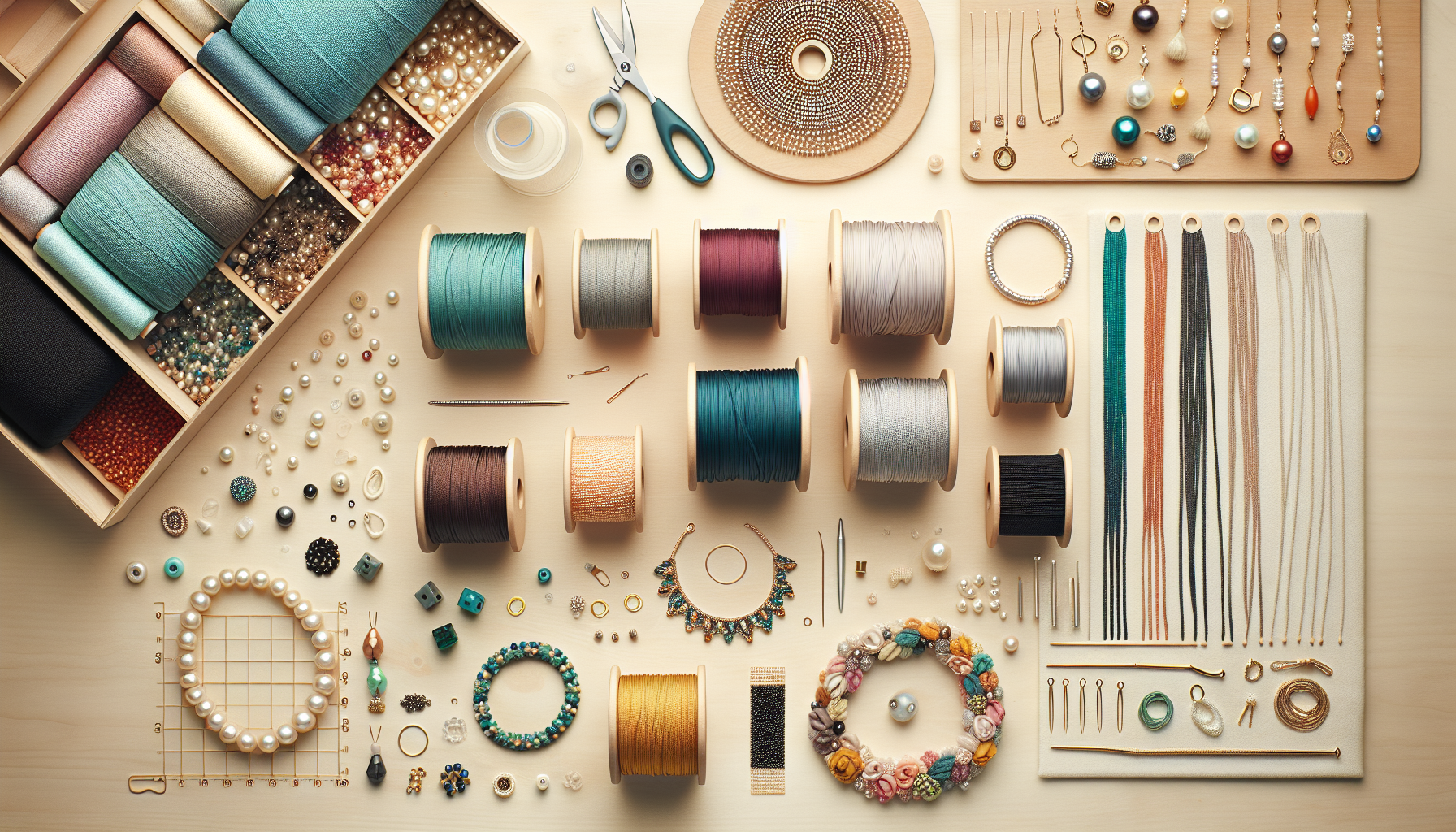
S-lon Bead Cord is a specially developed nylon thread for beading and knotting techniques, known for its combination of strength, flexibility, and a beautiful finish. Unlike regular sewing thread, S-lon is twisted in a way that gives it a compact, round profile and high wear resistance, meaning the thread can withstand both everyday use and more advanced techniques like micro macrame without breaking or losing its shape.
Material and Construction – Why S-lon Behaves as it Does
S-lon is made from high-quality nylon that is twisted into a smooth, strong cord:
-
Durable structure: The twisted construction makes the thread resistant to abrasion, perfect when using beads with sharper edges.
-
Colorfast: S-lon retains its color well over time, which is important for jewelry that will be worn often.
-
Minimal fraying: The thread frays significantly less than many simpler nylon alternatives, especially if the ends are lightly singed with a lighter or thread burner.
-
Sufficient stiffness: It has a natural "body," making it easier to thread through beads and work with in knotting techniques.
This combination makes S-lon feel more predictable than regular sewing thread, while also being softer and more pliable than jewelry wire. The result is jewelry that both looks professional and lasts a long time.
S-lon Compared to Other Brands and Uses
On top-ranked sites, S-lon is often compared to other well-known brands like C-Lon. They are close in quality, but many creators find that S-lon has a slightly more consistent diameter and a color range that is easier to combine tone-on-tone with popular bead series. This makes S-lon particularly appreciated for:
-
Micro macrame: Thin but strong threads that create sharp knots and detailed bracelets and earrings.
-
Bead embroidery and bead weaving: The consistent thickness creates stable, well-formed patterns.
-
Knotted necklaces: Interknots around, for example, pearls or gemstones become both decorative and functional.
One aspect rarely mentioned in simpler guides is the feel of the finished piece: S-lon provides a pleasant suppleness without the jewelry feeling flimsy. This makes the thread a well-thought-out choice for those who want to create durable, professional jewelry – whether you are a beginner or a more advanced jewelry maker.
Different Thicknesses and Types of S-lon – How to Choose the Right Thread
Choosing the right thickness of S-lon Bead Cord is crucial for the durability, comfort, and appearance of your jewelry. Many guides offer only general recommendations, but here we go deeper so you can confidently match thread, beads, and technique – especially when shopping at Hilmaspyssel.se.
Common Sizes and What They Really Mean
In Swedish webshops like Hilmaspyssel.se, you'll most often encounter S-lon in various designations, such as AA, D, or Tex measurements. Simply put, you can think of it this way:
-
S-lon AA (very thin): Perfect for small seed beads (e.g., size 11/0–15/0), advanced bead weaving, and detailed settings.
-
S-lon D (standard/thin): All-round choice for seed beads (8/0–11/0), crystals, and many glass and metal beads.
-
Thicker S-lon / Tex 70+: Good for micro macrame, shamballa, mala necklaces, and when the thread should be visible as part of the design.
-
S-lon rattail/cord (round cord): Used for sliding knots, simpler necklaces, kumihimo, and statement bracelets.
Always consider the size of the bead hole: it's better to use a slightly thinner thread that can pass through multiple times than one that is too thick and gets stuck halfway through the project.
Matching Bead Type and Technique with the Right S-lon
To make the choice easier, you can consider both bead type and technique:
-
Seed beads & bead weaving: Primarily choose AA or D, where AA is suitable for very small beads and dense patterns, while D works well for most standard patterns and bracelets.
-
Crystals & faceted glass beads: A slightly stronger thread, often D or slightly thicker, provides better resistance to sharp edges – especially important in bracelets that are exposed to more wear.
-
Natural stone & freshwater pearls: Both weight and hole size play a role here. A stable D-thread or thicker often works best, preferably doubled or tripled for extra strength in heavy necklaces.
-
Micro macrame, shamballa, mala: Choose thicker S-lon or rattail/cord where the knots are intended to be a clear design detail and the jewelry needs to withstand daily use.
When planning a project, it's a good idea to add a roll of thinner and a roll of slightly thicker S-lon to your cart at Hilmaspyssel.se. This gives you the flexibility to adapt if you change beads or techniques during the work. Over time, you'll build up a personal "toolkit" of favorite thicknesses that cover almost all your jewelry ideas.
Color Palette and Design – How to Use S-lon Creatively
S-lon Bead Cord is not just a strong and reliable thread – its color palette is one of the biggest reasons why many Swedish jewelry makers are drawn to S-lon. At Hilmaspyssel.se, you'll find a wide selection of shades that make it easy to create everything from discreet everyday jewelry to vibrant statement bracelets. The right thread color can elevate an otherwise simple project and give your beads a whole new expression.
How to Choose Thread Color for Your Beads
-
Neutral colors (white, beige, gray, black): Perfect when you want the beads to be the focal point and the thread to "disappear" into the design. Ideal for classic pearl necklaces and natural stones.
-
Strong colors (red, turquoise, cobalt, lime): Used when the thread is meant to be part of the design, such as in micro macrame or knotted bracelets where the knots are clearly visible.
-
Muted tones (taupe, forest green, plum): Creates a more exclusive, boho, or vintage impression and pairs beautifully with matte glass and natural stone beads.
-
Pastels and metallic: Pastels are popular for bridal jewelry and children's bracelets, while metallic colors (gold, silver, bronze) give a luxurious feel without needing as much precious metal elsewhere.
A simple rule of thumb is: light thread enhances light beads, dark thread deepens the color of dark beads, and contrast color creates a more graphic, modern look.
Trendy Color Combinations & Smart Basic Wardrobe
In Sweden, you currently see many micro macrame bracelets in earthy tones (terracotta, olive, mustard) combined with brass or gold details. Another popular trend is tone-on-tone jewelry, where both thread and beads are in the same color scale – for example, different shades of blue or green – which creates a soft, harmonious impression. For those who prefer more graphic expressions, black S-lon is often seen with white or metallic beads for a clear, minimalist look.
It's a good idea to build up a small "color wardrobe" of S-lon from Hilmaspyssel.se:
-
3–4 basic colors: e.g., black, natural white, light gray, linen/beige
-
2–3 accent colors you love and often wear (e.g., petrol, old rose, emerald green)
-
1 metallic color for more festive projects
With this foundation, you can handle most projects without having to buy new thread every time. When you find a favorite combination, make a note of both bead color and thread color – then you can easily recreate the style for future orders at Hilmaspyssel.se. This structured approach to working with color is rarely mentioned in simpler guides but saves time, money, and creative energy.
Common Uses – How You Can Use S-lon Bead Cord
S-lon Bead Cord is one of the most versatile threads on the market, which is why it appears in so many popular jewelry techniques. It combines strength, flexibility, and a wide range of colors, allowing you to use the same type of thread for everything from simple friendship bracelets to advanced bead weaving projects with tiny beads and cabochons.
Micro Macrame Jewelry, Knotted Necklaces, and Trendy Bracelets
-
Micro macrame: Perfect for thin bracelets, earrings, necklaces, and small pendants where you want sharp, clear knots and a smooth surface.
-
Shamballa and friendship bracelets: S-lon creates even knots, withstands daily wear, and comes in trendy colors that complement hematite, crystal, and glass beads.
-
Knotted pearl necklaces: Use thinner S-lon between freshwater, glass, or natural stone pearls for a luxurious, vintage-inspired look with secure knots between each pearl.
Here, S-lon stands out compared to cotton cord or waxed polyester by not stretching significantly and retaining its color better over time. For those who sell jewelry, this means fewer complaints and more satisfied customers – something rarely mentioned in simpler guides but crucial in the long run.
Bead Embroidery, Bead Weaving, and Creative Mixed Projects
-
Bead embroidery & bead weaving: The thinner varieties of S-lon are excellent for detailed patterns, settings around cabochons, and woven bracelets with seed beads.
-
Mala necklaces and prayer beads: S-lon works very well for long, knotted malas where you want to combine natural stone, wood, and metal beads with durable knotting thread.
-
Combination with other materials: Mix S-lon with chain, leather, or textile ribbon for modern mixed media designs – for example, macrame-set stones suspended from a thin chain.
A smart way to get started is to choose 2–3 projects you really want to try, such as a micro macrame bracelet, a knotted pearl necklace, and a simple bead weaving bracelet. Based on these projects, you then select the thread thickness and color in S-lon, making your purchases more accurate and reducing waste – while also getting a clear sense of how versatile the material actually is. Hilmaspyssel.se has the assortment and accessories to make it easy to try just this type of varied project with S-lon.
Technique Guide – Tips, Tricks, and Common Mistakes to Avoid
This section focuses on how to actually work with S-lon Bead Cord in practice. Many Swedish jewelry makers find the thread incredibly durable – but also that the result depends on how you start, finish, and handle the thread during the work. With the right technique, your bracelets, necklaces, and micro macrame projects will be both more attractive and significantly more durable over time.
Starting, Finishing, and the Right Tools
-
Securely start the thread: Always attach S-lon with a double knot around a ring, clasp, or macrame board. For micro macrame, you can tape or pin the thread for extra control.
-
Professional finishing: Use crimp beads and end caps, possibly combined with a small drop of jewelry glue in the knot. Tighten the knot first – then sparingly apply glue.
-
Right needles for beading: Choose thin beading needles or so-called big-eye needles for finer S-lon, so you don't have to struggle to get the thread through bead holes.
By viewing the finishes as a design element in themselves – not just a necessity – you can create jewelry that feels well-crafted. Feel free to match the metal color of crimps and end caps with clasps and other details for a cohesive look.
Preventing Tangles, Fraying, and Beginner Traps
-
Prevent tangles: It's better to work with slightly shorter lengths and splice as needed rather than with extremely long threads. Store the spool on a spindle or in a small box so it doesn't roll around on the table.
-
Seal the ends: S-lon is a nylon thread – very carefully melt the ends with a lighter or heat tool. Keep the heat source a little distance away and quickly touch the end as it begins to melt. Always work over a fireproof surface.
- Common mistakes:
- Thread too thick for bead holes that are too small – try a thinner S-lon size or larger beads.
- Too much tension – especially in micro macrame, pulling too hard can make the jewelry stiff and crooked.
-
Wrong dimension for heavy stones – always choose a thicker S-lon or double threads for heavier natural stones and larger cabochons.
An extra professional tip is to practice knots and finishes on scraps before doing it on your actual project. This way, you'll get the hang of working with the specific S-lon thickness you're using, and your finished jewelry made with materials from Hilmaspyssel.se will look like they were made by a true professional.
S-lon Bead Cord at Hilmaspyssel.se – Assortment, Quality, and Service
Once you've discovered how versatile S-lon Bead Cord is, the next step is to find a store that has both the right assortment and expertise. Here, Hilmaspyssel.se stands out in Swedish search results: a niche webshop focusing on jewelry supplies, where S-lon is not just a side item but a well-considered part of the offering. This makes it significantly easier to find the right thread from your very first order.
What S-lon Products Will You Find at Hilmaspyssel.se?
The assortment typically includes several varieties of S-lon, carefully selected for jewelry making:
-
Different thicknesses: thinner S-lon Bead Cord for bead weaving and knotted necklaces, and thicker cord for macrame and bracelets
-
Wide color range: neutral base colors, trendy accent shades, and classic pearl colors suitable for freshwater and glass pearls
-
Practical spools and packaging: suitable quantities for both beginners and avid crafters, minimizing unnecessary waste
-
Matching accessories: clasps, beads, spacers, needles, and tools that have been tested with S-lon in real projects
By gathering everything in one place, you reduce the risk of accidentally buying the wrong dimensions or components that don't work together – a common frustration rarely discussed in simpler guides.
Smarter Shopping with Filters, Service, and Starter Kits
One strength of Hilmaspyssel.se is that the store is built for creators, not just for "products on shelves." With clear categories, filtering by color and thickness, and searching for S-lon, you can quickly find the right thread for your specific beads. For newcomers, there are often well-thought-out starter kit suggestions: a few selected S-lon colors + basic beads + the right needles, so you can start creating as soon as the package arrives in your mailbox.
Add Swedish customer service, short delivery times, and easy returns, and you get a secure shopping experience that allows you to spend more time on the creative process – and less time worrying about whether you ordered correctly.
Buying Advice, Value for Money, and Durability – How to Get the Most Out of Your S-lon
Once you've fallen for S-lon Bead Cord, the next questions are: how much thread do I need, which colors should I invest in, and how do I shop smartest? In this section, we guide you through planning, budgeting, and durability so that every spool from Hilmaspyssel.se is truly used – and doesn't just sit in a drawer.
How Much Thread, Which Spools, and How to Plan Your Purchases
- Typical quantities per project:
- Thin micro macrame bracelets: approx. 1.5–3 m per bracelet
- Knotted pearl necklaces (e.g., pearls between knots): 3–5 m depending on length and knot spacing
- Mala necklaces (108 beads): 4–6 m including tassel and extra safety margin
- Detailed bead embroidery: count 2–4 m per smaller project
-
Cost per meter thinking: A spool of S-lon often contains tens of meters of thread, which makes the cost per piece of jewelry very low compared to pre-assembled cords or chains.
-
Build a well-thought-out collection: Start with a few key colors (e.g., black, natural white, gray, an accent color) in the thicknesses you use most – and then supplement as needed for projects instead of impulse buying.
By estimating the length per project already when sketching your design, you avoid both unnecessary extra orders and running out of thread in the middle of a piece of jewelry. The product descriptions on Hilmaspyssel.se can be helpful here – look at the spool length and compare it with your planned projects.
Storage, Durability, and a Smart Checklist Before Ordering
To extend the lifespan of both thread and jewelry, it's wise to consider how you handle S-lon:
- Storage:
- Store spools in a dark, dry place, preferably in a box or compartmentalized container.
- Avoid direct sunlight and high heat to preserve color and strength.
- Use small clothespins, thread clips, or washi tape to secure the end and prevent tangles.
-
Less waste through planning: It's better to cut a little too long than too short, but always collect short pieces in a "scrap box" – they are often enough for earrings, small decorative details, or test pieces.
-
Durability aspect: Since S-lon is durable, you won't have to re-thread jewelry as often, which saves time, material, and money over time.
Before placing your order at Hilmaspyssel.se, go through a quick checklist:
-
Bead type: Small seed beads or larger natural stone? (determines thickness choice)
-
Project: Bracelet, necklace, mala, embroidery? (affects length requirement)
-
Color theme: Neutral, tone-on-tone or contrast?
-
Tools and accessories: Do you have the right needles, clasps, crimp beads, glue?
By ordering thread, beads, and accessories simultaneously from Hilmaspyssel.se, you avoid double shipping costs and ensure that everything fits together – both aesthetically and technically. This gives you maximum utility from every meter of S-lon and a more sustainable jewelry studio in the long run.
Frequently Asked Questions about S-lon Bead Cord
Q: What is the biggest difference between S-lon Bead Cord and regular nylon or sewing thread?
A: S-lon is specially developed for beading and jewelry making. The thread is more tightly twisted, more durable, and significantly more dimensionally stable than regular sewing thread. This means it holds knots better, frays less, and withstands repeated movements – perfect for bracelets, necklaces, and micro-macrame that are used daily. Regular nylon thread can work for simpler projects, but if you want professional results and long-lasting jewelry, S-lon is a much better choice.
Q: Which S-lon thickness should I choose if I am a complete beginner?
A: For most beginner projects, a medium-thick thread is a good choice – for example, a standard size that fits seed beads in sizes 8/0–11/0, crystals, and smaller natural stones. It is thin enough to pass through most beads yet stable enough for you to clearly see what you are doing when knotting and embroidering. A tip is to start with 1–2 neutral colors in an all-round thickness and then build up gradually. Hilmaspyssel.se usually indicates suitable bead types in the product descriptions, which is very helpful.
Q: Is it possible to combine S-lon with other cords, such as leather or waxed cotton?
A: Yes, and it is actually one of the most underrated ways to use S-lon. For example, you can:
-
Knot micro-macrame details around a base of leather cord
-
Sew beads onto a wider textile band with S-lon for extra durability
-
Reinforce elastic bracelets by combining elastic thread with a thin S-lon thread in the core
Combinations like these provide both better durability and a more unique, personal expression.
Q: How do I prevent S-lon from tangling when I work with longer lengths?
A: The most common mistake is to take too long pieces at once. It is better to work with shorter lengths and splice when needed than to struggle with two meters of thread. You can also:
- Pull the thread through beeswax or thread conditioner (if the material allows) to reduce friction
- Keep the thread slightly taut during work, especially when bead weaving
- Store the thread spool on its reel and only pull out what you need, instead of having loose bundles in your lap
Small work habits like these make a big difference to the flow of your project.
Q: How long do jewelry made with S-lon last – and how do I care for them?
A: With the right technique and finishing, jewelry made with S-lon can last many years without losing shape or color. The nylon is resistant to everyday moisture, but it is best to avoid prolonged contact with water, perfume, and strong cleaning agents. For best durability:
- Store the jewelry in a dark and dry place, preferably in a box or fabric pouch
- Check knots and finishes occasionally on favorite bracelets that are used daily
- Plan generously with thread in the construction so that unnecessary wear does not occur at individual points
When you combine the right S-lon thickness, thoughtful design, and good storage, you get jewelry that both looks exclusive and is durable in the long run. Hilmaspyssel.se also makes it easy to replenish with new colors once you have found your favorite projects.
Create durable favorite jewelry with the right S-lon and the right store
You now have a comprehensive understanding of why S-lon Bead Cord is one of the most popular choices for everything from micro-macrame and bead embroidery to classic knotted bead necklaces. You know how the material is structured, how thickness and color affect the design, which techniques work best – and how to avoid common mistakes that many online guides miss. Together with insights into affordability, durability, and smart storage, you now have a solid foundation for creating jewelry that is both long-lasting and feels personal.
The next step is practical: choose a first project, decide on the bead type, color theme, and technique – and then put together a well-thought-out starter kit from Hilmaspyssel.se, where you will find S-lon in various thicknesses, colors, and packages, as well as matching beads, clasps, and tools. Feel free to start with some basic colors and a simple model, and gradually build on as you find your style. Explore the S-lon assortment at Hilmaspyssel.se, take part in their inspiration and guides, and start creating durable, unique jewelry today.