


Earring Components from Hilmaspyssel.se – A Complete Guide for Creative Jewelry Makers
Do you dream of creating your own personalized earrings but get stuck at the question: which earring components should I actually use? At Hilmaspyssel.se, you'll find everything from ear hooks, posts, and hoops to jump rings, chains, and charms – but without the right knowledge, it's easy to get overwhelmed. In this guide, we'll go through exactly which components you need to build durable and stylish earrings that look professional, even if you're a beginner.
You'll get a clear overview of different types of earring findings, material choices like nickel-tested, surgical steel, and sterling silver, as well as how to combine component kits into complete jewelry pieces. With concrete examples, simple DIY projects, and a smart shopping guide for Hilmaspyssel.se, you'll quickly get started and can begin creating your own collection of personalized earrings.
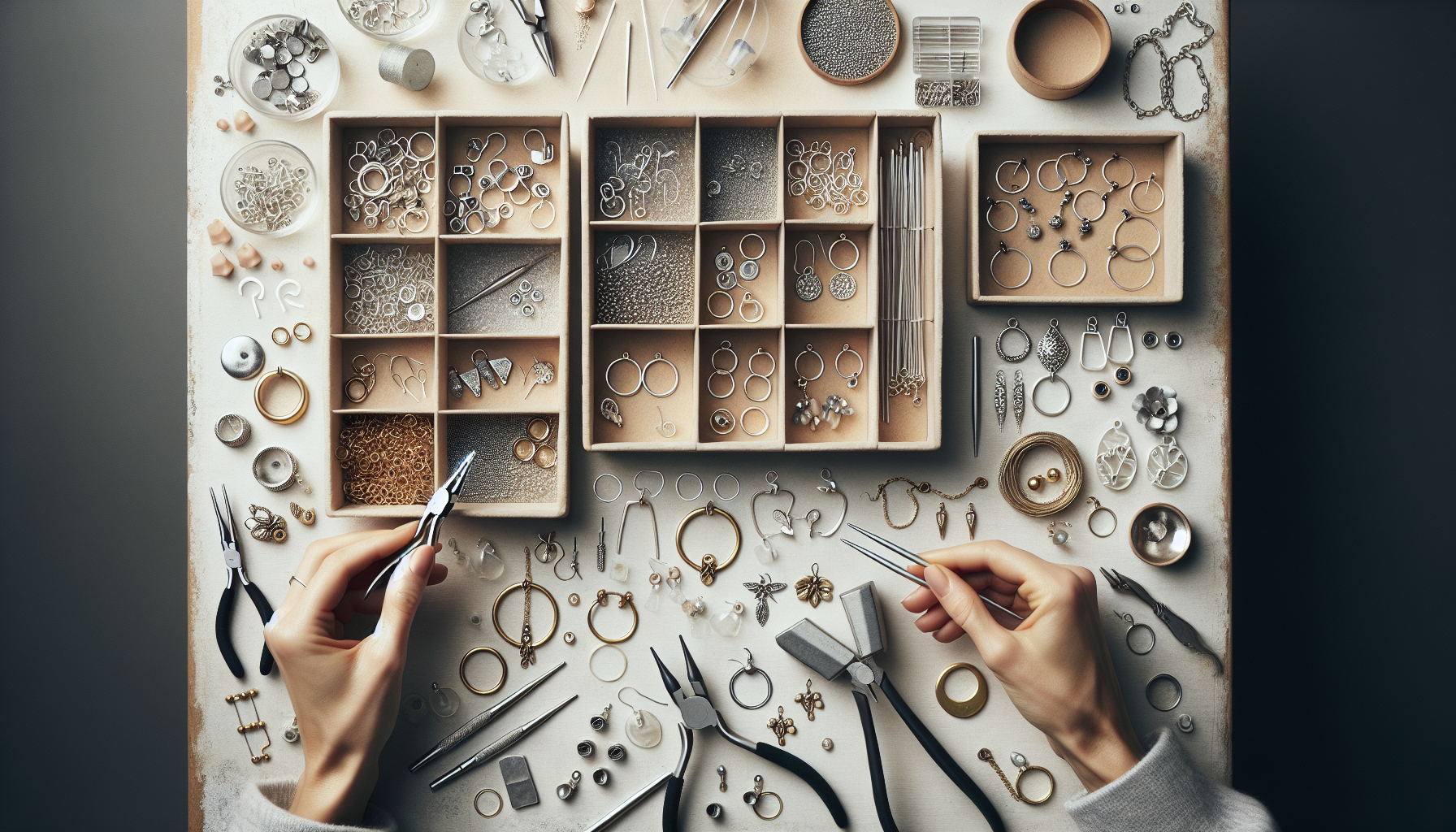
When you start making your own earrings, a question quickly arises: what components do I actually need? On sites like Hilmaspyssel.se, everything is gathered under the term earring components, but to choose correctly, it's important to understand what the different parts are called, what they look like, and what function they have in a finished piece of jewelry.
Overview of the Most Important Earring Components
To create a complete earring, several small cooperating parts are usually needed:
-
Earring Bases: The basic part that goes into the ear – e.g., ear hooks, posts, hoops, and clips.
-
Headpins, eye pins, and findings: Used to attach beads and charms, and create pendants.
-
Stoppers and Backs: Keep post earrings in place behind the earlobe.
-
Jump Rings and Split Rings: Small rings that connect parts, e.g., the base with a pendant.
-
Decorations: Beads, charms, crystals, cabochons, and other details that give the design its style.
At Hilmaspyssel.se, you'll find these categories clearly separated, making it easier to plan your projects and see what parts you need before ordering.
From Simple Dangle Earrings to Statement – Concrete Examples
A simple dangle earring requires surprisingly few components. Example:
-
Ear hook as base
-
Jump ring for linking
-
Headpin + bead/charm as pendant
A longer statement earring often consists of more links and thus more earring components:
-
Post or hoop as base for extra stability
-
Chain of desired length for dramatic effect
- Several jump rings to build length and movement
- Combination of beads, crystals, and charms for volume and eye-catching design
By viewing earring components as building blocks, it becomes easier to understand other designers' creations and to create your own professional jewelry with the right suspension, durability, and comfort.
Material Choices for Earring Components – How to Choose the Right Foundation for Your Jewelry
The material of your earring components determines both how the jewelry feels against the skin and how long it lasts. At Hilmaspyssel.se, you'll find everything from surgical steel and 925 sterling silver to plated brass and stainless steel, and each material has its clear strengths. To avoid rework, reorders, and dissatisfied customers, it's smart to consider material choices before you even start designing.
Common Materials: Surgical Steel, Sterling Silver, Brass, and Stainless Steel
-
Surgical Steel: Very popular for earring components because it is durable, color-stable, and often well-tolerated by sensitive skin. Perfect for everyday jewelry and children's earrings.
-
925 Sterling Silver: Genuine silver with a more luxurious feel. Provides a classic, exclusive look and is appreciated by customers who want "real" jewelry. May need occasional polishing to maintain its shine.
-
Plated Brass: Budget-friendly choice with many colors (gold, rose gold, black, etc.). Suitable for trendy collections where you often change style, but the plating can wear off over time with frequent use.
-
Stainless Steel: Very durable, holds color well, and is affordable. A good middle ground between an exclusive feel and everyday durability.
When planning a collection, you can, for example, use surgical steel for basic earrings for sensitive skin, and 925 silver for your more elaborate collections or wedding jewelry.
Nickel-Safe, Nickel-Tested, and the Right Material for the Right Customer
Terms like ”nickel-safe” and ”nickel-tested” often raise questions. Simply put, they mean that the product meets the EU's limit values for nickel release, which reduces the risk of allergic reactions. Hilmaspyssel.se clearly states the material in product descriptions, making it easier to choose correctly if you are targeting sensitive ears.
As a rule of thumb:
- Choose surgical steel or 925 silver for sensitive skin, children, and everyday jewelry that is used frequently.
- Use plated brass for seasonal trends, larger statement earrings, and collections where the price needs to be kept down.
- Opt for stainless steel when you want to combine durability, a nice finish, and a good price.
By consciously combining different materials in your inventory, you can offer several price points – from affordable fashion jewelry to durable favorites that become customers' long-lasting go-to earrings. This gives you a clear competitive advantage compared to many simpler DIY guides online.
Different Types of Earring Findings – Ear Hooks, Posts, Hoops, and Clips
The right earring findings are crucial for comfort, durability, and style. At Hilmaspyssel.se, you'll find several variants – from classic ear hooks to modern hoops – and each model suits different types of earrings and wearing styles. In this section, we'll go through the most common findings, when to use them, and what details make the biggest practical difference.
Ear Hooks and Earring Posts – The Foundation of Many Jewelry Collections
-
Ear Hooks: Perfect for dangle earrings, bohemian designs, and lightweight beaded earrings. Available in several designs (classic hook, French hook, leverback) and materials such as surgical steel and sterling silver.
-
Security with Stoppers: Always combine open ear hooks with rubber stoppers or metal stoppers to reduce the risk of losing the earring, especially when selling or gifting.
-
Earring Posts with Backs: Provide a discreet, stylish look – perfect for small studs, cabochons, and children's earrings. Posts with a flat pad facilitate gluing stones and cabochons.
When designing minimalist everyday earrings, posts are often the best choice, while ear hooks offer more movement and are well-suited for longer pendants with chains, charms, and beads. At Hilmaspyssel.se, you can match findings and decorations in the same metal color for a more professional look.
Hoops and Clips – For Trendy and Non-Pierced Ears
-
Hoops: Ideal for trendy earrings where you thread on beads, small charms, or mini chains. Choose thinner hoops for lighter jewelry and thicker models for statement designs.
-
Interchangeable Charms: Use openable hoops and small jump rings to create "interchangeable" fashion – the customer can easily vary the look without buying new basic findings.
-
Clip-on Earrings: A must-have in your assortment if you sell jewelry to people without pierced ears, children, or sensitive customers. Clip bases with flat surfaces make it easy to glue cabochons or small decorations.
By having several types of earring findings at home, you can quickly adapt the same design idea to different customer groups: posts for discreet office earrings, hoops for parties, and clips for anyone who wants to wear jewelry without piercings. This makes your collection more inclusive – and your purchases at Hilmaspyssel.se significantly more strategic.
Important Complementary Parts – Jump Rings, Chains, Charms, and Beads
Complementary parts are what transform a simple earring base into a personalized and professional piece of jewelry. At Hilmaspyssel.se, you'll find a large selection of jump rings, chains, charms, and beads that make it possible to create everything from minimalist everyday earrings to truly impressive statement earrings. By understanding how these small parts work together, you can plan your projects smarter, avoid unnecessary mispurchases, and achieve a more durable result.
Jump Rings and Chains – The Links That Hold Everything in Place
-
Jump Rings/Split Rings: Used to attach charms, chains, and other parts to ear hooks, posts, and hoops. Choose size based on both design and strength – small rings (3–4 mm) give a delicate look, larger ones (5–6 mm) suit heavier pendants.
-
Opening Direction: Always open jump rings sideways, never pull them apart, to maintain strength and prevent charms from being lost.
-
Chains: Perfect for threader earrings, multi-layered earrings, and asymmetrical designs. Thin chain gives an elegant, airy feel, while thicker chain suits trendy, chunky earrings.
By combining jump rings and chain, you can build modular earrings where you easily swap out charms according to season, collection, or customer preference. A practical tip is to always have a small assortment of jump rings in various sizes at home – it's an inexpensive part that solves many design challenges.
Charms, Beads, and Matching Jewelry Sets
Charms and beads are the actual focal point of the earring. At Hilmaspyssel.se, you'll find everything from simple metal charms to glass beads, natural stones, and crystals. Consider:
-
Match metal to base parts: Choose charms in the same metal tone as your ear hooks and posts (e.g., all in gold tone or all in silver) for a more professional impression.
-
Balance in weight and size: A large, heavy natural stone may require a shorter chain and a stronger jump ring, while small glass beads work well in clusters on a thinner chain.
-
Build sets: Use the same charms and beads for both earrings and a simple necklace. Example: two small charms in earrings and a larger version in a matching necklace – linked with the same type of chain and jump rings.
By planning your complementary parts already when sketching the design, you can create thoughtful collections instead of individual pieces. This makes it easier to sell jewelry as sets, which is perceived as more exclusive and often yields better margins.
How to Choose the Right Earring Components for Your Design Idea
Choosing the right earring components is not just about what you have at home in your box – it's about consciously shaping style, comfort, and durability in each piece of jewelry. When planning a new design idea, it's smart to start at the other end: what feeling do you want to create, and who will wear the earrings?
Start with Style, Usage, and Recipient
Begin by defining the overall style and context:
-
Bohemian & Boho-Chic: Choose larger hoops, antique gold or bronze-colored metal parts, chains, and many small charms. Combine with natural stones and beads for a vibrant impression.
-
Minimalist & Stylish: Opt for earring posts or small hoops in sterling silver or steel. Single cabochons, discreet crystals, or a small bead go a long way.
-
Romantic & Wedding: Thin ear hooks in silver or gold plating, chains for length, and teardrop-shaped beads. Pay extra attention to materials that do not discolor quickly.
-
Edgy & Statement: Thicker hoops, darker metal tones, multi-layered chains, and heavier charms – think contrasts and volume.
Also consider whether the earrings will be worn daily, at the office, or for a party. For everyday wear, lightness and hypoallergenic materials are usually prioritized, while party earrings can be larger and more eye-catching.
Length, Weight, and Smart Ordering Strategy
To avoid heavy or uncomfortable earrings, planning is key:
-
Keep track of weight: Combine light bases (e.g., thin wire hoops, small posts) with heavier decorations in limited numbers. Avoid too many metal charms in the same earring.
-
Adjust length: Long chains and multiple jump rings provide movement but may need to be balanced with smaller beads to avoid becoming too heavy or tangled.
-
Choose the right clasp type: For children and active adults, posts with backs or small hoops are usually the safest. For sensitive ears – prioritize nickel-tested, surgical steel, or 925 silver.
A simple checklist before ordering at Hilmaspyssel.se:
- Have I chosen the right material for the target group (sensitive skin, children, everyday wear)?
- Does the color/metal tone match other jewelry in the collection?
- Are the size and length well thought out based on style and comfort?
- Have I chosen the clasp type that suits the recipient (post, hook, hoop, clip)?
Common beginner mistakes are buying too few jump rings, forgetting stoppers for ear hooks, or mixing metals in a way that looks unfinished. By thinking in complete sets – base parts, findings, and decorations – already when ordering, you reduce the risk of mispurchases and can maximize Hilmaspyssel's assortment.
Practical Examples – 3 Simple Earring Projects with Parts from Hilmaspyssel.se
Now it's time to put your knowledge of earring components into practice. In this section, you'll find three concrete projects where all parts can be found at Hilmaspyssel.se. The examples are designed so that beginners can quickly get started, while more experienced jewelry makers can use them as base models to build upon.
Project 1: Super Simple Beaded Earrings for Beginners
-
You need: ear hooks, jump rings, headpins, your favorite beads (e.g., glass or gemstone), possibly rubber stoppers
-
How to make them: thread the bead onto the headpin, make a loop with round-nose pliers, attach to the jump ring, and then connect the jump ring to the ear hook
-
Extra tip: choose surgical steel or 925 sterling silver if you are making earrings for sensitive ears
This project often takes less than 10 minutes and is perfect if you want to test new color combinations or make small gifts. With a mixed pack of headpins and ear hooks from Hilmaspyssel.se, you can quickly create several pairs in different styles.
Project 2 & 3: Hoops with Charms and Stylish Cabochon Earrings
- Trendy Hoops with Charms:
- Choose plain or textured hoops from Hilmaspyssel.se
- Attach small charms or beads using jump rings around the bottom edge
-
Create seasonal variations (summer – shells, autumn – leaves, winter – crystals) by simply changing the charms
-
Stylish Post Earrings with Cabochons:
- Use earring posts with flat pads and matching cabochons in glass, resin, or stone
- Glue the cabochon with jewelry glue, let dry thoroughly (preferably 24 hours for maximum durability)
- Finish with comfortable silicone or metal backs adapted to the target group
By starting from these three basic projects, you can easily vary materials, colors, and shapes – but continue to use the same type of earring components. This makes it easier to plan purchases at Hilmaspyssel.se and build up a smart stock of basic parts that will suffice for many different collections.
How to Smartly Shop for Earring Components at Hilmaspyssel.se
Shopping for earring components online can feel overwhelming the first time – but at Hilmaspyssel.se, everything is structured to help you quickly find what you need. In this section, we'll go through how to navigate the store, build up a smart basic stock, and plan your purchases to save both time and money – without compromising on quality or creative freedom.
Navigate the "Earring Components" Category Like a Pro
At Hilmaspyssel.se, you'll find the Earring Components category via the jewelry parts menu. Use:
-
Filters and submenus: Sort by material (e.g., surgical steel, 925 silver), color (gold, silver, rose), type (ear hooks, posts, hoops, clips).
-
Search terms in the search bar: Try words like "ear hooks," "earring posts," "hoops," "nickel-free," or "mixed pack" to quickly find specific parts.
-
Product descriptions: Always read measurements, material specifications, and information about nickel testing – especially important if you sell jewelry or make it for sensitive skin.
Also, utilize related products under each item. There, you'll often find matching jump rings, charms, and beads, making it easy to put together an entire collection directly in your shopping cart.
Build a Sustainable Basic Stock and Save Money
To avoid panic orders before a customer order or gift, it's smart to have a small stock at home. Start with:
-
Standard parts in multi-packs: Ear hooks, earring posts, backs, and jump rings in silver and gold color – these are always needed.
-
Timeless metals: Opt for surgical steel, stainless steel, and silver-plated for everyday jewelry, and 925 sterling silver for more exclusive projects.
-
Neutral beads and basic charms: White, black, and clear tones that work all year round and can be combined with seasonal accent colors.
Combine this with some carefully selected tools and accessories – such as round-nose pliers, flat-nose pliers, jewelry wire, and small storage boxes – and you have a complete jewelry workshop at home. By planning your purchases, choosing multipacks, and consistently using the same basic components in different designs, you will achieve both a cohesive style and significantly better margins on each pair of earrings you create.
Common questions about earring components
Q: Which earring material is best if you have sensitive ears?
A: If you have sensitive ears, surgical steel, 925 sterling silver, and sometimes titanium are usually the safest choices. They contain very little or no nickel in a releasable form and typically meet EU nickel requirements. At Hilmaspyssel.se, you can filter for surgical steel and nickel-tested products, for example – always read the product description carefully. Avoid cheap, unknown metals and heavily worn plated parts if you know you are allergic, as wear and tear can expose nickel or other metals over time.
Q: What is the difference between “nickel safe,” “nickel tested,” and “nickel free”?
A: In Swedish/European jewelry retail, nickel safe usually means that the jewelry complies with EU limit values for how much nickel may be released. Nickel tested means that the product has been tested (internally or externally) against these limits. Nickel free is sometimes used as a marketing term but is not a legal guarantee – small amounts of nickel can still be present in the alloy. Therefore, rely on reputable stores like Hilmaspyssel.se and their clear material descriptions rather than just the word “nickel free.”
Q: How do I prevent earrings from becoming too heavy and uncomfortable?
A: The most important thing is to consider light weight at every step:
-
Choose light bases: thin hoops, delicate ear hooks, or small studs instead of solid metal parts
-
Opt for light decorations: acrylic, glass, or resin beads instead of heavy stones in large quantities
-
Keep the length reasonable: the longer the chains and the more layers, the heavier the overall piece will be
-
Test as you go: weigh a finished earring on a kitchen scale and compare it to a pair you know is comfortable
This way, you can create statement earrings that are still comfortable enough to wear all day.
Q: Which earring components are best for children or those unaccustomed to jewelry?
A: For children and unaccustomed wearers, simple, secure fasteners are most important:
-
Earring studs with good stoppers (preferably flat silicone stoppers) reduce the risk of the earring getting caught
-
Small hoops that click shut securely are good for everyday wear
-
Nickel-tested surgical steel or sterling silver is preferable in terms of material
Avoid very long, dangling designs for active children – instead, opt for small studs or short pendants with rounded edges.
Q: What do I need at a minimum to start making my own earrings at home?
A: To get started, a small basic kit is sufficient:
-
Ear hooks or studs in a material you tolerate
-
Jump rings/split rings in 1–5 mm to connect the parts
-
Headpins or eye pins for bead pendants
-
A few types of beads/charms you like
-
A pair of round-nose pliers and a pair of flat-/bent-nose pliers to open/close rings and make loops
At Hilmaspyssel.se, you'll find both mixed packs of earring components and basic tools, making it easy to order everything in one shipment and start your first earring project as soon as the package arrives.
Concluding thoughts – how to take your earrings from idea to beloved favorites
You have now received a complete overview of earring components, from basic elements and material choices to findings, complementary parts, and concrete DIY projects using products from Hilmaspyssel.se. The key to durable, comfortable, and stylish earrings lies in the combination of the right materials, well-considered findings, and smartly chosen details such as jump rings, chains, beads, and charms. By planning your design based on style, application, length, and weight, you can create jewelry that lasts a long time and is worn often – not just left in a drawer.
The next step is to put this knowledge into practice. Start with one of the three projects in the guide, or sketch out your own design and use the checklist to choose the right earring components. Visit Hilmaspyssel.se, navigate to the earring components category, and build up a small basic stock of favorites in, for example, surgical steel or sterling silver. Once you feel comfortable, you can delve deeper into more guides on material knowledge and jewelry design – and step by step create your very own collection of personalized, professionally crafted earrings.