


Miyuki Seed Beads 11/0 from Hilmaspyssel.se – A Guide to Perfect Beaded Jewelry
Do you want to create thinner, more detailed jewelry that looks truly professional – without complicating things? Then Miyuki Seed Beads 11/0 are one of the best choices you can make. These Japanese glass beads are known for their precision, uniform shape, and fantastic range of colors, making them incredibly popular among Swedish jewelry makers of all levels. At Hilmaspyssel.se, you'll find a wide assortment of Miyuki 11/0 in various colors, finishes, and package sizes.
In this guide, you will learn exactly what distinguishes Miyuki from other seed beads, how to choose the right beads for your project, which techniques are best suited, and how to shop smartly at Hilmaspyssel.se. You will also get concrete project ideas, color tips, and practical advice on thread choice, storage, and purchasing – all in one place, so you can confidently build your own bead stash with Miyuki 11/0.
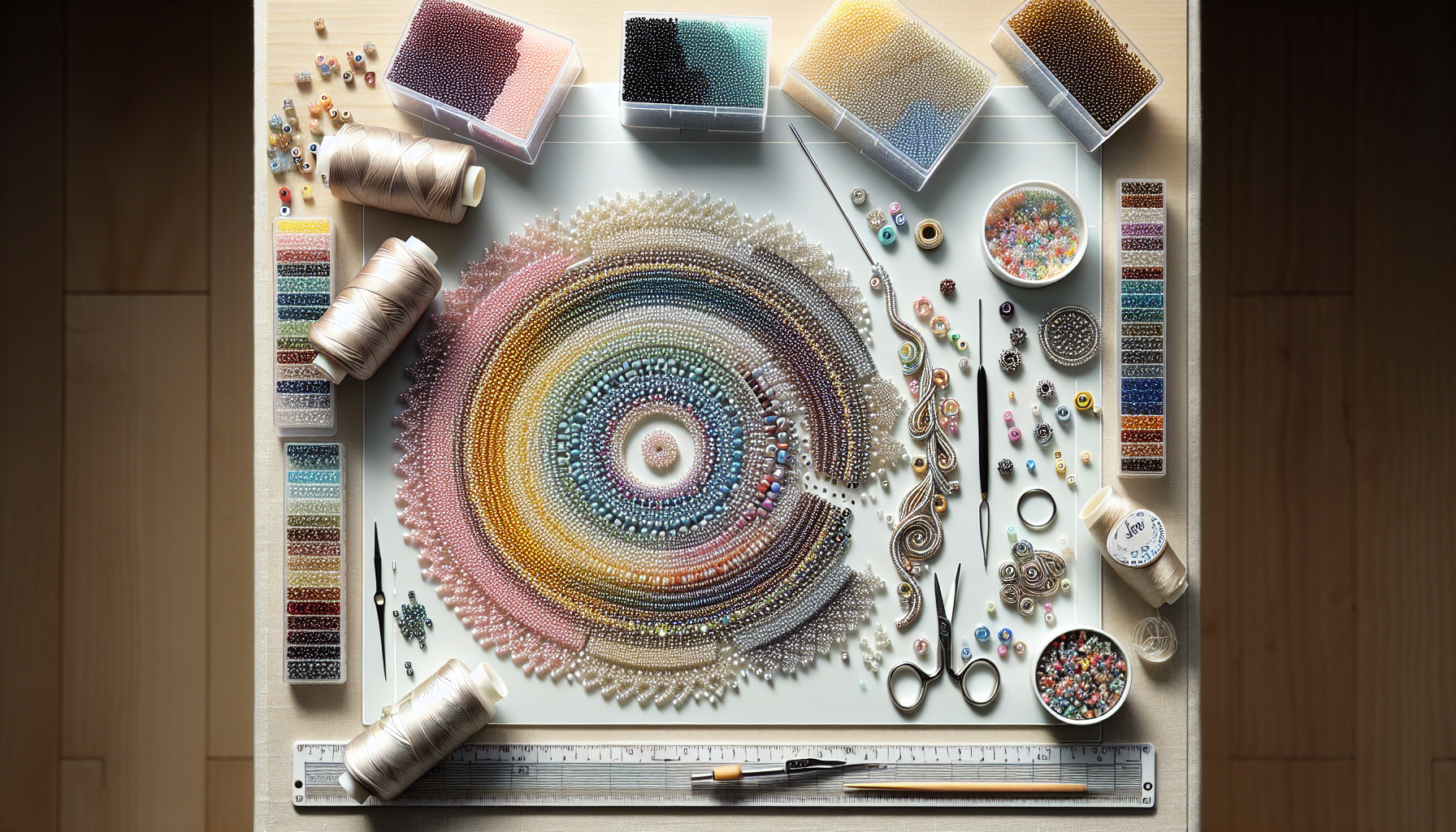
Miyuki Seed beads 11/0 are small glass beads from the Japanese manufacturer Miyuki, renowned worldwide for their extreme precision. When you see truly sharp bead patterns in, for example, peyote bracelets, woven bracelets, or delicate earrings, there's a good chance that Miyuki 11/0 were used. The size 11/0 simply means that approximately 11 beads fit on an inch in a row – in practice, these are beads of about 2 mm with a generous hole for multiple thread passes.
What distinguishes Miyuki 11/0 from other seed beads?
The main difference between Miyuki and simpler seed beads lies in their uniformity:
-
Exact shape: The beads are almost identical in height and width, ensuring that rows lie perfectly even.
-
Consistent hole size: The relatively large hole makes it easier to pass the needle and thread through multiple times – important for peyote, brick stitch, and bead embroidery.
-
High-quality glass material: Colors and coatings hold up better over time compared to cheaper alternatives, especially with frequent use of the jewelry.
In many guides, uniform size is mentioned as a "nice to have," but in practice, it makes an enormous difference. A bracelet stitched with mixed, uneven beads can easily get dents, gaps, and a "wavy" appearance. With Miyuki Seed beads 11/0, the pattern becomes denser, more graphic, and immediately looks more professional – even if you are a beginner.
Why is size 11/0 a favorite among jewelry makers?
Size 11/0 is something of a standard size in the bead world: small enough for detailed patterns, but still manageable enough to handle easily. It works perfectly for:
-
Peyote and brick stitch: Clear, sharp patterns and lettering.
-
Bead weaving (loom): Even rows that resemble woven fabric.
-
Bead embroidery: Dense, elegant outlines around cabochons and motifs.
By choosing Miyuki 11/0 as a base, you can build an entire "wardrobe" of jewelry: from delicate everyday bracelets to elaborate statement earrings, with the same reliable quality in every tiny stitch.
Why buy Miyuki Seed beads 11/0 at Hilmaspyssel.se?
Once you've decided to work with Miyuki Seed beads 11/0, the next question is often: where can I buy them most conveniently in Sweden? Here, Hilmaspyssel.se stands out by combining a wide assortment, clear product information, and fast deliveries – something many Swedish jewelry makers request in forums and blogs.
Advantages of buying Miyuki 11/0 from a Swedish online store
Choosing a Swedish retailer like Hilmaspyssel.se offers several concrete benefits:
-
Fast delivery within Sweden: Shorter shipping time means you can start your project almost immediately.
-
No customs or complicated import: You avoid unexpected fees and slow customs processing.
-
Swedish-speaking customer service: Easier to get help with sizes, color codes, and complementary materials.
-
Carefully selected assortment: Focus on quality brands like Miyuki, tailored to the needs of Swedish beaders.
Furthermore, the product pages at Hilmaspyssel.se are designed to make your choice easier: each color has a clear Miyuki color code, information about the finish (e.g., opaque, metallic, matte), quantity per package, and sharp close-up images that show the beads' true character. This reduces the risk of incorrect purchases – a problem many experience when ordering from foreign sites.
How to find the right Miyuki Seed beads 11/0 on Hilmaspyssel.se – step by step
A practical way to utilize the store's structure is to work methodically:
-
Go to the "Miyuki Seed Beads 11/0" category via the menu or search function.
-
Filter or browse by color tone (e.g., blue/green, neutral, metallic) depending on your project.
-
Open the product page and note the color code, finish, and package size in your project plan or notebook.
-
Compare several shades within the same color family by keeping multiple tabs open – pay special attention to how the beads look in zoomed images.
By working this way, you gradually build your own "favorite list" of Miyuki 11/0 colors at Hilmaspyssel.se. This makes future orders faster and reduces the risk of being without the right color when creativity strikes. Hilmaspyssel becomes not just a store, but your long-term partner in bead crafting.
Understanding Sizes, Shapes, and Finishes of Miyuki Seed beads 11/0
Understanding how size, shape, and surface interact is key to truly utilizing Miyuki Seed beads 11/0 to their full potential. Many guides mention measurements and names, but few explain how it actually affects your finished jewelry. Here, we'll go through the basics – with a focus on how you can make better design decisions when shopping at Hilmaspyssel.se.
What does size 11/0 mean in practice?
-
Size 11/0: corresponds to approximately 2.0 mm in diameter, with a generous hole that accommodates several passes of thread.
-
Uniform size: ensures that patterns in, for example, peyote, brick stitch, and bead weaving become straight and clear.
-
Affects thread choice: you can often use both FireLine, Nymo, and Miyuki thread and still pass multiple times through the same bead.
In practice, this means that 11/0 is small enough for detailed patterns, but not so small that it becomes difficult for beginners to handle. For bracelets, earrings, and delicate woven bands, 11/0 is the most commonly used standard size, which also makes it easy to follow patterns you find online.
Shapes and different finishes – how they affect your design
-
Round seed beads 11/0: the classic for all-purpose use, from bead weaving to stitched ropes and edging.
-
Delica vs. regular seed beads (if combining): Delicas are cylindrical and create a super-straight pixel effect; round beads give a softer, more organic impression.
-
Surfaces and finishes at Hilmaspyssel.se:
-
Opaque: strong, clear colors – perfect base beads.
-
Transparent: more depth and luster, beautiful in layered effects.
-
Matte: gives a boho and vintage feel, softer expression.
-
Metallic & galvanized: luxurious, metallic look – good for details or framing.
-
AB / iris: shimmering surface that catches the light, perfect for festive jewelry.
A practical way to become confident in your choices is to create your own color chart: string up small sample rows of your most common Miyuki 11/0 on thread or felt, label with color code and name. This way, you can immediately see how different finishes interact – something that saves both time and money when planning larger projects and orders from Hilmaspyssel.se.
How to choose the right Miyuki 11/0 for your jewelry project
Choosing the right Miyuki Seed beads 11/0 is often what determines whether your jewelry feels homemade or exclusive. Size 11/0 works for almost all techniques, but which beads you choose depends on the project, thread, technique, and color palette. In this section, we'll go through how to think strategically – before you click home your beads from Hilmaspyssel.se.
Adapt beads to project and technique
-
Finer bracelets and necklaces: Choose classic round Miyuki 11/0 in even, calm colors (e.g., metallic or semi-matte). They provide smooth edges and a supple feel around the wrist or neck.
-
Earrings and rings: For clear outlines and graphic patterns, contrast colors are perfect – e.g., black/white, gold/turquoise, or silver/navy blue.
-
Bead embroidery on fabric or leather: Here, opaque and semi-matte beads work very well, as they lie stably and provide rich coverage.
-
Match thread and needle: For dense patterns in peyote or brick stitch, many use FireLine or Miyuki beading thread in combination with a beading needle size 10–12 to easily pass multiple times through the same 11/0.
A practical way to test is to stitch a small "sample piece" in the correct technique with the beads you are considering. Then you can immediately see if the luster, color, and texture suit your intended jewelry.
Color combinations that work – concrete example
To avoid color anxiety before your next project, you can use a simple color formula:
-
1–2 base colors: e.g., matte black and light silver-plated.
-
1 main accent: e.g., petrol, mustard yellow, or old rose.
-
1–2 small accents: e.g., a metallic or AB-finish for extra vibrancy.
Imagine a harmonious peyote bracelet with Miyuki 11/0 from Hilmaspyssel.se where you combine: matte black as background, light "galvanized" silver as outline, and a muted petrol as the main color in the pattern. Add a discreet AB shade in a few bead rows – then you get just the right amount of shimmer without the bracelet feeling cluttered.
Always save the color codes from Hilmaspyssel.se (e.g., on your phone or on a label). Then you can easily reorder the same shades when you find a favorite design you want to make more of or develop into matching earrings and necklaces.
Popular Jewelry Techniques with Miyuki Seed beads 11/0
Miyuki Seed beads 11/0 are almost a standard in advanced bead crafting, precisely because they work so well in many different techniques. In this section, we'll go through the most appreciated methods among Swedish beaders – and how to utilize the beads' precision to achieve a result that looks store-bought, even though it's handmade at the kitchen table.
Techniques where Miyuki 11/0 truly shine
-
Peyote stitch (even/odd count): Perfect for bracelets, patterned "cuffs," and small tabs for earrings. The uniform size of Miyuki 11/0 ensures that the rows interlock neatly without gaps.
-
Brick stitch (especially for earrings): Often used for trendy "miyuki earrings" with fringes, triangles, and graphic motifs. The beads' equal height makes the outlines sharp.
-
Loom weaving (bead weaving on a loom): Ideal for narrow, detailed bracelets and keychains where each bead must be placed in exactly the right spot.
-
RAW and spiral ropes: Right Angle Weave and various spiral stitches become more stable and flexible when all beads have the same dimensions.
When choosing a technique, it's smart to also plan thread, needle, and clasp at the same time. At Hilmaspyssel.se, you'll find both FireLine, Miyuki beading thread, jewelry clasps, and ear wires that have been tested together with Miyuki 11/0 – something many simpler guides fail to highlight.
Concrete beginner projects with Miyuki 11/0
To get started immediately with these techniques, you can try:
-
Beginner peyote bracelet: Choose two contrasting colors of Miyuki 11/0, a spool of FireLine 0.15–0.17 mm, and a magnetic clasp. Stitch a simple striped pattern with even count peyote – a perfect first project that still looks advanced.
-
Brick stitch earrings with fringe: Combine 3–4 colors of 11/0, ear wires, and some small chain pieces. Start with a small triangle in brick stitch and then add fringe for a boho look.
-
Narrow bead-woven bracelet: Use a simple loom and 3 colors of Miyuki 11/0. Create a geometric pattern, e.g., chevron or checkerboard, where the precision of the beads is truly visible.
By starting with these projects, you'll quickly get a feel for how Miyuki 11/0 behave in different stitches and how tightly you should pull the thread. Once the basics are in place, it becomes much easier to then design your own patterns and combine techniques – for example, a peyote-woven central piece with brick stitch fringes or woven bracelets with elements of RAW for extra texture.
Project Ideas with Miyuki Seed beads 11/0 from Hilmaspyssel.se
Miyuki 11/0 are perfect when you want to go from inspiration to finished jewelry without hassle. In this section, you'll get concrete project ideas based on techniques and materials often recommended in top articles – but adapted to the assortment at Hilmaspyssel.se and Swedish conditions.
1. Simple two-color peyote bracelet
-
Materials: Miyuki 11/0 in two contrasting colors, e.g., opaque black + metallic gold, beading thread/FireLine, needle, small clasp.
-
Setup: Stitch a classic even count peyote pattern with simple stripes or a checkerboard pattern.
-
Time & difficulty: approx. 1–2 hours, beginner level.
-
Tip: Choose one matte and one glossy color for extra depth – search for different finishes in the Miyuki 11/0 category at Hilmaspyssel.se.
This project is perfect as a first contact with both peyote and Miyuki beads. You learn how the uniform size makes the pattern "lock" neatly without gaps, and you quickly get a wearable result.
2. Boho earrings and personalized accessories
- Boho earrings in brick stitch:
- Use 3–5 colors of Miyuki 11/0 in earthy tones (e.g., turquoise, copper, cream, petrol).
- Build a small triangle in brick stitch and finish with fringe of seed beads.
- Combine with ear hooks, rings, and chains from Hilmaspyssel.se.
- Narrow bead-woven bracelet:
- Weave a graphic pattern on a bead loom with 11/0 in 3 colors (base + two accent colors).
- Finish with an adjustable macrame clasp or a ready-made magnetic clasp.
- Keychain or bag charm with initial:
- Create a small bead-woven tab with a letter motif in Delica/seed 11/0.
- Attach to a keyring or carabiner hook from Hilmaspyssel.se.
By combining Miyuki 11/0 with the store's other jewelry components, you get complete projects that feel well-thought-out and personal, while maximizing the beads' precision.
Practical Tips for Storing, Sorting, and Purchasing Miyuki Seed beads 11/0
Building a collection of Miyuki Seed beads 11/0 is incredibly fun – but without good storage and smart purchases, it can quickly become messy and expensive. In this section, you'll get concrete, proven strategies that many experienced beaders use, adapted for those who shop at Hilmaspyssel.se.
Storage and smart sorting of Miyuki 11/0
Here's how you can keep your small beads organized:
-
Sealable jars and bead boxes: Stackable jars or bead boxes with many small compartments make it easy to see all colors at once.
-
Pill organizers and small boxes for projects: Have a separate "project box" where you only put the Miyuki 11/0 that belong to ongoing jewelry pieces – reduces spills and searching.
-
Labeling with Miyuki color code: Write the color code, color name, and finish on labels and attach them to the jar. Then you can easily reorder the exact same beads from Hilmaspyssel.se.
An extra tip is to sort by color groups (neutrals, warm, cool, metallic) instead of just by number. This makes it quicker to pick out harmonious combinations when designing new bracelets or earrings.
Build a sustainable basic wardrobe and plan your purchases
To both save money and always have the "right bead at home," you can think strategically about purchases:
-
Start with basic colors: Black, white, silver, gold, and some transparent neutral – colors you use in almost all projects.
-
Add accent colors: Choose 4–6 favorite shades (e.g., turquoise, petrol, rose gold, dark green) that suit your style and your target audience if you sell jewelry.
-
Analyze your favorites: When a color starts to run out often – make it an "always in stock" color on your personal list.
-
Compare packages and follow campaigns: Look at grams/quantity in the product description at Hilmaspyssel.se and take advantage of campaigns or ready-made sets to replenish your basic assortment cost-effectively.
Finally, create a shopping list per project where you note down: technique, color codes, estimated quantity/grams, and any complementary parts (clasps, chain, ear hooks). Keep the list next to you when shopping at Hilmaspyssel.se to reduce the risk of forgetting something – and make a more thoughtful, budget-smart purchase every time.
Frequently Asked Questions (FAQ)
Q: What does the size 11/0 on Miyuki Seed beads actually mean?
A: 11/0 is an international size designation for small seed beads. For Miyuki, it means the beads are approximately 2 mm in diameter with a relatively generous hole, allowing you to thread multiple strands of wire through the same bead. Exact measurements can vary slightly between different manufacturers, but Miyuki is known for its consistent size and shape, which provides even, tight patterns – perfect for bead weaving, peyote, and brick stitch.
Q: What is the difference between Miyuki 11/0 and cheaper seed beads from craft stores?
A: The biggest difference is precision and uniformity. Cheaper beads can vary greatly in height, width, and hole size, making it difficult to achieve straight edges and symmetrical patterns. Miyuki 11/0 are machine-made with very tight tolerances, resulting in:
-
Even shape – no "bumpy" beads that disrupt the pattern
-
Larger, consistent hole – easier to work with multiple thread passes
-
Better finish – color and coating last longer with normal use
This is particularly noticeable in narrow bracelets, earrings, and geometric patterns.
Q: What threads work best with Miyuki Seed beads 11/0?
A: For most techniques, the following are good choices:
-
FireLine or similar braided fishing line – ideal for peyote, brick stitch, and geometric jewelry where you want stability
-
Miyuki Beading Thread or Nymo – good for bead weaving, embroidery, and softer bracelets
-
Polyester/nylon thread (e.g., S-Lon/C-Lon) – suitable for macrame and woven details with 11/0
As a rule of thumb: the tighter the pattern and the more passes through the same bead, the thinner and stronger the thread (e.g., FireLine 0.006”).
Q: How do I prevent the color from wearing off metallic and galvanized beads?
A: Some finishes are more delicate than others. For longer durability:
-
Choose "Duracoat" or "Permanent Finish" where available – they are designed for better wear resistance
- Use matte or opaque in exposed areas (e.g., the underside of a bracelet) and metallic as an accent
- Avoid perfume, hairspray, and strong cleaning agents directly on the jewelry
- For bracelets worn daily: combine metallic 11/0 with more durable basic colors from Hilmaspyssel.se
Q: How many Miyuki 11/0 beads do I need for a bracelet?
A: It depends on the width and technique, but approximate guidelines are:
- Narrow peyote bracelet (approx. 1 cm wide, 16–18 cm long): 500–800 beads
- Bead-woven bracelet, 5–7 beads wide: 300–600 beads
- Fringed brick stitch earrings: 150–300 beads per pair
A typical small bag (e.g., 10 g) often suffices for at least one bracelet and a pair of earrings, depending on the design. The product pages on Hilmaspyssel.se specify weight/quantity so you can plan your purchases more accurately.
Q: How do I best start if I am completely new to Miyuki 11/0?
A: Start small and structured:
- Choose 2–3 basic colors + 1 accent color in Miyuki 11/0 from Hilmaspyssel.se.
- Buy a good needle (size 10–12) and a spool of FireLine or Miyuki thread.
- Follow a simple peyote or brick stitch tutorial (preferably a narrow bracelet or small earrings).
- Write down the color codes you use so you can easily order more.
This way, you'll learn how the beads behave, approximately how many you need, and what style you prefer – without buying a mountain of materials from the start.
Create professional jewelry with the right Miyuki beads – your next creative level
Miyuki Seed beads 11/0 combine Japanese precision with creative freedom, making them an obvious choice for both hobbyists and experienced jewelers. In this guide, you've gained a comprehensive overview: what distinguishes Miyuki from other seed beads, how size, shape, and finish affect the result, and how to choose the right colors, threads, and techniques for your specific project. Along with concrete project ideas and smart tips for storage and purchasing, you now have a solid foundation for creating jewelry that looks both thoughtful and professional.
The next step is to translate inspiration into action. Visit the Miyuki Seed beads 11/0 category on Hilmaspyssel.se, select some basic colors, and complement them with 1–2 accent colors that bring you joy. Start with one of the project suggestions – for example, a simple peyote bracelet – and then let your own patterns emerge as you get to know the beads. With the right materials, clear color codes, and a reliable Swedish store behind you, you can build a personal bead wardrobe and progressively develop your own unique jewelry style.