


Miyuki Cubes from Hilmaspyssel.se – Japanese glass beads for creative jewelry
Do you want to create jewelry that looks both professional and unique, but feel unsure about which beads to choose? Then Miyuki Cubes, the cube-shaped Japanese glass beads, are a perfect choice. They are known for their precision, color stability, and luxurious look – qualities that make a big difference in everything from simple bracelets to advanced bead weaving.
In this article, we'll guide you on how to best use Miyuki Cubes and how you can easily buy Miyuki beads online from the Swedish retailer Hilmaspyssel.se. You'll get practical tips on choosing size and color, basic techniques, inspiring project ideas, and common mistakes to avoid. The goal is for you to feel confident in choosing the right beads and getting started with jewelry making today.
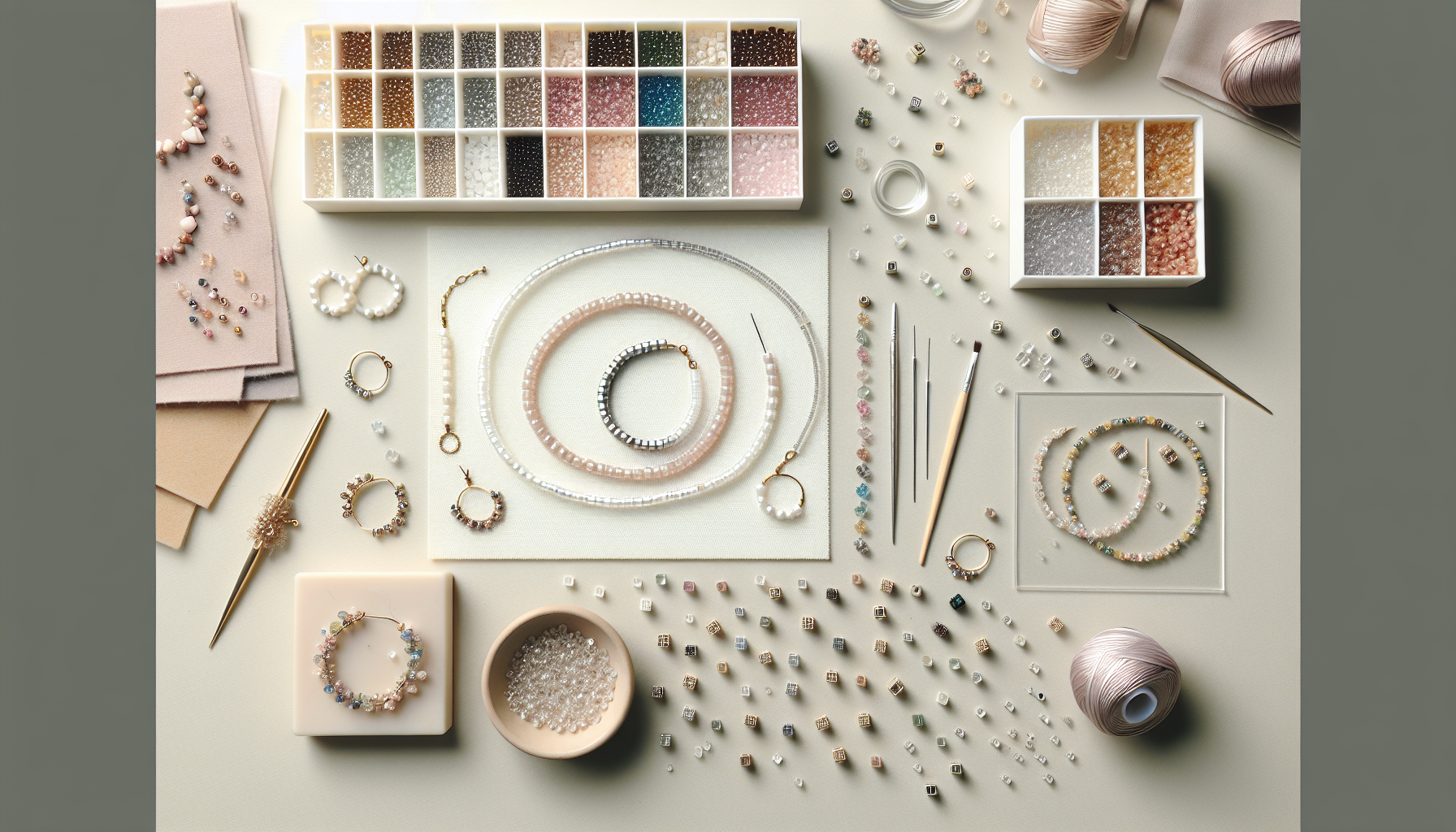
Miyuki Cubes are small, perfectly shaped cubic Japanese glass beads that have become a favorite among both hobby and professional jewelry makers. They are manufactured by the well-known Japanese brand Miyuki, which is renowned for its extremely high precision, consistent sizes, and color-stable finishes. This combination makes Miyuki Cubes especially valued in everything from simple jewelry making to advanced bead weaving and bead weaving projects.
What distinguishes Miyuki Cubes from ordinary seed beads?
Compared to classic rocaille beads, Miyuki Cubes have several distinct advantages:
-
Cubic shape: The straight edges give a graphic, modern look and create clear lines in bracelets, necklaces, and bead-woven patterns.
-
High precision: All cubes are very uniform, which makes patterns exact, without gaps or crooked rows.
-
Generous hole size: The relatively large opening allows the thread to pass through multiple times – perfect for techniques like peyote, brick stitch, and loom work.
-
Color stability: Miyuki is known for durable coatings and shades, meaning your jewelry will retain its appearance longer with proper handling.
This combination of shape and quality gives your jewelry a distinct "professional" look, even if you're a beginner.
Sizes of Miyuki Cubes and how they affect design
Miyuki Cubes are available in sizes such as 1.8 mm, 3 mm, and 4 mm, and the choice affects both appearance and working feel:
-
1.8 mm Cubes – suitable for detailed work, slender bracelets, discreet earrings, and fine bead weaving where you want a dense, fabric-like result.
-
3 mm Cubes – a popular all-round size for bracelets, necklaces, and keychains; clear structure but still relatively delicate.
-
4 mm Cubes – give a stronger, more graphic expression and are perfect for beginners or statement jewelry where each bead gets to stand out.
The cubic shape also means that light reflects differently than on round beads, giving extra life to matte, transparent, and metallic colors alike. By understanding the difference between sizes, it becomes easier to choose the right Miyuki Cubes for your next project from, for example, Hilmaspyssel.se, and achieve exactly the result you envisioned.
Why you should buy Miyuki Cubes from Hilmaspyssel.se
When you want to buy Miyuki Cubes online in Sweden, there's a big difference in where you shop. Hilmaspyssel.se is a specialized Swedish bead shop that focuses on quality materials for jewelry making, with a particularly wide assortment of Miyuki beads. This means that as a beader, you don't have to compromise on colors, sizes, or quality – everything you need for your cube-shaped Japanese glass beads is gathered in one place.
Advantages of choosing Hilmaspyssel.se for Miyuki Cubes
Hilmaspyssel.se distinguishes itself by combining a large selection with personal, Swedish service:
-
Wide range of Miyuki Cubes: Many colors, finishes, and sizes – perfect when you're following international patterns or creating your own designs.
-
Fast delivery within Sweden: Short waiting time means you can quickly get started with your projects, even with spontaneous ideas.
-
Matching Miyuki series: Easy to complement your Cubes with Miyuki Delica, Round, Drops and other bead types for a consistent finish.
-
Convenient smaller packages: If you buy several colors, you can build up a palette without committing to large quantities.
Many top articles mention the importance of buying genuine Miyuki beads from reliable retailers. By choosing Hilmaspyssel.se, you minimize the risk of uneven copies and get consistently high quality in all your projects.
How to find the right Miyuki Cubes on Hilmaspyssel.se
To make shopping easy, Hilmaspyssel.se has clear categories and filters. You can sort by size, color group, and surface type (matte, metallic, transparent, etc.). A smart approach is to first decide on your project – for example, a bead-woven bracelet – and then:
- Choose a basic size (often 3 mm for bracelets, 1.8 mm for more detailed work).
- Pick 2–3 base colors (e.g., black, silver, a neutral tone).
- Add 1–2 accent colors for contrast or seasonal feel.
Feel free to create a reusable shopping list with your favorite Miyuki Cubes colors at Hilmaspyssel.se. That way, you can quickly restock when something runs out and always have a well-thought-out color palette ready for new jewelry ideas.
Choosing the right size and color of Miyuki Cubes for your project
Choosing the right size and color for your Miyuki Cubes is crucial for how your jewelry is perceived – in terms of style, comfort, and durability. Many beaders get stuck just buying "pretty colors," but the secret behind those truly professional bracelets and earrings lies in thoughtful choices of size, color scheme, and finish. Here, we'll go through how to think, with practical examples you can easily apply to real projects using beads from Hilmaspyssel.se.
How the size of Miyuki Cubes affects your design
-
1.8 mm Cubes – for details and delicate patterns
Perfect for thin bracelets, delicate earrings, and bead weaving where you want a high level of detail and a dainty look. Good when combining with Delica 11/0.
-
3 mm Cubes – the most all-round size
Provides clear structure without being bulky. Ideal for bracelets, wrap bracelets, and graphic patterns in bead weaving. A good first choice for most projects.
-
4 mm Cubes – statement and quick projects
Excellent when you want volume, clear lines, and quick impact. Suitable for chunkier bracelets, keychains, bag charms, and beginner-friendly jewelry.
Think of it this way: the larger the bead, the quicker the project and the more "graphic" the impression. For a subtle everyday bracelet, for example, you can choose 3 mm Cubes in two colors and alternate them in straight rows for a simple but professional look.
Color, finish, and practical color palettes
Color is what first catches the eye – but also what most often causes hesitation when buying online. A good way to avoid mispurchases is to start with ready-made, well-thought-out palettes:
-
Neutral bases: choose 1–2 shades of gray, beige, or metallic that you can use in many projects. Perfect for a jewelry capsule wardrobe.
- Accent colors by season:
- Spring: soft pastels (mint, light pink, light lavender)
- Summer: bright colors (turquoise, coral, lime)
- Autumn: rich tones (copper, petrol, burgundy)
- Winter: cool metallics and black/white for graphic contrasts
- Surface and finish:
-
Shiny/transparent gives more light and lightness
-
Matte feels more exclusive and "designer"
-
Galvanized/metallic gives a luxurious feel but should be used as an accent to last longer with heavy wear
A practical tip is to create a color chart for yourself: note which color codes from Hilmaspyssel.se you like and build small color combinations in notes or on paper before ordering. Also remember that screens can display colors slightly differently – so read product descriptions carefully (matte, transparent, metallic, etc.) and start with smaller quantities when testing new color tones. This way, you'll gradually build up a well-thought-out collection of Miyuki Cubes that work together in many different projects.
Basic techniques – how to get started with Miyuki Cubes
To get the most out of your Miyuki Cubes, it's smart to start with some tried-and-true basic techniques. The cube-shaped Japanese glass beads behave a little differently than round seed beads, and you can leverage that to create extra clear patterns and graphic surfaces. Here we'll go through techniques often recommended in top articles – but with concrete tips adapted to the assortment you'll find at Hilmaspyssel.se.
Especially suitable for structured beadwork techniques
-
Peyote stitch with cubes: The even size of Miyuki Cubes creates a straight, "brick-like" surface. Perfect for bracelets with letters, simple geometric patterns, or striped designs.
-
Brick stitch around pendants and cabochons: The flat sides allow the cubes to sit tightly together, creating a clear edge and stable bezel around, for example, glass or stone cabochons.
-
Bead weaving (loom work): On a bead loom, the cube shape becomes extra distinct. You get sharp lines, which makes Miyuki Cubes ideal for pixel-inspired motifs, name bracelets, and graphic patterns.
It's a good idea to start with a small test swatch of 5–10 bead rows in peyote or on a bead loom. This will allow you to get a feel for how your Cubes, for example in 3 mm from Hilmaspyssel.se, behave with different threads before committing to a larger project.
Right tools, thread choice, and your first simple project
To avoid the most common beginner problems (too thick thread, wrong needle, cracked beads), it's important to match your materials with your Miyuki Cubes:
-
Beading needles: Choose fine beading needles in size 10–12. They pass easily through the cubes' generous holes multiple times without getting stuck.
- Thread types:
- For bracelets and bead weaving: Fireline 0.10–0.12 mm or similar braided fishing line provides strength and shape stability.
- For more flexible projects: Nymo, Miyuki thread, or other nylon thread works well, especially for brick stitch and edging.
- First simple bracelet:
- String straight rows of 3 mm Miyuki Cubes onto Fireline.
- Stitch in simple peyote or just straight rows between two clasp components.
- Stick to two colors initially (e.g., a base color + an accent color from Hilmaspyssel.se) to clearly see how the pattern develops.
An extra practical tip is to always make your thread longer than you think you'll need and to test the thread tension: the work should be firm but not so tight that it bows. By combining the right technique, the right thread, and quality beads like Miyuki Cubes from Hilmaspyssel.se, you'll create jewelry that looks both professional and durable right from the start.
Inspiring jewelry projects with Miyuki Cubes – from beginner to advanced
Miyuki Cubes are perfect when you want to create jewelry that feels both modern and graphic, without the projects becoming too complicated. Thanks to their uniform cube shape, you get clear lines and stylish surfaces – something often highlighted in top-rated guides on beaded jewelry. In this section, you'll get concrete project ideas, from super-simple bracelets to advanced cuffs, where you can directly use the assortment of Miyuki Cubes from Hilmaspyssel.se.
Simple projects for beginners – quick results and low threshold
-
Straight elastic bracelet with Miyuki Cubes + spacer beads
String 3–4 mm Cubes onto elastic thread and alternate with small metal or glass spacer beads. Approximately 40–60 beads are enough for a bracelet depending on wrist size. -
Dangling earrings with 1–3 Cubes on a headpin
Create minimalist earrings by stringing 1–3 cubes onto a headpin, making a loop, and attaching to ear hooks. Perfect for leftover beads and color testing. -
Simple charm for a keychain
Make a short row of Cubes on wire or thread, attach to a small carabiner clasp, and clip onto your keychain or bag.
For an extra professional look: choose a base color (e.g., matte black or silver-lined crystal) and add an accent color. Everything you need – elastic thread, ear hooks, headpins, and Miyuki Cubes – can be found conveniently at Hilmaspyssel.se, making it easy to get started without specialized knowledge.
Projects for intermediate to advanced levels – more technique, bigger wow factor
When you feel more confident, you can elevate your skills with projects that leverage the graphic expression of the cubes:
-
Wrap bracelet with leather strap and Miyuki Cubes
Sew 3 mm Cubes along a folded leather strap with strong thread (e.g., Fireline). The result is a trendy bracelet that can be wrapped several times around the wrist. -
Geometric keychain or bag charm in bead weaving
Use bead weaving technique or loom work to create small grid patterns, letters, or symbols with 1.8 or 3 mm Cubes. -
Cuff bracelet in bead weaving
Create a wider bracelet in bead weaving where Miyuki Cubes are combined with Delica beads for extra texture. Plan the pattern on graph paper before you start. -
Statement necklace
Build blocks of cubes in various metallic and matte colors and combine with crystals and chain for an exclusive look.
A practical tip is to make small test pieces first: try out color combinations and patterns with 10–20 beads before starting your larger project. Feel free to use Hilmaspyssel.se as an "idea bank" – compare color series, finishes (matte, metallic, transparent), and sizes, and then create your own small project list where you write down: chosen technique, color codes for Miyuki Cubes, complementary materials, and estimated bead quantity. This way, every order will be well-thought-out, and you'll get more out of both your time and materials than most standard guides describe.
Combine Miyuki Cubes with other beads and jewelry materials
Combining Miyuki Cubes with other beads is one of the easiest ways to make your jewelry look more thoughtful and professional. The cube-shaped Japanese glass beads add structure, rhythm, and shine that elevate both simpler glass beads and more exclusive materials like crystals and natural stones. At Hilmaspyssel.se, you'll find a wide selection of both Miyuki beads and complementary components, making it easy to build harmonious designs from scratch.
Popular combinations that always work
Try building your designs around one or two main types of beads and let Miyuki Cubes be the "key ingredient" that ties everything together:
-
Miyuki Cubes + round glass beads: Use Cubes as spacer beads between 4–6 mm round beads for an airy, modern bracelet.
-
Miyuki Cubes + Miyuki Delica: Perfect in bead weaving or peyote – Delica creates a smooth background while Cubes provide relief and angular details.
-
Miyuki Cubes + natural stones: Let natural stones provide the organic and uneven, and Cubes the precise and graphic – especially attractive in necklaces and men's bracelets.
-
Miyuki Cubes + chain and metal components: Create a luxurious feel by alternating small sections of Cubes with thin chain in gold, silver, or rose gold tones.
A practical approach is to make small "test strands" on a piece of thread and try different combinations before deciding – then you'll immediately see what works together.
How to plan color and shape before you shop
To avoid mispurchases and unfinished projects, you can work with simple design trays at home. Lay out a white paper or a small tray, take out the beads you already have, and supplement with color samples from Hilmaspyssel.se (e.g., by noting color codes you like).
Consider especially:
-
Contrast – let matte natural stones meet glossy or metallic-colored Miyuki Cubes.
-
Scale – combine small Delica or seed beads with 3–4 mm Cubes for clear structure.
-
Style – a stark, geometric look with a lot of metal, or a softer boho feel with leather, wood, and stone?
By planning this way before placing your online bead order, you'll get well-thought-out projects, less waste – and significantly more enjoyable jewelry making with your Miyuki Cubes from Hilmaspyssel.se.
Common mistakes with Miyuki Cubes – and how to avoid them
Many who discover Miyuki Cubes for the first time love their uniform shape and beautiful colors – but quickly encounter problems with crooked bracelets, snapped thread, or patterns that don't quite "pop." In this section, we'll go through the most common mistakes mentioned in forums, blogs, and guides, and provide concrete, tested solutions that save both time and material.
Typical beginner problems with Miyuki Cubes
-
Incorrect thread tension: Too tight thread causes the work to bunch up and become wavy; too loose thread creates gaps between the cubes.
-
Incorrect needle and thread thickness: Too thick thread or needle makes it difficult to pass multiple times through the holes, especially in 1.8 mm Cubes.
-
Unthoughtful color choice: Too many strong colors or too low contrast makes patterns disappear.
-
Lack of size planning: Mixing different Cube sizes without structure can lead to crooked edges and uneven width.
The solution is to always start with a small test swatch. Test your thread tension on 3–4 rows before starting a whole bracelet. For Miyuki Cubes 3 mm, for example, Fireline 0.10–0.12 mm or equivalent strength Nymo thread works very well, combined with a bead needle size 10–12. Once you find a combination that glides easily through the beads without resistance, you can confidently start your real project.
How to avoid discoloration, messy patterns, and storage chaos
Another mistake rarely discussed in guides is long-term durability. Some finishes are more delicate than others. For bracelets and rings that are subject to a lot of wear, duracoat, inside color, and high-quality metallic finishes are often a safer choice than simpler coatings. At Hilmaspyssel.se, the color code and description help you see what type of finish you are buying.
To create clear, professional patterns:
-
Limit yourself to 2–3 main colors + possibly a neutral (black, white, metallic).
- Use a color wheel or choose colors based on a clear palette (e.g., “sea blue,” “earthy,” “rose gold”).
- Test combinations by laying out small piles of beads next to each other before you start stringing.
Finally: don't underestimate storage. Sort your Miyuki Cubes by size and color code in small jars or boxes, and label them clearly. This not only makes it easier to find the right beads – you also avoid mixing up similar shades, which is a common source of frustration among experienced beaders. With the right technique, thoughtful color choice, and smart organization, your projects will be both more enjoyable and more durable.
Frequently asked questions about Miyuki Cubes and Hilmaspyssel.se
Q: What is the most important thing to know before I start creating with Miyuki Cubes?
A: The most important thing is to understand that Miyuki Cubes are very precise Japanese glass beads with a uniform shape and size. This means that thread tension, needle choice, and thread type play a greater role than with simpler hobby beads. If you choose the right size (e.g., 3 mm for beginners), a thin but strong thread (like Fireline 0.12 mm), and a fine beading needle, you will immediately get a more professional result and avoid many of the most common beginner problems.
Q: Which size of Miyuki Cubes is best for beginners?
A: For most beginners, 3 mm Miyuki Cubes are a perfect start: they are easy to handle, the hole is relatively large, and they quickly build up a visible pattern. 1.8 mm gives a more detailed expression but requires more patience and better control of thread tension. 4 mm can be good for elastic bracelets and simpler jewelry where you want a clear, graphic look.
Q: How do I know which colors to order from Hilmaspyssel.se?
A: Start with three color categories when buying Miyuki Cubes online:
-
Base colors: e.g., black, white, metallic silver – things you always use
-
Accent colors: strong colors you like to wear near your face (earrings/necklaces)
-
Neutral mix: beige, gray, champagne – perfect for everyday bracelets
Look in your wardrobe and choose bead colors that match your most frequently worn clothes. On Hilmaspyssel.se, you can then filter by hue and finish (matte, glossy, metallic) to find the right shade.
Q: Which thread and needle work best with Miyuki Cubes?
A: For most projects, the following combinations work very well:
-
3 mm Cubes: Fireline 0.12–0.15 mm or Nymo B, needle size 10–12
-
1.8 mm Cubes: thinner thread (Fireline 0.10–0.12 mm), needle size 12
-
Elastic bracelets: elastic thread 0.5–0.7 mm, no beading needle needed
Keep in mind that the holes in Miyuki Cubes allow for multiple thread passes, but if you need to pass many times (e.g., in peyote), a thinner thread is usually better.
Q: How do I avoid crooked or wavy work with Miyuki Cubes?
A: Crookedness is almost always due to too tight or uneven thread tension. A simple trick is to first make a small test swatch: stitch 4–5 rows of peyote or brick stitch, relax your grip and adjust how tightly you pull the thread until the beads lie close together but are not pulled crooked. Also, use a steady work surface and avoid too long threads – rather change thread more often than struggle with 1.5 meters at a time.
Q: How can I store my Miyuki Cubes in a smart way?
A: For the best overview and durability, it is worth investing in small jars or compartment boxes. Label each compartment with size (e.g., 3 mm), color code, and possibly finish (matte, metallic, galvanized). Many beaders choose to sort by color group – e.g., blue/green, neutral, metallic – so that it is quick to set up small “design boards” when planning your next order at Hilmaspyssel.se.
Create personal favorite jewelry with Miyuki Cubes from Hilmaspyssel.se
Miyuki Cubes combine Japanese precision with creative freedom – which is why they are loved by both beginners and experienced jewelry makers. In this guide, you have received a complete overview of what cube-shaped Miyuki beads are, how to choose the right size and color, which techniques are best suited, and concrete project ideas. You have also seen how you can avoid common mistakes and how Hilmaspyssel.se helps you with a wide range of Miyuki Cubes and complementary beads online.
Now it's your turn to put inspiration into practice. Start with a small project – for example, a simple bracelet or a pair of earrings – and choose 2–3 colors of Miyuki Cubes that match your style or the season. Create a shopping list, compare colors and materials, and let Hilmaspyssel.se be your go-to bead store online. The more you experiment with color combinations, techniques, and different Miyuki beads, the faster you will find your own unique expression in jewelry making with Miyuki Cubes.