


Other Beads and Components at Hilmaspyssel.se – How to Elevate Your Jewelry to the Next Level
Have you ever felt that your handmade jewelry looks “just okay,” but lacks that special something? Often, it's beads and components – especially the more unique varieties in the "Other Beads and Components" category at Hilmaspyssel.se – that make the big difference between simple and truly professionally designed jewelry.
In this guide, we'll go through what beads and components actually are, why the "other" category is a creative treasure trove, and how you can use decorative spacer beads, connectors, and specially shaped findings to create more balanced, personal, and durable jewelry. You'll get concrete design ideas, technique tips, and buying advice directly linked to the assortment at Hilmaspyssel.se, so you can quickly turn inspiration into finished bracelets, necklaces, and earrings.
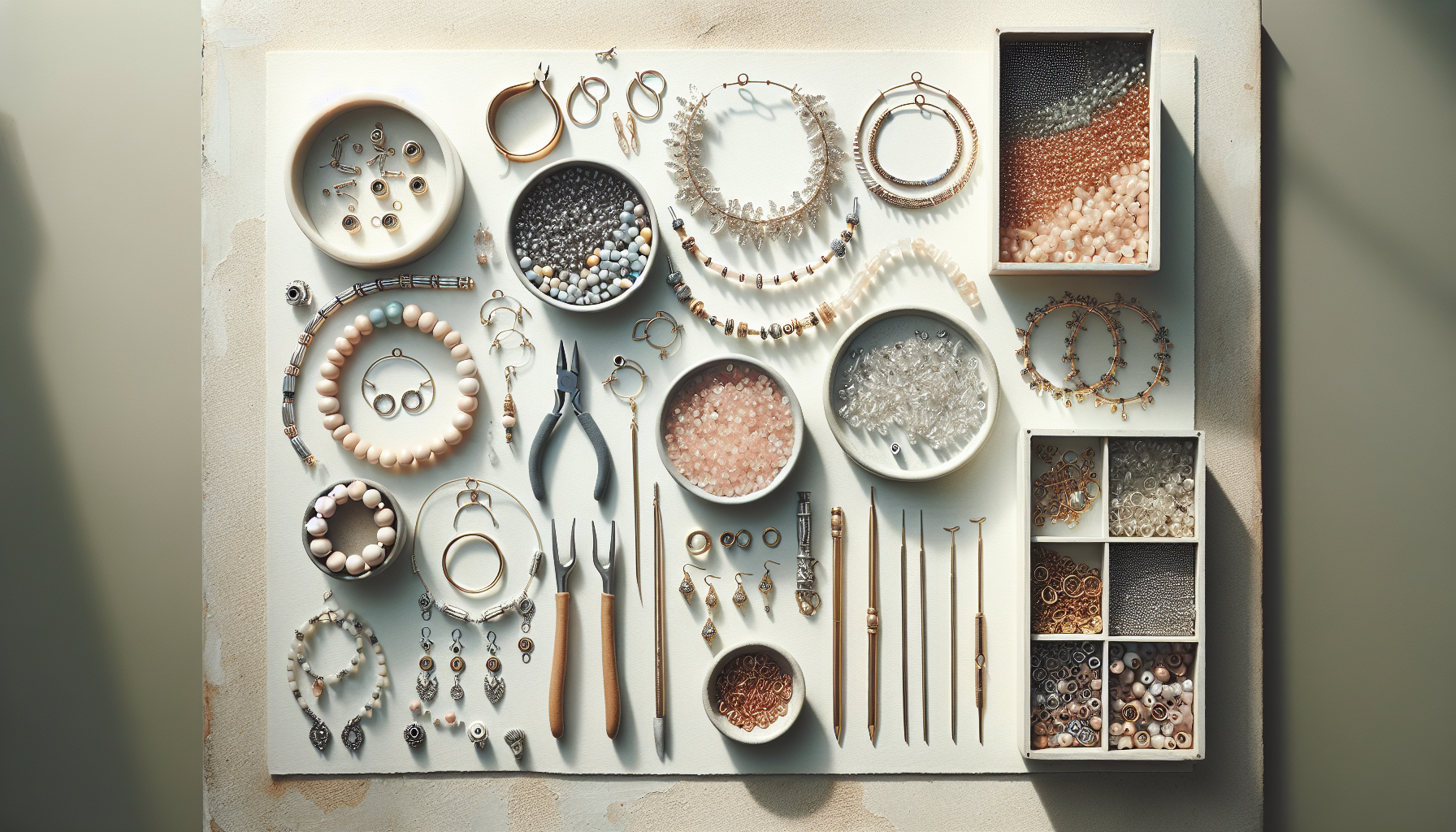
As you delve into jewelry making, you'll quickly discover how crucial beads and components are to the overall impression. They connect beads, create distance, provide structure – and can instantly transform a simple bracelet into an elaborate piece of jewelry. At Hilmaspyssel.se, these are gathered in several categories, where "Other Beads and Components" is the most playful and surprising. This is where all those slightly different, hard-to-place but incredibly useful parts end up.
What exactly is meant by beads and components and "other"?
Basically, a component is a smaller jewelry part placed between beads or components to create rhythm, spacing, or decoration. But not all components fit into standard categories like "rondelles," "bead caps," or "spacers." That's why there's a category called Other Beads and Components – a gathering place for creative special parts.
-
Specially shaped spacer beads: for example, flowers, leaves, or small figures that both create distance and become eye-catchers.
-
Decorative rings: rings and links that can be used both as a component and as a design focus in themselves.
-
Small connectors: parts with multiple loops that connect chains, threads, or pendants at different levels.
-
Symbol components: hearts, stars, infinity signs, crosses, and other symbols that add a personal message.
By understanding these subcategories, it becomes much easier to see how you can use them to elevate your own jewelry.
Why "Other Beads and Components" is a creative treasure trove
What makes this particular category at Hilmaspyssel.se so valuable is the combination of breadth and surprise. Here you'll find parts that aren't always visible in the basic assortment of other webshops – perfect when you want to create jewelry that doesn't look like everyone else's. Many experienced jewelry makers actually start their design process in the "Other" category to let an unusual component set the tone for the entire project. By regularly checking here, you can discover new shapes, symbols, and structures that open up entirely new design ideas – without having to replace your entire existing bead stock.
Different types of beads and components in the "Other" category
The category "Other Beads and Components" at Hilmaspyssel.se collects all those special little details that don't fit into the classic compartments – but often make the biggest difference in a piece of jewelry. Here you'll find everything from delicate spacer beads to eye-catching decorative components that give your design a unique character. To choose correctly, it's important to understand both material, shape, and practical properties such as size and hole diameter.
Materials and shapes – the foundation of your decorative components
Different materials give entirely different expressions and feelings to your jewelry components:
-
Metal (silver-colored, gold, bronze, rose gold): Classic, durable, and easy to match with most things. Perfect as a base for bracelets and necklaces.
-
Acrylic and resin: Lightweight, often colorful, and affordable. Good when you want to create larger jewelry without it becoming heavy.
-
Glass and crystal: Provides luxurious shine and is particularly suitable for party and wedding jewelry.
-
Antiqued metals: Creates a vintage or boho feel and hides wear better than highly polished metal.
In terms of shape, you'll find, among other things, flowers, leaves, hearts, stars, spirals, filigree details, geometric shapes, as well as small connectors and frames. A simple round bead can become something entirely different when combined with a detailed flower-shaped component or a stylish, square spacer bead.
Size, hole diameter, and clever use in design
When choosing special components from Hilmaspyssel, size and hole diameter are crucial for how they function in practice:
-
Small components (2–4 mm): Perfect between smaller beads, providing structure without overpowering. Good for discreet bracelets and earrings.
-
Medium components (5–8 mm): Used to create rhythm and clear sections in necklaces and bracelets.
-
Larger decorative components (9 mm and up): Function almost as focal points, especially in combination with simpler beads.
-
Hole diameter: Smaller holes fit thin wire and jewelry thread, while larger holes work better on thicker leather cords, satin ribbons, or multiple threads simultaneously.
By consciously combining different sizes and hole diameters, you can build layers, create space in the design, and direct where the eye should land. This is where "Other Beads and Components" becomes extra valuable – they give you the flexibility to adapt each piece of jewelry exactly to your idea, something that is often overlooked in simpler online guides.
How to use beads and components to create professional jewelry
Going from "homemade" to professional jewelry is often less about expensive materials and more about how you use your beads and components. Thoughtful placement of components in bracelets, necklaces, and earrings creates rhythm, balance, and a clear focal point – precisely what distinguishes a simple strand of beads from a designed piece of jewelry. Here we use the category "Other Beads and Components" at Hilmaspyssel.se as a toolbox to elevate your projects.
Basic principles: rhythm, balance, and focal point
-
Rhythm in the jewelry: Repeat a pattern, e.g., 3–4 small beads followed by a decorative component, for a harmonious and "calm" expression.
-
Balance in color and shape: Use discreet metal components between strongly colored or patterned beads to prevent the jewelry from looking cluttered.
-
Clear focal point: Let a larger stone or charm be the centerpiece and frame it with smaller components, e.g., small crown components or decorative rings.
For example, try making a bracelet where you alternate 4 round natural stone beads with a detailed flower-shaped component from "Other." Immediately, you get a more airy, elaborate impression than if you had just strung the beads one after another.
Concrete applications and common pitfalls
-
Create a "cluster effect": Gather several small components around a larger bead for a luxurious, cluster-like appearance – perfect in the center of a necklace or as a focus in a pair of earrings.
-
Build transitions: Use cone-shaped or cupped components to elegantly transition from a thicker bead to a thinner chain or wire.
-
Avoid overloading: A common beginner's mistake is to use too many decorative components. Let something be simple – not everything needs to "sparkle."
Also consider metal finish: don't mix too many different metal colors if you want a cohesive, professional look. For example, choose only silver-colored in one project, but vary between smooth, hammered, and filigree to create depth without the whole losing its tranquility.
Design Ideas with "Other Beads and Components" – Concrete Project Suggestions
Now that you understand what beads and components are and how they function in a piece of jewelry, it's time to put that knowledge into practice. Here are three concrete project ideas where Other Beads and Components from Hilmaspyssel.se play a key role and show how much difference the right details can make for both style and overall feel.
Project Idea 1: Elegant Bracelet with Spacer Beads and Semi-Precious Stones
-
Material Suggestions: Semi-precious stones (e.g., rose quartz or amethyst), elastic thread, metal spacer beads/components from the "Other" category, possibly small decorative components with flowers or filigree patterns.
-
Approach: Alternate 3–4 semi-precious stones with a simple metal component for an airy, balanced look.
-
Extra Detail: Place two more decorative components on either side of a larger focal stone in the middle of the bracelet for a clear centerpiece.
This project is perfect for beginners: few materials, clear structure, and yet a result that feels luxurious and "store-bought." You can easily change stone color and metal tone to create collections that match different seasons or clothing styles.
Project Idea 2 & 3: Layered Necklace and Playful Earrings
-
Layered Necklace: Use small connectors and decorative rings from "Other Beads and Components" to link two or three chains of different lengths. Let some components be placed असymmetrically on the sides for a modern, boho-inspired feel.
-
Earrings with a focus on components: Thread a main bead onto an eye pin and complement it with a small symbolic component above (e.g., heart or star) and a decorative rondelle below. Small components add volume and character without the earring becoming heavy.
For extra creativity: take out beads you already have at home and combine them with unexpected shapes from the "Other" category. Often, it's enough to replace a few standard parts with more special components to make an old design concept feel completely new and personal.
How to choose the right beads and components for your jewelry project
Choosing the right beads and components is crucial to whether your jewelry is perceived as cheap or professional and well-thought-out. In this section, we go deeper than most guides and link purpose, style, color, and material so that you can make smart choices even before you order your beads and components from Hilmaspyssel.se.
Based on the purpose and style of the jewelry
-
Occasion: For everyday jewelry, simpler metal components in silver or gold color work excellently, while for weddings and parties you can choose more decorative components with crystals, filigree details, or symbols.
-
Target group: For children's bracelets, light materials such as acrylic and colorful hearts or stars are often best, while adults often appreciate discreet metal components in gold, rose gold, or antique silver.
- Style direction:
- Minimalist: Small, smooth rondelles or thin rings.
- Boho: Irregular shapes, antique finish, leaves, and nature motifs.
-
Vintage/romantic: Filigree, lace-like details, roses, and soft shapes.
Feel free to lay out beads and components on a bead board before you start stringing – you'll immediately see if the style "holds together" or is scattered.
Color, material, and clever test stringing
- Metal color and skin tone:
- Warm skin tone? Gold, bronze, and rose gold enhance the overall impression.
- Cool skin tone? Silver, steel, and rhodium color often feel most harmonious.
-
Surfaces that create depth: Feel free to combine matte and shiny surfaces – for example, matte stone beads with shiny metal components – to give the jewelry life without it becoming messy.
- Base + accent:
- Always have neutral base components at home (simple metal rondelles in 3–5 mm).
- Use more decorative components from the "Other Beads and Components" category as accent details around a focal bead or at the clasp.
Do a quick test stringing on beading wire before crimping the clasp: string your intended design, photograph it, and adjust the number of components until the balance feels right. An extra tip is to order a few components in two nearby sizes (e.g., 4 and 6 mm). Then you can fine-tune the proportions afterwards and avoid the jewelry feeling heavy or clunky. With this method, every purchase from Hilmaspyssel.se will be more accurate – and your finished jewelry will look both elaborate and professional.
Practical Technique Tips – How to Work Smoothly with Beads and Components
For your jewelry with beads and components from the "Other Beads and Components" category at Hilmaspyssel.se to be both durable and professional, the technique is at least as important as the design. Many guides mention wire choice in passing, but rarely delve into how to actually adapt the technique to the component's material, weight, and hole size. Here we delve into just that, so you avoid unnecessary mistakes and re-stringing.
The Right Thread, Wire, and Elastic Cord for Different Components
-
Thin jewelry wire (e.g., 0.30–0.38 mm): Perfect for most metal components, spacer beads, and connectors. Provides good support in bracelets and necklaces.
-
Elastic cord (0.7–1.0 mm): Good for bracelets without clasps, but always check that the hole diameter in the components is large enough. Test by threading the cord back and forth a few times before you start stringing.
-
Nylon thread or pearl silk: Suitable for light components in acrylic, resin, or glass, especially in necklaces where you want a flowing drape.
-
Extra strong wire for heavy focal sections: Use stronger wire when combining components with heavy semi-precious stones to prevent the jewelry from stretching or breaking.
Also, remember to always have beading needles in various thicknesses at home. A thinner needle can be crucial when working with small decorative components from "Other," where the holes are sometimes a bit tighter.
Hiding Knots, Crimps, and Creating Durable Transitions
Many people find that finishes and transitions ruin the overall impression – but with the right components, you can actually turn them into an advantage.
-
Use small round components or caps to hide crimps and knots at the clasp. First thread the crimp, then the component, and finish with the clasp and return through the crimp before crimping tightly.
-
Let decorative rings and connectors become natural transitions between different chain types or between bead strand and chain. This provides both stability and a well-thought-out design break.
-
Avoid sharp edges by always feeling the component with your fingertip. If the hole feels sharp, use a file or choose another component to avoid abrading the thread or wire over time.
A simple but often overlooked routine is to do a mini-test before assembling the entire piece of jewelry: string a couple of beads and components on the chosen thread, bend and pull gently. If everything slides smoothly without resistance, you've found a durable combination. This way, you save both time and material, while your jewelry from Hilmaspyssel.se lasts significantly longer.
Why buy beads and components from Hilmaspyssel.se? – advantages and smart buying tips
Once you've discovered how much beads and components can elevate your jewelry, the next question becomes natural: where do I buy good beads and components online? Here, Hilmaspyssel.se stands out with an assortment that combines affordability, quality, and unusually great variety – especially in the "Other Beads and Components" category where many other webshops are quite limited.
Advantages of buying beads and components online at Hilmaspyssel.se
-
Broad and well-thought-out assortment: Everything from simple metal rondelles to unique special components and connectors that are difficult to find elsewhere.
-
Clear product descriptions: Measurements, hole diameter, color, and material are stated so you can plan your project before ordering.
-
Detailed product images: Close-up images that show texture, shape, and finish make it easier to determine if the component matches your existing beads.
-
Affordable multi-packs: Perfect for those who make a lot of jewelry, sell at markets, or want to repeat a popular design.
-
Easy to supplement: Since the assortment is broad also for other jewelry parts (clasps, beads, wire), you can do all your shopping in one place.
By shopping in a specialized online jewelry store, you reduce the risk of wrong purchases compared to general hobby stores, where information about hole size and material is often deficient.
Concrete buying tips – how to maximize your order from "Other Beads and Components"
-
Start with a small "starter kit": Choose a multi-pack in silver-colored metal, one in gold tone, and a set of decorative components from "Other." Then you have the base for many different styles.
-
Use filtering and search functions: Search for "heart," "flower," or "connector," for example, and filter by color/metal to quickly find the right type of component.
-
Think ahead in projects: If you like a certain model – grab an extra bag. Popular components often run out just when you want to place a supplementary order.
-
Match with your existing beads: Have your favorite beads in front of you when shopping online and compare measurements and color in the product description before you click home.
When you use the webshop's filters, read measurements carefully, and invest in affordable multi-packs, you quickly build up a "library" of components that makes it easy to create both simple everyday jewelry and more advanced collections – without having to hunt for parts in several different stores.
Frequently Asked Questions (FAQ)
Q: What exactly is meant by "Other Beads and Components" at Hilmaspyssel.se?
A: “Other Intermediates” is a collective category for all intermediate components that do not fit into the more classic categories such as rondelles, spacers, or bead caps. Here you will find specially shaped spacer beads, decorative intermediate rings, small connectors, symbolic intermediate components, and unique details in various materials. In short: it is the category where you often find those slightly different components that make your particular piece of jewelry feel personal and well-thought-out.
Q: What material for intermediate components is best suited for everyday jewelry?
A: For everyday jewelry, it's smart to choose nickel-safe metal intermediate components in steel, silver-tone, bronze, or gold-tone, preferably plated with better quality. They hold their shape, withstand wear and tear, and still look good after many uses. For children or sensitive skin, you can complement with acrylic and resin, which are lightweight and gentle on the skin. On Hilmaspyssel.se, you can see the material of each intermediate component in the product description, so you can choose the right one based on its intended use.
Q: How do I know what size and hole diameter to choose?
A: Base it on three things:
-
Thickness of thread/wire – the hole must be large enough for the chosen thread plus any wire protector or doubled thread.
-
Size of the beads – small intermediate components (2–4 mm) are best suited for 4–6 mm beads, larger intermediate components (5–8 mm) are good for 8–10 mm beads or as a focal detail.
-
Design balance – try arranging the combination on a bead board or ruler before stringing. If the intermediate components feel oversized, they often are.
Q: How do I prevent the jewelry from looking messy or "cheap" when I use many intermediate components?
A: Limit the number of different metals and colors in the same piece of jewelry. For example, choose one metal color + 1–2 accent colors for the beads. Repeat the same type of intermediate component throughout the bracelet or necklace to create rhythm. Add a more decorative special intermediate component only in selected places – for example, near the clasp or around a larger focal stone – instead of everywhere.
Q: Can I combine “Other Intermediates” with jewelry components I already have at home?
A: Absolutely, it's one of the best ways to get maximum value. Simple glass or acrylic beads get a whole new expression with:
-
Decorative connectors between two chains for a layered effect
-
Small symbolic intermediate components interspersed between neutral beads
-
Metal spacer beads between wood or natural stones for a more professional finish
Try laying out your existing beads together with some new intermediate components from Hilmaspyssel.se on a tray – you'll immediately see which combinations elevate the overall look.
Q: How do I get started if I'm completely new to intermediate components?
A: Start simply:
- Choose a basic project – e.g., an elastic bracelet.
- Buy a small selection of basic intermediate components (metal rondelles) and some more decorative ones from “Other”.
- Do a test stringing: 3–4 beads, 1 intermediate component, repeat.
- Photograph combinations you like before tying/crimping – then you can compare and develop your style over time.
This way, you quickly learn how different intermediate components affect the feel of your jewelry, without having to invest in advanced techniques right away.
Create personal favorite jewelry with “Other Intermediates”
Throughout the article, you have seen how intermediate components – especially the creative category “Other Intermediates” at Hilmaspyssel.se – can transform simple bead projects into well-thought-out, professional jewelry. You now know what types are available, how material, size, and hole diameter affect the design, and how you can use intermediate components for rhythm, balance, focal points, and smart technical solutions. Together, this gives you a solid foundation to both plan and dare to experiment with more advanced jewelry designs.
The next step is to put everything into practice. Visit Hilmaspyssel.se, go directly to the category “Other Intermediates”, and pick out a small assortment of both basic intermediate components and some more decorative favorites. Try at least one of the project suggestions – a bracelet, a layered necklace, or a pair of earrings – and then experiment further with your own combinations. The more you try, the clearer you will notice how the right intermediate components elevate your jewelry from "homemade" to unique, personal design accessories you can proudly wear or sell.