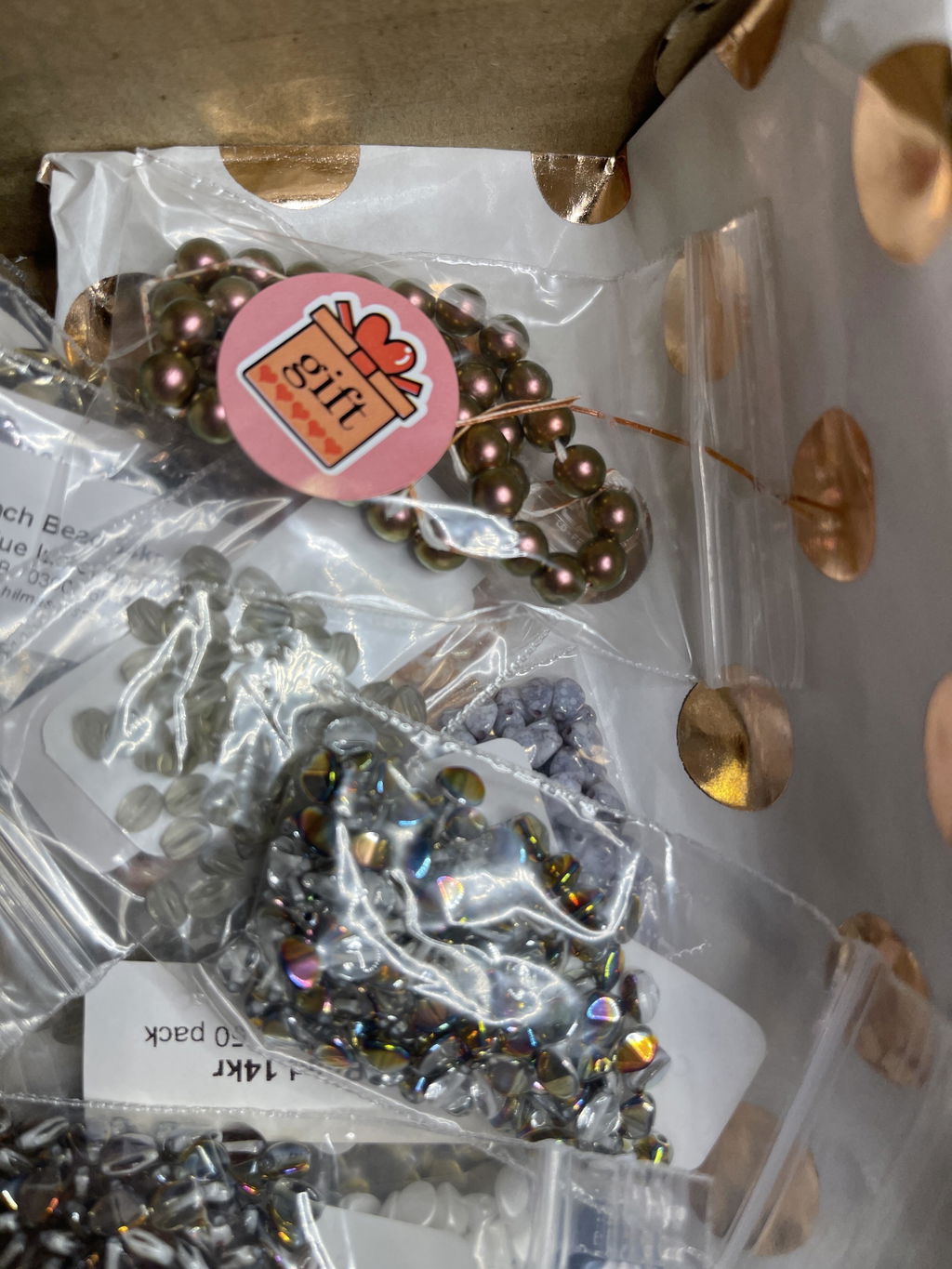
Faceted Beads – Create Sparkling Jewelry with Hilmaspyssel.se
Do you want to make your own jewelry that truly sparkles, catches the light, and looks professional – without breaking the bank? Then faceted beads are a perfect choice. With their cut surfaces that reflect light, they give bracelets, necklaces, and earrings an exclusive feel, whether you're a beginner or an experienced jewelry maker. At Hilmaspyssel.se, you'll find a wide selection of faceted glass beads, crystal beads, and acrylic beads in many colors, shapes, and sizes.
In this guide, we'll go through what faceted beads are, what types are available, how to choose the right ones for your specific project, and how to create your own jewelry step-by-step. You'll get smart tips, common pitfalls to avoid, and a simple buying guide so you can shop correctly online at Hilmaspyssel.se – and start creating sparkling favorite jewelry today.
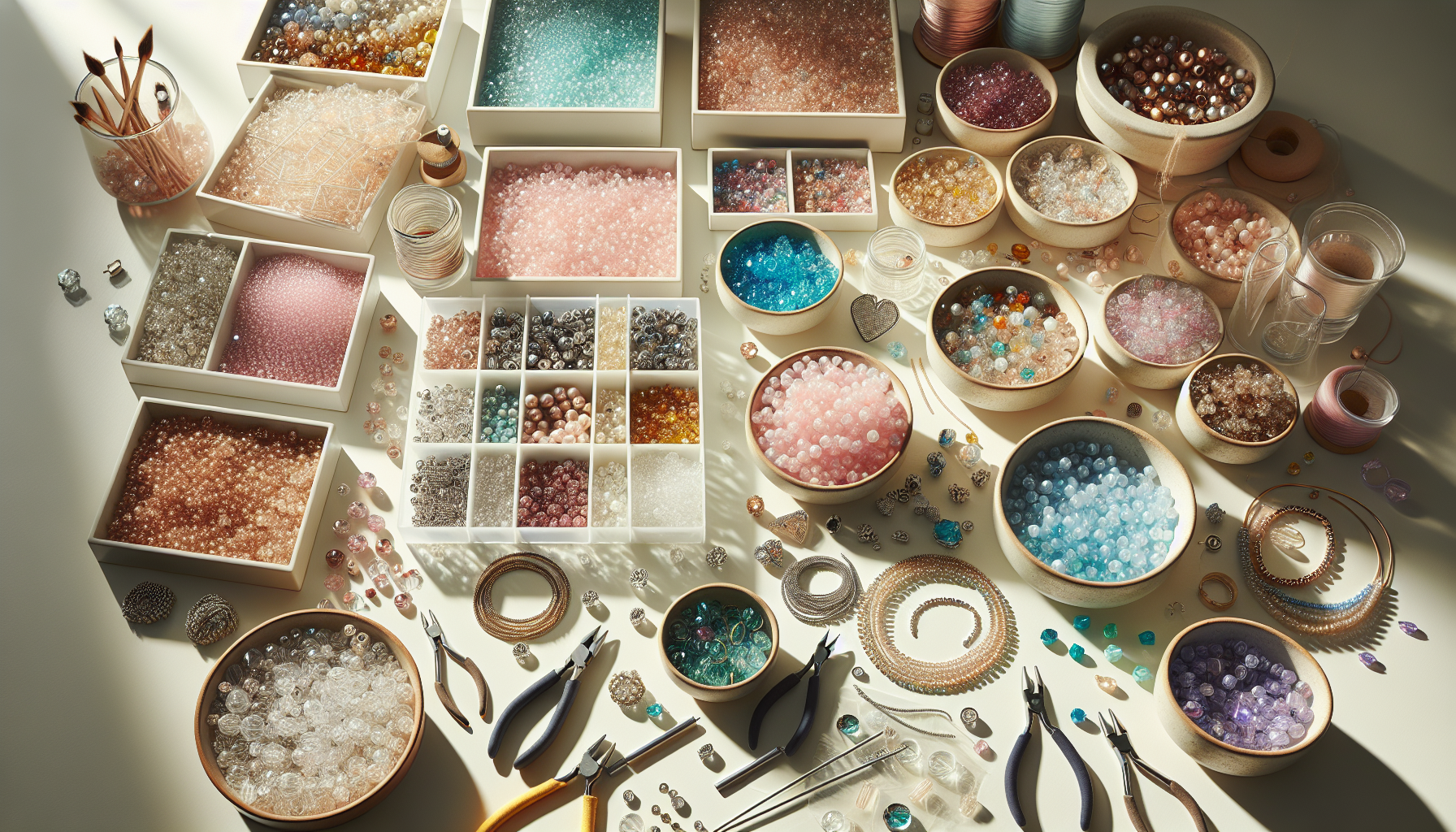
Faceted beads appear everywhere – in handmade bracelets, elegant earrings, and sparkling necklaces. But what does "faceted" actually mean, and why do these particular beads give such an exclusive impression even in simple jewelry? For those new to jewelry making, this is a perfect starting point to understand the basics before you start buying beads online, for example at Hilmaspyssel.se.
What does faceted mean – and how do they differ from smooth beads?
In short, a faceted bead is a bead with several small, cut surfaces (facets) that catch and reflect light:
-
Faceted beads: Have flat, cut sides that create extra shine, depth, and a "bling" effect, especially in glass and crystal.
-
Smooth beads: Have an even, round surface that gives a softer, more subdued impression without the same play of light.
-
Common materials: Glass, crystal, acrylic, semi-precious stones, porcelain, ceramic, and sometimes metal.
-
Light effect: The more and sharper the facets, the more sparkling the jewelry looks – perfect for parties, weddings, and "statement" jewelry.
A bracelet made of smooth beads can feel everyday, while the same color scheme in faceted glass beads suddenly feels more luxurious. It is precisely the combination of color, material, and facet cut that makes these beads so popular among both hobbyists and professionals.
Why faceted beads are perfect for both beginners and experienced crafters
Faceted beads are unexpectedly easy to use, even if the result looks advanced:
-
Easy to succeed with: Even a simple stretch bracelet with faceted beads looks thoughtful and professional without complicated techniques.
-
Flexible in style: The same type of bead can be used for boho, minimalist, and elegant jewelry – it's all about color, size, and shape.
-
Clear visual effect: You quickly see how patterns and color combinations work because the light highlights every detail.
-
Suits all levels: Beginners get "quick wins" with simple projects, while experienced crafters can create advanced designs with mixed materials and techniques.
By understanding what faceted beads are and how they behave in light and in different materials, it becomes much easier to choose the right products when you later move on to more specific types and projects – something we will delve into in the next section about the selection at Hilmaspyssel.se.
Different types of faceted beads at Hilmaspyssel.se
When you start exploring faceted beads, you quickly realize what a big difference the right type of bead makes to the result. At Hilmaspyssel.se, there is a wide range of shapes, sizes, colors, and materials – something many shorter online guides only mention superficially. Here, we go deeper so you can choose beads that truly suit your project and your style.
Shapes, materials, and finishes you should know about
Hilmaspyssel.se has a large assortment with several popular categories of faceted beads:
-
Faceted glass beads: Affordable, easy to work with, usually available in 3–8 mm. Perfect for bracelets, necklaces, and earrings.
-
Bicone beads: The classic "diamond shape" that gives extra sparkle to jewelry, especially popular in wedding and party designs.
-
Round faceted beads: Soft impression with lots of luster – fits well in both vintage and boho-inspired jewelry.
-
Teardrop faceted beads: Ideal for earrings and pendants where you want to create a sense of length and elegance.
-
Various finishes: Transparent, opaque, AB-coating (aurora borealis effect), metallic, and matte surfaces that give completely different expressions in the same color scheme.
A practical way to start is to choose a basic shape, such as round glass beads, and then complement with some bicone beads in the same color for extra sparkle in the middle of a bracelet or as a focus in a pair of earrings.
Concrete examples – the right bead for the right project
To make the choice easier, you can start from the type of project you want to create:
-
Elegant bracelets: Choose faceted glass beads in 4–6 mm, preferably bicone or round, in neutral colors such as crystal, silver, gold, or muted pastels. Combine with metal beads for a more exclusive impression.
-
Children's crafts and simpler projects: Opt for budget-friendly faceted beads in acrylic or simpler glass varieties in cheerful colors. They are light, durable, and perfect for stretch bracelets.
-
Festive necklaces: Mix teardrop faceted beads with round and bicone in the same color scheme. Place the most sparkling beads closest to the center for maximum effect.
By using the filters on Hilmaspyssel.se (e.g., color, size, and shape), you can quickly build a bead mix that is well-thought-out in both expression and function – something that truly shows when the finished piece of jewelry ends up on your wrist, around your neck, or in your ears.
How to choose the right faceted beads for your project
Choosing the right faceted beads is key to whether your jewelry feels cheap or exclusive, harmonious or cluttered. Here, we go through how to match bead type, size, color, and material with your specific style and project – with concrete, easy-to-use tips often missing in simpler guides.
Start with style, purpose, and feel
-
Vintage & romantic: Go for soft tones (rose, champagne, dusky gray), preferably smaller faceted glass beads 3–4 mm combined with antique gold or bronze-colored metal details.
-
Boho & bohemian: Choose larger beads 6–8 mm in earthy colors, preferably mixed shapes (round, drops, bicone) for a more vibrant expression.
-
Minimalist & everyday jewelry: Stick to a few colors, small faceted beads 2–4 mm, and clean shapes – perfect for thin bracelets and discreet earrings.
-
Party & wedding: Here, clear, strongly sparkling faceted beads do the job – preferably with AB-coating for extra luster in light and on photos.
Always consider when and how the jewelry will be worn. A bracelet you wear every day benefits from smaller beads and subdued colors, while a party necklace can support both larger sizes and more contrast.
Size, shape, color, and material – practical guidelines
- Size:
- 2–4 mm: Perfect as spacer beads, details, and thin bracelets.
- 4–6 mm: All-around size for bracelets, necklaces, and earrings.
- 8 mm and up: Best for statement necklaces, keychains, and bag charms.
- Shape:
- Bicone gives a more exclusive, crystal-like impression.
- Round faceted are the most versatile and forgiving for beginners.
-
Drops are particularly well-suited for earrings and pendants in necklaces.
- Color strategy:
- Build tone-on-tone (e.g., different shades of blue) for a calm, thoughtful expression.
- Use an accent color (e.g., gold, copper, or a vibrant hue) to elevate an otherwise neutral piece of jewelry.
- Adjust to the season: pastels for spring, bright colors for summer, deep jewel tones for autumn, and cool glitter for winter.
- Material choice:
- Faceted glass beads – affordable, good shine, perfect for most projects.
- Crystal and high-quality glass – more luster, ideal for weddings and parties.
-
Acrylic – super lightweight and budget-friendly, good for children's crafts and large jewelry that shouldn't be heavy.
A practical rule of thumb:
- Choose smaller, discreet faceted beads (2–4 mm) for earrings and everyday bracelets.
- For statement necklaces, you can combine larger faceted beads with simpler jump rings or spacer beads for balance and wearing comfort.
By considering these choices before ordering beads from Hilmaspyssel.se, you'll save both time and money – and increase the chance that you'll actually use everything you buy.
Inspiring Project Ideas with Faceted Beads
Faceted beads are perfect when you want clear, achievable craft projects that also look professional. In this section, you'll get concrete ideas you can start with right away – whether you're a beginner or already experienced in designing your own jewelry. All project suggestions can be made with the assortment at Hilmaspyssel.se, so you can easily order everything you need in one place.
Simple but effective jewelry for all levels
-
Stretch bracelets with faceted glass beads:
You'll need elastic thread, faceted glass beads (preferably 4–8 mm), and possibly some metal bead or charm as a focal point. Perfect beginner project and ideal for children's crafts or a quick "last-minute gift".
-
Classic earrings with faceted drops:
Use ear hooks, headpins, and 1–2 teardrop faceted beads per earring. A simple looping tool is enough to create elegant, lightweight earrings that sparkle beautifully in the light.
-
Necklaces with mixed faceted beads and metal components:
Combine round faceted beads with spacers, chain, and possibly a larger centerpiece bead. This is where playing with color and shape really comes into its own.
-
Keychains and bag charms with faceted details:
Assemble a small cluster of faceted beads onto a carabiner clip or keychain base. Durable, decorative, and perfect for using up smaller leftover beads.
For all projects, you'll find faceted beads, elastic thread, ear hooks, headpins, and other jewelry making supplies directly in their respective categories at Hilmaspyssel.se, saving both time and shipping costs.
Combine faceted beads with other materials
To elevate your projects further, you can advantageously mix faceted beads with other textures:
- Freshwater pearls for a more luxurious, wedding-inspired feel in bracelets and necklaces.
- Metal beads and spacers for a more graphic, modern look – especially pretty in silver, gold, or rose gold against clear glass beads.
-
Seed beads (small rocaille beads) for detailed patterns, sewn edges, or thin stacking bracelets that you can wear several at once.
Think in sets: for example, make a matching bracelet, necklace, and earrings in the same color scheme but with different combinations of faceted beads and complementary materials. This gives a thoughtful, "designer-like" feel without the projects becoming difficult. With the right choice of beads and accessories from Hilmaspyssel.se, you can quickly build a personal collection that looks much more advanced than it actually is to make.
Step-by-step: Create a sparkling bracelet with faceted beads
Making a bracelet with faceted beads is a perfect first project – quick, stylish, and surprisingly durable if you build it correctly from the start. Here, we'll go through a clear step-by-step guide that you can follow directly with materials from Hilmaspyssel.se, whether you choose elastic thread or jewelry wire.
Materials and preparations before you start
For a classic, sparkling bracelet, you will need:
-
Faceted glass beads 4–6 mm – e.g., round or bicone from Hilmaspyssel.se
-
Elastic thread (0.6–0.8 mm) or jewelry wire + crimp beads and clasp
-
Scissors or wire cutters, preferably also flat-nose and round-nose pliers for wire projects
-
Optional spacer beads or metal beads for details
-
Bead tray or small dish so the beads don't roll away
Start by measuring your wrist (add about 1–1.5 cm for movement space). Then lay out the beads in your desired order on a bead mat or white paper – this way you can clearly see color transitions and make adjustments before you start stringing.
Assembly itself – from first bead to finished bracelet
-
Cut the thread: Cut elastic thread with at least 10 cm extra length compared to your wrist measurement. For wire, add about 15 cm extra.
-
Secure one end: Tie a simple temporary knot or use a stopper bead so the beads don't slide off while you're stringing.
-
String the beads: Follow your planned pattern – e.g., 3 faceted beads + 1 metal bead, repeat for the entire length. Occasionally twist the thread to see how the light plays in the facets.
-
Test the fit: Before tying, try it around your wrist. Add or remove 1–2 beads if needed.
-
Tie or attach clasp:
-
Elastic thread: Use double surgeon's knots, tighten firmly, and preferably secure with a small drop of glue. Hide the knot in a bead or under a knot cover.
-
Jewelry wire: Thread through a crimp bead and clasp component, make a loop, tighten, and press the crimp bead with pliers. Finish with crimp bead covers for a professional look.
-
Refine and finish: Trim any excess thread close to the knot (without damaging it) and gently roll the bracelet between your hands so the beads are evenly distributed.
As a final step – lay the bracelet flat and look at the overall impression: is the color distribution balanced, does the bracelet feel flexible, and does it sit comfortably on the wrist? Then store your leftover faceted beads sorted by color, size, and shape (e.g., in small boxes or zip-lock bags). This will make future projects much quicker and more enjoyable – and you'll get maximum benefit from your bead purchase from Hilmaspyssel.se.
Common mistakes with faceted beads – and how to avoid them
Even experienced jewelry makers sometimes encounter problems when working with faceted beads. The thread breaks, bracelets lose their shape, or earrings become too heavy – and the joy of the finished piece disappears. By knowing the most common mistakes, you can save time, materials, and frustration, and get more out of your faceted beads from Hilmaspyssel.se.
Typical mistakes in thread, weight, and color choices
-
Wrong thread thickness in relation to hole size: Too thick thread prevents beads from being strung; too thin thread results in jewelry that breaks easily.
-
Too heavy beads in earrings and long pendants: Large faceted glass beads can become heavy if used in multiple layers close to the ear.
-
Cluttered color combinations: Too many strong colors without "breaks" can make the shine of the faceted beads disappear in the overall look.
-
Too tight or too loose assembly: A bracelet that is too tight is uncomfortable, one that is too loose feels cheap and flimsy.
A simple way to avoid much of this is to always read the product description on Hilmaspyssel.se: it specifies both size, material, and hole diameter, making it easier to match the right thread, wire, or elastic to your specific faceted beads.
Checklist before finishing your jewelry project
Before tying the last knot or crimping the final wire clasp, go through this quick list:
-
Test durability: Gently pull on the jewelry – does it feel stable, with nothing loose?
-
Check balance: Does the jewelry hang straight when you hold it by the clasp, or does a heavy bead pull one side down?
-
Evaluate color and overall impression: Take a step back. Do you see a clear color theme, or is the overall look disjointed?
-
Ensure knots and finishes: For elastic bracelets – use a double or triple knot and preferably a little glue that dries transparent.
By working methodically and using the information already available in the product descriptions at Hilmaspyssel.se, you minimize the risk of mistakes. The result will be jewelry that is not only beautiful when finished – but that maintains its shape and shine for a long time. This is key to truly getting the most out of your faceted beads and developing as a jewelry maker.
How to shop for faceted beads smartly at Hilmaspyssel.se
Buying faceted beads online becomes both more fun and significantly easier when you know how to navigate the store and plan your projects. At Hilmaspyssel.se, there is a large and affordable assortment, but precisely for this reason, it is especially valuable to shop smartly – so that you get the right beads, the right quantity, and maximum creativity for your money.
Navigate categories and filter like a pro
Start in the faceted beads category and use the filters strategically:
-
Filter by size (e.g., 4, 6, 8 mm): Perfect when you know whether the beads will be used for bracelets, earrings, or necklaces.
-
Choose shape (bicone, round, teardrop, etc.): Makes it easier when you want to create a certain style, e.g., elegant bicones for parties or round beads for everyday bracelets.
-
Sort by color and finish: For example, search for transparent pastels, opaque base colors, or beads with AB coating for extra shine.
A smart way to work is to first sketch 1–3 projects (e.g., a bracelet, a pair of earrings, and a keychain) and then select beads that work for all three. This way, you maximize the use of each bag of faceted beads and reduce the risk of buying the wrong items.
Budget-friendly choices, starter kits, and your own bead stock
To get started quickly – without breaking the bank – you can think in three levels:
-
Budget & variety: Choose mixed bags of faceted beads. You get many colors and shapes in the same package, perfect for experiments and children's crafts.
-
Smart beginner's kit: Build a small starter set from Hilmaspyssel.se with:
- Faceted beads in neutral colors (clear, black, silver, gold, nude)
- A roll of elastic thread and a jewelry wire
- Basic jewelry findings like clasps, jump rings, and ear hooks
-
Long-term bead stock: Start with standard sizes 4–8 mm in your most used colors. Then add accent colors (e.g., trendy colors for the season) and special shapes once you've found your style.
By combining smart planning, the store's filter functions, and a well-thought-out small "home stock," you avoid last-minute panic orders – and can sit down and create as soon as inspiration strikes. Hilmaspyssel.se then becomes not just a store, but your natural partner in every new jewelry project with faceted beads.
Frequently asked questions about faceted beads
Q: What size of faceted beads is best for bracelets, necklaces, and earrings?
A: For bracelets, 4–6 mm faceted beads are usually the most useful – they provide a nice shine without feeling bulky on the wrist. For necklaces, 6–8 mm works well as a base, while you can add larger beads (8–10 mm) as focal details. For earrings, many choose 3–4 mm for discreet everyday jewelry and 6–8 mm for more festive models. On Hilmaspyssel.se, you can filter by size, making it easy to find the right dimensions for your specific project.
Q: What material should I choose – glass, acrylic, or semi-precious stone?
A: Faceted glass beads are a perfect middle ground: affordable, durable, and with a beautiful luster – ideal for both beginners and experienced jewelry makers. Acrylic beads weigh less and are suitable for children's crafts, large statement necklaces, and earrings where you want to avoid a heavy feel. Semi-precious stones provide a more exclusive, natural look and are popular in gift and wedding jewelry. A smart approach is to build the base in glass and use semi-precious stones as selected accent beads.
Q: How do I prevent elastic bracelets with faceted beads from breaking?
A: Choose elastic thread that fills the hole properly without you having to force it through. Tie at least a surgeon's knot (double overhand knot), pull it tight, and secure it with a drop of jewelry glue. Hide the knot in a bead with a slightly larger hole for both durability and a neat finish. An extra tip is not to make the bracelet too tight – a little "breathing room" reduces wear and tear on the thread.
Q: How do I combine colors of faceted beads without the jewelry looking cluttered?
A: Start with 1–2 base colors and add a maximum of 1–2 accent colors. Feel free to use the color wheel: analogous hues create a harmonious expression, while complementary colors (e.g., blue–orange, purple–yellow) add more vibrancy. A practical trick is to arrange the beads on a bead board before you start stringing, so you can immediately see if the overall impression feels balanced. On Hilmaspyssel.se, you'll find many color-coordinated mixed bags that make the choice easier.
Q: I'm a complete beginner – what starter kit with faceted beads should I begin with?
A: Start with a small basic stock that you can use for many different projects:
-
Faceted glass beads 4 mm in clear crystal, black, and a neutral metallic tone
-
Faceted glass beads 6 mm in 2–3 favorite colors
-
Elastic thread, simple jewelry wire, and some clasps + crimp beads
- A pair of ear hooks and headpins to try out earrings
With this setup, you can make several bracelets, a pair of earrings, and at least one necklace without having to buy everything new each time.
Q: How do I know if a faceted bead suits my project when shopping online?
A: Always read the product description carefully: check size (mm), hole diameter, material, and whether the bead is light or heavy. Compare the measurements with a piece of jewelry you already have at home to get a feel for how it will look. Hilmaspyssel.se provides clear specifications and often also indicates what type of project the beads are suitable for – e.g., bracelets, earrings, or necklaces – so you don't have to guess and can order more accurately from the start.
Conclusion: Let faceted beads be the heart of your jewelry
You have now received a complete overview of faceted beads – from what they are and different materials, to how to choose the right size, color, and shape for your style. We have also looked at inspiring project ideas, a concrete step-by-step guide, common mistakes to avoid, and how to shop smartly online. Together, this gives you a solid foundation for creating jewelry that both sparkles beautifully and lasts over time.
The next step is to put inspiration into practice. Start with a simple bracelet or a pair of earrings, use the tips on color combinations and thread choices, and gradually build up your own small bead stock. Visit the faceted beads category on Hilmaspyssel.se, filter by color and size, and put together a small "starter kit" that fits your budget. The more you try, the more confident you'll become – so choose your favorite beads, plan your first project, and start creating your personal jewelry sparkle today.