


Cabochons & Flatbacks at Hilmaspyssel.se – Small Stones That Elevate Your Entire Project
Do you want to make your DIY jewelry, clothing decorations, or craft projects look more refined without being difficult? Cabochons and flatbacks are two favorites that make a big difference: cabochons offer a soft, classic "statement" feel with their smooth, rounded shapes, while flatbacks have a flat back that makes them easy to glue for quick bling and extra sparkle.
In this guide, we clarify the differences (shape, material, and use), provide a practical selection guide with adhesive and mounting tips, and plenty of ideas for jewelry, clothing, and interior crafts. You'll also learn how to quickly find what you need on Hilmaspyssel.se – including how to sort by most relevant, bestsellers, price, or new arrivals to save time and find exactly what you're looking for.
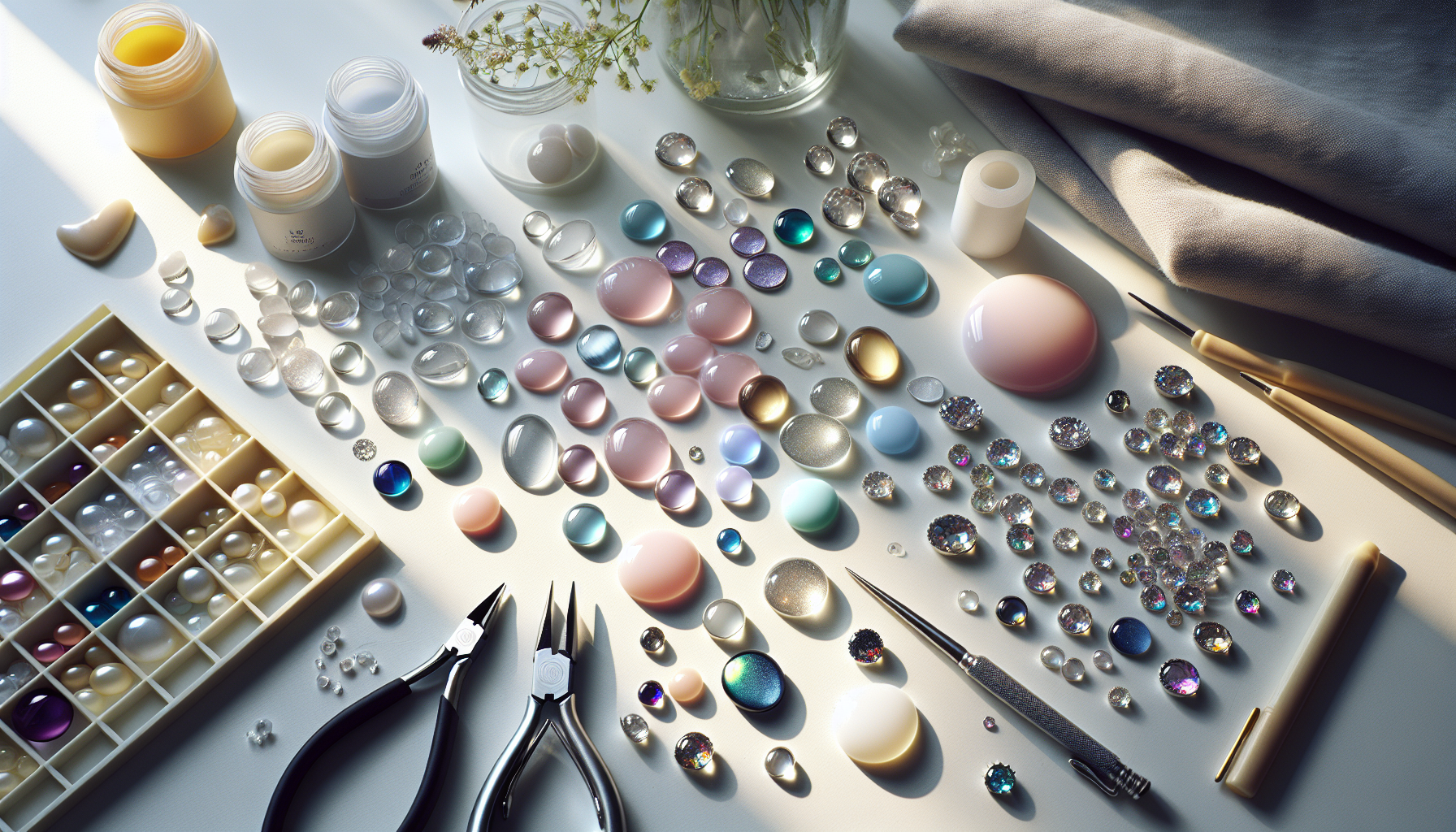
When creating DIY jewelry or decorating clothes and accessories, the choice between cabochons and flatbacks often determines whether the result feels classically handmade or truly sparkling. Both are popular jewelry stones at Hilmaspyssel.se, but they are designed for different types of projects – and therefore it's smart to understand the difference before you glue or set them.
Cabochon: Soft Shape, Timeless Feel
Cabochons are smooth, rounded stones without facets on the underside. They often come in shapes like round, oval, square, and heart-shaped – and the shape influences the expression more than you might think:
-
Round: gives a timeless, "clean" look suitable for everything from rings to earrings
-
Oval: often perceived as more elegant and can make the design appear longer and narrower
-
Square: creates a more modern, graphic impression – perfect for minimalist jewelry
-
Heart: romantic and playful, especially nice for personalized gifts
Materials vary, typically stone, glass, or resin. A practical rule of thumb: choose stone when you want weight and a premium feel, glass when you want clarity and depth, and resin when weight and everyday durability are more important (e.g., larger earrings).
Flatback: Flat Back for Quick "Bling" Decoration
Flatbacks are stones with a flat, faceted back, often made of glass or crystal, and they are designed to be glued directly onto a surface. This makes them perfect when you want to add sparkle quickly – to everything from jewelry to phone cases, shoes, frames, or scrapbooking.
The main practical difference is the mounting: cabochons are often placed in a setting or glued into a bezel for a "jewelry-built" look, while flatbacks are your shortcut to a detailed, sparkling finish. Think of it this way: cabochon = statement and craftsmanship, flatback = shine and precision.
How to Choose the Right Cabochon or Flatback: Size, Color, Shape, and Finish
When buying cabochons and flatbacks, it's easy to get stuck on the "that looks nice!" feeling. But the smartest (and cheapest in the long run) approach is to start with the project: will the stone sit in jewelry that rubs against the skin, on a garment that moves, or on an interior detail that just needs to sparkle? Cabochons – smooth, rounded and often made of glass, resin or stone – give a more classic, handmade expression, while flatbacks with a flat back (often glass/crystal) are made for quick gluing and maximum luster.
Size & Fit – Match to the Base First
-
Ring shanks and pendants: Choose cabochon size according to the setting/bezel (measure inner diameter/surface before ordering) to avoid gaps or overhang.
-
Earrings: Smaller cabochons give a timeless look; flatbacks work well as discrete "accent stones" around a larger center stone.
-
Clothing decoration and accessories: For a denim jacket, shoes, or bag, flatbacks are convenient because they are lightweight and flat—but avoid placing them where the fabric creases a lot (elbows, knees).
-
Home decor & crafts (phone cases, frames, scrapbooking): Feel free to go up in size or build clusters; here, design dictates more than weight.
A practical tip: make a quick paper template in the correct dimensions and "test place" visually before deciding on the size. This is especially helpful when mixing shapes like round, oval, square, or heart-shaped.
Color, Shape, and Finish – Create a Professional Overall Impression
The shape influences the feeling more than many realize: oval often feels elegant, round timeless, square modern, and heart romantic. For color choice, three safe strategies work: tone-on-tone (expensive look), contrast (statement), or seasonal palette (spring pastels, autumn jewels, winter metallic). Also consider the finish: transparent stones enhance the color of the underlying surface, while opaque ones hide imperfections. The goal is for the stone not just to be "pretty," but to suit your base and your style – directly from Hilmaspyssel.se to the finished project.
Material and Quality in Practice – What You Need to Know Before Gluing
The fact that cabochons and flatbacks are easy to use doesn't mean all materials behave the same. On the contrary: glass/crystal, resin, and stone react differently to glue, surfaces, wear, and cleaning. For your DIY jewelry and decorations to last (and look professional), it's smart to understand the strengths of the materials before you start—especially when gluing flatbacks to clothes, phone cases, or interior details.
Glass, Crystal, Resin, or Stone – Choose Based on Project Requirements
-
Glass/crystal (common for flatbacks): Provides maximum luster and "bling" effect. Perfect for quick decorations on hair accessories, scrapbooking, frames, and details on jewelry. Keep in mind that high gloss also reveals crookedly mounted stones—test placement carefully.
-
Resin (common for cabochons): Low weight and often much color/depth in expression. Good when you want to build larger "statement" pieces without the jewelry becoming heavy, e.g., earrings or charms. Avoid strong solvents during cleaning, which can dull the surface over time.
-
Stone (cabochons): Gives a classic, solid feel and can withstand a lot of everyday wear. Particularly suitable for rings and pendants where you want a more "handmade" and timeless expression—but the weight can affect comfort, especially in earrings.
What is often missing in guides is the "matching" between material and use: if the decoration is to sit on a surface that bends (textile), is exposed to friction (shoes/bags), or skin contact (rings/bracelets), you need to prioritize durability and the correct adhesive surface over appearance alone.
Adhesion and Durability Over Time – How to Prevent Stones from Falling Off
A flatback is made for gluing, but it only adheres well to a clean and grease-free surface. Always wipe down the surface (and if necessary, the back of the stone) and let it air dry before gluing. For cabochons: if the surface is small or the jewelry needs to withstand a lot (e.g., a ring used daily), a setting/bezel can provide significantly better durability than glue alone.
As a rule of thumb: do a quick test on a scrap piece when working with difficult materials like leather, plastic, or treated fabrics—then you'll avoid unpleasant surprises after the first use.
Applications That Create a Wow Factor: Jewelry, Clothes, and Interior Crafts
Cabochons and flatbacks are two small components that can elevate an entire project – whether you're making DIY jewelry, decorating clothes, or want to give everyday items a more personal finish. Common to both is that they function as decorative stones, but they give different expressions: cabochons (smooth, rounded stones) create a more classic, handcrafted feel, while flatbacks (flat back, often glass/crystal) quickly add "bling" through simple gluing on many types of surfaces.
Inspiration: How to Use Cabochons & Flatbacks in Practice
-
Jewelry (rings, earrings, bracelets, necklaces): Choose cabochons when you want a statement stone with a soft shape (round/oval/heart) and a more timeless expression. Use flatbacks as accent stones around a central point or to create a sparkly pattern on a charm or plate.
-
Clothing Decoration (jackets, jeans, dresses, stage costumes): Flatbacks are convenient for quick decoration on fabric, especially if you want to build up an edge, star pattern, or logo. Consider wear points: avoid areas that chafe (inner thigh, underarm) and instead place them on the collar, shoulder area, or pocket flap.
-
Accessories (shoes, bags, hair clips, headbands): Here, "small area – big effect" is particularly clear. A hair clip with a cabochon in the center and a couple of small flatbacks as a frame suddenly looks store-bought.
What is often missing in simpler guides is design composition. Try three professional tips: create clusters (3–7 stones of different sizes), build a gradient (dark to light), or work with asymmetry (a clear focal point + smaller "satellites") to achieve a more well-thought-out result.
Interior & Hobby: Decorate What You Already Own
Flatbacks are perfect for phone cases, frames, photo albums, candle holders, and scrapbooking where you want quick sparkle. Cabochons are particularly well-suited when you want to create a "medallion feel" on, for example, a frame or a box. The next step is to choose the right mounting for the surface – we'll cover that in the next section.
Step-by-Step: Gluing, Setting, and Mounting (Without Making a Mess)
Cabochons and flatbacks are designed to deliver maximum effect with minimal size – but it's the mounting that determines whether your DIY project lasts. Flatbacks (flat back, often glass/crystal) are perfect when you want to quickly glue "bling" onto everything from jewelry components to phone cases and interior crafts. Cabochons (smooth, rounded stones without a faceted underside) can be both glued and set, depending on the material, size, and how much wear the jewelry needs to withstand.
Prepare the Surface – 80% of the Work Is Here
-
Clean and degrease first: Wash the surface (metal/plastic/glass) and wipe with, for example, isopropanol. Grease and dust are the most common reasons for stones coming loose.
-
Test placement before gluing: Arrange the stones in a pattern (especially for clothing design, frames, and scrapbooking) and take a photo – this immediately shows if the size/shape (round, oval, square, heart) provides the right balance.
-
Roughen if necessary: On very smooth surfaces (lacquered metal, hard plastic), a slight roughening where the glue will sit can provide better grip. Be careful not to make it visible around the stone.
What is often missing in simpler guides is the "just enough" principle: the glue should moisten the surface, not spread out. Use a toothpick/dotting tool for small flatbacks and tweezers for precision. When gluing to textile or leather – always test on a scrap piece first, as materials can absorb glue differently and affect the finish.
Choose Method According to Project Wear (Quick Guide)
For best durability: consider surface + movement + weight. Flatbacks on phone cases and candle holders often hold up perfectly with gluing, while cabochons in rings/bracelets might benefit from a setting or a stronger type of glue. Regardless: respect the drying and curing time ("don't touch too early") and secure with a clamp/tape if the stone tends to slide.
When you master the process, cabochons and flatbacks become not just decoration – they become a professional finish that lasts, whether you're creating jewelry, clothing decorations, or personalized gifts.
Project Ideas with Cabochons & Flatbacks – 10 Concepts from "Quick Craft" to Statement Design
Cabochons and flatbacks are two of the most versatile decorations when you want to create personalized jewelry, clothing embellishments, or interior details with little effort and great impact. Cabochons (smooth, rounded stones in, for example, round, oval, square, and heart shapes) offer a more classic, handcrafted look, while flatbacks (flat back in glass/crystal) are perfect for quick "bling" that is easily glued to almost anything. Here are 10 ideas that build on the most common uses – plus some more "designer" twists to achieve a professional finish.
10 Ideas Suitable for Different Skill Levels (and Different Surfaces)
-
Minimalist earrings with cabochon: A round or oval glass/resin cabochon in a simple setting gives a timeless look – choose tone-on-tone for everyday or contrast for parties.
-
Ring with a statement stone: A larger square or heart-shaped cabochon becomes the focal point; keep the rest of the metal simple so the stone takes center stage.
-
Hair clip with flatbacks: Glue a row of crystal flatbacks along the edge for a quick upgrade that's immediately visible in your hair.<
-
Phone case with a color theme: Build a small cluster of flatbacks (large–small–small) for a luxurious composition without covering the entire case.
-
Bracelet: mix cabochons + flatbacks: Cabochons as main stones, small flatbacks as highlights around them – provides depth and sparkle simultaneously.
-
Shoe decoration on "safe zones": Place flatbacks where the shoe doesn't bend as much (e.g., sides or heel) for better durability.
-
Bag or toiletry bag with monogram: Use flatbacks for letters and frame them with a few smaller stones for a "boutique" feel.
-
Scrapbooking & photo albums: Cabochons can function as a "theme button" (e.g., heart), flatbacks as sparkly corner markers.
-
Candle holder/frame with discreet glamour: Work symmetrically on two sides, or create a gradient from large to small flatbacks for a more designed effect.
-
Clothing design for stage/party: Place flatbacks in patterns (lines, stars, waves) but avoid wear points like under the arm and waist where the garment moves the most.
What often distinguishes "homemade" from "designed" is not the quantity of stones – but placement and rhythm. Try doing a test layout before gluing: start with 1–3 focal stones (preferably cabochons), then fill in with smaller flatbacks as points of light. This gives you a premium feel even with a smaller budget.
Budget vs. Premium Look: How to Think Smart
Want to get maximum impact per stone? Choose a cabochon as the main attraction and add 5–10 flatbacks as an accent where the light naturally falls (in the middle, or in a soft arc). This provides shine, dimension, and a well-thought-out expression – whether you're making earrings, clothing decorations, or personalized gifts.
Shop Cabochons & Flatbacks at Hilmaspyssel.se – How to Find the Right Ones Quickly
Once you know whether your project needs a cabochon (soft, rounded top for a classic jewelry look) or a flatback (flat back for quick "bling" decoration), the next step is to find the right variant without getting lost in a sea of colors, shapes, and sizes. At Hilmaspyssel.se, cabochons and flatbacks are gathered in a clear assortment, making it easy to compare materials like glass, crystal, and resin and choose what suits your base and your style.
Use Smart Sorting – Answers to Common Questions
An underestimated trick for faster shopping is to utilize the sorting options in the web store. This helps you both find new arrivals and make safe choices when you're not sure what you want:
-
Most relevant: Good when you have a clear idea (e.g., "oval cabochon" or "flatback crystal") and want the most suitable options first.
-
Bestsellers: Perfect if you want to choose proven favorites, especially for rings, earrings, or clothing decorations that need to withstand use.
-
Featured: A quick shortcut to curated choices – good when you want inspiration or a "safe" start.
-
Alphabetical A–Z / Z–A: Convenient if you're looking for a specific color/variant and want to browse systematically.
-
Price low–high / high–low: Helps you stay within budget or find premium options for statement projects.
-
Date new–old: When you want to see new arrivals first and find seasonal colors and shapes.
This is also the answer to common questions like "how do I sort by relevance?" and "how do I see bestsellers first?" – you just select the correct sorting from the list.
Unique Purchasing Strategy: Build a Base Box That Always Works
To get maximum benefit from each order: create a small "base box" with round and oval cabochons in neutral colors (timeless), plus a set of flatbacks in an accent color for extra luster. Then add seasonal colors as needed – and consider buying a couple extra of your favorites if you want to make matching sets (e.g., ring + earrings) without risking a variant running out in the middle of production.
Frequently Asked Questions (FAQ)
Q: What is the difference between cabochons and flatbacks?
A: Cabochons are smooth, rounded stones without facets on the underside and are often used in rings, pendants, and earrings where you want a more classic, "handmade" look. They can be made of stone, glass, or resin and often come in shapes like round, oval, square, and heart. Flatbacks, on the other hand, have a flat back (often glass/crystal) and are designed to be glued directly onto surfaces such as textile, plastic, or metal for quick shine and "bling."
Q: What is the best glue for flatbacks and cabochons?
A: The "best" glue depends on the material and surface. As a rule of thumb: choose a strong jewelry adhesive/epoxy for metal (rings/settings), a plastic-compatible adhesive for phone cases, and a textile adhesive for clothes. Regardless of the glue: always clean the surface (grease and dust are the biggest enemies) and allow the glue to fully cure before stressing the decoration. It's also a good idea to test on a scrap piece, especially on textile and plastic.
Q: How do I choose the right size and shape for my project?
A: Start with a simple “requirements list”: 1) Where will the stone be placed? (ring, earring, garment) 2) How durable does it need to be? (movement, friction, possible washing) 3) What style do you prefer? Oval often feels more elegant, round is timeless, heart is romantic, and square is modern. For jewelry, cabochons work well as a statement, while flatbacks are perfect as small accents in clusters or along edges.
Q: Can I decorate clothes and shoes with flatbacks – and will it last?
A: Yes, flatbacks are popular for clothing decoration, but placement is crucial. Avoid wear points (e.g., at seams, elbows, heels). Use textile glue, press firmly, and allow to cure longer than you think. For garments that will be washed frequently: consider decorating parts that are not exposed to much friction or create removable accessories (e.g., brooch/clip).
Q: How do I quickly find what I'm looking for on Hilmaspyssel.se?
A: Use the sorting options smartly depending on your goal: Most relevant when you know roughly what you're looking for, Bestsellers for safe bets, Price low–high if you're building a basic kit, and Date new–old when you want to see new arrivals first. You can also sort alphabetically (A–Z/Z–A) to quickly find specific variations.
Q: What are the most common mistakes when working with cabochons and flatbacks?
A: Three classics: 1) Too much glue (it creeps up the edges and dulls the surface), 2) Wrong glue for the surface (especially plastic and textile), 3) Impatience – moving the stone before it has cured. A professional tip is to pre-place and mark, apply glue with a toothpick/dotting tool, and let everything rest flat overnight for maximum durability.
Create more with the right stone – and make it last
Now you have the basics for success with cabochons and flatbacks – two favorites when you want to elevate DIY jewelry, clothing details, and decorations. Remember the core difference: cabochons are smooth, rounded stones (often in round, oval, square, or heart shapes) that give a classic, handmade look, while flatbacks have a flat back and are designed for quick gluing and maximum “bling” effect. When you choose based on your project's requirements (surface, durability, weight, and finish) and prepare the surface correctly, you'll get a result that sticks – and looks professional longer.
Next step: choose one of the project ideas, make a short requirements list, and shop smartly. On Hilmaspyssel.se, you can quickly find what you're looking for by sorting by Most relevant, see reliable choices via Bestsellers, or check out new arrivals with Date, new to old (and yes – you can also sort A–Z). Explore the range of cabochons & flatbacks at Hilmaspyssel.se and find your new favorite shape and color.