


Beadalon Elastic Cord from Hilmaspyssel.se – Durable Bracelets Made Easy
Do you want to make stylish elastic bracelets that won't break after just a few wears? Then Beadalon elastic cord is one of the most reliable choices you can make. With the right elastic jewelry cord, in the correct thickness, your bracelets and necklaces will be comfortable, durable, and professional-looking – whether you're a beginner or an experienced jewelry maker.
In this guide, we'll cover everything you need to know to succeed: how to choose the right diameter, how to tie secure knots, avoid common mistakes, and make your jewelry last longer. At the same time, we'll show you how to easily find suitable Beadalon elastic cord at Hilmaspyssel.se, where you can buy all the jewelry materials you need for your projects in one place.
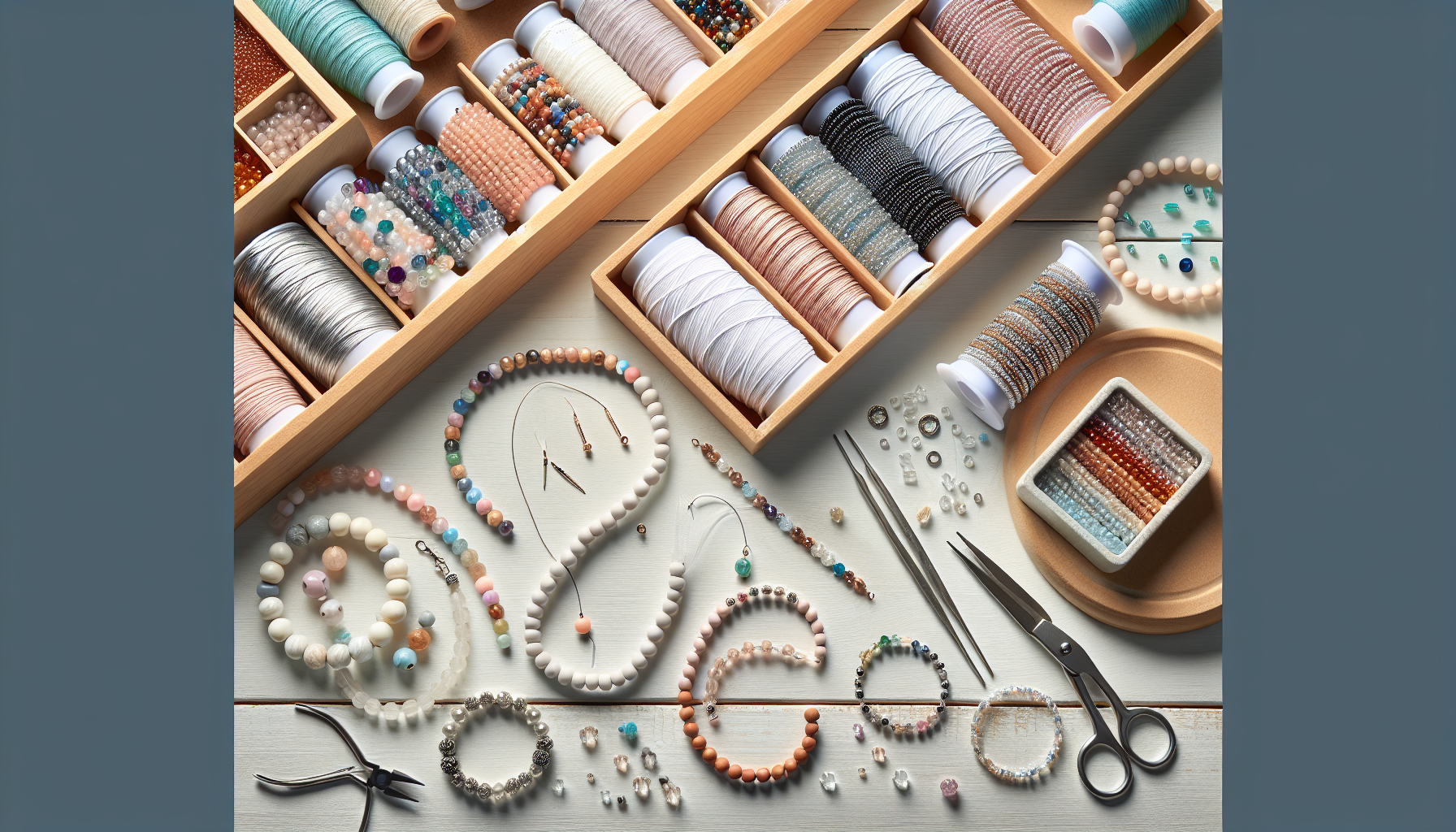
Beadalon elastic cord is a specially developed jewelry cord for stretch bracelets and elastic necklaces. Unlike regular nylon thread or metal wire, it's designed to stretch gently and return to its original shape without losing its elasticity. This makes it ideal as an elastic cord for bracelets that should be easy to put on and take off, for both adults and children.
What differentiates Beadalon jewelry cord from regular elastic?
Many beginners start with cheap craft elastic, but quickly discover that it can dry out, crack, and break. Beadalon elastic cord is specifically designed for jewelry making:
-
High elasticity: Provides comfortable stretch without feeling "flimsy" on the wrist.
-
Strength and durability: Can handle heavier beads like glass and semi-precious stones better than simpler elastic cords.<
-
Transparency and color: Available as clear/transparent cord that "disappears" between the beads, and in colors that can become part of the design.
-
Smooth surface: Makes it easier to thread beads, even through smaller holes, and reduces the risk of the cord fraying from sharp edges.
This combination makes Beadalon jewelry cord a quality choice when you want your elastic jewelry to last over time – not just look nice for the first week.
Overview of Beadalon elastic cord at Hilmaspyssel.se
At Hilmaspyssel.se, you'll find Beadalon elastic cord in several thicknesses, colors, and spool lengths, adapted for different types of projects. The most common diameters are 0.5 mm, 0.7 mm, and 1.0 mm – perfect for everything from lightweight glass beads to heavier stone beads. By choosing the right combination of thickness and color, you can create both discreet, "invisible" bracelets and more graphic, colorful designs. In later sections, we'll go through exactly how to choose the right variant for your specific jewelry, but for now, you can be assured that the assortment at Hilmaspyssel.se covers most needs for elastic bracelets and necklaces.
Choosing the Right Thickness and Type of Beadalon Elastic Cord from Hilmaspyssel.se
Choosing the right Beadalon elastic cord is crucial for how beautiful and durable your jewelry will be. Many beginners grab "the first best" spool, but experienced jewelry makers know that the correct thickness, type, and color of the cord make a big difference – especially when you're making elastic bracelets that need to withstand daily wear. At Hilmaspyssel.se, you'll find several variations in one place, making it easy to choose correctly from the start.
Thickness – how to match elastic cord with different beads
-
0.5 mm elastic cord: Suitable for small beads with small holes, such as seed beads, faceted glass beads, and smaller letter beads. Perfect for thin, delicate bracelets and children's bracelets.
-
0.7 mm elastic cord: The most all-around thickness. Good for 4–6 mm glass beads, acrylic beads, and lighter stone beads. A popular choice for everyday bracelets.
-
1.0 mm elastic cord: Best for heavier beads, such as semi-precious stones, lava, larger glass beads (8–10 mm), and men's bracelets where you want extra strength.
A practical example: If you're making a bracelet with 6 mm glass beads, 0.7 mm Beadalon elastic cord from Hilmaspyssel.se is usually the safest and easiest choice – thick enough for durability, but still easy to thread through the beads.
Clear or colored cord – focusing on design and durability
When choosing between transparent and colored elastic cord, it's about both appearance and function:
- Clear/transparent cord:
- Looks good when using many different colors of beads
- Perfect when you want the cord to "disappear" into the design
-
Suitable for glass and crystal beads where light can play freely
-
Colored elastic cord:
- Good when the beads are semi-transparent and you want to enhance a certain color tone
- Can add extra "depth" to the bracelet, for example, black cord under dark stone beads
- Smart when the holes in the beads are slightly larger and the cord might show – then it becomes part of the design instead of a distracting element
A tip is to always have at least two thicknesses at home (e.g., 0.5 and 0.7 mm) as well as both clear and a neutral color, such as black or white. This way, you can quickly adapt your Beadalon elastic cord from Hilmaspyssel.se to each new project without having to compromise on either durability or design.
How to Use Beadalon Elastic Cord – Step-by-Step for Beginners
Getting started with Beadalon elastic cord is easier than many think, especially when you follow a clear step-by-step guide. In this section, we'll go through in detail how to make your first elastic bracelet – from preparation to the final stretch test – so that the result is both beautiful and durable.
Preparations before you start threading beads
-
Choose beads with the right hole size: Always test threading a bead onto the cord before finalizing your entire design.
-
Measure your wrist or ankle: Use a measuring tape or string around your wrist, add about 1–1.5 cm for comfort, and another 5–8 cm for the knots.
-
Cut the correct length of cord: It's better to work with a slightly longer cord than too short; about 25–30 cm is suitable for a standard bracelet.
-
Pre-stretch the cord lightly: Gently pull the Beadalon cord a few times before you start; this reduces the risk of the jewelry stretching out later.
Once you have everything ready – Beadalon elastic cord, beads, scissors, and possibly a bead mat – the rest will go much more smoothly. Preparations make a big difference for both fit and durability, something many quick guides online underestimate.
Step-by-step: how to make a simple elastic bracelet
-
1. Thread the beads in the desired order: It's often helpful to start from the center of the pattern and work outwards for symmetry, especially with name bracelets.
-
2. Test the length on your wrist: Form a circle with the bracelet around your wrist before tying, and adjust the number of beads if needed.
-
3. Avoid twisted cord: Do not twist the bracelet around its own axis when threading; let the cord lie straight and rotate the bead mat or bead bowl instead.
-
4. Prepare for knotting: Leave a few centimeters of cord at each end so you can tie a secure knot without stress.
By taking your time at this step, you'll get a bracelet that not only looks nice immediately but also maintains its shape longer – something often missing in simpler "how to make an elastic cord bracelet" guides.
Knotting Technique and Finishing – How to Make Beadalon Elastic Cord Last Longer
When working with elastic bracelets, it's the knots and finishes that determine whether the jewelry lasts for weeks or years. Many guides mention "tie a double knot," but few go into depth. Here, we focus on proven techniques that work particularly well with Beadalon elastic cord from Hilmaspyssel.se, so you reduce the risk of the bracelet breaking or the knot slipping open.
Secure knots for elastic cord
-
Surgeon's knot (double overhand knot): Cross the cord twice in the first "overhand wrap" and once in the second. This creates friction and a very stable knot.
-
Extra locking wrap: For thin diameters (e.g., 0.5 mm), you can add a third wrap in the first step for extra grip, especially with heavy beads.
-
Leave adequate cord ends: Leave about 5–7 mm of cord end after the knot before cutting – too short ends are a common reason for knots coming undone.
When tightening the knot, do so slowly and evenly, not jerkily. Pull both cord ends simultaneously and check that the knot really "locks" before proceeding. A good test is to gently pull the bracelet a few times – if the knot holds then, it usually holds during wear as well.
Glue, knot covers, and neat finishes
A thin layer of jewelry glue can extend durability, but less is more. A small drop directly on the knot is sufficient – avoid getting glue on the Beadalon cord itself, as this can degrade its elasticity over time. Let the glue dry completely before cutting the ends.
For an extra professional result:
-
Hide the knot in a bead with a larger hole, e.g., a metal bead or a larger acrylic bead.
- Use knot covers or crimp covers from Hilmaspyssel.se to conceal the knot and protect it from wear.
- Plan the finish already at the design stage – include a "knot bead" where you know the knot can be discreetly hidden.
By combining the correct knotting technique, a sparse amount of glue, and smart finishing components, you'll get elastic jewelry that both looks professional and lasts significantly longer than average.
Creative Jewelry Ideas with Beadalon Elastic Cord
Beadalon elastic cord opens up a multitude of creative jewelry projects – from simple children's bracelets to elegant semi-precious stone sets. With the right combination of beads, spacers, and colors, you can create personalized jewelry that is both comfortable to wear and long-lasting. Here you'll find concrete ideas and practical tips that go beyond most basic guides, focusing on materials you can easily find at Hilmaspyssel.se.
Concrete projects you can start with right away
-
Name bracelets with letter beads
Use 0.7 mm Beadalon elastic cord, acrylic letter beads, and small rondelle spacers. Add a small heart charm for a more personal touch.
-
Minimalist semi-precious stone bracelets
Combine 4–6 mm semi-precious stones with individual stainless steel metal beads. Hide the knot in a larger metal bead for a "store-bought" look.
-
Matching bracelet sets (stacking bracelets)
Make 3–5 simple bracelets on Beadalon elastic cord in different color themes – one with only metal, one with matte stone, one with letters or short words like "LOVE," "MAMA," etc.
It's smart here to think in collections: choose a color theme (e.g., nude, pastel, or black/gold) and make several variations that can be worn together. At Hilmaspyssel.se, you'll find ready-made categories with beads and charms perfect for this type of project.
Color combinations, trends, and material choices
When planning your elastic bracelets, you can follow a few simple rules of thumb:
-
Boho style: Mix wooden beads, tassels, turquoise, and antique silver details on clear elastic cord. Work with many layers on the wrist.
-
Minimalist: Stick to 1–2 colors and repeat the same bead sequence along the entire bracelet. Semi-precious stone + discrete metal beads give an exclusive look.
-
Children's bracelets: Focus on bright colors, hearts, stars, and letter beads. Choose slightly thicker cord (0.7–1.0 mm) for extra durability.
By combining Beadalon elastic cord with carefully selected beads, spacers, and charms from Hilmaspyssel.se, you'll get jewelry that both follows trends and feels personal. Try making a small "test bracelet" first to see how colors and shapes work together before producing more – it saves time, material, and makes the final result even more beautiful.
Common Mistakes with Elastic Cord – and How to Avoid Them
Even the best Beadalon elastic cord can break or lose its shape if used incorrectly. Many of the problems mentioned in forums and guides – bracelets that snap, knots that slip open, or jewelry that feels uncomfortably tight – are often not due to the cord itself, but to small mistakes in technique. Here we go through the most common errors and how to easily avoid them when purchasing and creating with Beadalon elastic cord from Hilmaspyssel.se.
Typical problems – and their causes
-
The cord breaks after a short time
This is often due to cord that is too thin for beads that are too heavy, sharp edges in the bead holes, or that the jewelry was not "stretch-tested" before use.
-
The jewelry becomes too tight or too loose
Incorrect wrist measurement, no consideration for bead size, and pulling the cord too tight when knotting can all lead to the bracelet not fitting as intended.
-
The knot slips open or is too visible
A simple square knot, cord ends that are too short, or no glue are common causes – as is not hiding the knot in a bead with a larger hole.
By choosing the correct thickness of cord, checking the edges of the bead holes, and always doing a gentle pull test before cutting the cord ends, you can avoid the majority of these problems from the outset.
Checklist before finishing your jewelry
Before you consider an elastic bracelet finished, go through this quick checklist:
-
Length: Try the bracelet on your wrist – it should slide over your hand without you having to "force" it, yet still sit securely.
-
Stretch test: Gently stretch the jewelry a few times. If anything feels doubtful – re-tie it before cutting the cord ends.
-
Knot check: Ensure you've used a secure knot (e.g., a surgeon's knot), pulled it tight evenly, and applied a small drop of jewelry glue if needed.
-
Finish: Hide the knot in a bead with a slightly larger hole or use knot covers for a more professional result.
By following these steps, you'll create durable, comfortable jewelry where your Beadalon elastic cord from Hilmaspyssel.se truly shines – and you'll avoid unpleasant surprises when your favorite piece of jewelry is worn in everyday life.
Why Buy Beadalon Elastic Cord at Hilmaspyssel.se? – Benefits and Buying Tips
Choosing the right elastic cord for bracelets and necklaces isn't just about brand and thickness – where you shop also plays a big role. When you buy Beadalon elastic cord at Hilmaspyssel.se, you get both quality-assured products and a well-curated assortment adapted for hobby jewelry making and small businesses. Here, renowned brands like Beadalon are combined with personal service and fast delivery within Sweden.
Advantages of buying Beadalon at Hilmaspyssel.se
-
Genuine Beadalon products and carefully selected assortment
Hilmaspyssel.se sources from reliable suppliers, minimizing the risk of counterfeits or low-quality alternatives. You get the Beadalon jewelry cord that instructions and patterns actually refer to.
-
Clear product descriptions and correct thicknesses
Product descriptions usually indicate both thickness (e.g., 0.5, 0.7, or 1.0 mm), spool length, and recommended uses. This makes it easier to match cord with beads without guessing.
-
All jewelry materials in one place
You can complement your Beadalon elastic cord with beads, spacers, charms, knot covers, and glue in the same order – practical and saves on shipping costs.
Furthermore, the assortment is continuously updated according to trends and demand. This means you'll often find both classic basic spools of transparent cord and more niche variants in black or colored.
Smart buying tips for Beadalon elastic cord online
To get maximum value when shopping at Hilmaspyssel.se, you can think strategically:
-
Buy several thicknesses at once – e.g., 0.5 mm for small glass beads, 0.7 mm as an all-around for bracelets, and 1.0 mm for heavier stone beads. Then you're ready for almost any project without extra shipping costs next time you get an idea.
-
Build up a small basic stock – add neutral beads (black, white, metallic colors), a few packs of spacers, and a good jewelry adhesive. This allows you to create many different bracelets with the same spool of cord.
-
Read customer reviews and tips in the product description – there you often get practical advice on which cord works best for specific bead types, something rarely mentioned in general blog posts.
By planning your purchases and utilizing Hilmaspyssel's wide assortment, you avoid makeshift solutions with the wrong cord thickness or subpar quality. This, in turn, leads to fewer broken bracelets, more satisfied recipients, and more durable jewelry you can be proud to wear or sell. So, next time you need to buy Beadalon elastic cord online, Hilmaspyssel.se is a reliable first choice.
Frequently Asked Questions (FAQ)
Q: What thickness of Beadalon elastic cord should I choose for my bracelet?
A: Always consider the bead hole size and weight. As a rule of thumb, 0.5 mm works well for small glass beads and seed beads, 0.7 mm for common 4–6 mm beads (e.g., glass beads, acrylic, lighter stone), and 1.0 mm for heavier natural stone, lava, metal beads, and larger beads. Test by threading a piece of cord through your bead – the cord should slide easily but fill the hole enough so that the knot can be hidden. At Hilmaspyssel.se, you can compare product descriptions and easily match the right Beadalon elastic cord to your projects.
Q: How do I prevent my elastic bracelet from breaking after a short time?
A: The most common reasons are incorrect thread thickness, the jewelry being pulled too tight, and an unsecure knot. Choose a thread that is appropriate for the weight of the beads, tie a secure surgeon's knot/double knot, use a small drop of jewelry glue, and allow it to dry completely. Always perform a pull test before wearing the bracelet for the first time. Also, avoid rolling the bracelet on and off too roughly – instead, gently slide it over your hand.
Q: Do I always need to use glue on the knot?
A: You don't have to, but with elastic thread, it's strongly recommended for long-lasting durability. A good technique is: tie a surgeon's knot 3-4 times, pull it tight, apply a very small drop of glue directly onto the knot, and let it dry completely before trimming the ends. Too much glue can make the knot stiff and visible, so use less than you think. Many jewelry makers find that the combination of Beadalon elastic thread + glue significantly extends the lifespan.
Q: How do I hide the knot in a neat way?
A: The simplest way is to plan for a bead with a larger hole in the design. Once you've finished tying, carefully pull the knot into this bead. You can also use knot covers or metal beads that are designed to hide knots. At Hilmaspyssel.se, you'll find both metal beads, spacers, and knot covers that fit perfectly with Beadalon elastic thread.
Q: Can I use the same spool of Beadalon elastic thread for both children's bracelets and heavy stone bracelets?
A: It's possible, but not optimal. For the best results, it's smart to have at least two thicknesses at home – for example, 0.5–0.6 mm for children's and letter bracelets, and 0.7–1.0 mm for heavier adult bracelets made of stone or metal. This way, you won't have to compromise on durability. A tip is to buy several thicknesses at once from Hilmaspyssel.se, so you're ready for all types of projects.
Q: How do I store elastic thread to keep it fresh longer?
A: Store your Beadalon elastic thread at room temperature, in a dark and dry place, preferably on its original spool. Avoid direct sunlight, high heat, and moisture, which can eventually affect elasticity. Don't cut too many short pieces in advance – instead, just cut the length you need for each piece of jewelry. This way, the thread retains its elasticity and strength for as long as possible.
Conclusion: Make Your Elastic Jewelry Durable, Stylish, and Personal
With Beadalon elastic thread, you get a combination of strength, flexibility, and simplicity that is hard to beat when creating bracelets and necklaces. In this guide, you've learned how to choose the right thickness, match thread with beads, tie secure knots, avoid common mistakes, and find inspiration for new jewelry projects. Together, these elements will make your elastic jewelry last longer and look more professional – even if you're a beginner.
The next step is to put your knowledge into practice. Visit Hilmaspyssel.se and choose the Beadalon threads that suit your projects – preferably several thicknesses and both transparent and colored varieties. Pick up beads, spacers, and charms at the same time, follow the step-by-step advice in the article, and try a first (or next) set of elastic bracelets. Once you get started, you'll notice how easy, accessible, and creative it is to create your own personalized jewelry with the right materials as a foundation.